Aluminum Grades: Finding the Best Suit for Your Project (2026 Guide)
By JunWen Liu | Aug. 18, 2026
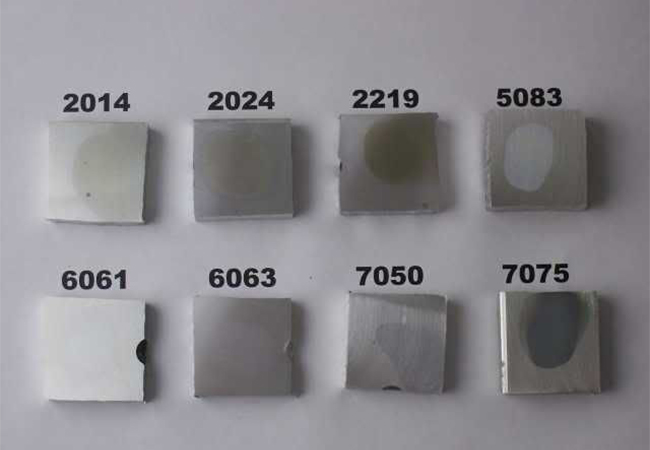

Aluminum is one of the most abundant elements on Earth, which is why it is manufactured into a wide variety of grades available worldwide. Of course, its popularity stems not only from the relatively low cost of raw materials, but also from its well-known lightweight advantages, as well as the exceptional properties of specific grades—such as high strength, easy formability, excellent machinability, superior corrosion resistance, and adaptability to diverse manufacturing processes.
While you may have a general impression of aluminum grades based on these broad traits, prototyping, manufacturing, and mass-producing specific aluminum products require a deeper understanding of exact grades and their unique characteristics. But don’t worry. To help you quickly find the perfect match for your project, this blog has categorized the most common aluminum grades below by composition, key performance features, manufacturing method, and recommended applications.
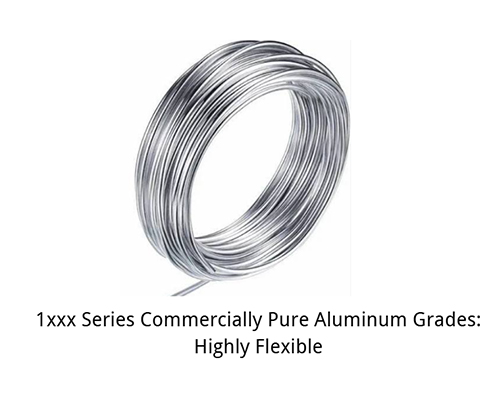
Commercially pure aluminum grades refer to the 1xxx series defined by the Aluminum Association, which features an aluminum content of 99.00% or higher. The most widely used grades in this category include 1100, 1050, and 1060.
These 1xxx series grades are your best suit when your project requires excellent electrical and thermal conductivity, superior corrosion resistance, high ductility, and outstanding formability—making them ideal for applications such as electrical cables, chemical storage tanks, transformer windings, food packaging, decorative trim, and general sheet metal parts.
Note: Due to their relatively low mechanical strength, these grades should not be used for load-bearing structural components.
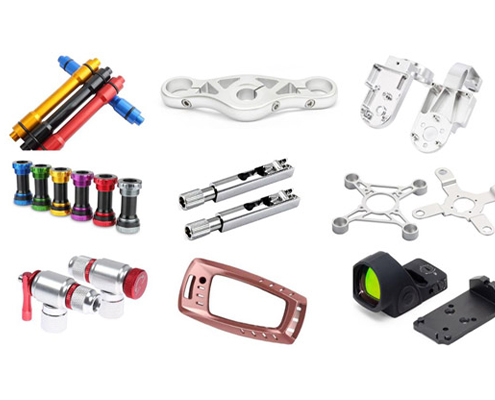
Heat-treatable aluminum alloys are categorized by their primary alloying elements: Copper (2xxx), Magnesium and Silicon (6xxx), and Zinc (7xxx). These grades achieve high strength and hardness through solution heat treatment and artificial aging (such as T4, T6, and T651 tempers). Among these, 6061, 7075, and 2024 are the most widely used options.
Suitable for:
Note: Some grades in this category (like 2024 and 7075) offer lower weldability and corrosion resistance, so protective surface treatments or specialized joining methods are recommended.
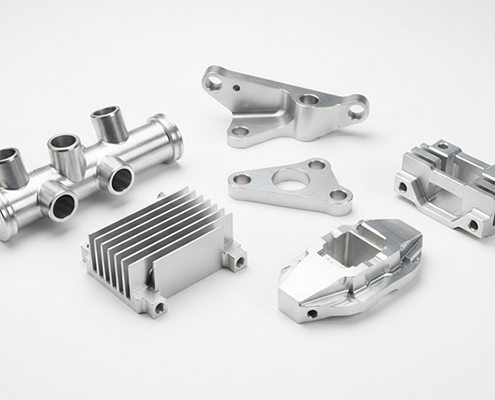
Non-heat-treatable aluminum alloys are classified by key elements like Manganese (3xxx), Silicon (4xxx), and Magnesium (5xxx). Instead of heat treatment, they rely on solid-solution strengthening and cold work hardening (H tempers like H14 or H32) to gain strength. Common grades in this group include 3003, 5052, and 5083.
Best suit
Note: While highly durable and formable, these alloys cannot achieve the ultra-high yield strength of 7xxx series alloys, making them less suitable for extreme load-bearing structures.
In engineering applications of aluminum components, the most critical properties include strength (load-bearing capacity), corrosion resistance, machinability (which directly impacts manufacturing cost), and surface finishing (essential for aesthetic appeal). The table below highlights the most popular aluminum grades recommended for these key performance characteristics:
| Feature | Top Aluminum Grades | Key Characteristics | Typical Applications |
| High-Strength & Aerospace-Grade | 7075 2024 | • Ultra-high yield strength & hardness • Superior fatigue resistance • High strength-to-weight ratio | Aerospace structures, drone frames, tactical gear, high-stress mechanical parts |
| Superior Corrosion Resistance | 5052 5083 | • Outstanding resistance to salt spray & seawater • Excellent weldability • No protective coating required | Marine hardware, fuel tanks, outdoor enclosures, pressure vessels |
| Free-Machining & High Precision | 2011 6020 (6061) | • Excellent chip-breaking performance • High-speed CNC turning & milling • Smooth surface finish with minimal tool wear | Precision CNC turned parts, automatic screw machine parts, optical mounts |
| Best Anodizing & Aesthetic Finish | 6063 | • Exceptionally smooth extruded finish • Excellent acceptance for clear/color anodizing • Good balance of strength and aesthetics | Consumer electronics enclosures, camera lens barrels, architectural trim |
Due to different chemical compositions and targeted manufacturing processes, aluminum alloys are tailored for specific production routes. Some grades belong to wrought aluminum alloys, which offer cleaner cutting performance and are ideal for precision CNC machining. Another like casting aluminum is specially optimized for casting processes, featuring superior liquid mobility in their molten state. Additionally, certain grades possess high formability and non-heat-treatable characteristics, making them far more common in sheet metal fabrication and extrusion applications.
The table below provides a clear categorization to help you select the right grade for your manufacturing process:
| Manufacturing Process | Recommended Grades | Why It’s the Best Choice | Ideal Parts |
| 1. Rapid Prototyping | 6061-T6 5052 7075-T6 | • High material availability & low lead time • Versatile for quick design iterations • Easy to validate fit, form, and function | Functional test prototypes, quick brackets, structural concept validation |
| 2. CNC Machining | 6061-T6 7075-T6 2024-T3/T4 | • Excellent dimensional stability & tight tolerances • Smooth surface finish with clean chip breaking • Minimal burr formation during high-speed milling | Precision optical mounts, drone arms, custom fixtures, aerospace components |
| 3. Die Casting | A380 A356 ADC12 | • High fluid mobility in liquid state • Excellent for complex, near-net-shape molds • Great pressure tightness & wall thickness control | Engine blocks, gearbox housings, auto wheels, complex pump bodies |
| 4. Aluminum Extrusion | 6063 6061 6005A | • Flows smoothly through dies without cracking • Produces ultra-smooth cosmetic surfaces • Perfect geometry for clear or color anodizing | Heat sinks, LED channels, structural framing, window/door profiles |
| 5. Sheet Metal Fabrication | 5052-H32 3003-H14 6061-O | • High elongation for smooth bending without cracking • Superior weldability & deep-drawing performance • Outstanding corrosion resistance | Electronic chassis, enclosures, brackets, fuel tanks, deep-drawn cans |
Here is a quick reference guide matching common industrial applications with their best-suited aluminum grades.
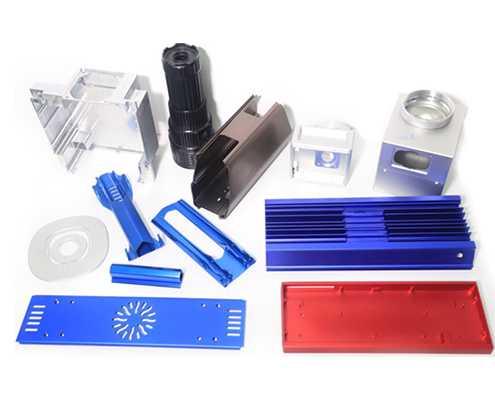
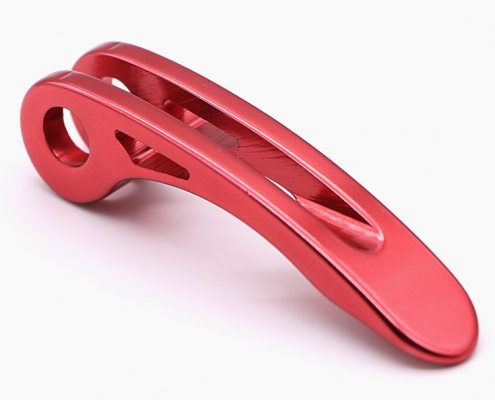
Modern industrial applications demanding high-precision aluminum components (tight tolerances of ±0.005 mm to ±0.01 mm, high structural integrity, and superior surface finishes of Ra 0.4–0.8 µm) typically rely on a winning combination: precision CNC machining paired with wrought aluminum alloys.
The table below outlines the raw material cost, CNC machining cost, and relative total finished part cost across common wrought aluminum grades:
| Grade & Temper | Raw Material Cost | CNC Machining Cost | Relative Total Cost | Application Examples |
| 6061-T6 | Low – Moderate | Lowest (Fast cycle times, easy chip removal) | $ (Most Economical) | Structural frames, CNC enclosures, drone brackets, general precision parts |
| 6063-T6 | Low – Moderate | Low (Smooth cutting, minimal burr formation) | $-$$ | Heat sinks, extruded electronic housings, architectural trim, cosmetic frames |
| 5052-H32 | Low | High (Gummy during 3D milling, prone to burrs) | $$ (For CNC Milling)
$ (For Sheet Bending) | Bent sheet metal chassis, marine brackets, fluid tanks, stamped covers |
| 2011-T3 / 6020 | Moderate | Lowest (Short, curling chips; zero tool tangling) | $-$$ | High-volume screw machine parts, precision optical threads, connectors |
| 2024-T3 | High | Moderate (Clean cutting, but prone to stress deformation) | $$$ | Aircraft structural fittings, shear webs, highly stressed tension links |
| 7075-T6 | Very High (2–3x of 6061) | Moderate – High (Clean cuts, but accelerates tool wear) | $$$$ (Premium) | Aerospace bulkheads, high-load drone arms, racing cycle gears, defense hardware |
For aluminum grades, minor variations in element ratios directly influence mechanical strength, corrosion resistance, and processing performance. The table below outlines the chemical breakdown of the key aluminum grades discussed in this guide:
| Alloy Grade | Series / Type | Si (%) | Fe (%) | Cu (%) | Mn (%) | Mg (%) | Cr (%) | Zn (%) | Ti (%) | Al (%) |
| 1050 | 1xxx (Pure) | ≤0.25 | ≤0.40 | ≤0.05 | ≤0.05 | ≤0.05 | – | ≤0.07 | ≤0.05 | ≥99.50 |
| 1060 | 1xxx (Pure) | ≤0.25 | ≤0.35 | ≤0.05 | ≤0.03 | ≤0.03 | – | ≤0.05 | ≤0.03 | ≥99.60 |
| 1100 | 1xxx (Pure) | <0.95(Si+Fe) | <0.95 | 0.05–0.20 | ≤0.05 | – | – | ≤0.10 | – | ≥99.00 |
| 2011 | 2xxx (Wrought) | ≤0.40 | ≤0.70 | 5.0–6.0 | – | – | – | ≤0.30 | – | Balance (Pb/Bi added) |
| 2024 | 2xxx (Wrought) | ≤0.50 | ≤0.50 | 3.8–4.9 | 0.30–0.90 | 1.2–1.8 | ≤0.10 | ≤0.25 | ≤0.15 | Balance |
| 3003 | 3xxx (Wrought) | ≤0.60 | ≤0.70 | 0.05–0.20 | 1.0–1.5 | – | – | ≤0.10 | – | Balance |
| 4043 | 4xxx (Filler) | 4.5–6.0 | ≤0.80 | ≤0.30 | ≤0.05 | ≤0.05 | – | ≤0.10 | ≤0.20 | Balance |
| 5052 | 5xxx (Wrought) | ≤0.25 | ≤0.40 | ≤0.10 | ≤0.10 | 2.2–2.8 | 0.15–0.35 | ≤0.10 | – | Balance |
| 5083 | 5xxx (Wrought) | ≤0.40 | ≤0.40 | ≤0.10 | 0.40–1.0 | 4.0–4.9 | 0.05–0.25 | ≤0.25 | ≤0.15 | Balance |
| 6005A | 6xxx (Wrought) | 0.50–0.90 | ≤0.35 | ≤0.30 | 0.10–0.50 | 0.40–0.70 | ≤0.30 | ≤0.20 | ≤0.10 | Balance |
| 6020 | 6xxx (Wrought) | 0.40–0.90 | ≤0.50 | 0.10–0.40 | ≤0.35 | 0.60–1.20 | ≤0.15 | ≤0.20 | ≤0.15 | Balance (Sn: 0.9-1.5) |
| 6061 | 6xxx (Wrought) | 0.40–0.80 | ≤0.70 | 0.15–0.40 | ≤0.15 | 0.8–1.2 | 0.04–0.35 | ≤0.25 | ≤0.15 | Balance |
| 6063 | 6xxx (Wrought) | 0.20–0.60 | ≤0.35 | ≤0.10 | ≤0.10 | 0.45–0.9 | ≤0.10 | ≤0.10 | ≤0.10 | Balance |
| 7075 | 7xxx (Wrought) | ≤0.40 | ≤0.50 | 1.2–2.0 | ≤0.30 | 2.1–2.9 | 0.18–0.28 | 5.1–6.1 | ≤0.20 | Balance |
| A356 | Cast Alloy | 6.5–7.5 | ≤0.20 | ≤0.20 | ≤0.10 | 0.25–0.45 | – | ≤0.10 | ≤0.20 | Balance |
| A380 | Cast Alloy | 7.5–9.5 | ≤1.30 | 3.0–4.0 | ≤0.50 | ≤0.10 | – | ≤3.00 | – | Balance |
| ADC12 | Cast Alloy | 9.6–12.0 | ≤1.30 | 1.5–3.5 | ≤0.50 | ≤0.30 | – | ≤1.00 | – | Balance |
Percentages represent single values as maximums unless shown as a range. “Balance” indicates that aluminum makes up the remainder of the composition.
Below is a quick table for you caculating how an alloy will perform under stress and load, and considering scratch resistance and heat dissipation performance for aluminum products:
| Aluminum Grade | Yield Strength (MPa) | Tensile Strength (MPa) | Hardness (HB/ Brinell) | Thermal Conductivity (W/m·K) | Density (g/cm³) | Elongation at Break (%) |
| 1050-O | 20 | 75 | 20 | 231 | 2.70 | 35 |
| 1060-O | 20 | 70 | 19 | 234 | 2.70 | 40 |
| 1100-O | 35 | 90 | 23 | 222 | 2.71 | 35 |
| 2011-T3 | 290 | 380 | 95 | 151 | 2.82 | 15 |
| 2024-T3 | 345 | 485 | 120 | 121 | 2.78 | 18 |
| 3003-H14 | 145 | 160 | 40 | 159 | 2.73 | 8–10 |
| 4043 (As Cast) | 70 | 145 | 45 | 155 | 2.68 | 8 |
| 5052-H32 | 195 | 230 | 60 | 138 | 2.68 | 12 |
| 5083-H111 | 145 | 290 | 73 | 120 | 2.66 | 16 |
| 6005A-T6 | 215 | 260 | 85 | 167 | 2.70 | 8 |
| 6020-T6 | 260 | 290 | 90 | 170 | 2.71 | 10 |
| 6061-T6 | 276 | 310 | 95 | 167 | 2.70 | 12 |
| 6063-T6 | 214 | 241 | 73 | 200 | 2.70 | 12 |
| 7075-T6 | 503 | 572 | 150 | 130 | 2.81 | 11 |
| A356-T6 | 205 | 262 | 80 | 151 | 2.68 | 6 |
| A380 (As Cast) | 160 | 325 | 80 | 96 | 2.74 | 3.5 |
| ADC12 (As Cast) | 150 | 310 | 85 | 96 | 2.72 | 3.5 |
Solving Thin-Wall Deformation in Custom Aluminum Earphone Cases
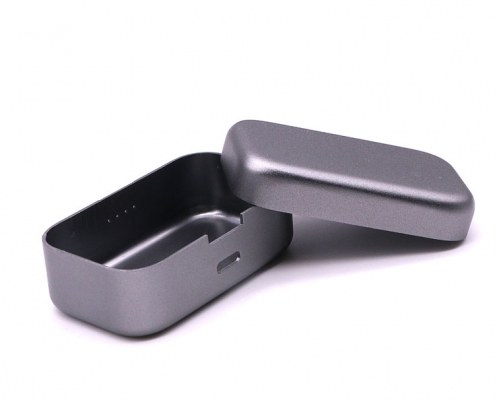
During the initial prototype phase for a high-end wireless audio client, manufacturing ultra-thin aluminum earphone cases presented severe engineering hurdles. The intricate design demanded a wall thickness of under 1.2 mm to maintain a lightweight profile, while simultaneously requiring tight dimensional tolerances (±0.01 mm) for seamless lid closure. Standard 6061 CNC milling caused significant material thermal expansion and internal stress release, leading to noticeable wall warping, chatter marks, and inconsistent mating gaps during batch assembly.
To address structural distortion, our engineering team refined both the manufacturing pathway and fixture design. We switched from standard stock to stress-relieved 6061-T6 aluminum and implemented a multi-pass high-speed CNC milling technique using customized soft jaws to distribute clamping pressure evenly. Furthermore, to eliminate internal stress between heavy roughing and fine finishing operations, an intermediate thermal stress-relief annealing cycle was introduced. For cosmetic perfection, a tailored fine-bead sandblasting combined with an anodizing protocol was applied, achieving a premium matte finish without eroding critical boundary tolerances.
By optimizing the tool paths and stress-relief sequence, the yield rate for the custom aluminum earphone case reached an impressive 98.5%, completely eliminating lid alignment issues. The final enclosure achieved an impeccable balance—delivering structural rigidity, efficient heat dissipation, and a flawless cosmetic surface. This approach successfully transitioned the project from a high-risk prototype stage into a seamless, high-volume production run.
Selecting the ideal aluminum alloy comes down to finding the right balance between mechanical strength, corrosion resistance, machinability, surface finishing, and overall production cost. From the most popular 6061-T6 for general CNC machining, structural components, and balanced performance, to 7075-T6 or 2024 when high load, fatigue resistance, and aerospace-level strength are non-negotiable, to 5052 or 3003 for sheet metal bending, deep drawing, and corrosive environments, to the 6063 or cast alloys like A380/A356 for smooth extruded profiles, complex molded shapes, there is a must the suitable one for your project.
Still unsure which aluminum alloy best fits your design, and looking for high-precision CNC machining, rapid prototyping, or custom metal fabrication aluminum components services? Welcome to send us your drawings, and our engineering team will provide a fast, professional DFM analysis and quote very soon to you. [2D Drawings (PDF files), 3D Drawings (IGS/STP/STEP files)].
 WhatsApp/WeChat/Mobile:
+86-15099911516
WhatsApp/WeChat/Mobile:
+86-15099911516 Tel: 86-150-9991-1516
 QQ: 939020977
 E-Mail: service@vimetal.com.cn


Is 6061 aluminum stronger than 7075?
No, 7075 aluminum is significantly stronger than 6061, offering nearly double the yield strength, making it the preferred choice for extreme load-bearing and aerospace applications.
How do I know if my aluminum is 5052 or 6061?
You can check the mill test report or stencil marks on the metal, or test its workability: 5052 bends easily without cracking, whereas 6061-T6 is much stiffer and more prone to snapping when cold-bent.
Is 6061 or 5052 aluminum stronger?
6061-T6 is stronger than 5052, offering higher yield strength and hardness, though 5052 excels in flexibility, formability, and salt-water corrosion resistance.
What are the key differences between 6061 and 3003 aluminum?
6061 is a heat-treatable structural alloy optimized for high strength and CNC machining, while 3003 is a softer, highly formable non-heat-treatable alloy designed for deep drawing, sheet metal bending, and general fabrication.
Is 6061 aluminum easy to weld?
Yes, 6061 has good weldability using TIG or MIG welding methods, though heat-treating or aging may be required post-weld to restore its original T6 strength.
Can you anodize all aluminum grades equally well?
No, while alloys like 6063 and 6061 produce smooth, vibrant anodized finishes, high-copper alloys like 2024 or high-silicon cast alloys often yield darker or discolored results.
 Written By JunWen Liu
JunWen Liu holds a Mechanical Engineering degree from Esslingen University of Applied Sciences and spent seven years as a CNC Process Engineer, accumulating extensive hands-on experience. She now shares that knowledge through her writing, drawing from real problems she encountered on actual projects. Outside of work, she enjoys hiking and is always chasing the next summit view.

 Food Grade Aluminum Explained: Uses, Grades, Cost, and vs Stainless Steel