Aluminum for Casting: A Complete Guide to Alloys, Casting Processes, and Selection
By JunWen Liu | Aug. 07, 2026
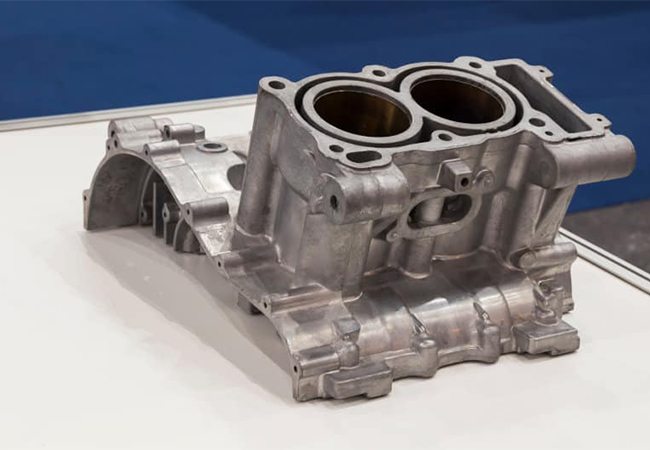

Aluminum for casting is popular for making complex, lightweight yet good strength, and budget friendly components, especially automotive, architectural, industrial hardware uses. This method of aluminum casting can provide you with the above advantages, which is more cost-effective than CNC machining wrought aluminum (but this shows best structural integrity and precision) for large batch of production needs.
In this blog, you will find cast aluminum methods, common grades, uses, pros and cons, and an advanced manufacturing way to gain both cost-saving and tight tolerance! Now, let’s dive into this article, and we will also share a case of how we solved transmission housings from our clients with cost-saving and precision assembly solutions!
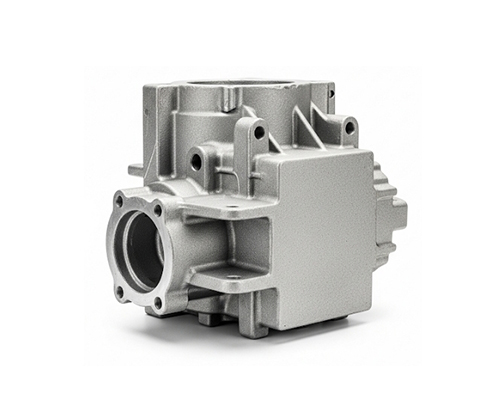
Cast aluminum alloys (like A356, A380, and 319) are specifically optimized for superior melt fluidity and castability. To achieve this, key elements such as silicon (Si) are added to improve liquid metal flow and reduce hot tearing, while copper (Cu) and magnesium (Mg) enhance strength, hardness, and heat treatability.
This composition optimization makes cast aluminum well-suited for various casting methods, such as die casting, permanent mold casting, sand casting, and investment casting.
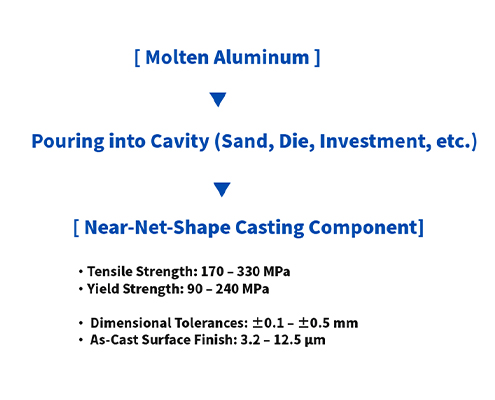
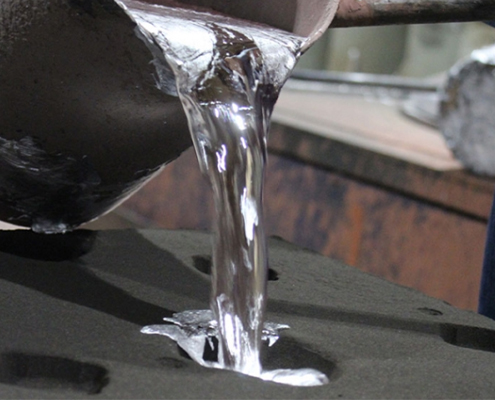
This aluminum for casting has its biggest advantage that you can get complex, net-shape, or near-net-shape parts in a single stage by introducing molten aluminum into a heat-proof cavity. While initial tooling and mold costs can be higher, aluminum casting can bring you budget-friendly for large-batch production of complex aluminum components, or structural aluminum parts.
Cast aluminum near-net-shape casting component offers daily-use performance for high-volume manufacturing:
Consequently, it is a good choice to use cast aluminum for making parts like:
Applications:
Selecting the right cast aluminum alloy depends on your required mechanical strength, thermal conductivity, corrosion resistance, and fluidity. Below is an overview of the most commonly used cast aluminum alloys and their typical characteristics:
| Cast Aluminum Grade | Tensile Strength (MPa) | Yield Strength (MPa) | Key Characteristics (Durability, Impact, Creep) | Typical Applications |
| A356 / 356 | 220 – 310 (T6) | 150 – 240 (T6) | High ductility, excellent fracture toughness, and superior impact resistance. | Automotive wheels, suspension parts, structural automotive components. |
| A380 | 300 – 330 | 160 – 170 | Excellent fluidity, pressure tightness, and good resistance to hot cracking. | Engine blocks, transmission gearboxes, electrical equipment housings. |
| 319 | 180 – 240 | 100 – 130 | Good casting versatility, balanced strength, and decent machinability. | Internal combustion engine heads, oil pans, commercial machinery parts. |
| 535 (Almag 35) | 240 – 260 | 120 – 140 | Outstanding corrosion resistance, shock resistance, and dimensional stability without heat treatment. | Marine hardware, instrument frames, high-impact structural components. |
While the core principle involves filling a mold cavity with molten metal, different casting methods have different mold types and they offer distinct trade-offs between cost, tolerance and surface finish. Here is a quick comparison of the primary methods:
| Process Name | Mold Type | Tolerance and Surface Finish | Cost Profile for Net Shape |
| Sand Casting | Expendable green sand or resin sand mold | Tolerance: ±0.5 to 1.5 mm Surface: Ra 12.5 to 25 µm | Low initial tooling cost; High unit/machining cost to reach final net shape. |
| Die Casting (HPDC) | Reusable hardened tool steel die | Tolerance: ±0.1 to 0.3 mm Surface: Ra 1.6 to 3.2 µm | Very High tooling cost; Very Low unit cost for high-volume net-shape parts. |
| Permanent Mold Casting (Gravity Die) | Reusable steel or iron cavities (one-piece or two-part) | Tolerance: ±0.2 to 0.5 mm Surface: Ra 3.2 to 6.3 µm | Moderate-High tooling cost; Low-Moderate unit cost for near-net shape. |
| Vacuum Die Casting | Reusable steel die with vacuum extraction | Tolerance: ±0.1 to 0.3 mm Surface: Ra 1.6 to 3.2 µm | High initial capital/tooling cost; Low unit cost with minimal post-processing. |
| Shell Mold Casting | Thin, baked resin-coated sand shell | Tolerance: ±0.2 to 0.4 mm Surface: Ra 3.2 to 6.3 µm | Moderate tooling cost; Moderate unit cost for achieving good near-net features. |
| Investment Casting | Ceramic shell mold over melted-out wax pattern | Tolerance: ±0.05 to 0.2 mm Surface: Ra 1.6 to 3.2 µm | Moderate-High tooling cost; High process cost, but yields exceptional net shape. |
| Lost Foam Casting | Low-density foamed polymer pattern in unbonded sand | Tolerance: ±0.2 to 0.5 mm Surface: Ra 6.3 to 12.5 µm | Moderate tooling cost; Moderate unit cost for highly complex, coreless net shapes. |
| Ceramic Mold Casting | Precision refractory ceramic slurry mold | Tolerance: ±0.1 to 0.3 mm Surface: Ra 1.6 to 3.2 µm | High mold/material cost; High unit cost, best for high-value precision parts. |
| Plaster Mold Casting | Gypsum / plaster-based mold | Tolerance: ±0.1 to 0.3 mm Surface: Ra 1.6 to 3.2 µm | Low-Moderate tooling cost; High unit cost due to long drying and cycle times. |
| Centrifugal Casting | Heavy rotating cylindrical steel mold | Tolerance: ±0.3 to 0.8 mm Surface: Ra 6.3 to 12.5 µm | Moderate tooling cost; Low-Moderate unit cost for symmetrical, hollow parts. |
| Open Mold Casting | Open-top reusable metal or sand mold | Tolerance: > ±1.5 mm Surface: Ra > 25 µm | Minimal tooling cost; High post-machining cost (poor net-shape capability). |
Balancing Cost, Performance, and High Precision
= Casting Aluminum Near-Net-Shape Complex Components
+ CNC Machining Threaded Holes & Critical Features
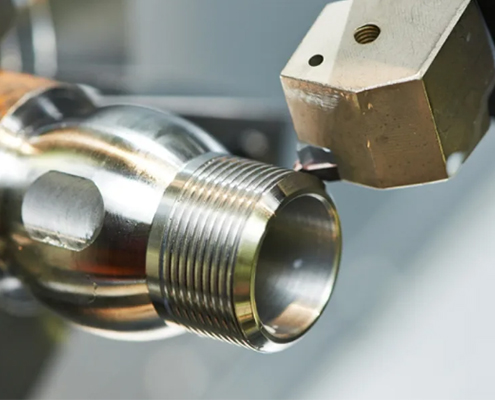
While raw castings offer great net-shape capability, achieving ultra-tight tolerances through casting can be impractical or cost-prohibitive.
The Hybrid Manufacturing Solution:
The most effective strategy to optimize cost, structural integrity, and accuracy is combining near-net-shape aluminum casting with selective CNC machining.
By casting the overall complex geometry and then using secondary CNC machining exclusively for critical areas, such as threaded holes, bearing seats, and mating surfaces, you get the best of both worlds: high-volume cost savings with pinpoint assembly precision (±0.005mm to 0.01 mm).
Understanding the unique strengths and inherent limitations of aluminum casting helps your teams make informed manufacturing decisions.
An American automotive client approached us with their current transmission housings, which were suffering from high unit costs due to full CNC machining from solid billet aluminum, yet previous traditional casting attempts failed to meet the critical tolerance required for bolt hole alignments and bearing seats. The client needed a solution that would drastically reduce mass-production expenses without sacrificing assembly precision or structural integrity.
To solve this, we implemented a hybrid manufacturing approach using Permanent Mold Casting combined with localized precision CNC machining.
First, we cast the main housing structure using A356-T6 aluminum alloy, capturing the complex overall geometry, cooling fins, and internal fluid channels in a single near-net-shape step. This immediately reduced over 70% of the raw material waste and machining time associated with full billet cutting.
Finally, we performed secondary CNC post-machining strictly on high-precision areas, including the main bearing bores, mating flanges, and threaded mounting holes. This process guaranteed tight dimensional tolerances within ±0.02 mm where exact fitment was critical.
The final solution delivered flawless assembly alignment for the client while reducing overall component unit cost by 38%.
Aluminum casting remains one of the most versatile and cost-effective manufacturing processes for producing complex, lightweight parts at scale. By understanding the unique characteristics of different cast alloys and knowing when to pair near-net-shape casting with secondary CNC machining, you can achieve the perfect balance between tight tolerances, structural integrity, and production budgets.
Whether designing automotive complex components, thermal management systems, or industrial hardware, selecting the right casting method and alloy grade is key to optimizing your component’s performance and cost. Looking for expert guidance on alloy selection, casting mold design, or precision post-machining solutions? Get in touch with our engineering team today to bring your custom project to life! [2D Drawings (PDF files), 3D Drawings (IGS/STP/STEP files)]
 WhatsApp/WeChat/Mobile:
+86-15099911516
WhatsApp/WeChat/Mobile:
+86-15099911516 Tel: 86-150-9991-1516
 QQ: 939020977
 E-Mail: service@vimetal.com.cn


Q1: Cast Aluminum vs. Pure Aluminum: What’s the Difference?
Cast aluminum is an aluminum alloy optimized for better melt fluidity and casting, capable of meeting medium-load daily uses. Pure aluminum is an extremely soft metal with over 99% aluminum content, typically used for packaging, busbars, or electronic foil. Pure aluminum cannot be selected for load-bearing components (even light-load ones) because it is too soft.
Q2: What Should I Do If My Cast Aluminum Part Suffers from Stress Cracking, Creep, or Wear During Testing?
Switch to CNC machining wrought aluminum (billet aluminum). Its metal structure remains intact and stronger, and you can choose harder, higher-strength grades such as 7075 aviation aluminum.
Q3: How Does the Strength of Cast Aluminum Compare to the Most Widely Used Structural Aluminum 6061?
Dedicated cast aluminum alloys (such as common A356-T6) have slightly lower strength than 6061-T6.
Q4: Can Cast Aluminum Parts Be Heat Treated to Improve Strength?
Yes, many cast aluminum alloys (such as A356 and 319) can undergo heat treatment—most commonly the T6 temper process (solution heat treatment plus artificial aging). Heat treating significantly refines the internal microstructures, increasing tensile strength, yield strength, and hardness to meet demanding structural requirements.
Q5: Can You Weld Cast Aluminum Components?
It depends on the casting method and internal porosity. Standard die-cast parts often contain trapped gas porosity, which causes bubbling, blistering, and weak joints during welding. However, parts produced via Vacuum Die Casting, Sand Casting, or Investment Casting have much lower internal porosity and can be successfully welded using methods like TIG or MIG welding.
Q6: Why Choose Cast Aluminum Over Cast Iron or Cast Steel?
Cast aluminum offers three key advantages over cast iron or steel: light weight (about 1/3 the density of iron), superior thermal conductivity, and built-in corrosion resistance due to its natural oxide layer. Unless your application requires extreme heat resistance or maximum heavy-duty load capacity, cast aluminum is usually the better choice for weight reduction and energy efficiency.
 Written By JunWen Liu
JunWen Liu holds a Mechanical Engineering degree from Esslingen University of Applied Sciences and spent seven years as a CNC Process Engineer, accumulating extensive hands-on experience. She now shares that knowledge through her writing, drawing from real problems she encountered on actual projects. Outside of work, she enjoys hiking and is always chasing the next summit view.


 CNC Aluminum Prototypes: Advantages, Uses, Costs & Alternatives (2026 ...