1. What’s the difference between 6061-T6, T651, and T6511?
6061-T6, T651, and T6511 share the same chemical composition and similar mechanical properties, but they differ in their resistance to distortion during machining.
| Temper | Why Choose It | Best For |
|---|
| T6 | Standard option, suitable for most parts | General-purpose parts |
| T651 | Lower residual stress, less prone to warping after machining | Parts with tight flatness or straightness requirements |
| T6511 | T651 benefits with additional straightening for better straightness control | Extruded shapes requiring tighter straightness |
For 6061 aluminum cnc machining projects where flatness or straightness is critical, T651 is often a better starting material because its lower residual stress can reduce distortion as material is removed during machining. [Read our full comparison guide →]
2. What’s the difference between 6061 and 6063 aluminum?
6061 and 6063 are both common aluminum grades, but they differ enough in mechanical performance and surface characteristics that the right choice depends on your part’s priorities.
6061 has notably higher tensile and yield strength, making it the more common choice for parts that carry structural loads or need to resist deformation under stress. 6063 offers lower strength but produces smoother extruded surfaces and generally provides a more uniform anodized appearance, which is why it’s widely used in architectural profiles and appearance-critical trim.
| Grade | Tensile Strength* | Yield Strength* | Why Choose It | Best For |
|---|
| 6061 | 310 MPa | 276 MPa | Higher strength, better fit for load-bearing parts | Structural components, brackets, fixtures |
| 6063 | 180 MPa | 140 MPa | Smoother extruded surface, consistent anodized finish | Appearance-critical parts, trim, enclosures |
Typical values for T6 temper; actual values vary by product form and thickness.
For 6061 cnc aluminum machining projects where strength matters more than surface finish, 6061 is generally the better choice. 6063 may be a better fit when appearance is the priority and high strength is not required. [Read our full comparison guide →]
3. What are the advantages of using 6061 for CNC machining?
6061’s combination of properties makes it a practical default for a wide range of parts, without the added cost of a specialty alloy.
- Good weldability, useful for assemblies that combine machined and welded components
- Solid corrosion resistance in most industrial and outdoor environments
- Responds well to anodizing, helping produce a more uniform cosmetic finish
- Good machinability, making it easier to achieve tight tolerances and consistent surface quality
- Widely available, which helps keep lead times predictable
For cnc 6061 aluminum parts that need a balance of strength, weldability, and finish quality, 6061 remains one of the most practical choices on the market.
4. Are there any limitations to using 6061 aluminum?
6061 offers a well-rounded set of properties, but a few trade-offs are worth knowing before you finalize your material choice for your aluminum 6061 cnc machined part.
- Lower strength than 7075, so parts subject to very high loads or stresses may need a higher-strength alloy instead. VMT reviews your load requirements during DFM to confirm whether 6061 or a stronger grade is the better fit.
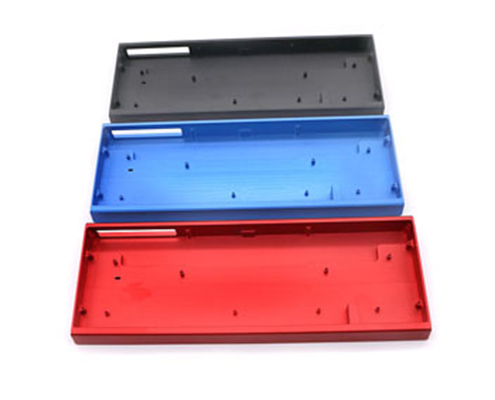
- Slight color variation can occur between anodizing batches due to natural composition differences. Specifying a single production batch helps keep color consistent across a full order.
- Aluminum-on-aluminum threads can gall under repeated assembly and disassembly. For threaded parts that will be assembled repeatedly, using a compatible non-aluminum fastener or adding a thread insert can reduce this risk.
These trade-offs don’t make 6061 a poor choice; they simply define when another material or a different design approach may be more suitable. VMT’s engineering team can help you weigh these factors during DFM, before production starts.
5. Why does the anodized color sometimes vary slightly between production batches?
Small differences in alloy composition can occur between aluminum batches, even within the same grade, and this can cause slight differences in how the material responds to the anodizing and coloring process. The effect is usually subtle, but it can be noticeable on parts placed side by side, especially with darker colors like black.
VMT helps minimize this variation by using material from a single production batch and holding consistent anodizing parameters across your full order, so your 6061-t6 aluminum cnc machining parts keep a uniform appearance from part to part.
6. Is 6061 aluminum good for outdoor or marine use?
6061 has solid corrosion resistance for most outdoor and general industrial environments, and anodizing further improves its protection against weathering. For most outdoor applications, such as equipment housings or structural brackets exposed to the elements, 6061 with an appropriate anodized or coated finish holds up well.
For direct saltwater or marine exposure, however, 5052 or 5083 typically offer better corrosion resistance due to their higher magnesium content. If your 6061 cnc milling aluminum parts project involves prolonged saltwater contact, it’s worth discussing whether a marine-grade alloy is a better fit before finalizing your material choice.
7. What tolerances can VMT hold when machining 6061 aluminum?
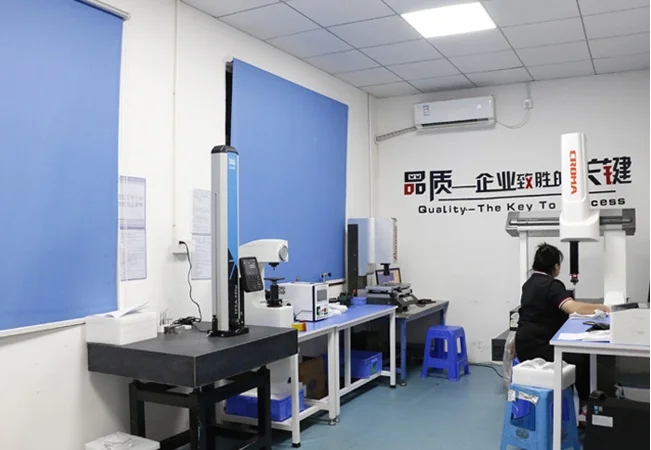
VMT can achieve tolerances down to ±0.005mm on selected 6061 aluminum features, with CMM inspection available to verify critical dimensions. The tolerance achievable on your part depends on its geometry, wall thickness, feature size, and machining requirements, so VMT reviews these details during DFM to confirm a realistic tolerance before production starts.
8. Does VMT provide material certification for 6061 aluminum parts?
Yes, VMT provides material certification for 6061 aluminum parts on request, including the certified mill test report confirming alloy composition and temper, so you have documented proof the material matches your specification.
9. What’s the minimum order quantity for 6061 CNC machining?
VMT has no minimum order quantity for 6061 aluminum CNC machining, so you can order a single prototype or a full production run without a minimum threshold to meet.
10. Can 6061 aluminum be welded after CNC machining?
Yes, 6061 is readily weldable, which is one reason it’s a common choice for assemblies that combine machined and welded components. That said, welding introduces localized heat that can affect the temper and mechanical properties near the weld area, so parts requiring both machining and welding should have the weld sequence planned early, before final machining, to keep critical tolerances and surface finishes intact.