CNC Aluminum Prototypes: Advantages, Uses, Costs & Alternatives (2026 Guide)
By JunWen Liu | Aug. 10, 2026
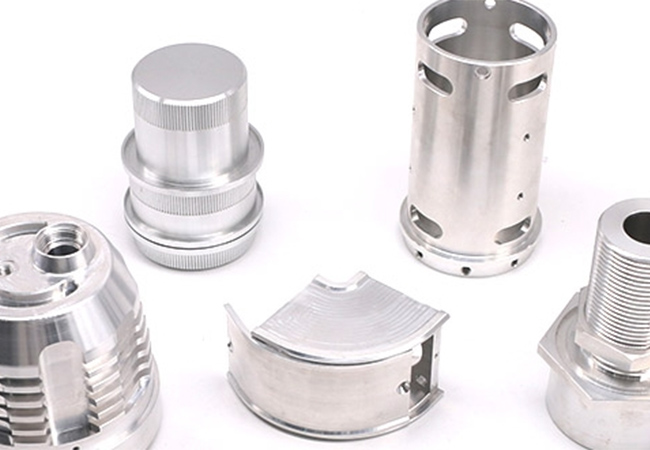
It is understandable that newly designed electronic, automotive, or aerospace products must undergo rigorous testing for quality and optimization before an official launch. This makes functional prototypes both critical and irreplaceable. However, not every material can meet high strength-to-weight ratio, cost-effectiveness, and excellent machinability, and not every manufacturing methods can do the best precision and surface finish. CNC aluminum prototype can be the best suit for the above asks, and then helps you ensure the quality before market launch and mitigate trial-and-error risks prior to mass production. This is why demand for aluminum prototype manufacturing services is surging now. Then, let’s explore the advantages, applications, costs, and alternatives of CNC aluminum prototyping!
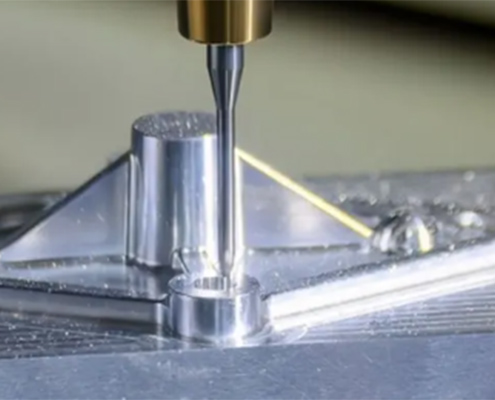
When it comes to aluminum prototype CNC machining, it’s now more often called aluminum rapid CNC prototyping. They are similar, yet the rapid one has a shorter timeline for production because of modern developments in online rapid drawing analysis and communication; AI-assisted programming and design for CNC machines; and intelligent production scheduling and logistics planning.
As for this aluminum prototype manufacturing method, it has the following capabilities:
When designing CNC machined functional prototypes, selecting the right material is critical. Among various metals and engineering plastics, aluminum is often the top choice for functional prototypes. Here is why aluminum stands out:
Lightweight with Versatile Material Grades:
Aluminum offers an ideal strength-to-weight ratio. Different aluminum grades can meet various mechanical requirements for your designs, for example:
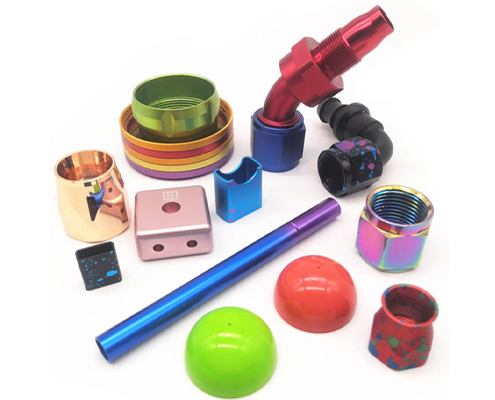
Versatile Surface Finishes and Aesthetics:
Aluminum is exceptionally friendly to post-processing, making it easy to achieve diverse cosmetic colors and surface textures:
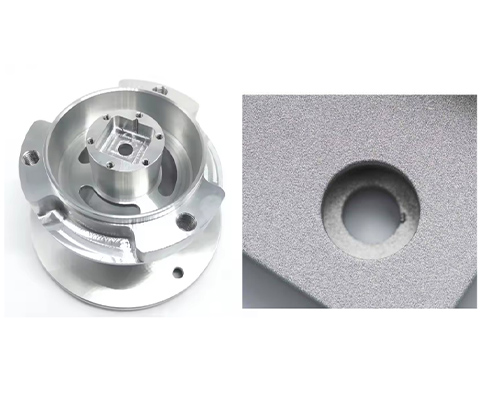
Cost-Effective Material and Machining Advantage:
Aluminum material costs are moderate compared to other engineering metals like stainless steel or titanium. More importantly, aluminum has excellent machinability (easy to cut and drill), which greatly reduces tool wear and machining hours—bringing down the overall production cost.
Natural and Enhanced Corrosion Resistance:
Aluminum naturally forms a thin oxide film when exposed to air, providing good everyday corrosion resistance. When combined with protective coatings or anodizing, it offers even stronger protection against harsh environments.
Excellent Thermal Conductivity:
Aluminum efficiently dissipates heat, making it the preferred material for functional prototypes that require thermal testing, such as electronics enclosures and heatsinks.
Eco-Friendly and Recyclable:
Aluminum is 100% recyclable. Using aluminum for rapid prototyping supports sustainable manufacturing practices and reduces material waste.
CNC aluminum prototyping is widely used across various high-tech and industrial sectors. Whenever a product demands lightweight design, tight tolerances, premium surface finishes, or rapid iteration, aluminum CNC machined prototypes are the go-to solution, and here are a few examples:
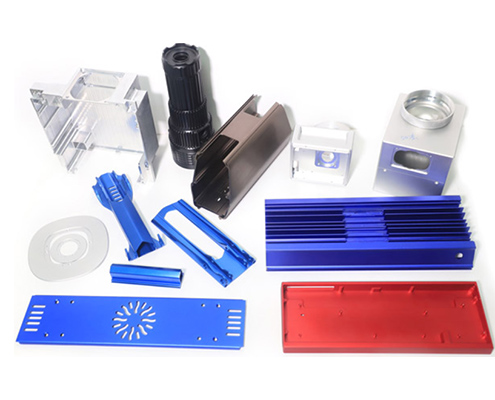
Aluminum rapid CNC prototyping plays a vital role in testing, contributing to product development, speed to market and product reliability.
The table below details the specific engineering tests enabled by CNC aluminum prototypes, the product development risks they mitigate, and the practical value delivered:
| Engineering Test Type | What Is Tested? | Risks Mitigated | Engineering Value |
| 1. Fit & Assembly Testing | Verifies physical dimensions, hole alignments, and clearances between mating parts in a multi-component assembly. | Prevents alignment errors, interference between internal parts, and costly post-production design modifications. | Ensures seamless assembly on the mass production line; reduces factory downtime. |
| 2. Structural & Mechanical Testing | Evaluates tensile strength, load-bearing capacity, fatigue resistance, and stress distribution under real loads. | Avoids structural failure, unexpected deformation, or breakage under operational stress. | Validates safety margins and structural integrity before mass manufacturing. |
| 3. Thermal Management Testing | Measures heat dissipation efficiency, thermal expansion, and airflow performance (e.g., in heatsinks or enclosures). | Prevents electronic overheating, thermal throttling, and component burnout. | Ensures optimal operating temperatures and extends overall product lifespan. |
| 4. Functional & Motion Testing | Tests moving components, hinges, gear trains, and pneumatic/hydraulic sealing under operational conditions. | Prevents mechanical jamming, premature wear, and sealing leaks. | Confirms performance reliability in real-world operating environments. |
| 5. Environmental & Surface Testing | Subjects anodized or coated aluminum prototypes to salt spray, UV exposure, humidity, and abrasion tests. | Prevents premature corrosion, paint peeling, or surface discoloration in target climates. | Guarantees aesthetic durability and brand reputation for end consumers. |
| 6. DFM & Tooling Verification | Tests part geometry against tool access, undercut limits, and machining efficiency. | Avoids unmanufacturable designs, high unit costs. | Optimizes design for mass production, lowering per-unit production costs. |
When compared to alternative prototyping methods, CNC machined aluminum prototypes deliver a better combination of speed, outstanding quality, and cost-efficiency, especially for small batches (1 to 100 units):
For functional testing and rapid design iterations, CNC aluminum prototype machining remains the most cost-effective and reliable choice on the market.
When your engineering demands exceed aluminum’s limitations, these alternatives are more suitable:
Machining an Apple-Grade Aluminum Electronics Enclosure
A high-end consumer electronics client aimed to develop a sleek, premium aluminum enclosure for a next-generation smart home controller. The design required an “Apple-grade” aesthetic—a seamless unibody structure featuring ultra-thin wall sections (0.8 mm), tight dimensional tolerances within ± 0.005 mm, and a flawless matte surface. The primary challenge was preventing thin-wall thermal deformation during high-speed cutting while achieving a zero-defect visual finish.
To meet these demanding specifications, our engineering team utilized 5-axis CNC machining with 6061-T6 aluminum block. We optimized high-speed cutting tool paths and utilized specialized vacuum fixtures to minimize vibration and mechanical stress during milling. Following precision machining, the enclosure underwent a multi-step surface post-processing workflow: fine 150# ceramic bead sandblasting to create a silk-smooth tactile texture, followed by high-precision color anodizing to achieve a uniform, durable matte finish.
The final CNC aluminum prototype met every aesthetic and functional requirement, flawlessly integrating internal PCB mounts, flush-fitting port cutouts, and crisp laser-etched branding. Delivering this prototype in just 7 days enabled the client to conduct crucial thermal dissipation test. After passing the thermal tests, they placed a production order for 500 pieces, which accelerated their official product launch timeline by two months.
Aluminum CNC prototyping from CAD design to a market-ready product requires balancing precision, speed, and cost-efficiency. CNC aluminum prototyping stands out as you are also prioritize mechanical strength, precision, or visual quality. By delivering rapid lead times, dense material integrity, and versatile surface finishes, CNC aluminum prototypes allow you to test with confidence, mitigate high-stakes manufacturing risks, and accelerate the time-to-market. Whether you are validating a lightweight automotive component or perfecting an Apple-grade electronics enclosure, or other testing needs, starting with the right prototyping partner makes all the difference. Ready to bring your designs to life? Upload your drawings today for instant online DFM feedback and a fast quote on your next CNC aluminum prototyping project! [2D Drawings (PDF files), 3D Drawings (IGS/STP/STEP files)]
 WhatsApp/WeChat/Mobile:
+86-15099911516
WhatsApp/WeChat/Mobile:
+86-15099911516 Tel: 86-150-9991-1516
 QQ: 939020977
 E-Mail: service@vimetal.com.cn


When is 3D-printed aluminum better than CNC machining?
A: 3D printing (SLM/DMLS) is advantageous when your design features internal organic channels, complex lattice structures, or hollow geometries that cutting tools cannot physically reach.
What are the limitations of aluminum prototype castings that require CNC prototyping instead?
Castings suffer from long mold lead times, high initial tooling costs, and risks of internal porosity. CNC prototyping doesn’t have so-expensive mold costs, offers superior dimensional precision (±0.005mm to ±0.01mm), and delivers dense, structural integrity in just days.
What is the difference between Aluminum CNC Rapid Prototyping and Traditional CNC Prototyping?
Rapid CNC prototyping leverages instant online DFM feedback, AI-assisted CAM programming, and automated scheduling to cut lead times down to days, whereas traditional CNC involves slow manual quoting, programming, and long queue times.
What future possibilities exist for aluminum CNC prototyping?
Future advancements will integrate AI-driven adaptive machining, real-time automated quality inspection, and the widespread adoption of low-carbon, recycled aluminum alloys to support green manufacturing.
What aluminum grade is best for functional prototypes?
6061 aluminum is the most popular choice for general structural prototypes due to its balanced strength and excellent machinability, while 7075 aluminum is best for ultra-high-strength, aerospace-grade requirements.
What is the typical lead time for CNC aluminum rapid prototypes?
Depending on design complexity and post-processing (such as anodizing or sandblasting), common CNC aluminum prototypes can be delivered in as fast as 5 to 10 business days.
 Written By JunWen Liu
JunWen Liu holds a Mechanical Engineering degree from Esslingen University of Applied Sciences and spent seven years as a CNC Process Engineer, accumulating extensive hands-on experience. She now shares that knowledge through her writing, drawing from real problems she encountered on actual projects. Outside of work, she enjoys hiking and is always chasing the next summit view.

 Aluminum Surface Finishes: 8 Common Traps for CNC parts (And How to Avoid T...