1. What’s the difference between 7075 and 6061 aluminum?
7075 and 6061 are both common aluminum grades, but they suit different priorities.
| Grade | Tensile Strength | Yield Strength | Why Choose It | Best For |
|---|
| 7075 | 560 MPa | 480 MPa | Higher strength-to-weight ratio, better fit for high-stress parts | Aerospace components, high-load brackets, performance parts |
| 6061 | 310 MPa | 276 MPa | Good weldability, more consistent anodizing, lower cost | Structural components, general-purpose parts |
If you’re comparing aluminum 6061 vs 7075 cnc options for a prototype, 7075 is generally the better choice when strength-to-weight ratio is the priority. If your part needs welding or a lower-cost general-purpose material, 6061 may be a better fit.
2. What’s the difference between 7075-T6 and T651?
Both tempers start from the same 7075 alloy and offer nearly identical strength, but T651 goes through an added stress-relief stretching step after heat treatment. This extra step lowers residual stress in the material, which matters most once machining begins — as material is removed, residual stress can cause a part to warp or bow, and T651 is less prone to this than standard T6.
If your 7075-T6 cnc machining aluminum parts project involves thin sections, long parts, or features with tight flatness requirements, T651 is usually the safer starting material. For parts without strict flatness demands, standard T6 works well and is more widely available.
3. What are the advantages of using 7075 for CNC machining?
7075’s high strength-to-weight ratio can help reduce part weight while maintaining the strength needed for high-load applications, which is why it is widely used in aerospace and other weight-sensitive, high-performance applications. Its high strength also makes it suitable for many components exposed to repeated or fluctuating loads, provided the design and load case are properly evaluated.
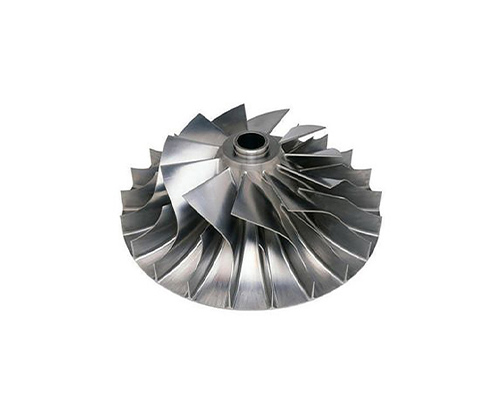
For complex 5 axis cnc 7075 aluminum machining projects, 7075 can be machined to tight tolerances when cutting parameters, tooling, and workholding are properly controlled, so demanding part designs don’t have to compromise on strength.
4. Are there any limitations to using 7075 aluminum?
7075’s high strength comes with a few trade-offs worth knowing before you finalize your material choice.
- Lower elongation than grades like 6061, meaning less ductility and plastic deformation before failure. For parts combining high loads with repeated flexing, a more ductile alloy may be a better fit.
- Weaker corrosion resistance than 6061, so parts exposed to moisture or outdoor conditions may benefit from anodizing, Chem Film, or another protective coating.
- Higher cutting forces than softer grades like 6061, which may require more controlled tooling and cutting parameters and can increase machining time or cost for complex parts.
- Not recommended for conventional welding in many applications, since welding can significantly reduce strength around the weld and heat-affected zone.
VMT can help you weigh these trade-offs during a free DFM review for your 7075 cnc aluminum machining factory project.
5. Can 7075 aluminum be welded?
Conventional welding is generally not recommended for 7075. Welding creates a heat-affected zone where the heat treatment and resulting strength are compromised.
If your design requires welded joints, 6061 is generally a better material choice, or you can use mechanical fasteners, press fits, or adhesive bonding to join 7075 components instead.
6. Is 7075 aluminum corrosion resistant?
7075’s corrosion resistance is lower than more common grades like 6061 or 6063, mainly due to its higher copper and zinc content. In dry indoor environments, this usually isn’t a concern. For parts exposed to moisture, outdoor conditions, or coastal environments, an appropriate surface treatment — such as anodizing, Chem Film, or a protective coating — can improve corrosion protection.
For 7075 parts headed for marine or continuous outdoor exposure, it’s worth discussing whether 7075 with added protection is the right choice, or whether a more corrosion-resistant alloy such as 5052 would better fit the application.
7. Why does anodized color vary more on 7075 than other grades?
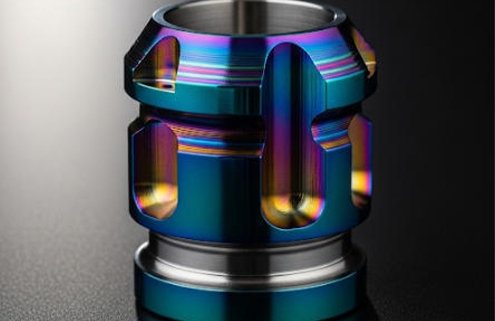
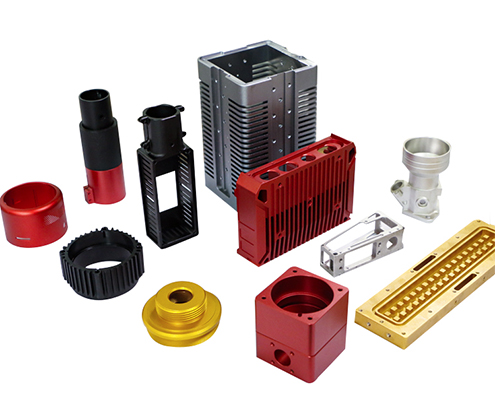
7075’s alloying composition, including its higher zinc and copper content, can make anodized color and surface appearance more sensitive to process variation than 6061. These alloying elements affect how the material responds to the anodizing and dyeing process, which can result in slightly different shades even within the same color specification, especially on darker colors like black.
For cosmetic parts with strict color matching requirements, using material from a single production batch and keeping anodizing parameters consistent can help minimize this variation. If tight color consistency is critical for your 7075 CNC machining project, it’s worth discussing this upfront so expectations are set before production begins.
8. What tolerances can VMT hold when machining 7075 aluminum?
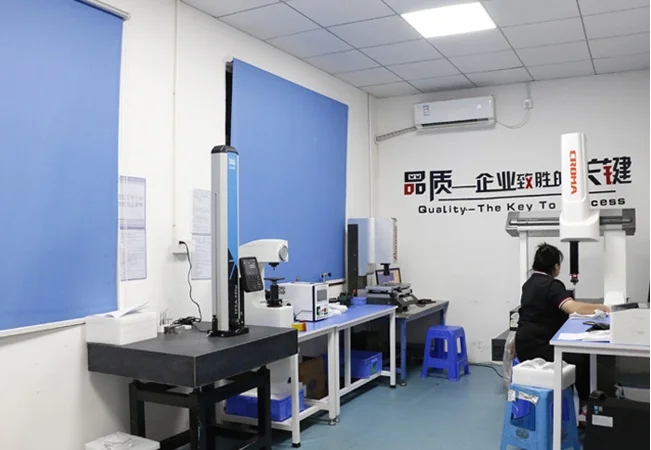
VMT can achieve tolerances down to ±0.005mm on selected 7075 aluminum features, with CMM inspection performed on every order to verify critical dimensions. The tolerance achievable on your part depends on its part geometry, wall thickness, feature complexity, and machining requirements, so VMT reviews these details during a free DFM review to confirm a realistic tolerance before production starts.
9. Does VMT provide material certification for 7075 aluminum parts?
Yes, VMT provides material certification for 7075 aluminum parts on request, including a mill test report (MTR) documenting the alloy composition and temper, providing documented traceability that the material matches your specified alloy and temper.
10. What is the lead time for 7075 CNC machining?
VMT’s typical lead time for 7075 CNC machining is 7-14 days, depending on part complexity, quantity, and surface treatment requirements. Parts requiring hardcoat anodizing, tight color matching, or extensive secondary operations may need additional time.