Aluminum Sheet Metal: How It Contributes to Aluminum Prototyping and CNC Parts
By JunWen Liu | Aug. 15, 2026
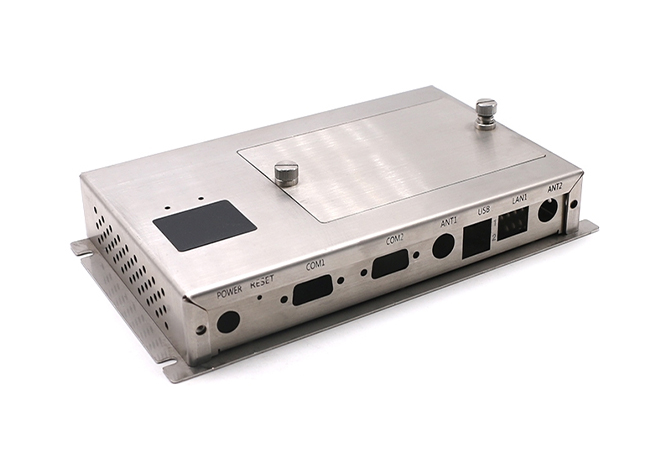

Aluminum sheet metal can be easily bent, stamped, or formed into complex shapes. Compared to machining parts entirely from a solid aluminum block (where vast amounts of material are removed), sheet metal fabrication significantly reduces material waste and material costs.
A prime example of this hybrid approach is in the manufacturing of electronic enclosures: the body is first stamped or bent into its rough geometry, after which high-precision features like threaded holes or tight-tolerance mounting points are added via CNC milling, and critical surfaces are perfected through precision grinding.
Combining the speed and cost-efficiency of sheet metal forming with the tight tolerances of CNC machining creates a powerful synergy for both prototyping and full-scale custom parts production. Packed with practical design tips and a factory’s case study on structural component cost and lead time optimization, this blog will help you master the processes and applications of aluminum sheet metal fabrication.
As it is well-known that aluminum is popular for its lightweight, high strength, corrosion resistance, and ease of processing, etc. Many functional prototypes need these good characteristics to complete testing to advance the product design or quality assurance prior to market launch. For aluminum prototypes, sheet aluminum can bring them:
There are so many grades of aluminum available, and not all of them are created equal when it comes to sheet metal fabrication or CNC machining. Choosing the right alloy depends heavily on your project’s primary needs: whether you prioritize cold bending formability, high-precision milling, strong weldability, or surface finishes.
To help you navigate these options, the table below breaks down the most popular grades and their key performance:
| Grade | Sheet Metal Popularity | Formability (Bending/Stamping) | Machinability (Secondary CNC suitability) | Weldability | Surface Finishing Suitability | Typical Applications |
| 3003 | Very Common | Excellent (Very easy to bend/draw) | Poor (Soft material, tends to stick to tools) | Excellent | Good (Great for painting; anodizing shows slight grey tint) | Heat exchangers, fluid tanks, piping, simple sheet metal covers |
| 5052 | Most Common (Industry Standard) | Superior (High strength with minimal cracking risk) | Fair (Suitable for basic drilling/tapping; not for complex milling) | Excellent | Excellent (Ideal for anodizing and powder coating) | Electronic enclosures, chassis, marine parts, automotive panels |
| 6061 | Very Common | Moderate (Requires larger bend radius to avoid cracking) | Excellent (Ideal for high-precision CNC milling and threading) | Good | Excellent (Provides exceptional color-anodized finishes) | Structural brackets, hybrid sheet-CNC components, robotics, machinery frames |
| 6063 | Moderately Common | Good (Forms well in softer tempers) | Good (Easy to machine and cut) | Excellent | Superior (Best aesthetics for anodizing and architectural finishes) | Heat sinks, architectural trim, decorative enclosures, frames |
| 7075 | Rare (Mostly for billets/plates) | Poor (Very high hardness; prone to cracking when cold-bent) | Excellent (Outstanding precision milling capabilities) | Poor (Not recommended for fusion welding) | Good (Great for hard-coat anodizing) | Aerospace structural parts, high-stress brackets, military components |
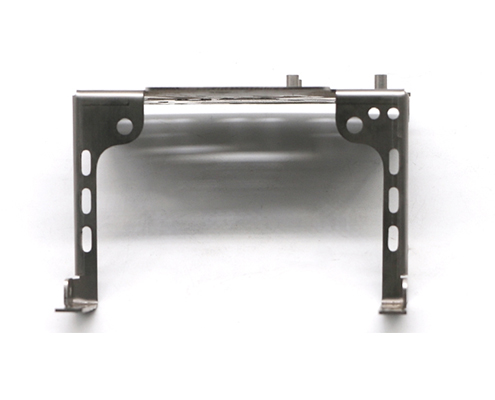
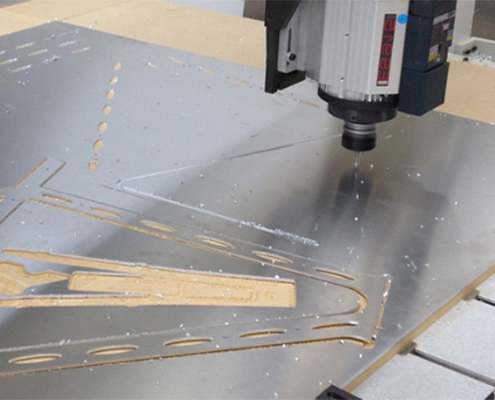
Cutting of metal aluminum sheets is all about achieving exact dimensions and clean contours for flat aluminum parts before assembly or secondary CNC machining:
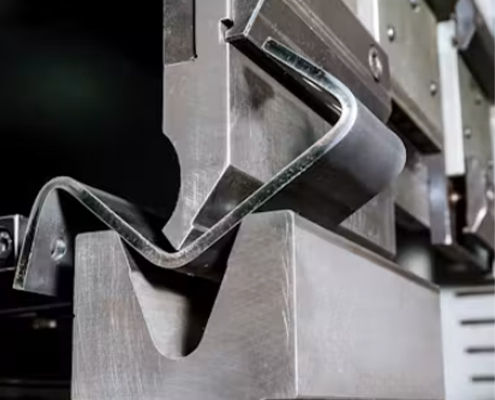
Bending transforms 2D flat blanks into 3D structural shapes (such as housings, brackets, and channels) without the high cost of CNC milling solid blocks to make parts:
To speed up prototype production made by aluminum alloy sheets, keep these simple design rules in mind:
Many functional parts across industries are made by first cutting and bending aluminum sheet metal into 3D shapes, followed by precision CNC machining for key features like tapped holes, tight-tolerance faces, or smooth mating edges. Here are some of the examples:
Cost & Lead Time Optimization for Aluminum Automation Chassis
A leading industrial automation vendor was developing a heavy-duty structural chassis for their new mobile robotic fleet. The original engineering design relied on CNC milling a 6061-T6 aluminum solid block to form the main structural housing. While this solid-machined prototype met all rigidity requirements, the unit cost was unacceptably high due to massive raw material waste(cost) and extended machining cycle times.
When the client approached us, our engineering team recommended a hybrid sheet metal and CNC manufacturing method:
By replacing the CNC-milled chassis with a optimized hybrid sheet metal method, the results are satisfying:
Aluminum sheet metal is a versatile, high-efficiency manufacturing solution that promotes both early design concepts and full-scale production. When combined with precision CNC post-machining for critical features, hybrid aluminum sheet metal design delivers the perfect balance of speed, structural integrity, and tight tolerances. Looking for solution to maximize cost efficiency and accelerate product’s time-to-market with your enclosures, structural frames, or complex hybrid assemblies? Welcome to contact us with drawings to get a free DFM review and quick quote. [ 2D Drawings (PDF files), 3D Drawings (IGS/STP/STEP files)].
 WhatsApp/WeChat/Mobile:
+86-15099911516
WhatsApp/WeChat/Mobile:
+86-15099911516 Tel: 86-150-9991-1516
 QQ: 939020977
 E-Mail: service@vimetal.com.cn


Q1: What is the most common aluminum grade for sheet metal prototyping?
A: Aluminum 5052-H32 is the most widely used grade for pure sheet metal prototyping due to its exceptional formability, high fatigue strength, and excellent corrosion resistance without cracking during tight bends.
Q2: Is CNC machining better than sheet metal fabrication for quick prototypes?
A: It depends on the part’s geometry. Sheet metal fabrication is faster and much more cost-effective for thin-walled structures, hollow enclosures, and large covers. CNC machining is better for solid, high-precision components with complex 3D features and tight tolerances. Often, a hybrid approach (sheet metal forming + CNC post-machining) offers the best speed and precision.
Q3: Can aluminum sheet metal be CNC machined after bending?
A: Yes. In hybrid prototyping, flat sheet metal is pre-cut and bent into shape first, then placed in a CNC mill to machine precise features like tapped threads, counterbores, or critical alignment faces.
Q4: How thin can aluminum sheet metal be for prototyping?
A: Common aluminum sheet thicknesses for prototyping range from 0.5 mm to 3.0 mm (0.020″ to 0.125″). Thinner sheets (under 0.5 mm) can tear during bending, while thicker plates (over 4.0 mm) require much larger bend radii to prevent cracking.
Q5: How do I choose between Aluminum 5052 and 6061 for my prototype?
A: Choose 5052 if the part relies heavily on complex bends, stamping, or deep drawing without cracking. Choose 6061 if the part requires structural strength, precision CNC milling/drilling, or a high-quality color anodized finish.
Q6: What is the minimum bend radius for aluminum sheet metal?
A: The inner bend radius (R) should be equal to or greater than the sheet thickness (T), meaning R ≥ T. For harder alloys like 6061-T6, a larger radius (1.5T to 2T) is recommended to avoid surface cracking.
 Written By JunWen Liu
JunWen Liu holds a Mechanical Engineering degree from Esslingen University of Applied Sciences and spent seven years as a CNC Process Engineer, accumulating extensive hands-on experience. She now shares that knowledge through her writing, drawing from real problems she encountered on actual projects. Outside of work, she enjoys hiking and is always chasing the next summit view.

 Aluminum Grades: Finding the Best Suit for Your Project (2026 Guide)