Robotics Materials: Selecting the Right Materials for Key Robot Components Based on Performance Requirements
By JunWen Liu | Oct. 19, 2026
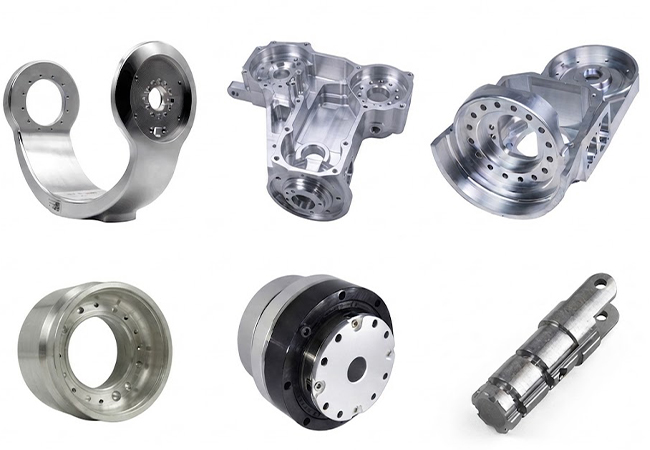

There is a vast array of materials available for manufacturing robotic components, and you are likely already familiar with the most common ones, such as 7075 aluminum for its high strength-to-weight ratio, 316 stainless steel for its corrosion resistance and ease of cleaning, Grade 5 titanium alloy for its biocompatibility, copper alloys for high electrical and thermal conductivity, and engineering plastics like POM for low friction, moisture resistance, and self-lubrication. However, simply understanding a material’s properties does not mean you can immediately design a fully functional robot component (after all, mechanical property handbooks and data sheets for most materials are readily accessible on engineering websites).
The true challenge in material selection for robotics lies in effectively matching properties with a component’s specific function, the unique operating conditions of different robot types, and downstream CNC machining tolerances and surface finishing processes. After all, no one wants a material misstep or overlooked machining characteristic to cause severe residual stress warping in a thin-wall joint housing after cutting, fatigue failure in a drive shaft under high-frequency alternating torque, or anodizing layer tolerance buildups that prevent bearings from press-fitting. These errors lead not only to costly rejections and rework, but also to delays in project development and mass-production schedules.
In this article, we will break down recommended material choices for core components common to most robots, and provide specific material solutions for application-specific parts used in humanoid robots, AMRs/AGVs, and medical robotics. Finally, we will share a real-world case study demonstrating how optimizing material selection and Design for Manufacturability (DFM) analysis helped raise the assembly pass rate of a humanoid knee joint bearing seat from 76.3% to 99.7% while keeping operating noise consistently below 41 dB.
Although humanoid robots on the market place a strong emphasis on strength, precision, and dimensional stability to achieve agile motion control; agricultural robots, industrial arms, and automation equipment prioritize corrosion and wear resistance; and medical robotics lean heavily toward extreme positioning accuracy and biocompatibility, these diverse systems still share many common components.
When designing or selecting materials for your robotic parts, these universal components, including joints and drive assemblies, structural frames and linkages, as well as end-effectors and protective covers, have specific materials that are exceptionally well-suited. Let’s take a look at these recommendations below, which you can evaluate step-by-step for your own material selection:
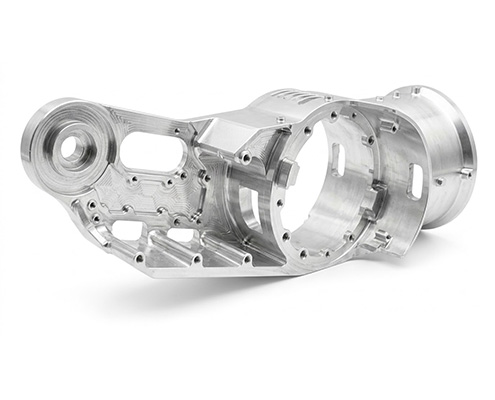
Joints and drive systems are critical motion assemblies in robots, housing precision components such as harmonic flexsplines, planetary gears, drive shafts, and motor bearing mounts. These components need to withstand high continuous torque, repeated reversing stresses, and dynamic impact loads.
However, you may keep the following limitations in mind:
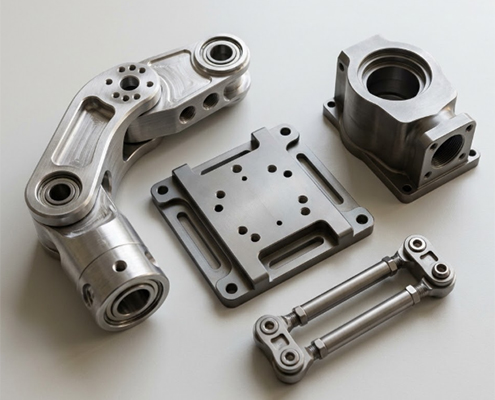
Structural frames and linkages constitute the structure of a robot, including shoulder and elbow links, base mounting plates, and main chassis frames. The overarching engineering priority for these parts is maximizing the strength-to-weight ratio and rigidity to prevent vibration and deflection during rapid start-stop movements.
Limitations:
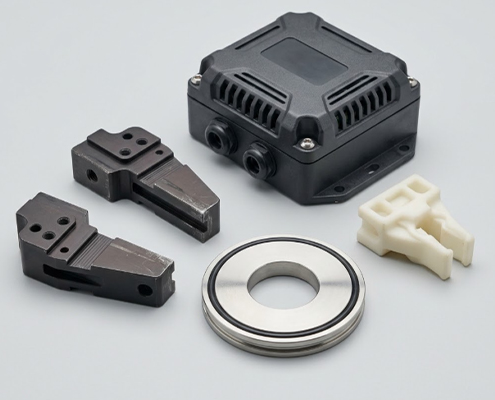
End-of-arm tooling (EOAT) and protective enclosures form the primary physical interfaces connecting the robot with its operating environment and internal electronics. Because their operational roles differ significantly, material selection must individually address requirements for lightweight responsiveness, wear resistance, impact strength, and IP-rated environmental sealing:
Gripper Jaws and EOAT Tooling:
To minimize rotational inertia at the robot wrist, custom gripper jaws and mounting flanges predominantly utilize 6061-T6 aluminum with Type III Hard Anodize, delivering a durable, wear-resistant surface layer while maintaining low mass. For handling delicate workpieces without surface scratching, or where electrical isolation is required, engineering plastics such as POM-H (Delrin) or PEEK 450G serve as excellent lightweight alternatives.
Enclosures and Sensor Mounts:
Controller housings and sensor protection covers must balance structural rigidity, thermal dissipation, and electrostatic discharge (ESD) protection. 6061-T6 aluminum is favored for main control enclosures requiring passive heat sinking, while impact-resistant ABS, PC-ABS, or ESD-safe engineering plastics are widely deployed to reduce structural deadweight while shielding sensitive circuitry.
Sealing Interfaces and IP Protection:
In high IP-rated environments (such as IP67/IP69K), washdown applications, or fluid-exposed operations, 304 and 316 stainless steels are extensively used for precision sealing flanges, O-ring groove interfaces, and corrosion-resistant cover plates. This ensures uniform elastomeric seal compression (e.g., NBR or Viton) without suffering chemical degradation.
Noting:
Below is a summary table comparing the key material options, properties, typical applications, and manufacturing trade-offs for universal robotic components:
| Component Category | Recommended Materials | Key Properties | Robotic Applications | Manufacturing and Performance Limitations |
| Joints and Drive Systems | 4140 / 4340 Alloy Steel | High fatigue strength, extreme torsional and shear resistance | Harmonic flexsplines, planetary gears, dynamic drive shafts | High tool wear during CNC milling/hobbing; requires heat treatment and surface coating to prevent corrosion. |
| 17-4PH Stainless Steel | Excellent yield strength, high hardness post-aging, good corrosion resistance | Precision gearboxes, zero-backlash flexsplines | Higher material and machining costs; requires controlled thermal processing. | |
| C36000 Brass / POM / PEEK | Low friction coefficient, self-lubricating, wear-resistant | Bushings, guided interfaces, low-load gear sets | Lower load capacity than metals; unreinforced plastics can suffer creep under heavy continuous radial loads. | |
| Structural Frames and Links | 7075-T6 Aluminum | High strength-to-weight ratio, excellent stiffness-to-mass balance | Robotic arm links, joint connectors, structural frames | Poor weldability and low corrosion resistance without surface anodizing; susceptible to stress corrosion. |
| 6061-T6 Aluminum | Good machinability, high thermal conductivity, easy to weld | Base mounting plates, structural frames, heat-dissipating shells | Lower yield strength compared to 7075; soft surface prone to scratching without anodizing. | |
| Carbon Fiber Composite | Ultra-high bending rigidity, minimal mass and inertia | High-speed pick-and-place arms, legged robot limbs | High raw material cost; risk of delamination and tool wear during secondary drilling/machining. | |
| Ductile Iron (QT450/QT500) | Superior vibration damping, high compressive strength | Heavy-duty industrial robot bases, fixed machinery frames | High weight restricts use strictly to stationary base assemblies; vulnerable to rust if untreated. | |
| End-Effectors and Enclosures | 6061-T6 (Hard Anodized) | Low inertia, high surface wear resistance | Custom gripper jaws, tooling flanges, sensor brackets | Hard anodizing (Type III) adds 25–50µm coating thickness, requiring dimensional compensation for tight tolerances. |
| POM / PEEK 450G | Non-marring surface, electrical insulation, lightweight | Delicates-handling grippers, insulating sensor mounts | Standard grades accumulate static charge (requires ESD-safe grades for electronics handling). | |
| 304 / 316L Stainless Steel | Excellent corrosion resistance, hygienic and washdown-compatible | Surgical end-effectors, food-grade grippers, sealed covers | Higher density adds wrist payload mass; 316L is more challenging to machine than aluminum. |
The material options featured below cover the most common specialized robotic components. For other custom parts or components from other robotic type not covered in this section, you can consult our team at any time.

Thin-Wall Joint Housings:
Joint housings in humanoid robots typically feature ultra-thin walls (often between 0.8 mm and 1.5 mm), demanding extreme lightweighting within tightly constrained volumes while rapidly dissipating high heat generated by dense joint motors. 7075-T6 aluminum alloy is the top choice for load-bearing thin-wall housings due to its exceptional strength-to-weight ratio.
Where active thermal management is prioritized, 6061-T6 aluminum, often designed with integrated cooling fins, is preferred for its higher thermal conductivity. For non-structural protective covers, PEEK or PC (Polycarbonate) engineering plastics are widely used to further minimize cantilever inertia.
Load-Bearing Chassis Frames:
AMR and AGV mobile bases need to continuously support static payloads ranging from hundreds of kilograms to several tons while withstanding dynamic road impacts during operation. Q235 or Q345 structural steel sheet metal fabrications deliver outstanding resistance to bending deformation and excellent cost-efficiency for heavy-duty applications.
For lightweight AMRs focused on maximizing battery life and rapid acceleration, 5052 or 6061 heavy-gauge aluminum plates are widely specified for robotics and automation CNC machining and structural assembly.
Sensor and Control Enclosures:
Protective covers for navigation LIDARs, optical sensors, and main controllers must withstand everyday physical bumps while offering flame retardancy and Electrostatic Discharge (ESD) protection to prevent static build-up from interfering with sensitive electronics.
ESD-safe ABS or PC-ABS alloys represent the benchmark material for these non-structural housings, combining impact toughness with effective electromagnetic and static shielding.
Surgical Instrument Wrists and Micro Gears:
Surgical robot end-effectors feature microscopic component dimensions that require extreme yield strength, micron-level positional stability, full biocompatibility, and resistance to repeated autoclave sterilization.
Grade Ti-6Al-4V (Grade 5) titanium alloy is the primary choice due to its high strength and bio-inertness, while 316L stainless steel (with electropolished finishing) is extensively used for micro transmission gears and wrist linkages to guarantee corrosion-free performance in sterile environments.
Direct Contact Shells and Tubing:
Robotic components in cleanrooms and food processing facilities directly interface with food products or operate in dust-free environments, requiring resistance to harsh chemical washdowns with strong acidic or alkaline detergents. 316L stainless steel with an electropolished surface is the gold standard for these parts, as its non-porous finish prevents bacterial growth without risk of coating flaking.
For contact flanges and sliding guides requiring lightweight or low-friction operation, FDA-compliant grades of POM (Delrin) or PTFE provide exceptional chemical resistance and self-lubricating properties.
The table below summarizes the key material choices, performance requirements, and critical considerations for specific-type robotic components:
| Robot Type | Special Component | Key Requirements | Recommended Material | Key Considerations |
| Humanoid Robotics | Thin-Wall Joint Housings | 0.8–1.5mm ultra-thin wall, extreme lightweighting, high strength, rapid heat dissipation | 7075-T6 Aluminum (6061-T6 for high thermal needs; PEEK/PC for non-structural covers) | Assembly Fit Risk: Thin walls warp easily after machining. Specify strict GD&T (flatness/concentricity) to avoid bearing binding during final assembly. |
| Mobile Robotics (AMR / AGV) | Load-Bearing Chassis Frame | Supports hundreds of kg to tons of payload, high resistance to bending deformation and dynamic ground impacts | Q235/Q345 Structural Steel Fabrications (5052/6061 heavy plate aluminum for lightweight frames) | Cost vs. Weight Trade-off: Steel lowers unit cost but reduces battery run-time; aluminum boosts mileage but requires thicker plates to match steel rigidity. |
| Sensor and Control Enclosures | Impact resistance, flame retardancy, ESD protection, shields sensitive electronics | ESD-Safe ABS / PC-ABS Alloy | Signal Reliability: Standard plastics build static that disrupts LIDAR; ensure your BOM specifically requests certified ESD-safe grades. | |
| Surgical and Medical Robotics | Surgical Wrists and Micro Gears | Micron-level precision, extreme yield strength, bio-inertness, withstands repeated autoclave sterilization | Medical-Grade Ti-6Al-4V (Grade 5) Titanium (316L Stainless Steel for micro gears/linkages) | Budget and Compliance Impact: Titanium drives up unit pricing significantly; request full Material Test Reports (MTRs) and electropolishing to ensure sterilization compliance. |
| Cleanroom and Food Robotics | Direct Contact Shells and Tubing | Resistance to harsh acid/alkaline chemical washdowns, zero coating flaking risk, non-porous antibacterial surface | 316L Stainless Steel (Electropolished) (FDA-compliant POM / PTFE for lightweight or sliding parts) | Audit and Flaking Risk: Never use painted/plated metals in food zones (coating chips cause product recalls); ensure plastics carry official FDA compliance docs. |
Optimizing material and DFM analysis for a humanoid joint bearing seat to raise the assembly pass rate to 99.7% and keep operating noise consistently below 41 db.
In high-precision humanoid robotics, joint dynamic response and structural stability rely heavily on the accuracy of internal bearing seats. A leading robotics developer approached us facing a critical manufacturing bottleneck: their integrated knee joint bearing housing was suffering from severe post-machining residual stress deformation, causing a poor initial assembly pass rate of only 76.3%. Furthermore, uneven internal bearing loading led to noticeable gear mesh friction and micro-vibration, resulting in excessive operational noise exceeding 52 dB during high-speed motion tests.
The core challenge stemmed from the component’s complex, thin-walled geometry combined with an improper initial manufacturing process. Originally specified in raw 7075-T6 aluminum without stress-relief protocols, the thin walls (0.9 mm at the narrowest section) warped significantly as internal stresses were released during CNC milling. Additionally, the subsequent Type III Hard Anodizing layer introduced a 30-micron coating thickness buildup that was not properly compensated for in the pre-machining GD&T models. This caused tolerance stack-up, making bearing press-fitting unpredictable and frequently leading to bore binding.
To solve this issue, our engineering team conducted a comprehensive DFM (Design for Manufacturability) overhaul. We retained 7075-T6 aluminum for its superior strength-to-weight ratio but introduced an intermediate rough-machining stress-relief annealing process before final finishing cuts to neutralize internal material tension. Furthermore, we implemented dynamic tool path optimization using low-force high-speed milling (HSM) alongside customized soft-jaw fixtures to prevent structural flexing. Crucially, we adjusted the pre-machining bore dimensions by exactly 32 microns to account for downstream hard anodizing growth, ensuring perfect concentricity and fit after surface treatment.
The result of this integrated material optimization and DFM strategy was immediate and dramatic. Upon using the tailored manufacturing methods, the customer’s knee joint assembly pass rate surged from 76.3% to 99.7%. Additionally, the precise concentricity of the bearing seat restored uniform load distribution across the drivetrain, reducing operational noise to a whisper-quiet 40.8 dB (well below their 41 dB threshold) while accelerating the client’s transition into full pilot production.
Robotics systems comprise numerous components, each with distinct material requirements. Selecting the right materials for different robotic assemblies demands a careful balance between weight, rigidity, thermal management, and precision tolerances. This guide introduces key material recommendations across both universal structural assemblies and application-specific components, ranging from high-torque joint drives to biocompatible surgical tools, to help you optimize performance and mitigate manufacturing risks. Furthermore, by proactively addressing tolerance stack-up, dimensional growth from surface treatments, and process-induced stresses during early design stages, you can leverage your manufacturing partner’s engineering team to eliminate costly design iterations and prevent issues related to assembly alignment, precision, or surface finish.
Looking for an expert manufacturer to help optimize an ultra-thin joint housing for a humanoid prototype, or seeking engineering guidance and custom production solutions for an IP-rated industrial arm? Welcome to contact our engineering team for a free consultation and a comprehensive DFM review.[2D Drawings (PDF files), 3D Drawings (IGS/STP/STEP files)].
 WhatsApp/WeChat/Mobile:
+86-15099911516
 Tel: 86-150-9991-1516
 QQ: 939020977
 E-Mail: service@vimetal.com.cn


How do I determine whether to use 7075-T6 or 6061-T6 aluminum for robotic structural links?
Choose 7075-T6 when high yield strength and fatigue resistance are critical under heavy dynamic loads, and opt for 6061-T6 if your priority is cost efficiency, complex welding, or superior passive thermal dissipation.
What is the lead time for custom precision CNC robotic components?
Typical prototype lead times range from 5 to 10 business days, while full production runs generally take 2 to 4 weeks depending on surface treatment requirements and custom tooling.
How do you handle tolerance stack-up for components requiring Type III Hard Anodizing?
Our engineering team calculates exact plating thickness growth (typically 25–50 microns per side) upfront and incorporates negative offsets into pre-machining CAD models to guarantee tight pin and bearing tolerances post-treatment.
Do you provide full material traceability and compliance certifications for medical or cleanroom robotics?
Yes, we supply complete Material Test Reports (MTRs), lot-traceable raw material mill certs, and official FDA or ISO 10993 compliance documentation upon request for all medical and food-grade components.
What is the best way to prevent static accumulation on plastic sensor housings?
You can specify ESD-safe engineering plastic grades (such as ESD ABS, PEEK-ESD, or POM-ESD), which feature integrated carbon fillers to continuously dissipate static charge and protect sensitive electronics.
What are the most critical components in a robotic system?
While every part plays a role, a robot’s most critical components fall into these core categories:
While the “most important” component ultimately depends on the application, a high-performance robot relies on the perfect synergy of smart control, high-torque actuation, and precise sensing.