Are white hazy marks showing up on your finished HDPE parts?
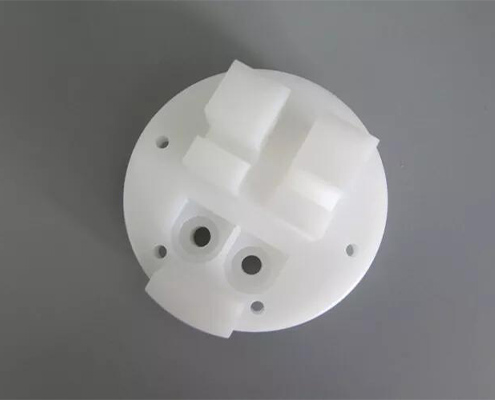
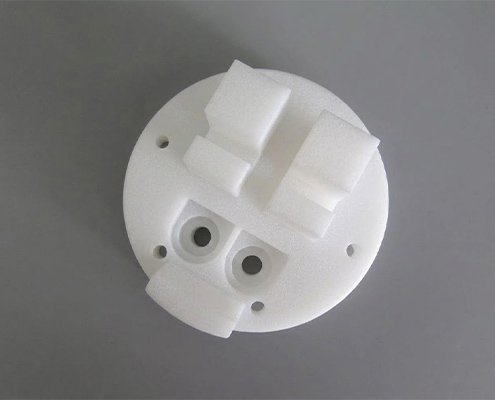
White hazy marks on HDPE surfaces are usually caused by excessive heat or excessive mechanical stress at the cutting point, often from worn tooling or incorrect feed rates. They can indicate localized material stress and may affect cosmetic quality or dimensional consistency in critical applications.
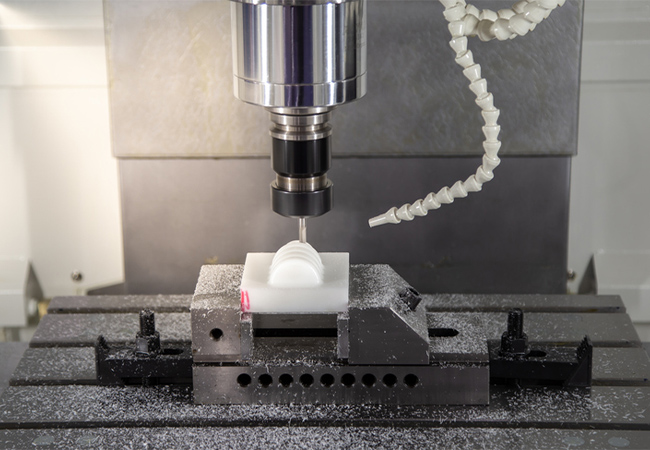
Sharp cutting tools are used and replaced on a preventive schedule to avoid the dragging and heat buildup that triggers stress whitening, so surface consistency is maintained from the first part to the last. Feed rates are set to move the cutter through the material cleanly. Compressed air continuously clears chips from the cutting zone, preventing them from rubbing against the finished surface and leaving marks that could lead to rejection during incoming inspection.
Are stringy burrs on HDPE edges slowing down your assembly process?
HDPE is highly ductile, so it tends to stretch rather than break into clean chips during machining. The result is long stringy burrs hanging off edges and holes that need to be removed before parts can go into assembly. Across production runs, this quickly adds unnecessary labor and cost.
Instead of leaving deburring to your team, we build it into our process. Climb milling on contour passes reduces the dragging effect that produces these burrs, giving edges a cleaner profile straight off the machine. Feed rates are set to encourage clean chip separation. Every part then goes through a dedicated edge inspection and deburring step before packaging, so what you receive goes directly into assembly with little or no additional preparation required.