Food Grade Aluminum Explained: Uses, Grades, Cost, and vs Stainless Steel
By JunWen Liu | Aug. 21, 2026
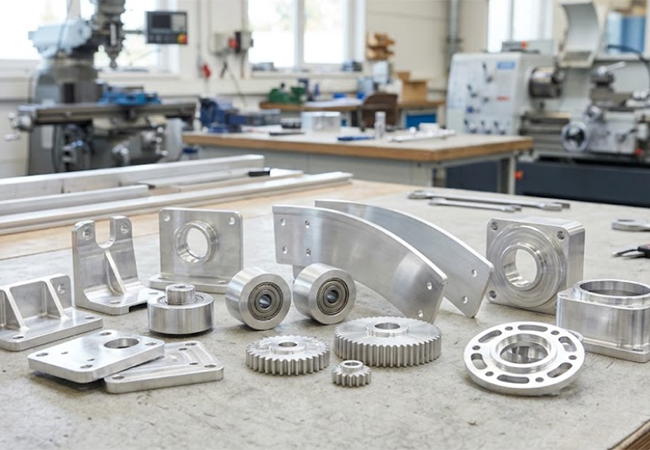

In food engineering, you likely know that stainless steel is generally better suited for direct food contact than aluminum. However, aluminum has its own distinct advantages—it is lightweight (great for equipment panels), highly thermally conductive (ideal for heat transfer), and cost-effective (easier to machine with lower material costs).
Because of this, even though the immediate aluminum parts produced by sheet metal fabrication or CNC machining cannot directly touch food, the concept of “Food Grade Aluminum” was created. It doesn’t refer to the single aluminum, but a complete solution: “The right aluminum alloy + produced part + a specialized food-grade surface treatment (e.g. anodizing/PTFE coating).”
In this article, you will learn about the applications of food-grade aluminum (direct vs. indirect contact), how its production costs compare stainless steel, essential surface treatments, and key regulatory standards.
First, it is important to know that only specific aluminum alloy grades—those meeting strict heavy metal migration limits—can come into direct contact with food, and only after receiving a proper food-grade surface treatment (such as anodizing, hardcoat anodizing, food-grade organic coatings, or PTFE / Teflon coatings).
Everyday examples include baking molds, beverage can linings (which typically feature a food-grade organic coating), and aluminum pressure cookers (coated with PTFE). These are commonly made from alloys like 3003 aluminum (known for excellent formability) and 5052 aluminum (offering superior corrosion resistance).
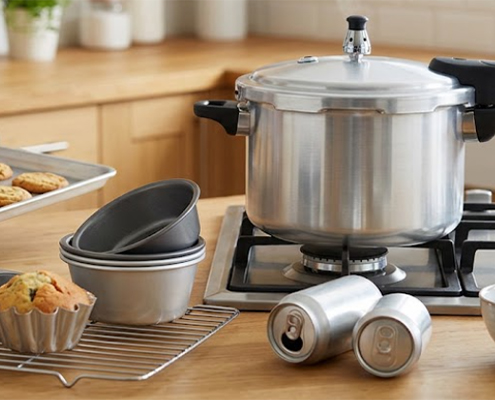
The most common application involves 6061 CNC-machined parts with anodizing or hardcoat anodizing used in food production equipment, such as structural machinery parts, processing platforms, and tray frames.
Additionally, alloys like 5052 aluminum and 5083 aluminum, valued for their strong corrosion resistance and good formability, are widely used for beverage filling equipment components, conveyor side guards, and similar machinery.
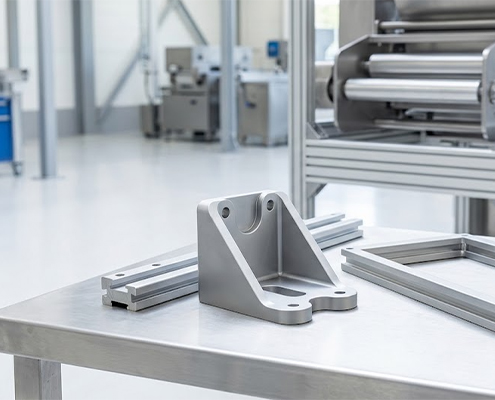
Selecting the right “food-grade” aluminum alloy depends heavily on your fabrication method, required surface treatment, and whether the part will directly or indirectly contact food. Below is a quick comparison of the most common food-safe aluminum grades:
| Aluminum Grade | Manufacturing Method | Surface Treatment | Food Contact or not | Uses Examples |
| 1050 | Sheet Metal Stamping / Deep Drawing | Natural Oxide Film / Anodizing | Direct Contact | Food packaging foils, milk can lids, food container wraps |
| 1100 | Sheet Metal Stamping / Forming | Anodizing / Food-Grade Coating | Direct Contact | Household aluminum foil, food trays, light cookware liners |
| 3003 | Deep Drawing / Sheet Metal Stamping | Anodizing / PTFE Coating | Direct Contact | Baking molds, cookware, commercial baking sheets |
| 3004 | Deep Drawing / Stamping | Food-Grade Organic Coating | Direct Contact | Beverage can bodies, food cans |
| 5052 | Sheet Metal / Bending / Light Machining | Hardcoat Anodizing / Passivation | Direct & Indirect | Pressure cookers, conveyor side guards, food storage tanks |
| 5083 | Sheet Metal / CNC Machining | Hardcoat Anodizing / Passivation | Direct & Indirect | Beverage filling equipment components, marine food transport parts |
| 6061 | Precision CNC Machining, or Structural Fabrication | Hardcoat Anodizing/ Anodizing | Indirect Contact (Direct after Type III Anodizing) | Food processing machinery structural parts, processing platforms, tray frames, heat-sealing dies |
Aluminum alloys like the 2000 series (high copper content) and 7000 series (high zinc content) are highly susceptible to electrochemical corrosion, which can cause heavy metals to leach out. As a result, they are strictly prohibited from being used as direct food-contact materials.
They are also generally avoided for indirect food-contact parts ( because 6061 is much more cost-effective and significantly safer, and indirect food equipment simply doesn’t require the aerospace-grade strength that 2000 and 7000 series alloys provide ) .
To meet food-grade compliance, aluminum must adhere to the following:
For CNC machining conditions, cnc aluminum parts are typically made from alloys like food-grade 6061 and 5052 (indirect contact), which are widely used in food processing equipment. In contrast, stainless steel CNC parts generally utilize austenitic grades such as 304 and 316 for similar applications, offering superior corrosion resistance. Meanwhile, martensitic stainless steels like 420 and 440 are commonly used in commercial kitchen components due to their high hardness.
However, stainless steel CNC parts generally lack the cost advantage offered by food-grade aluminum parts. The comparison table below highlights their respective pros and cons, applications, and cost profiles:
| Comparison | Aluminum (6061 / 5052) | Austenitic Stainless Steel (304 / 316) | Martensitic Stainless Steel (420 / 440) |
| Uses | Food equipment structural frames, high-speed automation parts, heat-sealing dies, tray frames | Food contact pipelines, liquid storage tanks, high-salinity/acidic processing equipment, CIP washdown areas | Commercial kitchen blades, food slicing knives, wear-resistant valve cores, high-hardness components |
| Key Pros | • Lightweight (1/3 weight of steel) • High thermal conductivity • Fast cutting speed with lower machine wear | • Exceptional corrosion/acid resistance • No surface coating required • High structural strength and durability | • high hardness and wear resistance • Able to hold sharp cutting edges |
| Key Cons | • Requires surface treatment (anodizing/PTFE coating) • Susceptible to harsh alkaline CIP cleaners | • High material and machining cost • Poor thermal conductivity compared to aluminum | • Lower corrosion resistance than 304/316 • Requires heat treatment post-machining |
| Raw Material Cost | Low | High (Especially 316 due to Nickel/Molybdenum) | Moderate to High |
| CNC Machining Cost | Low (Faster cutting speeds, minimal tool wear) | High (Work-hardening, slower speeds, high tool wear) | High (Requires annealing, heat treatment, and precision grinding) |
| Overall Cost Profile | Most Cost-Effective (Saves 30%–50% overall compared to stainless steel) | High | High |
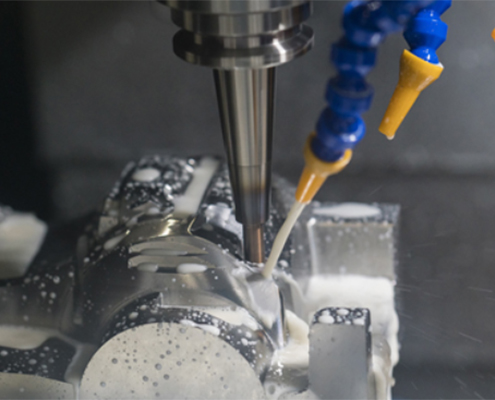
Since raw aluminum cannot directly contact food or withstand harsh washdown environments, surface treatment is the critical bridge that transforms machined or formed aluminum into a compliant, food-safe component. Different surface treatments offer unique performance advantages, targeted applications, and cost profiles depending on how the part is used in a food production environment.
Type II standard anodizing is primarily used for indirect food-contact parts, machine frame covers, mounting brackets, and housing enclosures. It creates a protective aluminum oxide layer between 5 and 25 microns thick, which enhances basic corrosion resistance, prevents surface oxidation, and allows for decorative color coding. This process is generally low to moderate in cost, making it the most economical choice for general aluminum machine components.
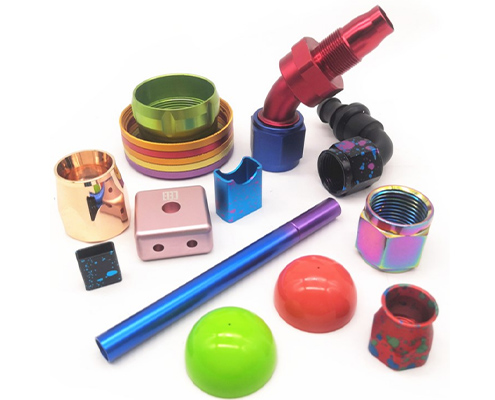
Type III hardcoat anodizing is applied to high-wear indirect contact parts, food processing machinery platforms, robotic sorting arms, and direct food-contact components made from alloys like 6061-T6. It forms a dense, hard oxide layer exceeding 50 microns with a surface hardness up to HRC 60. This layer provides exceptional wear resistance, scratch resistance, and corrosion protection, allowing aluminum parts to withstand mechanical friction and routine cleaning. The cost profile is moderate, which is slightly higher than standard anodizing, but it offers significantly greater functional durability.
Deionized water sealing is a critical final step applied to all anodized aluminum parts intended for food processing equipment. Anodizing naturally leaves microscopic pores on the aluminum surface, and deionized water sealing hydratively closes these micro-pores. This prevents bacterial entrapment, food residue accumulation, and chemical absorption. The cost for this step is very low, as it is routinely included as a standard quality control procedure during food-grade anodizing.
PTFE, commonly known as Teflon, is applied over an anodized aluminum base for heat-sealing dies, food-forming molds, baking trays, and components requiring non-stick properties. This treatment combines the wear resistance of an anodized substrate with the high-temperature tolerance and non-stick release properties of PTFE. It prevents food from sticking during processing while enduring elevated working temperatures. Due to the multi-step process involving anodizing, specialized spraying, and thermal curing, this is a high-cost premium solution.
Chemical passivation is commonly used on 5052, 5083, and 6061 aluminum structural parts, conveyor side guards, and machinery frames operating in humid environments. It utilizes a non-chromate chemical solution to form a thin, transparent passive oxide film on the aluminum surface. This process improves corrosion resistance against moisture and mild cleaning agents without altering the dimensional tolerances or visual appearance of the part. The cost profile is very low because it is a fast and simple chemical dip process.
Food-grade organic coatings are used for beverage can interiors, or food storage container lids. This method applies a food-safe epoxy, polyester, or polyurethane layer to build a physical barrier between the aluminum base metal and acidic or salty liquids. The cost profile is low to moderate for mass-produced stamped parts, though it can run slightly higher for complex three-dimensional CNC geometries.
When you source food-grade aluminum parts, a qualified CNC manufacturing partner will follow strict quality control and verification protocols at every stage of production:
A reputable factory starts by verifying raw materials before machining begins. Your manufacturer will source aluminum from certified mills and provide a Mill Test Certificate (EN 10204 3.1) for every batch of alloys like 6061-T6 or 5052. This ensures that trace heavy metal impurities, such as lead, cadmium, and mercury, remain well within legal limits.
To ensure your parts pass regulatory audits, a qualified factory builds compliance into their production process. They manufacture parts to meet FDA standards (such as FDA 21 CFR 175.300 for coatings) and European regulations (EU 1935/2004), guaranteeing that specific migration limits (SML) are met.
To prevent bacterial growth and ensure easy cleaning on your equipment, a reliable machinist will carefully control cutting parameters and tool wear. They use profilometers to verify that machined surfaces achieve a finish of Ra 0.8 microns (32 microinches) or smoother.
Use eddy-current testing to confirm specified anodizing film thickness (e.g., Type III Hardcoat at 25–50+ microns) and perform seal-quality testing to ensure deionized water sealing has closed all microscopic pores.
The machined components undergo multi-stage ultrasonic degreasing using non-toxic, food-safe detergents. Final inspection ensures your parts arrive completely clean, dry, burr-free, and ready for immediate assembly in food production. environment.
Lightweighting Motion Components for High-Speed Food Sorting Machinery
A manufacturer of high-speed primary packaging equipment was designing the main kinematic link arms and end-effector mount plates for an automated pick-and-place delta robot. Because the end-effector grippers directly handle raw frozen pastries, the client used 304 stainless steel for the entire arm assembly. However, the heavy moving mass of the stainless steel links severely restricted the robot’s acceleration, limiting line throughput to 85 picks per minute and causing excessive vibration that accelerated wear on the drive gearboxes.
To optimize dynamic performance without compromising food safety, our engineering team helped the client implement a smart hybrid design. The small suction tips in direct contact with food remained 316L stainless steel, while the heavy, high-inertia moving link arms were redesigned for CNC-machined 6061-T6 aluminum. To protect the aluminum arms from daily harsh washdowns (chlorinated alkaline CIP foaming) and indirect splatter, the parts underwent Type III Hardcoat Anodizing (50 µm thickness) with deionized water hot-sealing, achieving a surface finish of Ra 0.6 µm for easy sanitization.
By swapping the structural motion arms to hard-anodized aluminum, the total moving mass of the arm assembly was reduced by 62%. This reduction in inertia allowed the robot to increase its speed from 85 to 140 picks per minute (a 64% boost in line throughput) while reducing gearbox operating temperatures and thermal stress on the motors. [ Explore more about robotic and automation CNC machining ].
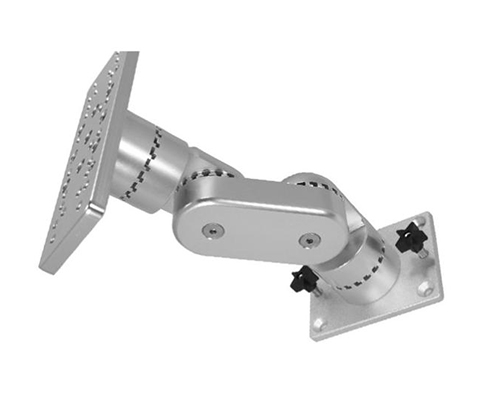
Food-grade aluminum is a comprehensive engineering approach that combines compliant alloy selection (such as 1050, 3003, 5052, or 6061), precision manufacturing, and dedicated food-safe surface treatments. While stainless steel remains the traditional choice for highly acidic, high-salinity, or harsh CIP washdown environments, food-grade aluminum offers an unmatched balance of lightweight efficiency, superior thermal conductivity, and cost savings. Looking for a partner that enforces strict material traceability, precision surface roughness control (Ra < 0.8 µm), and verified post-processing quality? Welcome to contact us for your food-grade aluminum cnc parts projects with free DFM review and quick quote within 24 hours. [2D Drawings (PDF files), 3D Drawings (IGS/STP/STEP files)].
 WhatsApp/WeChat/Mobile:
+86-15099911516
WhatsApp/WeChat/Mobile:
+86-15099911516 Tel: 86-150-9991-1516
 QQ: 939020977
 E-Mail: service@vimetal.com.cn


Is there food grade aluminum?
Yes, food-grade aluminum exists, but “food grade” refers to specific compliant alloys combined with specialized, safe surface treatments (like anodizing or food-safe coatings) that prevent raw metal contact with food.
Does aluminum release toxins when heated?
Uncoated or bare aluminum can leach small amounts of metal into food (especially acidic or salty dishes) when heated, which is why food-contact aluminum cookware uses protective anodized layers or non-stick coatings to keep it safe.
Is 6061 aluminum food grade?
Raw 6061 aluminum is not food grade on its own, but once it is CNC-machined and treated with a proper food-safe finish (such as Type III Hardcoat Anodizing with hot water sealing), it is widely certified and used for food equipment parts.
Is anodized aluminum completely safe for direct food contact?
Yes, properly anodized aluminum creates a durable, non-reactive aluminum oxide layer that prevents metal leaching, making it safe for direct food contact and cooking applications.
Why isn’t raw, untreated aluminum recommended for food equipment?
Bare aluminum reacts easily with acidic or alkaline substances, which can cause metal migration into food, alter tastes, and cause surface pitting or corrosion over time.
Why is 6061-T6 aluminum preferred over stainless steel for complex CNC food machinery parts?
6061-T6 cuts significantly faster and causes far less tool wear than 304/316 stainless steel, cutting CNC machining costs by 30% to 50% for complex geometries. In addition, it also has a much better strength-to-weight ratio.
 Written By JunWen Liu
JunWen Liu holds a Mechanical Engineering degree from Esslingen University of Applied Sciences and spent seven years as a CNC Process Engineer, accumulating extensive hands-on experience. She now shares that knowledge through her writing, drawing from real problems she encountered on actual projects. Outside of work, she enjoys hiking and is always chasing the next summit view.


 What is Aircraft Grade Aluminum? Complete Guide to Aerospace Alloys