Materials Used in CNC Prototyping: A Comprehensive Guide
By JunWen Liu | Sept. 09, 2026
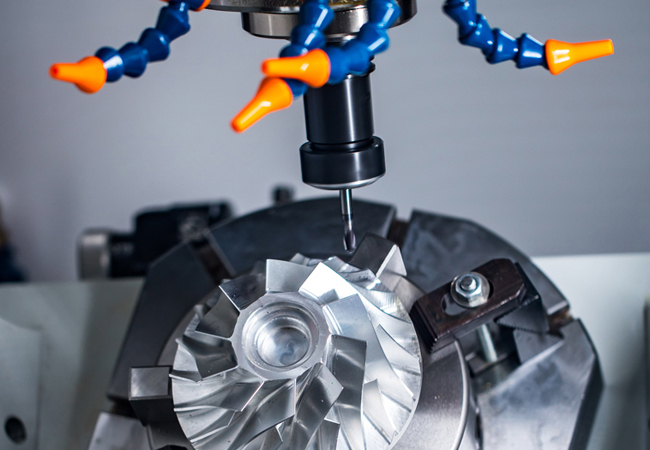

Material selection is a critical step in CNC rapid prototyping. Choosing the right material ensures thorough test performance, such as mechanical, airtightness, or visual testing, while enabling your team to achieve testing and product iteration goals within an optimized budget.
Although countless metal alloys and plastics are available globally, not all are suitable for the prototyping stage. Some materials are cost-prohibitive for early testing; others are so hard or tough that they hamper machinability, leading to longer lead times and inflated costs. Furthermore, when a part is designed for high-volume processes like casting in final production, it is often far more practical to choose a wrought alloy over a cast alloy for its CNC prototype phase.
In this article, we’ll walk you through the most common metals and engineering plastics used in CNC prototyping, highlighting their pros, cons, key applications, engineering tradeoffs, and practical recommendations. At the end, we’ll also share a case study from our shop: how we helped a client iterate their product by temporarily substituting titanium with aluminum during the early prototype phase, enabling functional and visual validation before final titanium prototyping and full-scale production.
Generally speaking, 6061 aluminum is the most widely used CNC prototype material. Unless your project demands aerospace-grade performance (where 7075 aluminum takes over), 6061 is the go-to choice for almost all other industrial products, including electronics enclosures, heat sinks, custom keyboards, game controllers, optical mounts, drone frames, and bicycle pedals. It achieves an optimal balance of lightweight design, high strength, wear resistance, corrosion resistance, and versatile color finishes through surface treatment (such as anodizing).
Furthermore, 6061 aluminum offers excellent machinability with a clean, non-sticky cutting action. Choosing 6061 for your CNC aluminum prototype ensures rapid machining speeds and superior surface finishes. This translates directly to faster lead times and lower machining costs, as well as easier post-processing, further saving your budget and accelerating time-to-market.
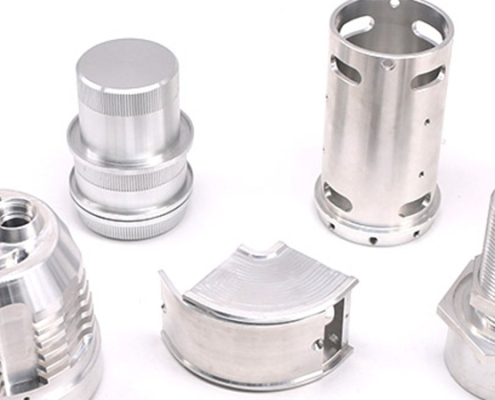
6061 aluminum can temporarily replace more expensive, difficult-to-machine, or mismatched production materials to conduct acceptable prototype validations during early product iterations:
Substituting Titanium Alloys (Ti-6Al-4V):
Substituting Cast Alloys (Cast Aluminum A380/A360):
Pros and Cons Summary (6061 Aluminum)
Pros:
Cons :
Applications Summary (6061 Aluminum)
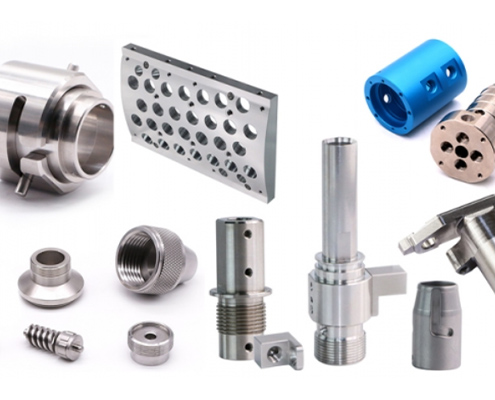
Stainless steel exhibits exceptional corrosion resistance due to its minimum chromium content of 10.5%. Generally, 304 stainless steel is recommended as the cost-effective go-to material for initial functional testing in CNC rapid prototyping.
If initial test results fall short of your expectations, for instance, if higher corrosion resistance or structural strength is required, you can upgrade to higher-performing, though more expensive, alloys such as 316, 316L, or 2205 duplex stainless steel. (In this series, strength, corrosion resistance, and material/machining costs all progressively increase.)
Pros
Cons
Typical Applications
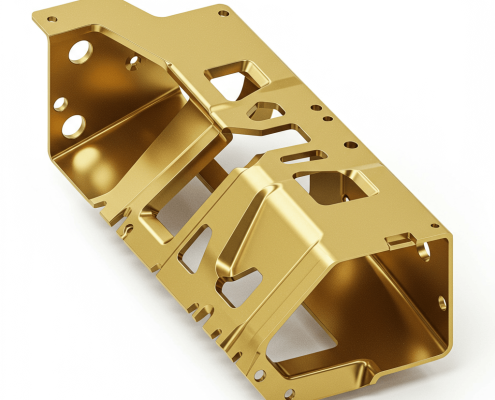
Brass comes in a wide variety of grades, with H62 brass (equivalent to C28000 / CuZn40) being one of the most ideal choices for CNC visual prototyping. It combines low cost and effortless machinability with a beautiful, rich gold-like color.
Aesthetic components, such as decorative hardware, consumer product housings, custom nameplates, and architectural trim, can all leverage H62 brass for high-quality visual prototypes. However, if visual modeling is not your only requirement and your prototype demands higher corrosion resistance, strength, or toughness, other brass grades may be worth considering. That said, H62 brass remains the most cost-effective brass option for early-stage prototype testing.
Pros
Cons
Typical Uses
These three engineering plastics are highly suited for CNC prototype machining with relatively budget-friendly prices, each offering unique performance advantages:
ABS (Acrylonitrile Butadiene Styrene): Exceptionally versatile and ideal for structural validation, outer enclosures, and cost-effective visual models due to its excellent post-processing compatibility (painting, gluing, and plating).
PC (Polycarbonate): Known for its high optical clarity (after polishing) and exceptional impact resistance, making it the top choice for transparent components and high-stress housings.
Nylon (PA6/PA66): Offers superior wear resistance, low friction, and high toughness, making it perfectly suited for functional structural parts subject to sliding friction or repeated dynamic loads.
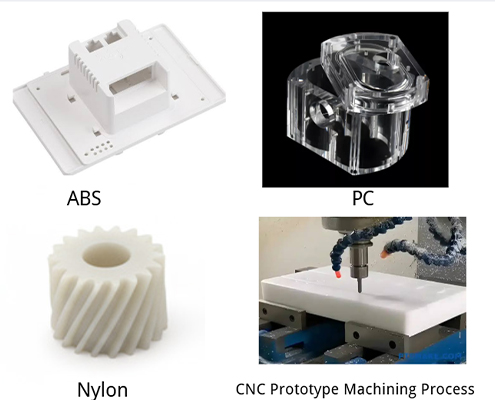
Selecting the Right Plastic Material for Your CNC Prototype
Before choosing from these three common ones, please ask yourself:
The following is a clear table based on the common needs:
| CNC Prototype Material | Primary Focus (Aesthetic vs. Structural/Functional) | Transparency & Optical Properties | Temperature Resistance (HDT @ 0.45 MPa) | Mechanical Load & Wear Capacity | Best For (Key Prototype Applications) |
| ABS | Aesthetic & Structural (Ideal for form-fit validation) | Opaque (Natural cream or black; easily painted/plated) | Moderate (~85°C–100°C) | Moderate impact resistance; general structural loads | Consumer electronics enclosures, dashboard models, early assembly mockups. |
| PC | Aesthetic & High-Functional (Focus on clarity & impact) | Excellent (Transparent to clear when vapor polished) | High (~130°C–140°C) | High impact strength; absorbs severe physical shocks | Lenses, light pipes, transparent covers, protective shields, medical device housings. |
| Nylon (PA6/PA66) | Purely Functional (Focus on wear, fatigue & friction) | Opaque to Semi-Translucent (Off-white or black) | High (~160°C–180°C depending on grade) | Exceptional toughness, fatigue resistance, and low surface friction | Gears, bearings, snap-fit joints, sliding bushings, dynamic structural brackets. |
Compared to the CNC prototyping materials discussed earlier, composite materials, specifically carbon fiber and glass fiber reinforced polymers, are less commonly used. Due to their exceptional strength and wear resistance, which can rival or surpass steel and nylon, they are primarily reserved for high-performance automotive parts and racing drone components.
However, these composite materials lack the cost advantages of the previously mentioned options, the raw stock is expensive and notoriously difficult to machine. In most cases, it is highly recommended to prioritize aluminum alloys or nylon for early-stage prototype functional testing before committing to composites.
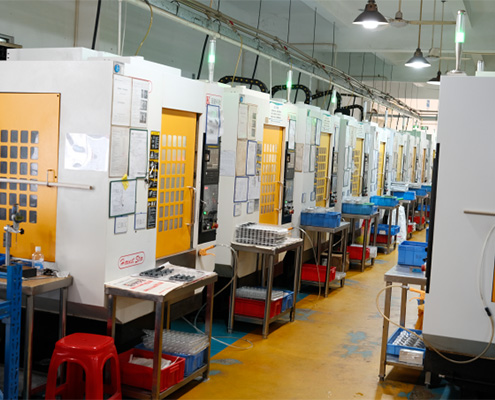
Explore our related guides to learn more about selecting the right processes and managing your production budget efficiently:
Optimizing Medical Fixture Iterations and Costs via Prototype Material Substitution
A medical device client approached our CNC machining service team to prototype a high-precision surgical fixture component. Due to strict requirements for biocompatibility, an exceptionally high strength-to-weight ratio, and high corrosion resistance, the final end-use part called for Grade 5 Titanium (Ti-6Al-4V). However, the client’s design was still in its early iteration phase, with several critical dimensions, mounting tolerances, and ergonomic contours yet to be verified. Manufacturing early-stage prototypes directly out of titanium threatened to inflate the development budget significantly and extend lead times due to high raw material costs and slow milling speeds.
Solution: Substituting Titanium with Aluminum for Early Prototype Testing
To save the client costs and accelerate prototype manufacturing progress, our engineering team recommended considering 6061-T6 aluminum during the initial prototype iteration phase. 6061 aluminum offered sufficient structural rigidity and form-fit accuracy to conduct crucial preliminary evaluations, such as visual mockups, spatial clearance checks, and hand-feel ergonomic assessments, at a fraction of the cost and turn-around time required for titanium.
CNC Prototyping and Design Iterations
The client accepted this proposal. During the subsequent prototyping batches, using 6061 aluminum allowed our CNC machinists to run higher cutting speeds and feed rates, reducing the overall machining cycle time per unit by over 60% compared to estimated titanium machining times. During the initial visual and physical assembly tests, the client identified key areas for design optimization: a clearance issue with an interconnecting sensor module and an uncomfortable grip contour. Following the client’s updated product drawings, our engineers synchronized directly with their design team to modify the CAD model and produced updated physical Grade 5 titanium samples within a week for final, comprehensive validation.
Outcome
Throughout this prototyping journey, because all geometric adjustments were perfected on the aluminum prototypes, the final titanium production phase executed flawlessly with zero material waste or design rework. By substituting titanium with aluminum during the early prototype phase, the client reduced their initial prototype manufacturing costs by 45%. The final Grade 5 titanium prototype samples fully satisfied the client, leading directly to a production batch order of 2,000 units.
Selecting the right CNC prototype material is ultimately about balancing performance requirements, lead times, and overall project costs. By understanding the unique strengths of metals like aluminum, stainless steel, and brass, as well as versatile engineering plastics like ABS, PC, and nylon, you can tailor each iteration to your specific testing stage. Furthermore, leveraging practical engineering practices, such as temporarily substituting costly or hard-to-machine alloys like titanium with aluminum in early phases, allows you to validate fit, form, and ergonomics rapidly without blowing your budget. Ready to bring your product concept to life with optimal speed and cost-efficiency? Upload your drawings today to get an instant quote and expert DFM feedback from our engineering team! [2D Drawings (PDF files), 3D Drawings (IGS/STP/STEP files)].
 WhatsApp/WeChat/Mobile:
+86-15099911516
WhatsApp/WeChat/Mobile:
+86-15099911516 Tel: 86-150-9991-1516
 QQ: 939020977
 E-Mail: service@vimetal.com.cn


What material is used for CNC machining?
CNC machines can process a wide range of materials, including metals like aluminum, stainless steel, and brass, as well as engineering plastics like ABS, PC, and Nylon. The choice depends entirely on your part’s required strength, durability, and budget.
What are some good materials for prototyping?
6061 aluminum is the most popular metal choice due to its high strength, low cost, and fast machining speed. For plastics, ABS is excellent for early-stage visual models and structural testing.
How do I choose between plastic and metal for a CNC prototype?
Choose plastic when the projects needs lightweight, low-cost prototypes for early form-fit testing or visual mockups. Opt for metal when the prototype needs to withstand high mechanical stress, extreme temperatures, or functional testing.
Can I use aluminum to replace titanium or steel during early-stage prototyping?
Yes, substituting tough materials like titanium with 6061 aluminum for early visual and ergonomic tests can reduce machining costs by up to 50% and cut lead times significantly. Once the design is finalized, you can switch back to titanium for final testing.
What is the most cost-effective plastic for CNC prototype machining?
ABS is generally the most economical plastic for CNC prototyping due to its low raw material cost and ease of machining. It is also very easy to post-process with paint, plating, or adhesive bonding.
Why choose CNC machining over 3D printing for prototype manufacturing?
CNC machining gives your prototype identical mechanical properties, tighter tolerances, and superior surface finishes compared to 3D printing. It is ideal for functional validation before full-scale production.


 Rapid Prototyping with 3D Printing: Complete Guide to Technologies, Materials,...