Top 10 Robot Parts & Components Manufacturers in China: The Ultimate Guide for 2026
By JunWen Liu | Updated on Nov. 12, 2026

Many people are concerned about the robust development of AI algorithm since 2026. Power grid construction, devices hosting AI algorithms, and robots with an urgent need for AI algorithms are also drawing lots of attention. This is a promising opportunity for you to enter the robot industry.
But whether you are interested in automation systems or humanoid robots components, you are surely needing reliable and experienced partner manufacturers to bring success to the project. And this is what this article will share with you: 2026 best 10 robot parts manufacturers in the world’s factory China— ranging from core drive systems to robotic arms. Whatever your requirements—CNC precision parts, heavy-duty castings, 3D printing, or robotic welding—explore this list to find your ideal manufacturing partner!
Best Fit for Precision Custom CNC Robot Components & Rapid Prototyping

When it comes to high-precision robotics part manufacturing, VMT CNC Machining Prototyping Factory stands at the forefront. Based in Shenzhen, China, VMT is located for a good reputation for serving 1,000 global clients with custom CNC solutions over 17 years of industry experience.
VMT is renowned for its extreme accuracy, achieving tolerances as tight as ±0.01mm, and the facility is equipped with over 100 advanced 3, 4, and 5-axis CNC milling machines that operate 24/7.
These are the basics VMT can provide you, the other important one is their capability of manufacturing a wide range of custom precision robotics parts.
SPECIALIZED ROBOTIC COMPONENTS THAT THEY CAN PRODUCE FOR YOU
VMT can provide you a comprehensive suite of robot components essential for modern robotics, including:
Different types of robotics require distinct priorities for some components, ranging from extreme structural rigidity in heavy industrial automation to lightweight dexterity in humanoid robotics. VMT supports specialized components across various robotic architectures:
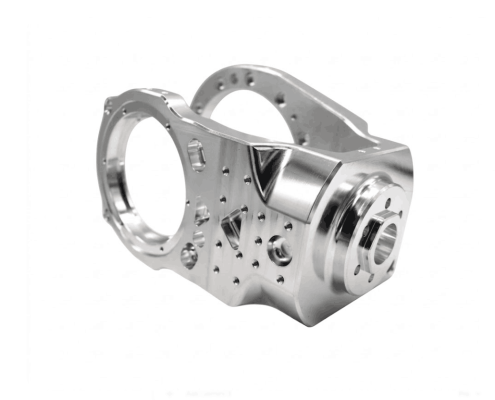
VMT machines the parts that keep robots moving—joints, gears, drive train housings, and structural frames—engineered to ±0.01mm for the torque, weight, and repeatability demands of industrial and humanoid robotics.

If you need a reliable partner for high-precision components like robot chassis, grippers, or actuators, XTJ CNC is an excellent choice. Established in 2005, this ISO 9001:2015 certified manufacturer specializes in precision robotics part manufacturing, scaling effortlessly from rapid prototypes to high-volume production.
WHAT THEY CAN OFFER YOU:
If your project requires a “one-stop” solution from initial design to the mass production of electromechanical products, CSMFG is the partner to trust. Since 2003, they have operated as a premier contract manufacturer, offering turnkey services that simplify the supply chain for complex robotics part manufacturing.
WHAT THEY CAN OFFER YOU:
HLH ModelTech is a powerhouse in the world of rapid prototyping and low-volume manufacturing. If you are in the R&D stage and need to iterate complex robot designs quickly, HLH is your go-to partner. They are known for bridging the gap between a digital concept and a physical prototype with industry-leading speed.
WHAT THEY CAN OFFER YOU:
If your project requires high-precision robotic joints, gearbox housing, or intricate drivetrain components, ZSCNC is a specialist. They focus heavily on subtractive manufacturing, particularly on handling challenging materials like Titanium, Stainless Steel, and aerospace-grade Aluminum.
WHAT THEY CAN OFFER YOU:
Business Focus: Standard Industrial Robot Arms & Automation IntegrationUnlike dedicated CNC machine shops, Alfarobot is primarily an automation equipment and robotic arm manufacturer. Their core business revolves around turnkey robotics rather than machining individual components from custom mechanical drawings.
Business Focus: Standardized Motion Modules & Core Robotic Actuators
RoboCT is an innovative robotics enterprise recognized for standardized, modular mechatronic components. They bridge the gap between complex drive design and application development by delivering off-the-shelf, integrated hardware for autonomous machines and exoskeleton platforms.
If you are looking for a high-precision partner capable of massive annual production, JUNYU Precision is a reliable choice. They specialize in delivering cost-effective, reliable machining solutions that meet strict industry standards for the aerospace, medical, and semiconductor sectors.
Business Focus: Standard Robot Fleet Spare Parts & Replacement AccessoriesKaihan Technology fills a crucial niche in the automation supply chain by manufacturing standard replacement parts and wear-resistant accessories compatible with legacy robotics giants (such as Fanuc, KUKA, ABB, and Yaskawa).
Business Focus: Heavy-Duty Industrial Welding & Automated Production LinesShandong Chenxuan is a comprehensive robotics systems integrator and industrial equipment manufacturer. Their market position is focused on heavy-duty robotic engineering workstations rather than loose component supply.
How VMT Completed an Urgent Prototype Project for a Humanoid Robot Joint Housing in Just 9 Days, Resolving the Assembly and Operational Jamming Issues Previously Encountered by the Client.
“Only four weeks remained before the investor demonstration of our second-generation humanoid robot. However, whenever the joint torque increased to 120 Nm, the gearbox would start to seize. Our previous machining supplier believed the problem was related to the CAD design, while we suspected thin-wall deformation and inadequate heat dissipation. Eventually, we sent the drawings to VMT.” — Mechatronics Director, Client Team
A humanoid robotics startup was developing its next-generation bipedal robot. To reduce overall robot weight while meeting the load-bearing and heat dissipation requirements of the joints, the joint housing featured a 1.0 mm thin-wall structure, internal spiral cooling channels, and a compact design.
The previous two prototype runs failed to meet the requirements. Residual machining stress caused thin-wall deformation, while vibration during deep-cavity machining affected the surface quality of the cooling channels. More importantly, the roundness error of the two bearing bores reached 0.015 mm, causing the gearbox to bind after assembly.
The client needed to resolve these machining issues quickly to keep the subsequent prototype testing on schedule.
Within 24 hours of receiving the drawings, VMT’s engineering team held an online technical meeting with the client and proposed adjustments to the material, structure, and critical machining features.
After machining, the parts required Type III hard anodizing. Since the oxide layer increases surface thickness, it could affect the bearing bore fit dimensions.
Before anodizing, VMT designed dedicated silicone masking fixtures to protect the bearing fits and other critical areas. After treatment, we inspected the critical bore dimensions to ensure that the bearing mounting areas met the drawing requirements while providing the required surface wear resistance.
On Day 8, the first batch of five prototypes completed machining and surface treatment. All parts passed the 0.6 MPa air leak test and full dimensional inspection using a ZEISS coordinate measuring machine (CMM). On Day 9, the samples were dispatched by air freight.
The client’s subsequent assembly and testing results showed:
After successfully passing subsequent fatigue life testing, VMT established a long-term partnership with the client and secured a production order for 10,000 units of this joint housing model.
Off-the-shelf robotic hardware often fail to meet stringent requirements for payload capacity, spatial constraints, and high-dynamic precision. As a result, custom CNC machining has become the standard manufacturing solution for both structural rigidity and micro-level tolerances. Below are the core custom robot components manufactured through multi-axis CNC milling and turning processes:
| Component Category | Specific Robot Parts | Key Machining Requirements & Tolerances |
| Robot Arms & Structural Parts | • Lightweight robotic arm links (Upper/Forearm) • Swivel joints and structural linkages • Main base mounts, robot chassis, and pedestals • Mounting brackets and internal routing channels | High strength-to-weight ratio (optimized via CNC pocketing); critical bearing bore concentricity within ±0.005 mm; strict perpendicularity. |
| Transmission & Drive Housings | • Harmonic drive housings and outer rings • Planetary gearbox casings and output flanges • Servo motor mounts, brackets, and casings • High-precision timing pulleys and custom shafts | Strict positional tolerances; precise concentricity down to ±0.003 mm to prevent gear backlash, vibration, and premature wear during high-speed rotation. |
| End-Effectors & Tooling (EOAT) | • Custom pneumatic & electric gripper fingers/jaws • Robotic tooling fixtures and quick-change adapters • Suction cup mounts and sensor/vision camera brackets | High-mix, low-volume customization; complex 3D contour milling; hard anodized or corrosion-resistant surfaces to withstand continuous cycling. |
Achieving the balance between dynamic speed, payload capacity, and long-term operating durability requires a precise combination of engineering materials, 5-axis machining techniques, and functional surface finishing.
Many robotic arm links and hollow joint shells feature compound angles, cross-drilled internal wiring passages, and tight geometric dimensioning and tolerancing (GD&T). Utilizing simultaneous 5-axis CNC machining allows us to machine deep pockets, undercut profiles, and multi-sided mounting faces in a single setup. This eliminates setup clamping errors, maintaining true positional tolerance within ±0.005 mm.
The robotics industry in 2026 is moving at breakneck speed, fueled by the unprecedented evolution of AI. However, even the most brilliant AI algorithm is only as good as the hardware it inhabits.
Choosing the right manufacturing partner in China is no longer just about finding the lowest price—it’s about finding precision, reliability, and engineering expertise. Whether you are building a specialized industrial gripper or a state-of-the-art humanoid, the “Top 10” manufacturers listed above represent the gold standard of the world’s factory.
Ready to bring your robot to life? Start by reaching out to these experts for a DFM analysis and take the first step toward a successful launch.
Lightweight joints, tight tolerances, or high-torque housings for your robot? Send us your drawing and get expert DFM feedback from our CNC machined robot parts engineers.
 WhatsApp/WeChat/Mobile:
+86-15099911516
 Tel: 86-150-9991-1516
 QQ: 939020977
 E-Mail: service@vimetal.com.cn


How do I ensure Intellectual Property (IP) protection when manufacturing in China?
In 2026, reputable manufacturers like those on our list prioritize IP security. You should always sign a bilingual Non-Disclosure Agreement (NDA) before sharing 3D files. Look for factories with ISO 27001 certification or those that use secure, encrypted servers for client data.
What is the typical lead time for custom CNC robot parts in 2026?
For prototyping, lead times are typically 3 to 7 days. For mass production, depending on the complexity and volume, you should expect 15 to 30 days. Many top-tier factories now offer “Expedited Lanes” for AI startups to meet aggressive launch deadlines.
Can these manufacturers work with advanced materials like Carbon Fiber or PEEK?
Yes. As humanoid and medical robots become more advanced, manufacturers like VMT and XTJ have expanded their capabilities to include high-performance plastics (PEEK, Ultem) and composite materials that offer high strength-to-weight ratios.
How are shipping and logistics handled for international clients?
Most manufacturers offer DDP (Delivered Duty Paid) or DAP (Delivered at Place) shipping via air (DHL/FedEx/UPS) or sea. In 2026, many use AI-driven logistics tracking to provide real-time updates and ensure parts arrive within 3–5 days globally via air express.
Do I need to provide 2D drawings or are 3D files enough?
While 3D files (STEP, IGES) are essential for CNC programming, 2D drawings (PDF) are still highly recommended. They are necessary for indicating specific tolerances, surface finish requirements, and thread details that may not be captured in a 3D model.


 Top 10 Motorcycle Parts Manufacturers in China: 2026 List and Market Guide