Rapid Prototyping with 3D Printing: Complete Guide to Technologies, Materials, and Advantages
By JunWen Liu | Sept. 14, 2026
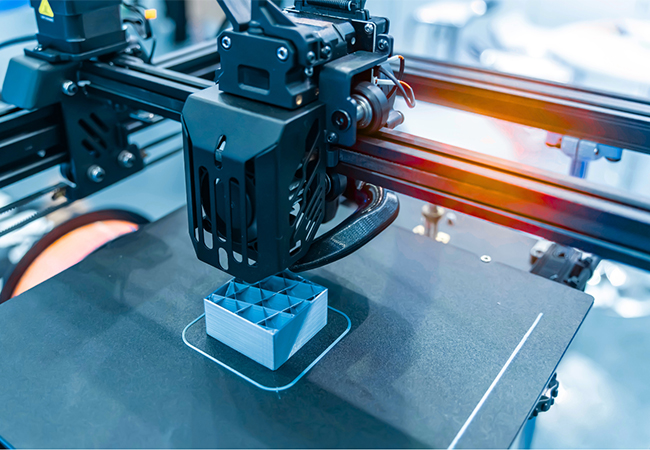

Rapid prototyping with 3D printing leverages additive manufacturing to swiftly transform your concepts into physical prototypes for design verification. Across industries like automotive, mold manufacturing, and electronics, industrial 3D printing makes it possible to take complex CAD models and turn them directly into metal or plastic parts with significantly reduced turnaround times and costs. Whether you need visual mockups or functional prototypes, this technology enables your team to validate designs faster, iterate smoothly, and accelerate product development cost-effectively.
In this guide, you will learn everything about 3D printing rapid prototyping, including core manufacturing processes, material selection, key advantages, applications, a direct comparison with CNC machining, and essential post-processing options. Additionally, at the end of this article, we showcase a case study from our factory demonstrating our rapid prototyping 3d printing service, and how we successfully produced an engine cylinder head water jacket prototype with complex curved and spiral internal cooling channels, perfectly passing demanding thermal performance tests.
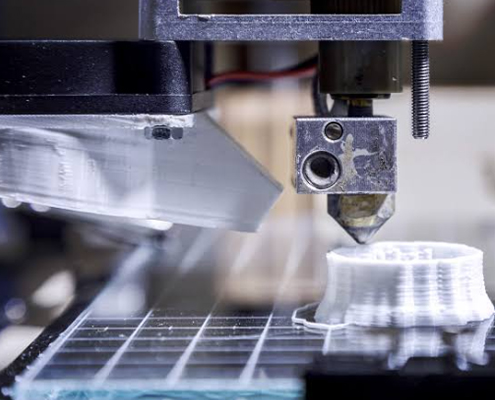
They are not the same although they are often mentioned in parts manufacturing together:
But you can think of 3D printing is one of the most efficient tools used to achieve rapid prototyping. And rapid prototyping can also be accomplished using other techniques like CNC machining, vacuum casting, or sheet metal fabrication.
Rapid prototype 3d printing delivers several distinct advantages that can help your team accelerate product development. Let’s explore its primary benefits:
While traditional manufacturing processes like casting, stamping, or CNC machining can achieve intricate geometries, rapid prototyping with 3D printing renders complex internal channels, topologically optimized lightweight structures, and integrated multi-part designs much simpler and far more cost-effective. Because additive manufacturing builds objects layer-by-layer using materials like thermoplastics, resins, or metal powders, it offers unmatched design flexibility.
For instance, in rapid prototyping 3d printing automotive applications, complex components ideal for this process include: engine cylinder head water jacket prototypes, turbocharger housings, engine bay brackets, seat frame prototypes, suspension control arms, intricate intake manifolds, HVAC air ducts, and race car rear wing internal airflow channels. For these parts, utilizing 3d printer rapid prototyping not only maximizes efficiency but also ensures superior dimensional stability.
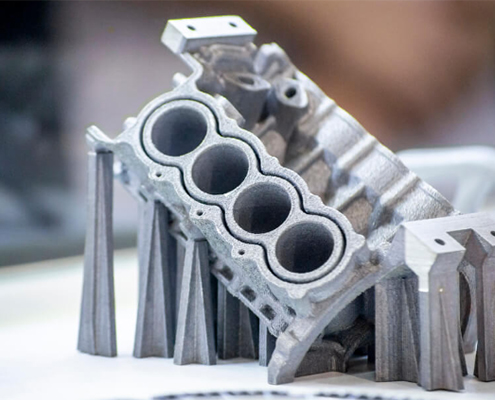
When traditional methods are used for rapid prototyping, large or complex components often require multi-piece fabrication followed by welding or mechanical fastening. 3d rapid prototype printing virtually solves this issue by its “ a layer by a layer printing process” , saving both time and assembly labor costs .
Additionally, updating a prototype in 3d printing is remarkably convenient: you simply submit updated design drawings, allow the engineering team to modify the CAD model, and a new iteration can be printed within hours. Compared to rapid tooling methods like quick-turn injection molding, which still requires temporary molds, rapid prototyping 3d printing offers a distinct advantage in compressing design verification cycles.
A prime example is 3d printing for the rapid prototyping of structural electronics, where electronic components and conductive circuitry are integrated directly inside structural parts, enabling the housing to serve both mechanical and electrical functions. Traditional methods require manufacturing the enclosure separately, fabricating the PCB, and assembling them manually. 3D printing can construct the structural shell and print the circuit traces in a single build. Furthermore, if you need to alter the circuit layout or housing geometry, simply update the CAD model, and a new iteration of the structural electronics prototype can be printed in a matter of hours.
Visual presentation models, often referred to as aesthetic prototypes or concept models, are crucial when your team needs high-fidelity physical samples for client demonstrations, design reviews, market research, or trade shows. 3d printing rapid prototyping produces models with nearly imperceptible layer lines and remarkably smooth surfaces. If an even higher cosmetic finish is required, post-processing options like sanding and polishing can achieve a mirror-like finish. For short-run visual models, pairing 3D rapid prototyping with post-polishing is noticeably faster and more economical than CNC machining combined with manual finishing.
Examples of visual presentation prototypes ideal for 3D printing include concept car steering wheels, wireless earbud charging cases, drone fuselages, pump body models, and transparent display models featuring complex internal features.
Importantly, fine details such as micro-grooves, raised text/logos, and anti-slip knurling textures can be directly and accurately produced through rapid prototyping 3d printing, removing the need for secondary post-processing steps like micro-engraving or chemical etching required by other manufacturing methods.
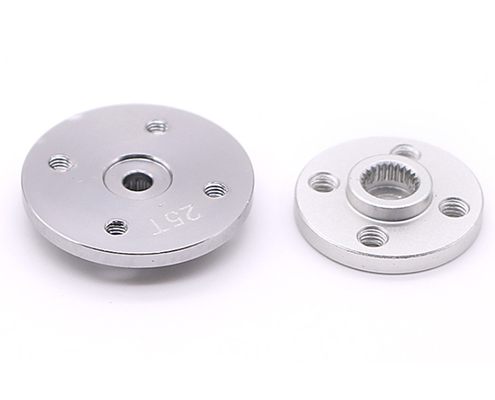
Beyond aesthetic verification, 3d printing in rapid prototyping is equally capable of producing functional testing models. These prototypes can undergo real-world mechanical stress, thermal load, and fluid dynamics testing. However, whether a part passes validation depends on the specific performance requirements. If the prototype fails under extreme loads, alternative methods, such as CNC machining, which preserves the intrinsic structural integrity of solid stock materials—may be necessary.
As additive manufacturing technology advances, modern 3D printing materials can closely simulate the performance characteristics of production plastics, elastomers (rubber-like materials), and high-strength metals. While they may not 100% duplicate the exact mechanical properties of raw molded or forged stock, 3d printing rapid prototyping provides a significantly faster, more flexible, and cost-effective method to perform initial functional testing.
Selecting the right 3D printing technology depends on whether your project prioritizes visual aesthetics, dimensional accuracy, mechanical strength, or heat resistance. Different additive manufacturing processes utilize distinct raw materials and build mechanisms to turn CAD models into physical prototypes.
The table below breaks down how the primary 3D printing technologies work and where they fit into the rapid prototyping workflow:
| Technology | Process Overview | Compatible Materials | Key Strengths | Best Prototyping Applications |
| FDM (Fused Deposition Modeling) | Extrudes heated thermoplastic filaments layer-by-layer through a nozzle. | ABS, PLA, PETG, TPU, Carbon Fiber composites | Low cost, wide material variety, quick turnaround | Early-stage concept models, basic fit checks, jigs and fixtures |
| SLA (Stereolithography) | Cures liquid photopolymer resin layer-by-layer using a UV laser beam. | Standard resins, Tough/ABS-like, Flexible, Clear, High-temp resins | Exceptional surface finish, high feature accuracy, tight tolerances | Aesthetic presentation models, visual mockups, micro-detailed components |
| SLS (Selective Laser Sintering) | Sinters powdered polymer materials using a high-power laser (no support structures needed). | Nylon (PA12, PA11), TPU, Polypropylene powders | High mechanical strength, complex geometries, self-supporting builds | Functional testing prototypes, snap-fit assemblies, low-volume production parts |
| SLM / DMLS (Selective Laser Melting) | Fully melts metal powder particles layer-by-layer using a high-energy laser. | Aluminum alloys, Stainless steel, Titanium, Inconel, Tool steel | Production-grade density, high thermal and structural resistance | High-stress functional testing, engine components, aerospace and medical prototypes |
Selecting the ideal material is a critical step in rapid prototyping 3d printing. The optimal material choice depends heavily on your project’s primary goal: whether you are building a high-fidelity visual presentation model or a rugged functional prototype built for mechanical stress testing.
Below is a detailed breakdown of how different materials adapt to 3D printing, their cost profiles, typical component applications, and the characteristics of the finished prototypes.
Plastics and elastomers form the foundation of rapid prototyping. They offer excellent versatility across FDM, SLA, and SLS technologies for visual models, ergonomic testing, and functional housings.
Rigid Engineering Plastics (ABS, PC):
Photopolymer Resins:
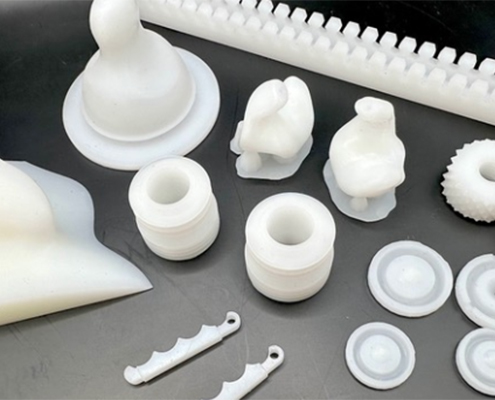
Elastomers and Rubber-Like Materials (TPU, Flexible SLA Resins):
To explore our full material capabilities for plastic rapid prototyping, visit our plastic 3d printing service.
Looking to compare additive manufacturing with other plastic fabrication techniques? Check out our guide on 4 plastic prototyping ways.
When prototypes must withstand mechanical stress, high pressure, or thermal environments, metal 3D printing is essential.
Aluminum Alloys (AlSi10Mg):
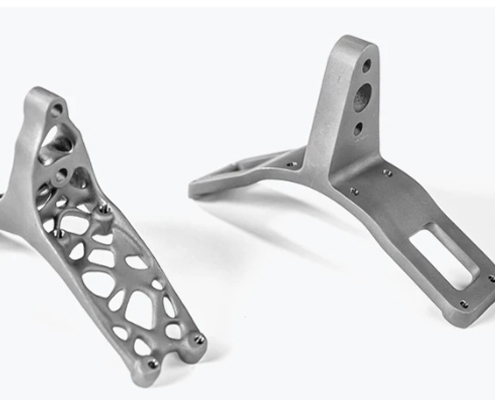
Stainless Steels (316L, 17-4 PH):
Titanium Alloys (Ti6Al4V) and Inconel (718):
Materials that lack thermoplastic melt phases, cannot undergo photopolymerization, or possess extreme reflectivity without proper laser absorption (e.g., pure unalloyed copper, untreated wood, or non-curable silicone rubbers) cannot be directly processed with standard 3D printers.
Avoid costly redesigns and material selection mistakes by reading our detailed breakdown of what materials cannot be used in 3d printing.
Post-processing is the critical final step in rapid prototyping 3d printing that transforms raw printed parts into high-value functional components or exhibition-grade visual models.
About the effects:
Common post-processing techniques, including support removal, sanding, bead blasting, painting, UV coating, and chemical vapor smoothing or electroplating, can enhance surface smoothness, dimensional precision, and aesthetic appeal for 3d printing prototypes. By fine finishing visible layer lines and applying protective coatings, post-processing allows plastic and metal prototypes to closely mimic the appearance and mechanical performance of precision machined parts.
About the cost:
While basic support removal and light sanding add minimal labor cost, advanced surface treatments like mirror polishing, custom color painting, or electroplating will increase overall unit cost and lead time.
To apply, or not apply?
Post-processing is recommended when your prototype requires tight-tolerance fit checks, airtight or watertight sealing, enhanced UV and wear resistance, or premium cosmetic finishes for commercial demonstrations, trade shows, and investor pitches.
When choosing between 3D printing and CNC machining for rapid prototyping, you should balance: tolerance accuracy, surface roughness, material limitations, production cost, and lead time. About 3d printing vs. cnc machining for rapid prototyping, here’s a clear table:
| Features | 3D Printing (Additive Manufacturing) | CNC Machining (Subtractive Manufacturing) |
| Tolerance Accuracy | Moderate (+/- 0.05 mm to +/- 0.2 mm depending on technology) | Ultra-high (+/- 0.005 mm to +/- 0.025 mm) |
| Surface Roughness | As-printed surface is rougher (Ra 3.2 um – 12.5 um); requires post-processing for smooth finish | Superior as-machined finish (Ra 0.8 um – 3.2 um) |
| Material Limitations | Limited to printable filaments, resins, and specific metal powders; anisotropic strength | Virtually unlimited; processes any standard stock metal, rigid plastic, or alloy |
| Production Cost | Lower cost for complex geometries, low-volume prototypes, and multi-version iterations | Lower cost per part for simple geometries and medium-to-high volume runs |
| Lead Time | Very fast (hours to a few days); no tool setting or fixture design required | Fast to moderate; requires CAD/CAM programming, tool setup, and fixturing |
Overall, for project demands ultra-high dimensional precision, load-bearing mechanical integrity, or a better surface finish, CNC machining rapid prototyping is the optimal method. But for design features intricate geometries, topological optimization, or requires rapid multi-version testing at lower early-stage costs, 3D printing is the clear winner.
High-Precision 3D Printing of an Engine Cylinder Head Water Jacket Prototype
A leading automotive manufacturer approached our factory with a manufacturing challenge: producing a functional engine cylinder head water jacket prototype. Traditional casting methods for this component were cost-prohibitive for low-volume testing and required months of tooling lead time. Furthermore, the design featured ultra-complex curved and spiral internal cooling channels designed to maximize heat dissipation, geometries virtually very hard and costly to produce using CNC machining.
To achieve this manufacturing effectively and budget-friendly, our team utilized our advanced rapid prototyping 3d printing service, selecting Direct Metal Laser Sintering (DMLS/SLM) technology paired with high-performance aluminum alloy powder (AlSi10Mg). This process allowed us to print the entire internal cooling network as a single-piece structure directly from the client’s native CAD model. By superseding multi-part assembly, we preserved structural integrity and prevented potential coolant leakage under high working pressures.
Precision post-processing was applied following the build, including automated powder evacuation from the narrow spiral channels, thermal stress relief, and precision CNC finishing on critical mating faces. Dimensional accuracy was verified using 3D laser scanning and internal borescope inspection, confirming that the intricate internal cooling passages perfectly matched the tight geometrical tolerances required by the client’s thermal simulation models.
The completed engine cylinder head water jacket prototype was subjected to rigorous dynamometer and thermal bench performance tests. It passed the thermal exchange and pressure resistance tests flawlessly, achieving optimal heat dissipation. Delivered in just days rather than months, our 3D printing solution compressed the client’s engine development cycle while reducing their rapid prototyping costs.
Rapid prototyping with 3D printing has reshaped modern product development by turning complex digital CAD models into physical, high-performance components in record time. Whether you need high-fidelity visual presentation models or high-strength metal components capable of enduring rigorous functional testing, 3d printing additive manufacturing rapid prototyping offers unprecedented design freedom, cost efficiency, and speed. By selecting the optimal 3D printing process (FDM, SLA, SLS, or SLM), pairing it with the right plastic or metal material, and utilizing precise post-processing techniques, your teams can shorten verification cycles and bring innovative products to market faster than ever before. Ready to accelerate your product development cycle? Upload your drawings today to get an instant quote and expert technical analysis from our rapid prototyping 3D printing service team! [2D Drawings (PDF files), 3D Drawings (IGS/STP/STEP files)].
 WhatsApp/WeChat/Mobile:
+86-15099911516
WhatsApp/WeChat/Mobile:
+86-15099911516 Tel: 86-150-9991-1516
 QQ: 939020977
 E-Mail: service@vimetal.com.cn


What are the primary benefits of professional 3d printing rapid prototyping services?
Professional 3d printing rapid prototyping services provide on-demand access to industrial-grade additive equipment, advanced material options, and engineering support. This allows businesses to produce accurate prototype iterations quickly without the heavy upfront investment in machinery.
How does 3d printing additive manufacturing rapid prototyping speed up product development?
3d printing additive manufacturing rapid prototyping allows engineers to convert 3D CAD models directly into physical components without needing expensive, time-consuming custom tooling. This streamlined workflow enables teams to test, modify, and finalize designs in days.
How is 3d printing rapid prototyping used in the mold industry?
In the 3d printing rapid prototyping mold industry, manufacturers use additive technology to fabricate prototype injection molds and inserts with complex conformal cooling channels. This significantly improves cycle times, reduces thermal warping, and lowers initial tooling risks.
How FDM 3d printing works for rapid prototyping?
FDM (Fused Deposition Modeling) 3D printing works by melting thermoplastic filament and extruding it layer by layer through a heated nozzle onto a build platform. It is a highly cost-effective method for quickly creating basic functional parts, physical mockups, and early-stage design prototypes.


 Complete Guide to Plastic Prototyping: Process Selection, Material Matching,...