ULTEM (PEI) vs PEEK: Key Properties Comparison, Uses, Machining & Design Guide
By JunWen Liu | July 17, 2026
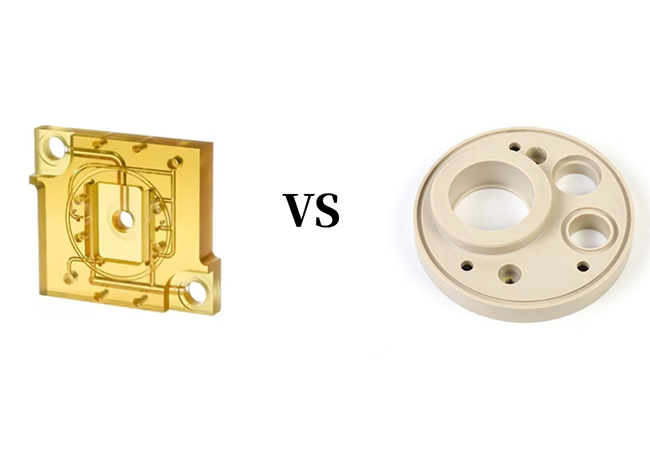

ULTEM (PEI) delivers exceptional dimensional stability, high rigidity, and competitive pricing for high-temperature structural components, while PEEK offers superior overall strength, extreme durability, outstanding chemical resistance, and premium high-low temperature performance. These distinct property gaps lead to massive differences in applications, CNC machining and costs, and supply cycles.
This seems like that: if a high-temperature insulating structural bracket requiring strict dimensional stability is mistakenly manufactured with PEEK, it will bring unnecessary high material costs and overqualified performance. Conversely, using ULTEM for precision medical wear parts or high-load aerospace components will result in insufficient strength and poor durability, causing premature part failure in harsh working conditions.
This article provides a comprehensive guide to ULTEM vs. PEEK, covering core properties and performance, industrial applications, professional CNC machining skills, production costs, sourcing lead times, and alternative high-performance engineering plastics. At the end of the article, we will also share a factory case study on solving tolerance deviation and surface cracking problems for high-precision medical PEEK machined parts.
Before analyzing machining difficulties and application differences, it is essential to clarify the fundamental material characteristics of ULTEM and PEEK:
ULTEM, commercially known as PEI (Polyetherimide), is an amorphous high-performance thermoplastic. It features excellent rigidity, outstanding dimensional stability, inherent flame retardancy, and stable electrical insulation properties. With ultra-low water absorption and excellent anti-creep performance, ULTEM maintains stable physical properties under long-term high-temperature and high-load conditions. Its mature production process, moderate cost and excellent machinability make it a cost-effective alternative to PEEK for high-temperature structural applications. In addition, as a well-known grade, ULTEM 9085 is the most widely used flame-retardant grade for electronics and aerospace uses.
PEEK (Polyether Ether Ketone) is a semi-crystalline super engineering plastic. It boasts high tensile strength, exceptional abrasion resistance,durability, and good anti-impact performance, and full-spectrum chemical resistance. PEEK retains stable mechanical properties in ultra-high and ultra-low temperature environments and features excellent fatigue resistance and self-lubricity, making it the preferred material for high-end precision, harsh-environment industrial and medical parts.
| Comparison Dimension | ULTEM (PEI) Performance | PEEK Performance | Which is Better |
| Continuous Temperature Resistance | 170°C – 200°C | Up to 260°C | PEEK is better |
| Melting Point | ~217°C | ~343°C | PEEK is better |
| Tensile Strength | ~85 – 90 MPa | ~90 – 100 MPa | PEEK is relatively better |
| Wear Resistance | Good, not suitable for high-friction sliding parts | Excellent, ideal for bearings, gears and wear-resistant moving parts | PEEK is definitely the better one |
| Chemical Resistance | Resistant to conventional solvents, poor resistance to strong acid/alkali corrosion | Resistant to almost all acids, alkalis, solvents and oils, only soluble in concentrated strong acid/strong nitric acid | PEEK is better |
| Machinability | Excellent, easy CNC machining and 3D printing, low tool loss | Poor, high tool wear, strict temperature control and high mold requirements | ULTEM is better |
| Cost Performance | High cost-effective, moderate raw material and processing cost | High comprehensive cost, 3-5 times of ULTEM | ULTEM is better |
| Dimensional Stability | Excellent, low warpage and shrinkage | Good, slight shrinkage stress after processing | ULTEM is better |
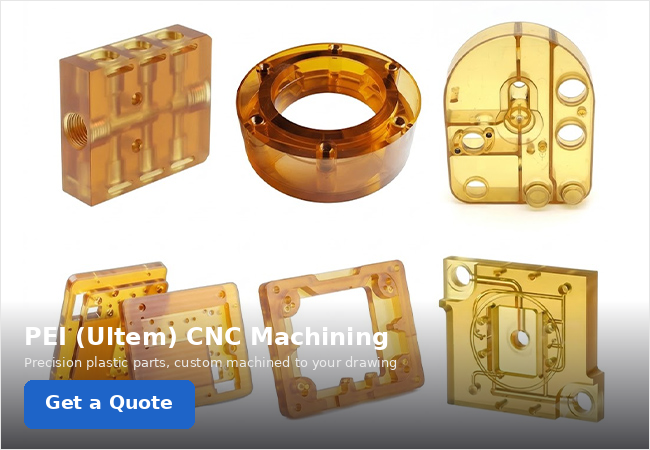
New energy vehicle high-voltage insulating components, battery module fixing brackets, charging pile internal structural parts, and energy storage equipment insulating shells. Relying on its excellent flame retardancy, electrical insulation and dimensional stability, ULTEM adapts to long-term stable operation of new energy equipment under medium temperature and high-voltage environments, and effectively controls production costs for production.
Reusable medical surgical instrument handles, medical equipment insulating shells, high-temperature disinfection-resistant structural parts, and in-vitro diagnostic equipment brackets. Compliant with FDA standards, ULTEM withstands repeated high-temperature steam sterilization without deformation or performance degradation.
Semiconductor wafer carrier fixtures, high-temperature electronic insulating gaskets, precision circuit board support frames, and 5G communication equipment insulating accessories. Its ultra-low water absorption and stable electrical insulation effectively avoid short circuits and dimensional deviation caused by environmental humidity and temperature changes.
Precision instrument housings, automated equipment insulating brackets, low-load precision fixing jigs, and environmental testing equipment structural parts. It balances cost and precision performance, ideal for medium-temperature, low-wear, high-precision industrial scenarios.
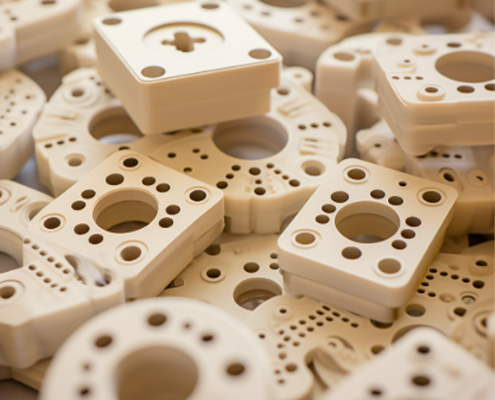
Downhole high-temperature and high-pressure sealing parts, offshore platform corrosion-resistant structural components, chemical pipeline wear-resistant accessories, and high-pressure pump valve core parts. PEEK’s excellent chemical resistance and 260°C high temperature resistance adapt to harsh marine corrosion and underground high-load demand working conditions, which cannot be replaced by ULTEM in peek vs ultem comparison.
Implantable bone repair parts, dental prosthetic components, precision surgical transmission parts, and long-term wearable medical device accessories. Its excellent biocompatibility, fatigue resistance and corrosion resistance meet strict medical long-term service life and safety standards.
Aero-engine high-temperature wear-resistant accessories, precision transmission components, aerospace low-temperature resistant functional parts, and military equipment corrosion-resistant structural parts.
Robot wear-resistant joint bearings, high-speed transmission gears, precision slide rail accessories, and automated production line self-lubricating moving parts. Its ultra-low friction coefficient and high wear resistance reduce equipment maintenance frequency and improve long-term operational stability.
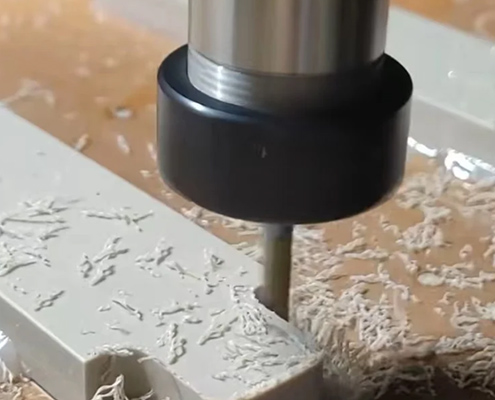
Both ULTEM and PEEK are high-hardness engineering plastics, featuring high melting points, low thermal conductivity, and certain residual processing stress. Their CNC machining processes face strict requirements for speed control, tool selection, stress relief, thin-wall processing, and tolerance control.
ULTEM has a melting point of approximately 217°C, while PEEK reaches 343°C. Although both have high heat resistance, their poor thermal conductivity leads to cutting heat accumulation, resulting in tool burning, surface scorching, and dimensional tolerance deviation.
Machining Solution:
Design Recommendation: Avoid overly deep and narrow closed grooves and blind holes. These structures hinder chip removal and heat dissipation, easily causing local material aging and dimensional inconsistency.
PEEK has high hardness and strong abrasiveness, causing tool wear perhapes; ULTEM is prone to edge burrs and chipping with dull tools. Unreasonable tool selection affects surface finish and assembly accuracy.
Machining Solution:
For both materials, use high-precision double-flute carbide end mills with large chip flutes. For mass PEEK precision machining, adopt diamond-coated (PCD) tools to reduce tool wear and ensure long-term consistent cutting accuracy. Replace tools regularly to avoid burrs and edge chipping caused by dull blades.
Design Recommendation: Set chamfers or rounded transitions for sharp outer corners to eliminate stress concentration and simplify post-processing deburring. Relax non-critical surface finish requirements appropriately to balance machining cost and efficiency.
As an amorphous material, ULTEM has low warpage potentials and stable dimensional accuracy; While as a semi-crystalline material, PEEK has slight shrinkage stress after producing, and asymmetric material removal during CNC processing will unbalance internal stress, causing part warping and bending deformation.
Machining Solution:
PEEK plastics need high-temperature stress-relief annealing pretreatment before processing. Adopt symmetrical double-sided roughing during machining, loosen fixtures regularly to release residual stress, and perform finish milling after stress stabilization. For ULTEM parts, conventional symmetrical processing can basically avoid deformation.
Design Recommendation: Adopt symmetrical structural design for PEEK parts. Avoid large-area single-sided hollowing..
Both materials have high rigidity, suitable for thin-wall precision processing. However, ultra-thin wall structures will deflect under cutting force, resulting in uneven wall thickness and dimensional errors.
Machining Solution:
Adopt climb milling to reduce lateral cutting force. Custom vacuum suction fixtures or backing molds for thin-wall parts to enhance support. Use multi-pass micro-finishing with a single cutting depth controlled below 0.3mm to ensure uniform wall thickness.
Design Recommendation: The minimum wall thickness of ULTEM parts is not less than 1.5mm; the minimum wall thickness of PEEK parts is not less than 2mm. For mandatory thin-wall structures, add transition fillets and reinforcing ribs at the root to improve local rigidity.
PEEK parts have significantly higher comprehensive production costs than ULTEM parts, mainly reflected in raw material cost and machining loss, which is the core advantage of ULTEM in ultem vs peek commercial selection:
Raw Material Cost: PEEK is a high-performance engineering plastic with expensive raw materials, 3–5 times the price of ULTEM. ULTEM has a mature market supply chain, sufficient stock, and stable and moderate prices. The popular grade ULTEM 9085 also has higher cost performance than PEEK in electronic and aerospace interior applications.
Machining Labor & Tool Cost: PEEK has high hardness and strong abrasiveness, leading to fast tool wear and frequent tool replacement. Its slow cutting speed and complex stress relief process also extend machining cycles. Meanwhile, PEEK requires strict post-processing inspection and deburring, increasing manual and time costs. ULTEM features fast machining speed, low tool loss, and simple post-processing, with much lower comprehensive production costs.
Blueprint Review & Process Planning: PEEK parts require professional DFM evaluation for stress deformation and tolerance stability, with longer pre-production preparation time. ULTEM has stable processing performance and simple process planning, shortening pre-production cycle.
Machining Efficiency: ULTEM supports high-speed cutting with short single-piece processing cycles. PEEK requires low-speed stable cutting, multi-stage roughing and stress relief, resulting in low production efficiency.
Post-Processing Cycle: ULTEM finished parts have smooth edges with few burrs, requiring only simple cleaning and inspection. PEEK parts have complex post-processing procedures including fine deburring and dimensional calibration.
Overall, under the same part complexity, ULTEM’s delivery speed is 30%–50% faster than PEEK.
When to Clearly Choose ULTEM (PEI)
When to Clearly Choose PEEK
If ULTEM and PEEK cannot meet your requirements for ultra-high temperature resistance, ultra-low friction, or ultra-high rigidity, you can select the following alternative engineering plastics according to application scenarios.
| Options | Continuous Temperature Range | Rigidity & Tensile Strength | Dimensional Stability | Core Pros & Cons | Common CNC Machined Parts |
| Delrin / POM | -40°C to 90°C | Medium-High (~65-70 MPa) | Excellent | Pros: High surface hardness, excellent self-lubrication, low cost. Cons: Poor high-temperature resistance, not corrosion-resistant. | Low-temperature precision gears, ordinary wear-resistant sliders |
| Nylon 66 | -40°C to 100°C | High (~75-85 MPa) | Fair (humidity sensitive) | Pros: Good toughness and wear resistance. Cons: High water absorption, unstable tolerance in humid environments. | Mechanical transmission parts, heavy-duty support components |
| PTFE | -200°C to 260°C | Low (~20-30 MPa) | Poor (easy to deflect) | Pros: Low friction, excellent corrosion resistance. Cons: Low rigidity, easy creep deformation. | High-temperature corrosion-resistant gaskets, low-load self-lubricating parts |
| PC | -40°C to 120°C | High (~60-70 MPa) | Excellent | Pros: Excellent impact resistance, transparent. Cons: Average wear resistance, prone to stress cracking. | High-strength transparent protective parts, instrument housings |
A medical equipment manufacturer customized a batch of high-precision, wear-resistant guide rail parts using PEEK. In previous processing attempts, the customer encountered some quality issues: the PEEK guide rails exhibited slight warpage and edge chipping post-machining, which resulted in assembly jamming and failed to meet the medical equipment’s strict precision matching standards. The customer turned to our factory for process optimization and reprocessing.
Optimization Solutions
Results
All finished PEEK parts achieved zero warpage and zero chipping, with dimensions fully complying with the drawing tolerances. The one-time assembly qualification rate reached 99.8%, successfully resolving the assembly jamming issue while significantly shortening the project delivery cycle.
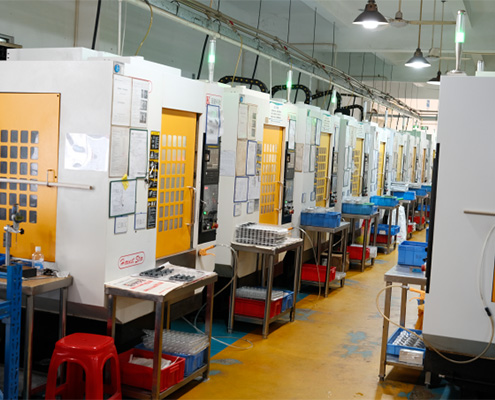
Both ULTEM and PEEK are premium high-performance thermoplastics with their unique application advantages. We can clearly define their positioning: ULTEM is the cost-effective, high-precision, and fast-supply choice for medium-high temperature insulation, structural support, new energy and electronic precision parts. PEEK is the ultimate solution for extreme temperature, high wear, high impact, medical-grade, and harsh industrial environment parts such as petroleum offshore and aerospace core components.
In actual project design and material selection, it is necessary to comprehensively balance performance requirements, dimensional tolerance standards, budget costs, and delivery cycles. Still have questions about material selection, CNC machining tolerance control, thin-wall structural design, or cost optimization for ULTEM and PEEK parts? Feel free to contact our engineering team for free DFM design evaluation and customized CNC machining quotes. [2D Drawings (PDF files), 3D Drawings (IGS/STP/STEP files)]
 WhatsApp/WeChat/Mobile:
+86-15099911516
WhatsApp/WeChat/Mobile:
+86-15099911516 Tel: 86-150-9991-1516
 QQ: 939020977
 E-Mail: service@vimetal.com.cn


ULTEM vs PEEK: Are They Safety and Food/Medical Compliance?
Both materials are non-toxic, inert, and FDA-compliant. ULTEM is suitable for food contact and general medical disinfection scenarios, while medical-grade PEEK has higher biocompatibility. Both will produce slight irritating gas when overheated above 350°C, requiring ventilation during processing.
ULTEM vs PEEK: What are Their CNC Machining Tolerance Range?
ULTEM vs PEEK vs Delrin: What are the Key Differences?
Delrin (POM) has high surface hardness and good self-lubrication but poor high-temperature resistance and chemical stability, suitable only for normal-temperature low-load precision parts. ULTEM and PEEK are high-temperature resistant plastics; ULTEM focuses on dimensional stability and cost performance, while PEEK focuses on demand comprehensive performance, exceeding Delrin in temperature resistance, corrosion resistance, and durability.
Can ULTEM and PEEK be bonded and welded?
Both materials have low surface activity, and ordinary adhesives are difficult to bond firmly. Professional surface activation treatment + special high-temperature adhesive or hot plate welding is required for assembly connection to ensure bonding strength and dimensional stability.
Which is more durable, ULTEM or PEEK?
PEEK has far better wear resistance, impact resistance, and fatigue durability than ULTEM. In high-friction, high-impact, and extreme temperature environments, PEEK’s service life is 3–5 times that of ULTEM.
Is ULTEM 9085 different from PEEK in industrial applications?
Yes, there are obvious application differences between ULTEM 9085 (the most common flame-retardant PEI grade) and PEEK. ULTEM 9085 features UL94 V-0 flame retardancy, excellent electrical insulation and affordable cost, which is specially designed for electronic communication, new energy and aerospace interior decorative structural parts with strict flame retardant requirements. In contrast, PEEK has no advantage in flame retardant and cost performance, but it outperforms ULTEM 9085 in temperature resistance, wear resistance and chemical corrosion resistance, making it suitable for load-bearing and wear-resistant parts in harsh environments.
 Written By JunWen Liu
JunWen Liu holds a Mechanical Engineering degree from Esslingen University of Applied Sciences and spent seven years as a CNC Process Engineer, accumulating extensive hands-on experience. She now shares that knowledge through her writing, drawing from real problems she encountered on actual projects. Outside of work, she enjoys hiking and is always chasing the next summit view.


 HDPE vs. Delrin®: Key Differences and A Comprehensive Comparison for CNC Machined...