HDPE vs. Delrin®: Key Differences and A Comprehensive Comparison for CNC Machined Parts
By JunWen Liu | July 23, 2026
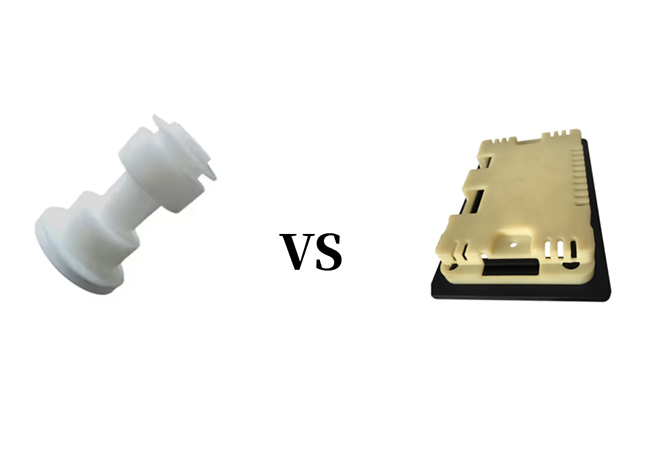

When choosing between HDPE and Delrin® for a CNC machined plastic parts, it is essential to understand the differences between these two materials — and how those differences affect manufacturability, in-service performance, and total cost.
HDPE (high-density polyethylene) is a thermoplastic that is widely used in applications requiring chemical resistance, low moisture absorption, and impact toughness. Delrin®, on the other hand, is the brand name for polyoxymethylene homopolymer (POM-H), an engineering plastic that offers high tensile strength, low coefficient of friction, and excellent dimensional stability. While the two plastics share some overlapping use cases, they occupy different positions in the materials spectrum and are rarely interchangeable.
In this article, we will examine HDPE vs. Delrin® in detail — covering physical properties, chemical resistance, CNC machining, cost difference, and typical applications — so you can make an informed material selection decision for your next machined parts. At the end part, we will also share a case study from our factory on how we solved the custom plastic impeller geometry distorted problem for one of our clients.
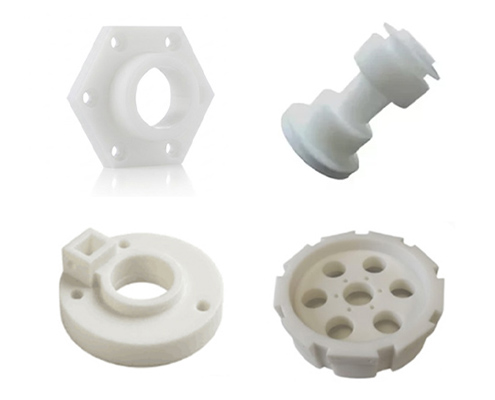
HDPE is a semi-crystalline thermoplastic derived from ethylene monomer, classified within the commodity plastics family alongside LDPE and UHMW. Its density ranges from 0.94 to 0.97 g/cm³, making HDPE one of the lightest engineering plastics available — it floats on water.
Most CNC machined HDPE parts are produced from extruded sheet or extruded rod and bar stock. HDPE resin costs approximately $2 to $4 per kilogram in raw form, which makes it the lowest-cost engineering-grade plastic on the market. It is also FDA-compliant in food-contact grades, can be recycled up to ten times, and is easy to machine with standard tooling.
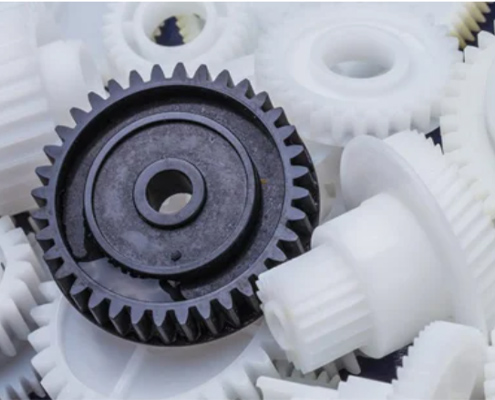
Delrin® is the DuPont trade name for polyoxymethylene homopolymer, abbreviated POM-H. It belongs to the acetal family of engineering thermoplastics.
A clarification is important here. Acetal is the family name; and there are two chemistries inside that family: POM-H (homopolymer, marketed as Delrin®) and POM-C (copolymer, marketed as generic “acetal”).
They are not the same material. POM-H offers higher tensile strength and better fatigue endurance; POM-C offers better resistance to hot water and chlorine.
If the specification calls for “Delrin®,” you are specifying POM-H. If the specification calls for “acetal” without naming a brand, please confirm with your supplier which form is the specifying one.
Delrin® density is 1.42 g/cm³ — approximately 50% denser than HDPE. And the Derlin machined parts can achieve a smoother surface finish, holds tighter tolerances, and absorbs less water than HDPE. Also, Delrin® can be recycled up to five times, somewhat less than HDPE.
The table below compares the core physical properties of HDPE and Delrin® for your quick check :
| Property | HDPE | Delrin® (POM-H) | Notes |
| Density (g/cm³) | 0.94–0.97 | 1.42 | Delrin® is ~50% denser |
| Tensile Strength at Yield (MPa) | 22–31 | 70 | Delrin® is ~2.5x stronger |
| Elongation at Break (%) | 700+ | 25–75 | HDPE is highly ductile |
| Water Absorption (24h) | <0.01% | 0.2–0.25% | HDPE resists water better |
| Continuous Service Temp (°C) | 80 | 90–100 | Delrin® handles more heat |
| Melting Point (°C) | 130 | 175 | Delrin® holds geometry near melt |
The key difference when comparing HDPE vs Delrin mechanical properties is that:
| Property | HDPE | Delrin® |
| Tensile Modulus (GPa) | 0.8–1.0 | 3.1 |
| Compressive Strength (10% deflection, MPa) | ~20 | ~35 |
| Hardness (Rockwell) | R35–50 | M85–90 |
| Coefficient of Friction (dynamic, vs steel) | 0.29 | 0.20 |
| Wear Resistance | Moderate | High |
| Impact Strength (Izod, J/m) | No break | 70–80 |
| Creep Resistance (load over time) | Low | High |
| Dimensional Stability | Low | High |
Here is the their key chemical property differences and comparison:
| Chemical | HDPE | Delrin® |
| Strong Acids (HCl, H₂SO₄) | Excellent | Poor |
| Strong Bases (NaOH) | Excellent | Poor |
| Organic Solvents (alcohols, ketones) | Good | Fair to Good |
| Chlorine / Bleach | Poor | Poor |
| Hot Water (>60°C) | Good | Marginal |
| Hydraulic Fluid / Oils | Fair | Good |
The single most important chemical difference is resistance to strong acids and bases. Delrin® fails rapidly in those environments; HDPE handles them well at room temperature and reasonably at elevated temperatures. But If the operating environment involves aggressive chemistry, HDPE is the only viable choice between the two.
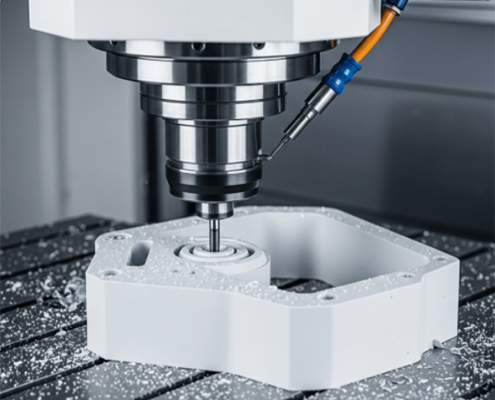
When selecting HDPE vs. Delrin for CNC machining, cost is often a decisive factor. Here is a clear cost breakdown comparing HDPE and Delrin® (POM-H) to help inform your engineering and sourcing decisions.
| Cost Factor | HDPE | Delrin® |
| Raw material ($/kg, rod/bar stock) | $2–4 | $10–15 |
| CNC machining cost factor | 1.0x baseline | 1.2x to 1.4x baseline |
| Scrap rate in production | Low (chips recycle) | Medium |
| Finished cost at 500 units (small part) | $2–6 per unit | $6–14 per unit |
| Finished cost at 5,000 units (small part) | $1.50–4 per unit | $5–10 per unit |
From this clear table, you should notice that:
For HDPE vs. Delrin CNC machining, they behaves differently on the machine bed , which determines real-world cycle times, scrap rates, and part quality.
| Machining Aspect | HDPE | Delrin® |
| Machinability rating | Good | Excellent |
| Tool wear | Low | Medium (slightly abrasive) |
| Chip characteristics | Long, stringy, can wrap | Small chips, sometimes powdery |
| Achievable surface finish | Good (matte) | Very good (semi-gloss) |
| Typical tolerance holding | ±0.10 mm | ±0.05 mm |
| Coolant compatibility | OK with most coolants | Avoid chlorine-containing water-based |
| Clamping caution | Soft — over-tightening causes deformation | Use moderate pressure; soft jaws recommended |
For HDPE:
For Delrin®:
Applications of HDPE
HDPE is typically used for applications requiring greater chemical resistance, low moisture absorption, and impact toughness at low cost:
Applications of Delrin®
Delrin® is typically chosen for applications needing high tensile strength, low friction, and tight tolerances:
Advantages of HDPE:
Limitations of HDPE:
Advantages of Delrin® (POM-H):
Limitations of Delrin® (POM-H):
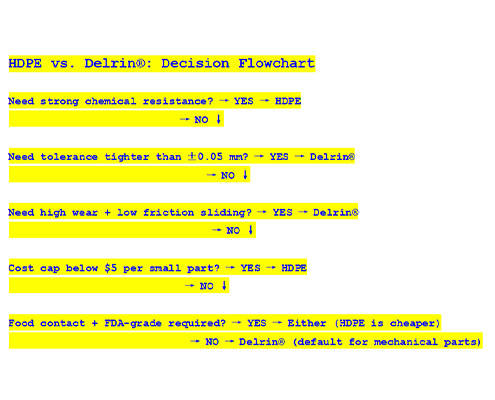
If neither HDPE nor Delrin® fully satisfies your application requirements, several other engineering plastics merit consideration:
Eight design rules that hold for most CNC machined plastic parts in either material:
A chemical dosing pump manufacturer had standardized on Delrin® for all of its small impellers. Most applications performed without issue. The trouble arose in a 30% sulfuric acid service at 60°C.
Delrin® impellers failed within two to three months as the acid attacked the polymer, and the impeller geometry distorted enough to drop the pump’s flow rate below specification. Replacement cost was high because each impeller was a custom machined part.
The fix was a material switch to HDPE. HDPE is not as strong or stiff as Delrin®, but the impeller geometry was within HDPE’s load capacity, and the flow rate was unaffected by the slightly different polymer. HDPE’s resistance to sulfuric acid at 60°C is excellent.
Results after the switch:
A chemical dosing pump manufacturer approached us after their previous supplier’s Delrin® impellers failed in service. Operating in 30% sulfuric acid at 60°C, the impellers suffered chemical attack within 2 to 3 months. The resulting geometric distortion caused flow rate drops below required specifications, leading to pump downtime and frequent replacement costs.
Our engineering team analyzed the application and identified the cause: Delrin® degrades when exposed to strong acids at elevated temperatures, causing the polymer structure to soften and lose shape.
We recommended switching to HDPE for its chemical resistance to the acids.
To ensure performance, we performed structural load calculations based on pump operating pressure and torque, confirming that the existing impeller geometry remained within HDPE’s load capacity despite its lower yield strength and stiffness.
On the production side, to handle HDPE’s softness and low melting point during machining, we used sharp, high-rake cutting tools, optimized spindle speeds to minimize heat buildup, and applied reduced clamping pressure to prevent elastic deformation during fixture holding.
The material switch provided an immediate, long-term solution without compromising hydraulic performance:
HDPE and Delrin® are both CNC-friendly thermoplastics, but they solve different problems and are best applied in different contexts. HDPE wins on cost and chemical resistance; it loses on strength, stiffness, and tolerance holding. Delrin® wins on strength, stiffness, dimensional stability, and sliding wear; it loses on cost and chemical resistance. For mixed-requirement applications where neither HDPE nor Delrin® provides an adequate answer, UHMW, PEEK, or PTFE often fill the gap.
Unsure which plastic material is right for your part, or considering other engineered polymers for your CNC machining project? Contact our engineering team today for free technical support and custom quotes. [2D Drawings (PDF files), 3D Drawings (IGS/STP/STEP files)]
 WhatsApp/WeChat/Mobile:
+86-15099911516
WhatsApp/WeChat/Mobile:
+86-15099911516 Tel: 86-150-9991-1516
 QQ: 939020977
 E-Mail: service@vimetal.com.cn


What is the difference between HDPE and Delrin®?
HDPE is a commodity thermoplastic valued for chemical resistance and low cost. Delrin® is an engineering thermoplastic (POM-H, acetal homopolymer) valued for strength, stiffness, and dimensional stability.
Is Delrin® stronger than HDPE?
Yes. Delrin® has roughly 2.5x the tensile strength of HDPE, 3x the tensile modulus, and significantly better creep resistance.
Can HDPE replace Delrin®?
Yes, in low-load or chemical-resistance applications where Delrin®’s strength and stiffness are not required. Delrin® cannot replace HDPE where strong acids, strong bases, or chlorinated water are present.
Which is cheaper?
HDPE. Raw HDPE costs approximately $2 to $4 per kg. Delrin® costs approximately $10 to $15 per kg. Finished machined parts show HDPE costing roughly one-third to one-half the price of comparable Delrin® parts.
Which is better for CNC machining?
Both materials machine well. HDPE is softer and more forgiving but holds looser tolerances. Delrin® machines to a smoother finish and holds tighter tolerances, but requires more attention to chip control and stress relief.
Is Delrin® FDA approved for food contact?
Yes. Delrin® is available in FDA-compliant grades for food-contact applications. HDPE is also FDA-compliant and is the more common food-contact plastic due to its lower cost.
 Written By JunWen Liu
JunWen Liu holds a Mechanical Engineering degree from Esslingen University of Applied Sciences and spent seven years as a CNC Process Engineer, accumulating extensive hands-on experience. She now shares that knowledge through her writing, drawing from real problems she encountered on actual projects. Outside of work, she enjoys hiking and is always chasing the next summit view.

 The Ultimate Guide to CNC Machining Grade 1 Titanium: Properties, Deformation...