HDPE vs. UHMW: Key Differences, Machining Challenges, Alternatives, Costs, and Sourcing
By JunWen Liu | July 10, 2026
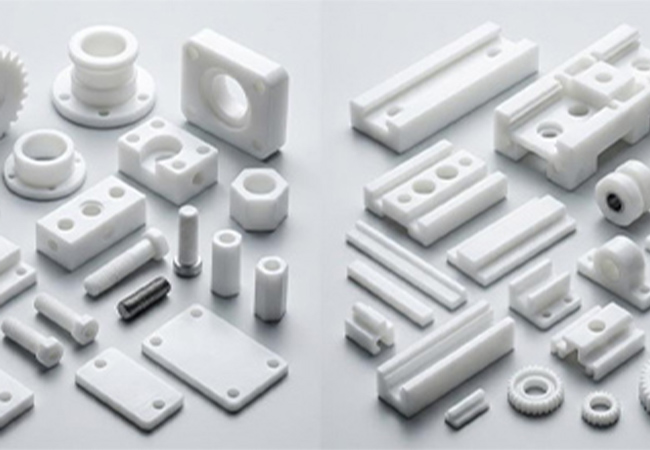

HDPE offers excellent rigidity, toughness, chemical resistance, and low manufacturing costs, while UHMW provides superior impact resistance, self-lubrication, and low-temperature performance. Different properties thereby lead to different considerations in terms of application, CNC machining, and sourcing.
For instance, if a sorting line slider—which demands high wear resistance—is mistakenly made from HDPE, it might wear out and fail within just a few weeks. Conversely, using UHMW for everyday furniture or toy parts unnecessarily drives up costs when more affordable HDPE would suffice.
Additionally, when CNC machining HDPE vs. UHMW parts, issues like warping/deformation and thin-wall machining require extra attention to ensure they align with your design blueprints.
This article provides a comprehensive guide to HDPE vs. UHMW, covering core properties, applications, material selection, machining costs, sourcing and lead times, and alternative engineering plastics. At the end of the article, we will also share a case study on how our factory resolved burr, assembly, and surface aesthetics issues for a client’s slider guide rail machining.
Before diving into their applications and machining, we need to understand the core nature of these two materials.
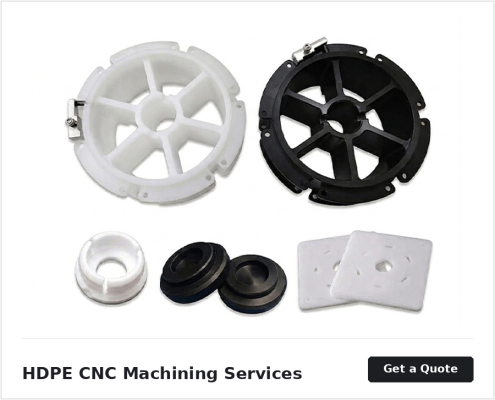
Core Performance Comparison Table
| Comparison Dimension | HDPE Performance | UHMW Performance | Which is Better? |
| Tensile Strength | ~20 – 30 MPa | ~20 – 25 MPa | UHMW is relatively better |
| Wear Resistance (Sand Slurry Test) | Good | Excellent (several times that of carbon steel) | UHMW is definitely the better one |
| Durability | Moderate | Extremely long (in high-friction environments) | UHMW is definitely the better one |
| Impact Strength (Notched Izod) | ~3 – 4 kJ/m² | No Break | UHMW is definitely the better one |
| Coefficient of Friction | Approx. 0.20 – 0.28 | Approx. 0.10 – 0.15 | UHMW is definitely the better one |
| Chemical Resistance | Excellent (resistant to most acids & alkalis) | Excellent (virtually immune to corrosion) | Similar |
| Water Absorption Rate | < 0.01% | < 0.01% (near zero absorption) | Similar |
| UV Resistance | Requires stabilizers; fair | Similar; black grades offer better UV resistance | Similar |
| Food Safety (FDA Approved) | Generally compliant with FDA certification | Generally compliant with FDA certification | Similar |
| Recyclability | Extremely high (Recycling Code 2) | Difficult to recycle and remold | HDPE is better |
| High-Temperature Resistance | Continuous use at approx. 80°C | Continuous use at approx. 80 – 90°C | UHMW is relatively better |
| Low-Temperature Resistance | Embrittlement temperature approx. -70°C | Capable of operating at cryogenic temperatures (-260°C) | UHMW is definitely the better one |
| Molding Difficulty (Injection/Extrusion) | Easy (excellent melt fluidity) | Extremely difficult (melt index close to 0) | HDPE is better |
| Machining Difficulty (CNC) | Easy | Moderate (prone to burrs and springback) | HDPE is better |
| Raw Material Cost | Low | High | HDPE is better |
| CNC Machined Part Cost | Lower (affordable material, fast machining) | Higher (expensive material, time-consuming machining) | HDPE is better |
Summary of Advantages and Disadvantages of HDPE vs. UHMW
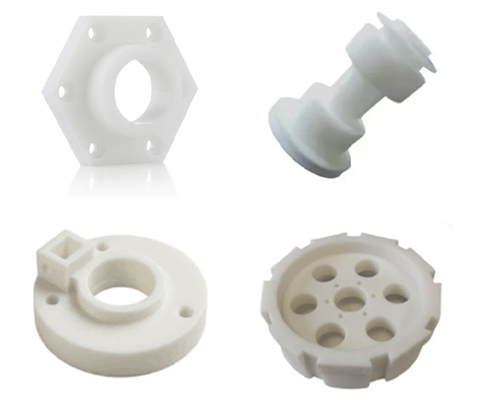
Food Processing & Commercial Catering Industry:
Chemical Industry & Environmental Protection Equipment:
Water Conservancy & Marine Engineering Industry:
Floating Dock Interlocking Fasteners: Custom fixing blocks used to connect floating pontoon modules and floating bridges, requiring long-term water immersion while maintaining rigidity.
Consumer Goods & Commercial Equipment Industry:
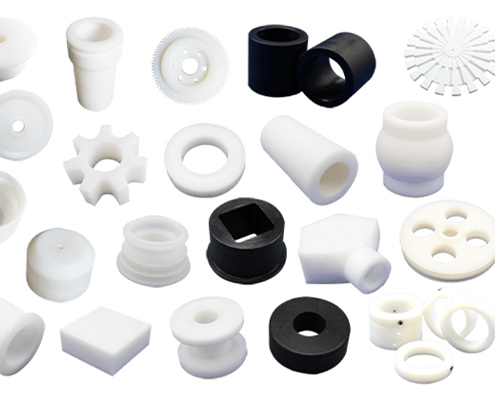
Automated Logistics & Material Handling Industry:
Food Packaging & Pharmaceutical Machinery Industry:
Heavy Industry & Mining Machinery Industry:
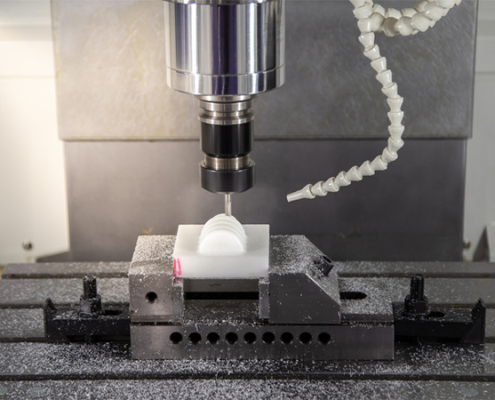
When customizing parts from these two materials, their low melting points, large coefficients of thermal expansion, and inherent elasticity place extra demands on both the CNC machining process and part design adjustments:
Both materials have low melting points (approx. 130°C for HDPE and 135°C for UHMW) and extremely poor thermal conductivity. If machining speeds are not matched correctly, cutting heat accumulates rapidly, leading to localized material melting, tool gumming, and out-of-tolerance part dimensions.
Machining Solution:
Design Recommendation: Avoid designing overly deep and narrow blind holes or slots. These structures impede chip evacuation during machining, making them prone to localized melting and deformation due to trapped heat.
Both materials possess high toughness, which is particularly pronounced in UHMW. If a cutting tool is even slightly dull, it will cause stringing and fuzzing along the cut edges, resulting in poor surface aesthetics that fail to meet assembly requirements.
Machining Solution: Use brand-new, single- or double-flute carbide end mills designed for aluminum, featuring high positive rake angles and large chip flutes (typically with a 45° helix angle). For finishing UHMW, use Diamond-Coated (PCD) tools; their extreme sharpness effectively “slices” through the plastic fibers, ensuring a smooth, burr-free machined surface.
Design Recommendation: It is recommended to include chamfers or radii on external sharp corners. Additionally, reasonably relax surface finish requirements on engineering drawings (e.g., allowing up to Ra 3.2 μm).
Compression-molded or extruded UHMW sheets, in particular, harbor high residual internal stresses. Once large-scale, single-sided CNC milling is performed, these internal stresses become unbalanced, causing the part to easily bow or warp.
Machining Solution:
Design Recommendation: Consider symmetrical designs. If a part has a large pocket milled out on one side, consider adding corresponding weight-reduction pockets on the opposite side to balance the stresses. For long guide rails, try to keep the thickness-to-width ratio within 1:2 to avoid selecting overly thin, elongated stock.
Despite having a degree of rigidity, both UHMW and HDPE are relatively flexible compared to metals (which handle thin walls much better). When part walls are too thin, the lateral cutting forces of the CNC mill will cause the thin wall to elastically deflect (push away from the tool), resulting in uneven wall thickness or tearing.
Machining Solution: Utilize climb milling to reduce the tool’s pushing force against the thin wall. Fabricate dedicated backing fixtures or vacuum chucks to provide solid backing support for the thin-walled structures, and apply a multi-pass, micro-finishing process (with a single depth of cut under 0.5 mm).
Design Recommendation:
Excluding the actual service life of the parts in post-application (where UHMW is much more durable) and looking strictly at the investment during the manufacturing cycle, the production cost of CNC machined HDPE parts is significantly lower than that of UHMW parts. This is primarily due to the following factors:
The sourcing and delivery speed of parts is influenced by factors such as upfront design compatibility, machining efficiency, and post-processing complexity:
Overall, under identical blueprint complexity, the total production and delivery speed for HDPE parts is generally faster than that for UHMW parts.
To ensure your parts align with your design blueprint expectations without wasting your budget, please make your selection based on the following scenarios:
When to Clearly Choose HDPE:
When to Clearly Choose UHMW:
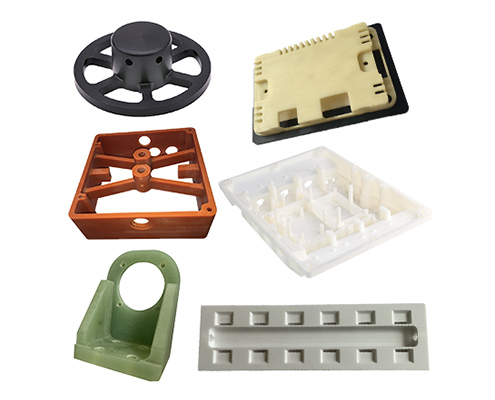
If HDPE and UHMW fall short of your requirements for rigidity or temperature resistance, or if they do not meet your expectations for dimensional stability during CNC machining, you can consider a broader range of engineering plastics based on the table below:
Comprehensive Engineering Plastics Alternative Table
| Material Options | Continuous Temperature Range | Rigidity & Tensile Strength | CNC Machining Dimensional Stability | Core Pros & Cons Comparison | Common CNC Machined Parts |
| Delrin / POM | -40°C to 90°C | High (~65 – 70 MPa) | Excellent (Uniform crystallinity, no warping during cutting, easy to control tolerances) | Pros: High rigidity, good self-lubrication. Cons: Poor resistance to strong acids/alkalis, slightly brittle. | Precision gears, non-standard bearing housings, high-load transmission components, pneumatic valve bodies. |
| Nylon 66 | -40°C to 100°C | High (~75 – 85 MPa) | Fair (Prone to humidity; absorbs water and swells after machining) | Pros: High mechanical wear resistance, good toughness. Cons: High water absorption; tolerances can fail in humid environments. | Pulleys in dry environments, heavy-duty drive gears, wear-resistant sliders. |
| PTFE | -200°C to 260°C | Low (~20 – 30 MPa) | Poor (Very soft material, prone to elastic deflection during cutting) | Pros: High temperature resistance, low friction coefficient, high corrosion resistance. Cons: Prone to creep (permanent deformation under pressure). | High-temperature chemical valve gaskets, semiconductor corrosion-resistant low-load components. |
| ABS | -20°C to 80°C | Medium (~40 – 50 MPa) | Excellent (Amorphous plastic, virtually zero machining residual stress) | Pros: Easy to machine, good impact resistance, good for bonding and surface finishing. Cons: Poor wear resistance, not resistant to organic solvents. | Machinery protective enclosures, instrument and equipment internal structural brackets. |
| PC | -40°C to 120°C | High (~60 – 70 MPa) | Excellent (Low creep rate, easy to maintain blueprint tolerances) | Pros: High impact strength, naturally highly transparent. Cons: Prone to stress cracking, moderate wear resistance. | Sight glass covers, transparent pump faceplates, high-strength structural transparent chambers. |
| PP | 0°C to 100°C | Medium (~30 – 40 MPa) | Moderate (Similar to HDPE; risks of warping during large-scale material removal) | Pros: Better temperature resistance and hardness than HDPE, high corrosion resistance. Cons: Prone to brittle cracking at low temperatures, average wear performance. | Chemical anti-corrosion tank plates, low-speed mixing paddles, acid/alkali-resistant pipe flanges. |
| PEEK | -40°C to 250°C | High (~100 MPa) | Excellent (Maintains mechanical dimensional stability under high temperature and high loads) | Pros: High temperature resistance, high strength, and high corrosion resistance. Cons: Very high raw material and cutting tool costs. | Aerospace precision connectors, semiconductor high-temperature fixtures, medical device components. |
An automated equipment client required a batch of custom, non-standard “slider guide rails” for a food packaging line. Initially, the client had these UHMW parts custom-made by another machine shop, but encountered quality issues upon receiving the finished products: due to the release of residual internal stresses during cutting, the parts suffered significant warping and deformation, making it impossible to align the bolt holes with the metal base during on-site assembly. At the same time, a large amount of fibrous, stringy burrs remained along the edges of the long guide rails, compromising both equipment aesthetics and food hygiene safety. Consequently, the client turned to our factory for help.
The Solution
Delivery Results
Through these machining optimizations, the batch of slider guide rails was delivered with a smooth surface finish and zero residual burrs, fully aligning with the blueprint expectations. The client achieved flawless on-site assembly on the first attempt. The final acceptance rate reached 99.5%, while saving the client 45% in material costs.
Both HDPE and UHMW are excellent engineering thermoplastics. HDPE is an all-around solution balancing cost-effectiveness, rigidity, and corrosion resistance, while UHMW is the material of choice for CNC machined parts facing severe wear, impact, and friction.
However, if your part requires asymmetrical pocket milling or thin-walled structures, or demands tight tolerances for bolt hole alignment, it is vital to account for material internal stress warping, stringing, and burring during the initial design phase.
Do you have questions about adding proper chamfers to HDPE or UHMW CNC machined parts, or relaxing surface finishes on non-critical edges? Feel free to contact our factory’s engineering team anytime for a free DFM design evaluation and CNC machining quote. [2D Drawings (PDF files), 3D Drawings (IGS/STP/STEP files)]
 WhatsApp/WeChat/Mobile:
+86-15099911516
WhatsApp/WeChat/Mobile:
+86-15099911516 Tel: 86-150-9991-1516
 QQ: 939020977
 E-Mail: service@vimetal.com.cn


UHMW vs. HDPE Plastic: Safety and Environmental Concerns
UHMW Plastic vs. HDPE: Historical Origins of These Two Plastics
HDPE vs. UHMW vs. Delrin: What are the key differences?
UHMW vs. HDPE: What tolerances can be achieved for CNC machined parts?
Because plastics have relatively high thermal expansion rates:
Can they be bonded with standard adhesives?
No. Both HDPE and UHMW have low surface energy, meaning they are very slick and resist adhesion. Standard glues like cyanoacrylate (502) or epoxy cannot bond them. If joining is required, you must use specialized surface primers or employ plastic hot-melt welding.
How can you quickly distinguish between HDPE and UHMW sheets?
For natural (milky white), uncolored materials:
 Written By JunWen Liu
JunWen Liu holds a Mechanical Engineering degree from Esslingen University of Applied Sciences and spent seven years as a CNC Process Engineer, accumulating extensive hands-on experience. She now shares that knowledge through her writing, drawing from real problems she encountered on actual projects. Outside of work, she enjoys hiking and is always chasing the next summit view.


 High-Performance Polymer Ultem 1000: Properties, Processing, and Design Gui...