HDPE vs. PVC: Pros and Cons, Uses, and CNC Machining Performance
By JunWen Liu | July 01, 2026
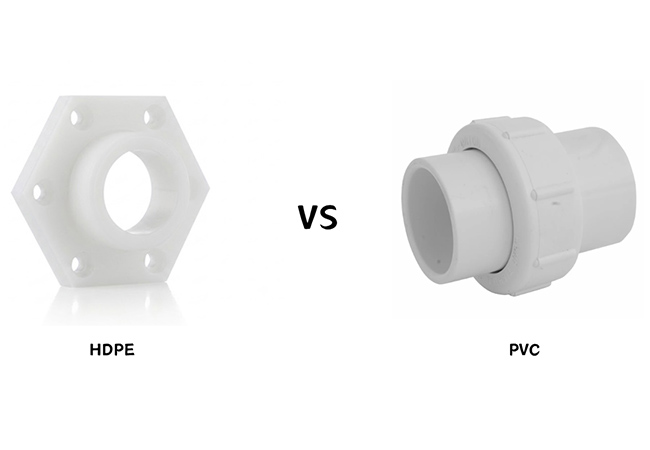

Recently, while assisting an outdoor energy storage cabinet client, we discovered that they had mistakenly selected PVC instead of HDPE to manufacture their panels. After only 18 months of outdoor service, the material embrittled and cracked, allowing water to ingress into the internal circuitry and triggering subsequent order claims.
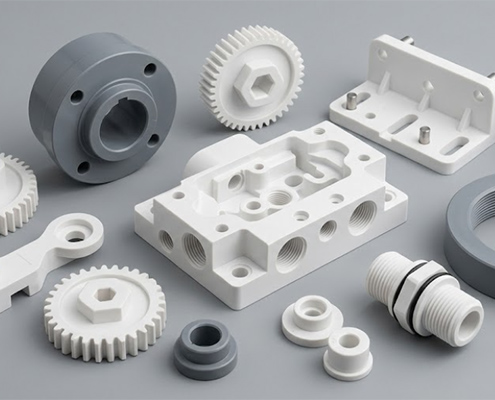
HDPE and PVC are two of the most commonly used thermoplastics. Although they both present a dense, industrial aesthetic, their molecular structures, material properties, and CNC machining behaviors are vastly different. Material selection mistakes between HDPE and PVC engineering plastics often come with a hefty price tag. So, which engineering plastic is better suited for your CNC machined parts project?
This article will provide an in-depth comparison of the core differences, pros and cons, and common pitfalls of HDPE vs. PVC from the perspective of professional CNC machining and engineering applications, helping you master these two materials for your CNC machined parts. Additionally, we will share a case study at the end of the article detailing how our factory resolved a client’s abnormal part-cracking issue.
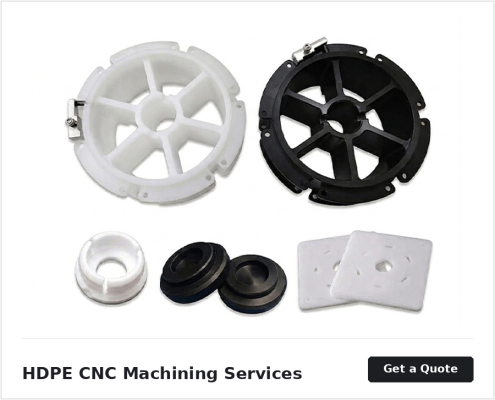
HDPE (High-Density Polyethylene): High Toughness and Chemical Inertness
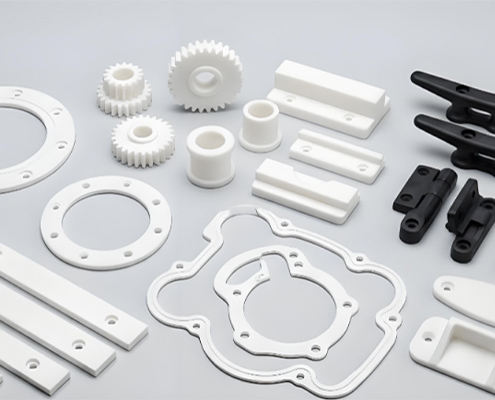
HDPE (also known as PE-HD or Polythene) is a linear polymer with a high crystallinity of over 80%. Its molecular chains have virtually no branching, which endows it with excellent toughness and impact resistance. Visually, HDPE appears as a milky white translucent or opaque material. In daily industrial applications, HDPE is commonly used to manufacture chemical storage tanks, wear-resistant slide guides, and food-grade containers.
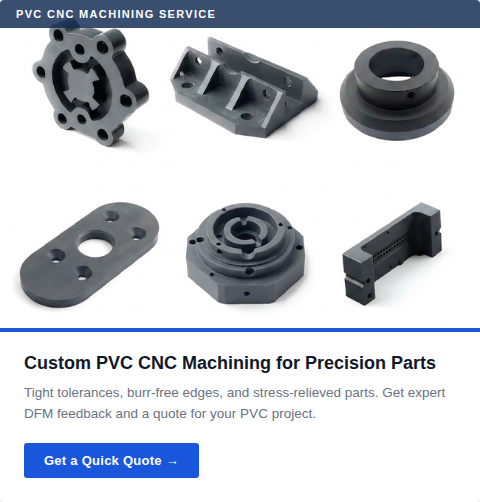
PVC (Polyvinyl Chloride): High Rigidity and Natural Flame Retardancy
PVC (also known as Vinyl) is an amorphous plastic. Due to the presence of chlorine atoms in its molecular chain, it possesses inherent and outstanding flame retardancy. At the same time, its extremely high mechanical strength and rigidity make it widely used in electrical distribution enclosures, chemical pipe fittings, and corrosion-resistant structural components.
For your quick reference and comparison, the key parameters of the two materials across physical, mechanical, thermal, and machining dimensions are summarized below:
| Property | HDPE | PVC |
| Density (g/cm³) | 0.94 – 0.97 | 1.30 – 1.50 |
| Tensile Strength (MPa) | 22 – 31 | 50 – 60 |
| Flexural Modulus (MPa) | 800 – 1200 | 2700 – 3500 |
| Continuous Service Temperature (°C) | -40 to 80 | -15 to 60 |
| Vicat Softening Point (°C) | 120 – 130 | 70 – 80 |
| Limiting Oxygen Index (LOI) | < 18 (Flammable with dripping) | ≥ 45 (Self-extinguishing, flame-retardant) |
| UV Resistance | Excellent (with carbon black grades) | Poor (requires additional UV stabilizers) |
| Food Contact Compliance | Complies with FDA / NSF standards | Risk of plasticizer migration, generally non-compliant |
| CNC Machining Tolerance Capability | ±0.1mm (Softer material, harder to control tolerance) | ±0.05mm (Good rigidity, can achieve up to ±0.02mm) |
Advantages
Disadvantages
Advantages
Disadvantages
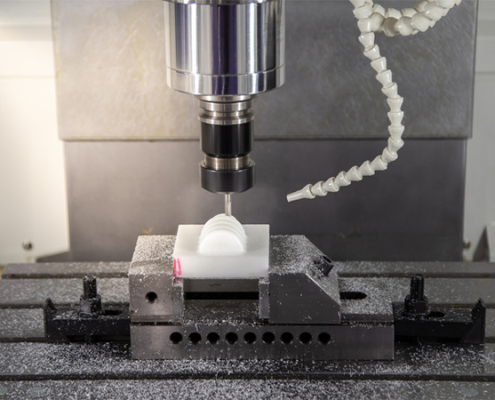
To ensure that melting, deformation, or edge chipping does not occur during CNC milling or turning, the cutting parameters are outlined in the table below (it is recommended to use single-flute or two-flute aluminum milling cutters with large chip evacuation pockets):
| Parameter | HDPE (High-Density Polyethylene) | PVC (Polyvinyl Chloride) |
| Recommended Tool Material | Solid carbide (uncoated, sharp cutting edge) | Solid carbide (or diamond PCD-coated tools) |
| Tool Helix Angle | 35° – 45° (Large helix for efficient chip removal) | 30° – 35° (Balances tool strength and chip removal) |
| Cutting Speed Vc (m/min) | 250 – 450 (High speed) | 150 – 300 (Medium-high speed; strictly prevent overheating) |
| Feed per Tooth fz (mm/tooth) | 0.15 – 0.30 (Large feed to form thick chips that carry away heat) | 0.08 – 0.18 (Small to medium feed to prevent edge chipping) |
| Cooling Method | Highly recommended: Dry cutting + strong air cooling (water cooling makes chips stick) | Compressed air cooling + localized extraction system (crucial to remove cutting heat) |
| Reference Spindle Speed (Based on a 10mm diameter tool) | 8,000 – 12,000 RPM | 5,000 – 8,000 RPM |
| Core Machining Process Points | 1. Use conventional milling (up-milling) to reduce burr formation. 2. Use large-surface clamping or soft jaws for workholding to prevent deformation from lateral pressure. 3. Promptly clean long, stringy chips wrapped around the spindle. | 1. Use climb milling (down-milling) to achieve a better surface finish. 2. Provide auxiliary support when machining thin walls to prevent brittle cracking. 3. Strictly avoid heat accumulation inside the machine to prevent the release of trace corrosive HCl gas. |
Misconception 1: A material with a higher softening point naturally offers a higher long-term service temperature.
Fact: Although the softening point of HDPE is higher than that of PVC, its mechanical strength drops significantly above 60°C. Under continuous loads around 60°C, PVC actually exhibits better creep resistance than HDPE.
Misconception 2: The higher the mechanical strength, the better the material.
Fact: While PVC possesses high tensile strength, it is inherently brittle. For operating conditions involving high-frequency impacts, severe vibrations, or frequent deformations, high-toughness HDPE is the correct choice.
Misconception 3: Any plastic can be used outdoors indefinitely as long as UV stabilizers are added.
Fact: Standard PVC, even with UV stabilizers, typically has a lifespan of only 5 to 15 years under strong outdoor sunlight. In contrast, carbon black-modified HDPE can easily achieve an outdoor service life exceeding 50 years.
Misconception 4: Choosing a material with a lower per-unit processing cost guarantees a lower overall project cost.
Fact: Although PVC raw material is less expensive, its machining challenges (such as protecting against gas corrosion and accelerated tool wear) can drive up machining fees. Furthermore, if choosing the wrong material leads to frequent post-installation replacements, its total lifecycle cost will be much higher than that of HDPE.
Misconception 5: As long as it is plastic, it can be used to make food machinery parts.
Fact: Industrial-grade PVC usually contains plasticizers (such as DEHP) or heavy metal stabilizers, making it strictly forbidden for contact with food and drinking water. Food processing machinery should preferentially utilize FDA-certified HDPE grades.
In actual production, material selection is not simply a matter of comparing which material has better properties, but rather about matching the specific application scenario:
Food Processing and Medical Conveying Systems (e.g., Guide Rails, Sliders, Cutting Boards)
Electrical and Electronic Equipment Enclosures (e.g., Indoor Distribution Boxes, Junction Boxes)
Ambient-Temperature Chemical Plant Piping and Corrosion-Resistant Structural Brackets
Precision Thin-Walled Structural Parts (Wall Thickness Less Than or Equal to 2mm)
Background: One of our clients required industrial reactor linings, which were originally designed and manufactured using PVC sheets.
Challenges: Under a working environment of 50°C combined with agitator shear forces, the PVC linings frequently suffered from creep cracking after approximately 18 months of service. The strongly acidic medium leaked through these cracks, directly corroding three expensive metal agitator impellers. This resulted in an asset repair loss of $1,700 USD per unit for a single incident, with the cumulative annual comprehensive maintenance cost exceeding $70,000 USD.
Root Cause : PVC undergoes stress creep when subjected to long-term continuous shear stress in environments with elevated ambient temperatures. Furthermore, the fact that the equipment was stored in a semi-outdoor environment accelerated the aging and embrittlement of the PVC material.
Solution: After our engineering team intervened, we recommended upgrading the material to Ultra-High-Molecular-Weight Polyethylene (UHMW-PE, a modified higher grade of the HDPE family). Additionally, we optimized the wall thickness from 5mm to 8mm to counteract long-term mechanical wear. In terms of processing, the component was fully formed in a single operation using precision CNC cutting, drilling, and tapping.
Implementation Benefits:
When deciding between HDPE, PVC, or other engineering plastics, the most critical factors to consider are:
Do you have questions about machining tolerances for HDPE vs. PVC, or need advice on other engineering plastic grades? Welcome to submit your 2D/3D drawings to us . Our professional engineers will provide you with material selection evaluation, Design for Manufacturability (DFM) analysis, and a part machining quotation within 24 hours. [2D drawing (PDF file), 3D drawing (IGS/STP/STEP file)]
 WhatsApp/WeChat/Mobile:
+86-15099911516
WhatsApp/WeChat/Mobile:
+86-15099911516 Tel: 86-150-9991-1516
 QQ: 939020977
 E-Mail: service@vimetal.com.cn


Which is more expensive, PVC or HDPE?
According to the 2026 market trends, the unit price of HDPE is approximately 30% higher than that of PVC. However, the total project cost is not necessarily higher. HDPE offers a significantly longer service life (50+ years outdoors vs. 5–15 years for PVC) and lower maintenance costs. Furthermore, it delivers better overall processing efficiency, which also reduces machining costs.
Does HDPE have a long lifespan?
Yes, HDPE has one of the longest lifespans among all engineering plastics. Black HDPE can last over 50 years in outdoor applications and more than 100 years for buried underground piping. Its longevity advantages stem from four key areas:
① UV resistance (black grades are completely UV resistant);
② Chemical stability (highly resistant to acids, alkalis, and salts);
③ Fatigue resistance (its resistance to water hammer is 2,500 times that of PVC);
④ Stress crack resistance.
Can HDPE pipes be used for sewage pipes?
Yes, it is one of the main materials used for municipal sewage pipelines. Note: For industrial sewage where temperatures exceed 60°C, you must select the HDPE 100 grade or switch to alternative materials.
Which plastic containers should be avoided?
FDA standards prohibit or restrict the use of the following plastic containers for food contact:
① PVC (due to the risk of plasticizer DEHP migration);
② PS (Polystyrene) (due to residual styrene monomers);
③ ABS (due to the presence of acrylonitrile);
④ PC (Polycarbonate) (due to Bisphenol A/BPA, which is banned in several EU countries). Recommended materials: HDPE, PP, and food-grade silicone.
Will HDPE parts undergo thermal creep deformation under direct, intense sunlight exposure?
Yes. Although black HDPE has exceptional UV resistance, the black color absorbs heat. Under direct sunlight, the surface temperature can soar above 70°C, which approaches the upper limit of the material’s working range. Recommendations for outdoor applications:
① Select a grade with a dual formulation of black colorant + UV stabilizers;
② Design parts with built-in thermal expansion gaps (calculated using a coefficient of 1.5×10⁻⁴ /°C);
③ Avoid continuous full-load conditions. Applying a reflective coating can reduce the surface temperature by 10–15°C.
What certifications and quality assurances does VMT offer for plastic CNC machining?
VMT holds ISO 9001:2015 Quality Management System certification and complies with AS9100 and IATF 16949 system standards, making us fully qualified to process plastic parts for aerospace and automotive industry clients. Our entire product line is RoHS and REACH compliant, and we can provide declarations of conformity and SVHC lists for clients exporting to the EU and North America.
 Written By JunWen Liu
JunWen Liu holds a Mechanical Engineering degree from Esslingen University of Applied Sciences and spent seven years as a CNC Process Engineer, accumulating extensive hands-on experience. She now shares that knowledge through her writing, drawing from real problems she encountered on actual projects. Outside of work, she enjoys hiking and is always chasing the next summit view.


 PVC CNC Machining: Overcoming Common Defects, Pros and Cons, and Vs Other