Titanium Metal Grades: A Complete Guide to Choosing the Right Titanium Alloy
By JunWen Liu | July 31, 2026
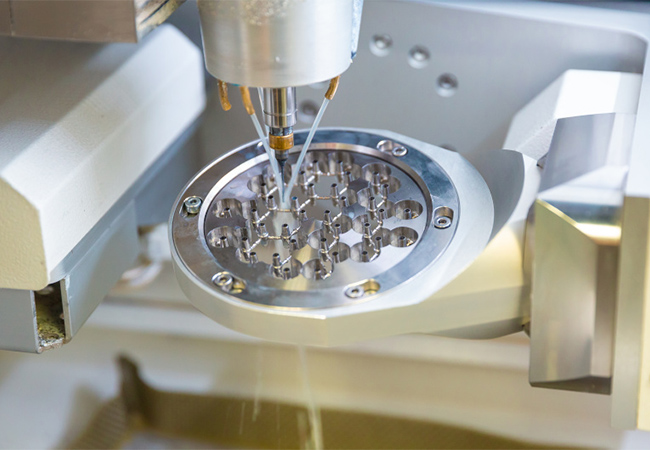

Titanium is a high-strength, corrosion-resistant, highly biocompatible metal that is widely used in high-end engineering fields such as aerospace, chemical valves, marine engineering, and human implants. Although this material is relatively expensive, and the processing cost is also higher, due to its irreplaceable high-end characteristics, it is still very popular.
However, among commercially pure titanium, titanium alloys, and special titanium alloys, there are many grades available on the market, and they have different physical and mechanical properties. You need to master these common grades, so that when selecting alloys for titanium CNC machining, you do not end up with application mismatch, higher cost waste, and project cycle extension because not understand the characteristics.
For example, for better forming and welding, then commercially pure titanium is the best choice. Titanium alloys, on the other hand, are more corrosion-resistant and have higher strength. Read this article to understand comprehensive titanium grade characteristics, pros and cons, typical applications, as well as processing difficulty and cost. At the end, we will also share a case from our factory on how we solved a European customer’s titanium alloy product by achieving sealing surface compliance and water pressure test compliance.
This table puts every grade covered for their key properties.
| Titanium Grade | Family | Density (g/cm³) | Melting Point (°C) | Tensile Rm (MPa) | Yield Rp0.2 (MPa) | Elongation (%) | Hardness (HV) | Elastic Modulus (GPa) |
| Grade 1 | CP | 4.51 | 1670 | 240 | 170 | 24 | 120 | 105 |
| Grade 2 | CP | 4.51 | 1670 | 345 | 275 | 20 | 145 | 105 |
| Grade 3 | CP | 4.51 | 1670 | 450 | 350 | 18 | 180 | 105 |
| Grade 4 | CP | 4.51 | 1670 | 550 | 485 | 15 | 200 | 105 |
| Grade 7 | Modified CP | 4.51 | 1670 | 345 | 275 | 20 | 145 | 105 |
| Grade 12 | Modified CP | 4.51 | 1670 | 480 | 380 | 18 | 150 | 105 |
| Grade 16 / 17 | Modified CP | 4.51 | 1670 | 345 | 275 | 20 | 145 | 105 |
| Grade 5 (Ti-6Al-4V) | α-β | 4.43 | 1660 | 895 | 825 | 10 | 350 | 114 |
| Grade 9 (Ti-3Al-2.5V) | Near-α | 4.48 | 1700 | 620 | 510 | 15 | 250 | 105 |
| Grade 23 (Ti-6Al-4V ELI) | α-β | 4.43 | 1660 | 860 | 795 | 12 | 320 | 114 |
| Ti-6242 | Near-α | 4.54 | ~1700 | 970 | 880 | 8 | 320 | 114 |
| Ti-1100 | Near-α | 4.55 | ~1700 | 970 | 870 | 11 | 330 | 115 |
| Ti-6211 | Near-α (marine) | 4.50 | ~1700 | ~860 | ~770 | ~12 | ~290 | ~112 |
| Ti-6432 | α-β (marine) | 4.51 | ~1700 | ~895 | ~830 | ~10 | ~330 | ~114 |
| Beta C / Grade 19 | β | 4.81 | ~1650 | 1300 | 1200 | 8 | 380 | 105 |
| Ti-15-3 | β | 4.76 | ~1700 | 1170 | 1100 | 10 | 320 | 105 |
| Ti-10-2-3 | β | 4.65 | ~1660 | 1240 | 1140 | 6 | 320 | 110 |
| Nitinol (NiTi) | Specialty | 6.45 | ~1310 | varies (heat-treated) | varies | varies | ~200 (austenite) | 75 |
| Ti-40 (Ti-25V-15Cr) | Specialty | ~4.65 | ~1700 | ~970 | ~880 | ~10 | ~330 | ~115 |
Commercially pure titanium (Commercial pure titanium) has only titanium as its content. However, among the many grades of commercially pure titanium, their differences are mainly controlled by the content of interstitial elements such as oxygen, nitrogen, carbon, and iron. Overall, these industrial pure titanium grades are mainly used in applications that require easy forming or welding and relatively low strength requirements. For example, chemical storage tanks and liners, bellows, stamping parts, heat exchangers, and architectural decoration forming applications.
Grade 1 titanium is also called UNS R50250 and CP4. In Chinese materials nomenclature it is written TA1. Some industry references also describe it as “the softest commercially pure titanium grade.”
Its main composition is titanium at a minimum of 99.5%, with O, N, C, Fe, and H as controlled impurities. Across all the commercially pure titanium grades, Grade 1 has the lowest content of oxygen, nitrogen, carbon, and iron interstitials, which is why it sits at the bottom of the strength ladder and the top of the formability ladder.
When the titanium product or component needs the best cold workability and weldability, or when it needs deep drawing and stretching, and when the titanium part needs to show excellent corrosion resistance in oxidizing or mildly reducing environments, you can choose Grade 1 titanium.
Of course there are some limitations. Its strength is the lowest in the entire titanium series, and the material is soft. In addition, when the part has threaded contact surfaces, then galling wear becomes more likely, and this point you need to consider yourself.
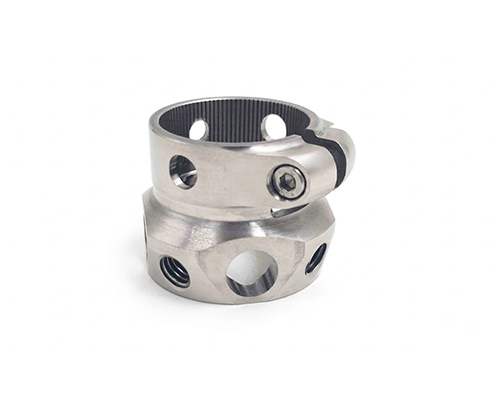
Grade 2 titanium maps to ASTM Grade 2, UNS R50400, CP3, and TA2. It is the most widely used grade of the CP family and the most widely stocked pure titanium grade.
Its composition is titanium at a minimum of 99.3%, with the O and Fe interstitial content slightly higher than Grade 1 — typically O ≤ 0.25% and Fe ≤ 0.30%.
Across all the CP grades, Grade 2 sits in the middle of the strength ladder — stronger than Grade 1, weaker than Grade 3 and Grade 4, with formability and weldability that fall between Grade 1 and Grade 4.
Grade 2 is the default pick when the project sits inside the CP family’s property but needs more strength than Grade 1 — heat exchanger tubesheets, chemical process piping, marine hardware, cryogenic vessels, medical non-implant components, and the long tail of industrial applications where corrosion resistance, weldability, and formability all matter.
The limitation is that Grade 2 is neither the cheapest CP grade on the market nor the strongest. It is the middle option that almost every project reaches for, so, for projects that need a clear strength upgrade or a clear cost reduction sometimes move off it.
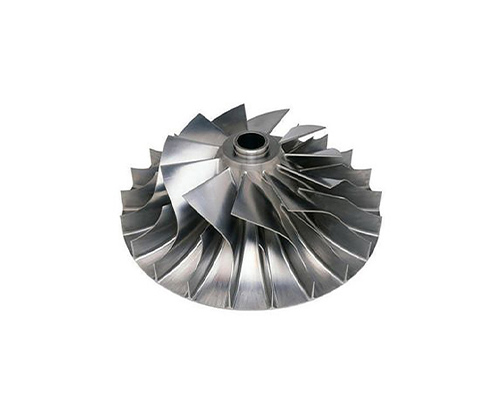
Grade 3 titanium maps to ASTM Grade 3, UNS R50550, CP2, and Chinese TA3. It is a less common but spec-validated CP grade.
Its composition is titanium at a minimum of 99.2%, with the interstitial content pushed higher than Grade 2.
Across all the CP grades, Grade 3 sits at the higher end of the strength ladder — stronger than Grade 2, weaker than Grade 4, with formability and weldability correspondingly lower than Grade 2 but better than Grade 4.
Grade 3 is the right pick when a project sits in the gap between Grade 2’s weldability-friendly strength and Grade 4’s near-alloy strength. For applications such as chemical reactor shells, marine fasteners, pressure vessel parts that need more load capacity than Grade 2 can offer , you can apply the Grade 3.
The disadvantage is supply and formability: Grade 3 is harder to deep-draw than Grade 2, and the number of stocked product forms is much smaller.
Grade 4 titanium maps to ASTM Grade 4, UNS R50700, CP1, and Chinese TA4. It sits at the top of the CP family on strength.
Its composition is titanium at a minimum of 99.0%, with the highest interstitial content of any CP grade — O ≤ 0.40% in the standard specification.
It sits at the top of the strength ladder — the strongest CP grade, with the worst formability and weldability in the family.
Grade 4 is the right pick when the project genuinely needs the highest strength the CP family can deliver — surgical hardware, hydraulic systems, marine shafts.
The downside is operational: springback in cold forming is significant, welding demands more care than Grade 2 (post-weld stress relief is often necessary), and the supply chain outside of the most common bar and sheet forms is thinner than Grade 2’s.
The modified CP branch extends the CP base chemistry with small alloying additions that push the property .
Grade 7 titanium maps to ASTM Grade 7 and UNS R52400. It is sometimes written TA7 or treated as a palladium-modified Grade 2.
Its composition is Grade 2 chemistry — titanium at a minimum of 99.3%, O ≤ 0.25%, Fe ≤ 0.30% — plus a deliberate 0.12–0.25% palladium addition. Mechanical strength is identical to Grade 2.
Grade 7 is the right pick when the corrosion resistance is not good enough for the operating conditions without giving up Grade 2’s weldability and formability.
The cons is cost: palladium is expensive, and Grade 7 carries a higher cost Grade 2.
Grade 12 titanium maps to ASTM Grade 12 and UNS R53400.Its composition is Grade 2 chemistry with 0.3% molybdenum and 0.8% nickel added. Mechanical property close to Grade 4 on strength, but with materially better corrosion behavior in hot chloride service.
Grade 12 is the right pick for chemical heat exchanger shells and tube sheets, wet chloride service, hydrocarbon processing, and downhole tools where crevice corrosion is the dominant failure mode.The limitation is the nickel content, which rules out some implant applications.
Grade 16 titanium maps to ASTM Grade 16 and UNS R52202; Grade 17 titanium maps to ASTM Grade 17 and UNS R52252. Their alloying composition is mainly Grade 2 chemistry with 0.05% palladium added — roughly half the palladium adding of Grade 7. Mechanical property matches Grade 2 exactly.
Grade 16 and 17 are the right pick when the corrosion property of Grade 2 needs a small upgrade without paying for the full Grade 7 palladium adding fees. They are good at being used in chemical plant piping, chloride-containing process fluids, hydrometallurgy equipment, and sub-sea manifolds. The cons is that they are not as corrosion-resistant as Grade 7.
When the project needs more strength than CP titanium can deliver without losing too much corrosion behavior, α-β and near-α alloys are the next step.
Grade 5 titanium maps to ASTM Grade 5, UNS R56400, and Chinese TC4. The industry shorthand is Ti-6Al-4V. It is the most widely used titanium alloy in the world — well over half of all titanium alloy tonnage shipped each year is Grade 5.
Its composition is Ti + 6% Al + 4% V, balance titanium. Aluminum stabilizes the α phase and lifts heat resistance.
Aerospace structural frames and rotors, medical implants in the orthopedic category, offshore fasteners, racing components, marine hardware, and defense components all run Grade 5 as the default.
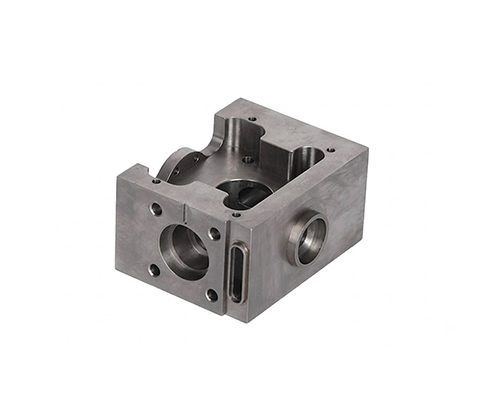
Grade 9 titanium maps to ASTM Grade 9, UNS R56320, and Chinese TC1. The industry shorthand is Ti-3Al-2.5V.
Its composition is Ti + 3% Al + 2.5% V, balance titanium. With lower Al than Grade 5, Grade 9 keeps the cold-formability and weldability high while trading away some strength. Aerospace tubing, hydraulic lines, bicycle frames, high-end sporting goods, and marine heat-exchanger tubes are the canonical Grade 9 applications.
The downside is the strength trade-off — Grade 9 is meaningfully weaker than Grade 5, so it does not work for high-load structural parts.
Grade 23 titanium maps to ASTM Grade 23, UNS R56401, and Chinese TC4 ELI. The industry shorthand is Ti-6Al-4V ELI (Extra Low Interstitials).Its composition matches Grade 5 at Ti + 6% Al + 4% V, with tighter limits on Fe, O, N, and H.
Medical implants (long-bone plates, dental implants), airframe fracture-critical parts, military armor, and cryogenic tanks are the canonical Grade 23 applications. Grade 23 is pricier than standard Grade 5.
When Grade 5 runs out of strength at elevated temperature, or when the project needs a marine alloy that handles seawater and pressure together, the search moves outside the standard 1–23 numbering.
Ti-6242 maps to ASTM Grade 19 and UNS R58640. The industry shorthand is Ti-6Al-2Sn-4Zr-2Mo, often abbreviated 6-2-4-2.Its composition is Ti + 6% Al + 2% Sn + 4% Zr + 2% Mo. Al and Sn jointly stabilize the α phase, Zr provides solid-solution strengthening, and Mo lifts β stability and heat resistance.
For high-temperature aerospace service at 500 °C and long-life compressor discs, blades, and casings across subsonic and supersonic engine stages, Ti-6242 is the right pick.
Ti-1100 aerospace titanium is a trade-designated alloy(brand name) rather than an ASTM-numbered grade.
Its composition is Ti + 6% Al + 2.75% Sn + 4% Zr + 0.4% Mo + 0.45% Si. The silicon addition is what differentiates it from Ti-6242 — silicon suppresses creep in long-duration high-temperature service.
When the uses environments push into the 600 °C and stay there for long durations, Ti-1100 is the right pick. Advanced aero-engine compressor rear stages, frontier hypersonic airframe structures, industrial turbine blades are the canonical Ti-1100 applications.
Ti-6211 is a Russian-origin marine and chemical alloy, written as Ti-6Al-2Nb-1Ta-1Mo in composition shorthand. Its composition is Ti + 6% Al + 2% Nb + 1% Ta + 1% Mo.
For project needs cathodic-protection compatibility without hydrogen embrittlement at normal operating potentials, weldability for marine structural assemblies, and good fatigue life under hydrodynamic load, Ti-6211 is the right pick. Marine propellers and shafts, deep-sea ROV housings, hydrofoil components, and mooring system hardware are the canonical Ti-6211 applications. But Ti-6211 is largely confined to Russian / CIS and select Asian mills.
Ti-6432 is a marine-optimized variant of the Grade 5 base, written as Ti-6Al-4V with roughly 3% Mo and 2% Sn added. Mechanical property is Grade 5-class , but with materially better corrosion allowance in seawater.
It suits project demanding dimensional stability under hydrostatic pressure and longer-duration seawater service than unprotected Grade 5 can delive. Deep-sea pressure housings, oceanographic instrument housings, and sub-sea manifolds for oil and gas are the canonical Ti-6432 applications.
The downside is machining and supply: Mo, Sn, and any Zr content make the chips gummier, the machinability rate sits below Grade 5, and the mill sources are limited to specialty producers.
β-titanium alloys shift the phase balance with enough β-stabilizers (vanadium, molybdenum, chromium, iron) that the β phase dominates at room temperature. The payoff is high specific strength, very high fracture toughness, and the ability to be heat-treated to higher strength than α-β alloys. The trade-off is lower elastic modulus than α-β, higher cost, and reduced corrosion resistance in chloride service.
Beyond the structural grades sits a small but commercially important family of specialty alloys that earn their existence from one specific property.
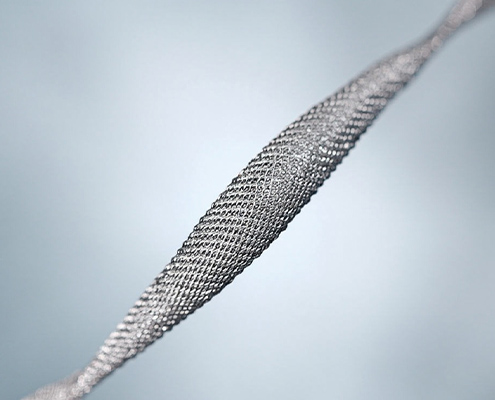
Overall, titanium machining is harder than other common metals such as aluminum alloys, brass, and carbon steel — that is, your machining cost spending will be higher than for those common metals. The main reasons for this cutting difficulty are the following.
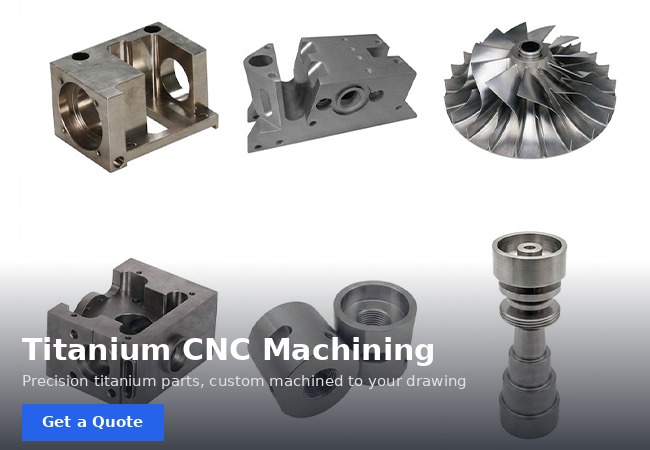
Its thermal conductivity is relatively poor, so cutting heat easily accumulates at the tool tip. That is one cause of cutting difficulty. Its strength is also high, so tool wear is high, which is part of the cost. In addition, titanium alloys themselves will work-harden during cutting, and surface hardening further increases cutting difficulty. Another point is that at high temperature, titanium may adhere to the cutting tool, and that can produce scrap. So the processing technical requirements, insert and tool selection, parameter settings, and cycle time all become harder, and the cost goes up.
The table below compares the machining difficulty and cost coefficients of the common titanium and titanium alloy grades covered in this article. The table uses Grade 5 (Ti-6Al-4V), the most widely used titanium alloy in industrial engineering applications, as the baseline reference and sets its machining difficulty and cost coefficient to 1.
| Titanium Grade | Machinability Rating | Tool Wear | Cost Index | Coolant / Chip Notes |
| Grade 1 | Good (CP, soft) | Low | 0.8× | Flood coolant; sharp HSS tools work; form chips long, use chip breaker |
| Grade 2 | Good | Low-Moderate | 0.85× | Flood; TiAlN-coated carbide recommended |
| Grade 3 | Moderate | Moderate | 0.9× | Flood; carbide inserts |
| Grade 4 | Moderate-Hard | Moderate-High | 1.0× | Sharp insert geometry; flood coolant |
| Grade 7 | Good | Low-Moderate | 0.85× | Same as Grade 2; Pd addition has minor effect |
| Grade 12 | Moderate | Moderate | 0.95× | Flood; sharp carbide |
| Grade 16 / 17 | Good | Low-Moderate | 0.85× | Same as Grade 2 / Grade 7 |
| Grade 5 (Ti-6Al-4V) | Benchmark | Moderate | 1.0× | TiAlN-coated carbide; high-pressure flood; sharp edge; low radial engagement |
| Grade 9 | Moderate | Moderate | 1.0× | Similar to Grade 5 |
| Grade 23 | Moderate (slightly better than Grade 5 due to lower interstitials) | Moderate | 1.0× | Same as Grade 5 |
| Ti-6242 | Hard | High | 1.3× | Aerospace-spec inserts; flood; rigid setup required |
| Ti-1100 | Hard | High | 1.3× | Aerospace-spec tooling; flood; chip thinning controls |
| Ti-6211 | Moderate-Hard | Moderate-High | 1.1× | Flood; carbide; corrosion-resistant coolant for long cycles |
| Ti-6432 | Hard (gummy chips) | High | 1.2× | Sharp inserts; high-pressure flood; chip evacuation aggressive; expect extra tool changeouts |
| Beta C | Hard | High | 1.4× | Aerospace-spec carbide; rigid fixturing |
| Ti-15-3 | Hard | High | 1.3× | Sharp inserts; low engagement; flood |
| Ti-10-2-3 | Hard | High | 1.3× | Aerospace-spec tooling; rigid setup |
| Nitinol | Very Poor (work-hardens) | Extreme | 2.0×+ | Almost never turned or milled; EDM, wire EDM, or grinding is normal |
| Ti-40 | Very Hard | High | 1.4× | Aerospace-spec tools; aggressive coolant |
A European customer wanted to machine a detector housing, and was not sure which titanium grade to select. The earlier suppliers all suggested various titanium alloys and different machining plans, but the final results were not satisfactory. The customer then turned to our engineering team.
The detector housing operates in fresh water and weakly corrosive underwater media. Four hard requirements drove the design:
Tracing back through the earlier suppliers’ processes, three problems were stacked:
After re-assessing the drawing and the operating conditions, our engineering team recommended Grade 2 commercially pure titanium. The reasoning:
For this part, three specific process adjustments went into the plan:
Result
Following the revised plan, the sealing surface flatness came in at ≤ 0.02 mm, surface roughness at Ra ≤ 0.6 µm, and the 1.5 MPa hydrostatic water pressure test passed on the first submission. The first batch of 50 parts was delivered, and the complete unit cleared downstream CE certification.
This article has mainly introduced the characteristics and pros and cons of the comprehensive grades of common commercially pure titanium, titanium alloys, and special titanium alloys used in engineering applications. The selection of titanium alloy parts for project depends on your required structural strength, service corrosion, environment, biocompatibility standards, and so on. Generally speaking, the common grades are Grade 2, Grade 5. For special grades, the total production cycle may be longer, because the supply is not as widespread.
Still have doubts about the grade selection for the titanium product project, or would like Design for Manufacturability advice to optimize manufacturing cost? Please contact our engineering team. Whether the part is a structural bracket, a heat exchanger, a housing, an aerospace fitting, a medical part, or an implant, we have the relevant machining experience.[2D Drawings (PDF files), 3D Drawings (IGS/STP/STEP files)]
 WhatsApp/WeChat/Mobile:
+86-15099911516
WhatsApp/WeChat/Mobile:
+86-15099911516 Tel: 86-150-9991-1516
 QQ: 939020977
 E-Mail: service@vimetal.com.cn


What is the melting point of titanium metal? Are different grades’ melting points the same?
What is the density of titanium metal? Is it the same across grades?
How hard is titanium? Are all grades equally hard?
Hardness varies widely:
Harder grades suit wear-resistant parts like bearings and valve seats; soft CP titanium works best for forming and welding.
Are all titanium grades equally difficult to machine?
What is the titanium modulus of elasticity? Does it vary by grade?
Titanium deflects twice as much as steel under load. Choose Gr9 or high-modulus near-α alloys for stiffness-critical components.
How does cost differ across titanium grades?
Select the lowest-cost grade meeting operational requirements; upgrade to premium alloys only when necessary.
 Written By JunWen Liu
JunWen Liu holds a Mechanical Engineering degree from Esslingen University of Applied Sciences and spent seven years as a CNC Process Engineer, accumulating extensive hands-on experience. She now shares that knowledge through her writing, drawing from real problems she encountered on actual projects. Outside of work, she enjoys hiking and is always chasing the next summit view.


 Compare CNC Prototyping Cost and Application: Is This Way Suitable for Your...