What Is Grade 5 Titanium (Ti-6Al-4V)? Its Properties and Uses in Engineering
By JunWen Liu | Apr. 30, 2026
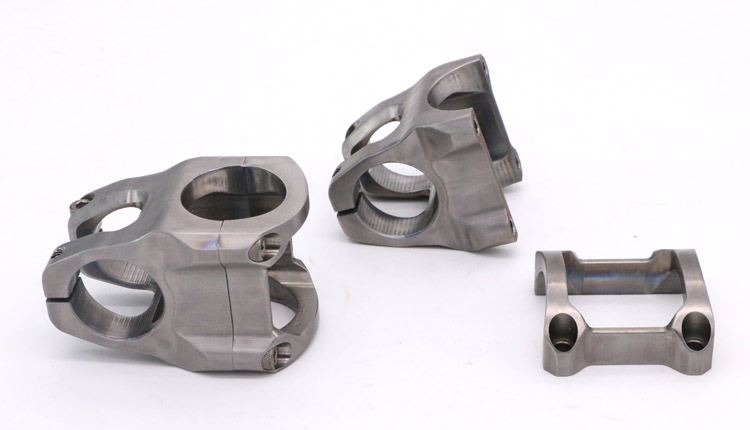

Grade 5 titanium is definitely one of your options for high performance uses in aerospace, medical, high-end bicycle, and consumer watch cases or audio enclosures. Excellent strength, light-weight property, heat resistance, and corrosion resistance make the grade 5 titanium machining parts be a key role in those of high performance uses, and you can sure trust this metal—about half of titanium components in the world are made by the grade 5 titanium (Ti-6Al-4V) !
To further dive into grade 5 titanium properties, applications, machining difficulty and cost, please read on. In the final part, a successful case that how we solve the titanium CNC machining challenge for our clients will be also shared.
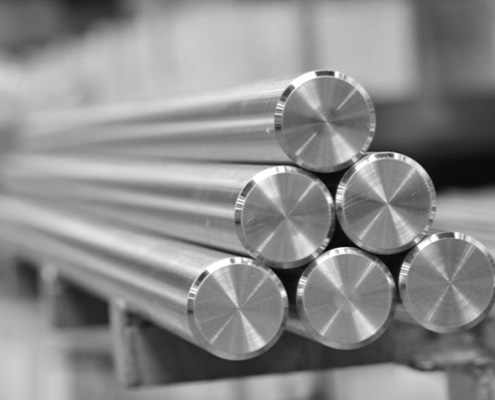
Approximate composition of 90% titanium, 6% aluminum, and 4% vanadium, and structure of α+β (α-type offers corrosion resistance while β-type offers high strength) make the grade 5 titanium one of the most popular alloys. If you plan to produce Grade 5 Titanium parts for aerospace, medical devices, high-performance sports equipment, or premium consumer electronics, here’s what you should know:
For these following equivalent names of grade 5 titanium— they are the same as grade 5 titanium if you find them in the drawings or supply.
| Region | Equivalent Name |
| International (UNS) | R56400 |
| USA (ASTM) | Grade 5 |
| USA (Aerospace) | AMS 4911 / AMS 4928 |
| USA (Military) | MIL-T-9046 / 9047 |
| Europe (ISO) | ISO 5832-3 |
| Germany (DIN) | 3.7165 / Ti6Al4V |
| Germany (Luftfahrt) | 3.7164 |
| China (GB/T) | TC4 |
| France (AFNOR) | T-A6V |
| UK (BS) | TA10 / TA11 |
| Japan (JIS) | Type 60 / Class 60 |
One of grade 5 titanium’s biggest advantages is that it weighs only 4.43 g/cm³ — about half the weight of steel! This means you can use grade 5 titanium for lightweight designs like racing cars, motorcycles, or bicycles. By reducing the overall weight, you can save energy and improve speed — in other words, enhance the performance of the whole product. Using grade 5 titanium parts instead of heavier steel components can also lower shipping costs of your total cost, which is another practical benefit.
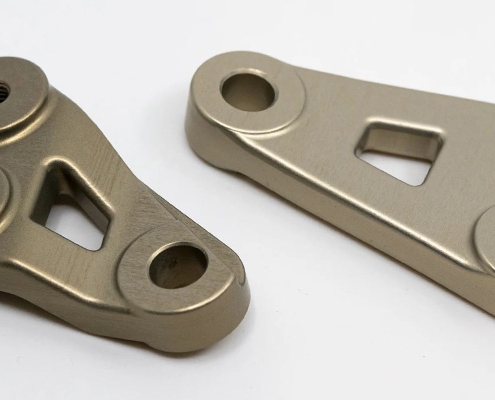
Grade 5 titanium has a high melting point of 1,660 °C, which gives excellent high-temperature processing capabilities. This makes it suitable for forging, heat treatment, and other high-temperature manufacturing processes without compromising its mechanical properties. With this advantage, you can gain strong, reliable titanium parts that maintain their quality even after demanding thermal operations.
Grade 5 Titanium has a relatively low thermal conductivity of 6.7 W/m·K. This makes it more challenging and costly to machine, as heat can build up quickly and cause tool wear. Machining costs can be slightly higher than with metals like aluminum or steel, but the priority is the quality of final part — including precision, consistency, and surface finish. Therefore, it is very important to find a qualified manufacturing partner to ensure parts are made accurately and maintain high quality, even if the machining process is tougher and slightly more expensive.
With a tensile strength of 895–1,000 MPa, Grade 5 Titanium is nearly as strong as high-strength steel. You can use it for structural components that need to handle heavy loads while keeping the weight low, which is perfect for aerospace or high-performance sports equipment.
Grade 5 Titanium has a yield strength of 830–880 MPa, meaning it resists permanent deformation under stress. This allows you to design thinner, lighter components without sacrificing reliability or safety, such as aerospace brackets, bicycle frames, or high-performance automotive parts.
Grade 5 Titanium has a Brinell hardness of 330 HB, giving excellent surface durability. This means parts resist wear over time, helping to reduce maintenance and replacement costs. For applications that involve friction, such as bearings, shafts, or gears, you can use Grade 5 Titanium with surface coatings like TiN (Titanium Nitride), TiC (Titanium Carbide), or DLC (Diamond-Like Carbon) to further improve wear resistance. However, it’s important to avoid using two grade 5 titanium parts in direct contact under load — for example, meshing gears or shafts — because galling can occur. So, if you are not using these parts for both lightweight, high strength, wear-resistance, and wear resistance, actually carbon steels or alloy steels are more practical ones.
With a stiffness of 113.8 GPa, grade 5 titanium offers solid rigidity. However, it can spring back slightly during machining, so your partner factory usually will take careful calibration is needed to achieve precise dimensions of the parts.
Grade 5 Titanium forms a protective oxide layer instantly, making it highly resistant to seawater, acids, and alkalis—it is chemically inert and basically doesn’t react with chlorides. This allows you to use it in marine environments, chemical equipment, or medical implants (it is biocompatible)with confidence in long-term durability.
Grade 5 Titanium remains strong and stable up to 400 °C, making it perfect for components exposed to high heat. This means you can use it in engines, exhaust systems, or other heat-intensive parts without worrying about the material failing. Using Grade 5 Titanium helps parts last longer and keeps performance stable under extreme conditions, which can save you money on maintenance and replacements.
The biggest difference between them is:
You cannot use grade 2 titanium for high-stress structural components — grade 2 titanium is considered commercially pure titanium, with excellent corrosion resistance but relatively low strength.
On the other hand, if you need aerospace fasteners, medical bone screws, critical parts for high-end bicycles, or premium consumer electronics housings, choose grade 5 titanium — it performs better in terms of strength, toughness, and high-temperature resistance.
If you want to use grade 2 titanium, it is recommended for pipes, chemical equipment, and other components that do not bear high loads.
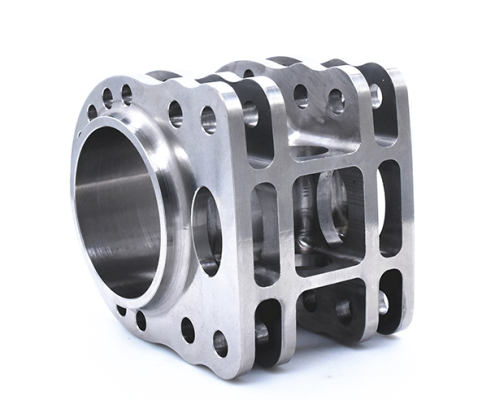
Thanks to its high strength and lightweight properties, grade 5 titanium is the go-to material for critical aircraft and spacecraft components. If you’re working on fasteners, hydraulic fittings, or manifolds, it can handle high-pressure and high-temperature environments. For sensor and instrument housings, fuel injector sleeves, or black box protective cases, its corrosion and heat resistance help ensure your equipment runs reliably.
In medical devices, grade 5 titanium is ideal for surgical implants and bone screws. Its biocompatibility, corrosion resistance, and high strength mean that the implants products can provide stable, long-term support for bone healing.
For high-end bicycles, you can use grade 5 titanium in dropouts, chain stay yokes, pedal spindles, and thru-axles. This lets you reduce overall bike weight without sacrificing strength, improving performance on every ride.
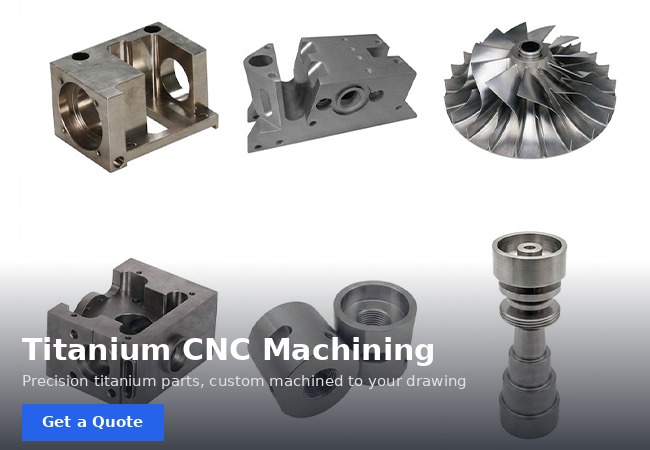
Grade 5 Titanium is increasingly used in high-performance automotive parts, such as connecting rods, valves, and suspension components. By choosing it, you can improve engine efficiency, reduce vehicle weight, and enhance overall performance.
Grade 5 Titanium is also used in watch cases, mechanical keyboard housings, smartphone frames, and headphone shells. Its light weight, wear resistance, and corrosion resistance mean your products feel premium and last longer.
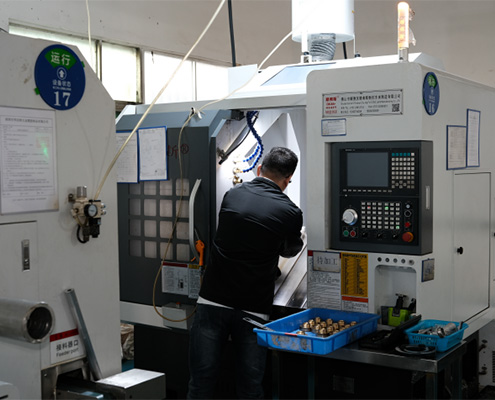
A client from the bicycle industry approached us to customize a batch of Ti-6Al-4V bicycle stem components, requiring tight dimensional tolerances (±0.02 mm) to ensure precise alignment between the fork and handlebars. Additionally, the parts featured hollowed-out designs to achieve lightweight construction.
The main challenges our factory faced for this project were: Titanium alloy has low thermal conductivity during cutting, causing heat to concentrate at the tool edge and leading to rapid tool wear. At the same time, its low elastic modulus makes thin-walled structures prone to spring-back and vibration, making it difficult to achieve the required surface finish.
To address these challenges, our technical team developed a rigorous machining process. First, we selected high-performance coated carbide tools and used a five-axis CNC machining center to complete multi-surface machining in a single setup, effectively avoiding errors caused by re-positioning. To manage the poor heat dissipation, we implemented a high-pressure internal cooling system, ensuring the cutting fluid reached the cutting zone precisely, removed heat efficiently, and flushed fine chips away to prevent built-up edge. Furthermore, we optimized the toolpath, using shallow cuts and high feed rates to significantly reduce cutting stress, ensuring the final parts met the client’s stringent tolerance requirements.
In the end, VMT successfully delivered this batch of high-quality titanium stem components. Test results showed that all dimensional tolerances fully met the drawings, and surface roughness reached Ra 0.8 or better. The client was highly satisfied and expressed their intention to continue long-term cooperation with us.
Grade 5 Titanium (Ti-6Al-4V) has become a core material in high-end manufacturing thanks to its lightweight, high strength, corrosion resistance, and heat resistance. By understanding its key properties and applications, you can make a better decision on whether grade 5 titanium for your parts is the right choice. While it comes with higher material and machining costs, its unique combination of biocompatibility, exceptional corrosion resistance, and strength gives you advantages in aerospace, medical devices, high-performance sports equipment, and consumer electronics that no other alloys can match.
 WhatsApp/WeChat/Mobile:
+86-15099911516
WhatsApp/WeChat/Mobile:
+86-15099911516 Tel: 86-150-9991-1516
 QQ: 939020977
 E-Mail: service@vimetal.com.cn


Is grade 5 titanium good?
Yes, it is excellent for high-performance applications due to its high strength, corrosion resistance, and lightweight properties.
How strong is grade 5 titanium?
It has a tensile strength of 895–1,000 MPa, nearly as strong as steel while being about half the weight.
What are the disadvantages of grade 5 titanium?
It is expensive and difficult to machine due to low thermal conductivity and high hardness.
Does grade 5 titanium scratch easily?
It is quite hard and scratch-resistant, but not completely scratch-proof under sharp impacts.
Can grade 5 titanium be used at high temperatures?
Yes, it maintains strength up to around 400℃, making it suitable for high-temperature applications.
Is grade 5 titanium safe for medical implants?
Yes, it is biocompatible and widely used for surgical implants and bone screws.


 The Comprehensive Guide to Grade 2 Titanium: Why It’s the Good Option for...