How to Choose a China Titanium CNC Machining Factory
By JunWen Liu | July 29, 2026
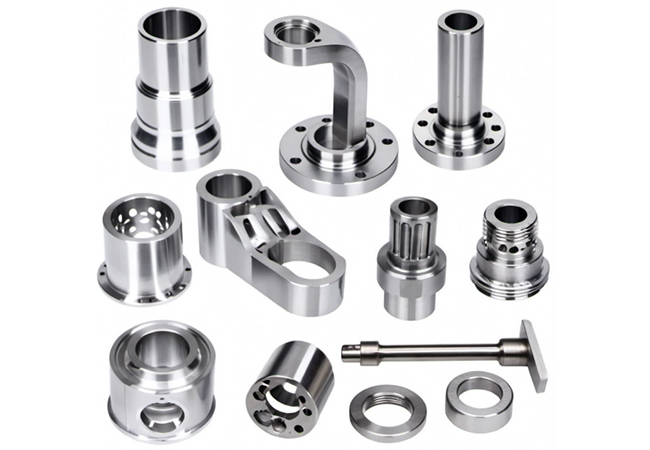

Choosing a Chinese titanium CNC machining factory for your titanium parts project is, at its core, a risk decision.
China’s titanium CNC factories are part of a complete integrated supply chain — titanium grade availability, machining, surface treatment, fast logistics — and that integration in itself solves part of the project risk management problem.
What you need, however, is a factory that specializes in high-complexity precision titanium machining, not a supplier that wins on the lowest price.
Industrial, medical, and aerospace applications all rely on titanium for its light weight, high strength, and corrosion resistance. But choose a supplier that is unqualified, immature, or simply lacks titanium experience, you will pay for it late in these projects: a delayed product launch, a scrapped batch, or a forced mid-program supplier swap — each one bringing extra cost you did not budget for.
This article focuses on project risk and supplier qualification. It walks through how to choose the right China titanium CNC machining factory. At the end, we also share a case study from our own factory — how we machined a titanium part with deep cavities, thin walls, and free-form surfaces for a client.
Titanium machined parts carry excellent properties: high strength, light weight, and corrosion resistance. But when you choose a supplier for titanium CNC machining services, the first thing to check is whether that supplier understands the actual difficulty of machining titanium.
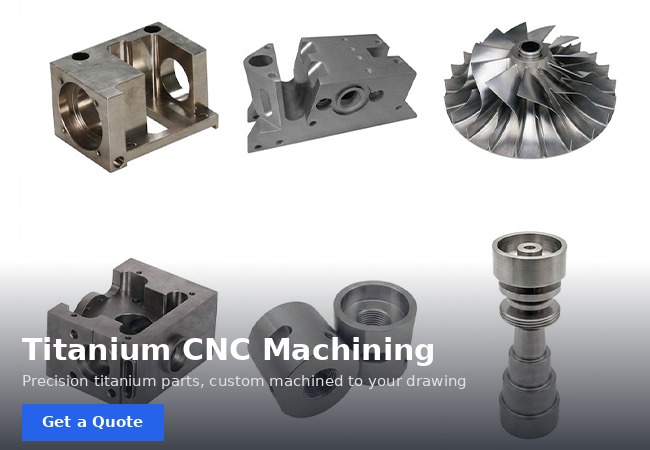
Some suppliers are very good at common metals — aluminium, brass, carbon steel — and these are all relatively easy to machine. With titanium, however, you cannot simply apply the same machining approach you use for those common metals.
The following are things a mature titanium CNC machining factory should understand:
Titanium is one of the more expensive metals. Raw material prices run roughly 10 to 20 times those of aluminium.
When an inexperienced supplier machines titanium without proper process discipline, scrap rates rise. Every scrapped part is your raw material cost written off.
The thermal conductivity of commercially pure titanium sits around 21 W/m·K, and the more commonly used Grade 5 (Ti-6Al-4V) is even lower at approximately 6.7 W/m·K.
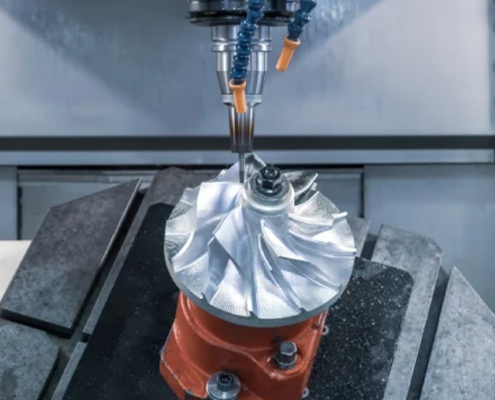
During titanium CNC machining, the heat generated at the cutting edge cannot be carried away with the chips. Part of it accelerates tool wear; part of it work-hardens the surface layer of the part.
A supplier who cannot pick the right cutting tools and parameters for titanium will give you higher scrap rates, accumulated tolerance drift that causes downstream assembly problems, and rapid tool consumption. All three are extra cost on your project.
Some suppliers who do not understand titanium’s machining behaviour may pause the cut during precision-critical operations. Titanium is highly strain-rate sensitive: prolonged tool dwell, feed rates that are too slow, and interrupted cutting all raise the surface hardness of the part.
The result is a surface that is harder to machine, worse surface finish, accumulated tolerance error, and high scrap rates.
An experienced titanium supplier plans for continuous cutting, rational deceleration when needed, and direct tool retraction rather than pausing on the workpiece.
Titanium’s poor thermal conductivity causes heat to concentrate at the cut. At elevated temperature, titanium reacts with carbide tooling and can gall onto the tool surface.
An experienced titanium supplier applies strict process control: proper coolant ratio, coated tooling, and a stable machining plan that keeps heat generation under control.
An experienced titanium machining factory should be able to supply the common titanium grades available on the market, and should understand the mechanical behaviour, certification requirements, machining approach, and application conditions of each grade well enough to recommend a grade and machining solution based on your application and part requirements.
| Grade | Common name | Composition | Tensile strength (MPa) | Typical applications | Why it matters |
| Grade 1 | CP4 | Commercially pure Ti | ~240 | Chemical processing, marine, low-load medical implants | Softest CP grade; excellent formability and corrosion resistance |
| Grade 2 | CP3 | Commercially pure Ti | ~345 | Heat exchangers, chemical tanks, architecture | The default CP grade — balanced strength, weldability, cost |
| Grade 5 | Ti-6Al-4V | Ti + 6% Al + 4% V | ~895 | Aerospace structures, medical implants, automotive, marine | Most common titanium alloy (>50% of all Ti usage); the default aerospace standard |
| Grade 9 | Ti-3Al-2.5V | Ti + 3% Al + 2.5% V | ~620 | Hydraulic tubing, marine, bicycle frames | Best weldability of the alpha-beta alloys; preferred for thin-wall tubing |
| Grade 23 | Ti-6Al-4V ELI | Ti-6Al-4V + extra-low interstitials | ~860 | Surgical implants, trauma devices, spinal hardware | Medical-grade sibling of Grade 5; tighter impurity limits for biocompatibility |
| Beta alloys | Ti-10V-2Fe-3Al, Ti-15V-3Cr-3Al-3Sn (representative) | Beta stabilizers | ~1200–1700 (heat-treat dependent) | Landing gear, high-strength fasteners, springs | Highest strength-to-weight in the Ti family; harder to machine, more expensive |
A qualified titanium CNC machining factory understands the standards, material traceability, and quality management system that each grade-class demands, and can recommend appropriate grades and machining solutions tailored to your application and part specifications.
| Tier | Common standards | Process / QC expectations | Typical applications |
| Industrial | ISO 9001, ASTM B348, GB/T 2965 | Mill certificate with shipment, standard inspection report, CMM on critical features | Semiconductor fixtures, chemical processing parts, automation jigs, robotics |
| Medical | ISO 13485, ASTM F136 (Grade 23), ASTM F1108 | Material traceability per lot, biocompatibility file, validated cleaning, dimensional CMM + surface finish, often gamma-validated packaging | Orthopaedic implants, surgical instruments, dental abutments, diagnostic housings |
| Aerospace | AS9100D, AMS 4911 (sheet), AMS 4928 (bar), AMS 6931 (plate) | Full material traceability, process-capability data (Cp/Cpk), first-article inspection reports, often Nadcap special process audits | Airframe brackets, engine components, landing gear, fasteners, UAV structural parts |
You can use this table to map your main requirement to the matching standard. Ordinary industrial applications need the factory to deliver the inspection standards, processes, and QC discipline called out in the row. Medical applications place heavier emphasis on biocompatibility. Aerospace titanium parts place heavier emphasis on safety. Each of these corresponds to specific standards, processes, and QC requirements that a qualified titanium machining supplier knows well — and you can ask them for the relevant documentation.
If the material origin or inspection trail is unclear, the cost of a future regulatory audit is the kind of project loss no quote line item will prepare you for.
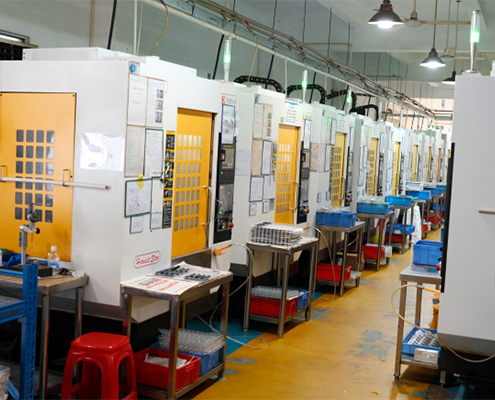
When your project lands with an unqualified or inexperience-rich titanium machining supplier, the visible damage — high scrap rates, high in-process machining cost, wasted titanium raw material — is only the surface. Below it sit three hidden costs.
A supplier who does not understand the cutting difficulty of titanium will surface that lack of understanding late in the project: missed delivery dates, mid-run process changes, mid-run tooling-surcharge requests. The schedule slips, and the hidden cost of that slip lands on your project.
A reliable CNC machining factory points out engineering and manufacturability problems during the early communication phase — deep cavities, thin walls, under-cuts, high-precision tolerance features, structural and tolerance optimization opportunities. An immature factory takes your drawing as-is, and the problems only surface during machining or after the first sample is delivered, by which time the engineering communication cost has already accumulated.
If your project’s machining keeps failing, or downstream assembly and surface treatment keep falling short, you may be tempted to switch suppliers mid-program. With a mature, experienced titanium machining process, you would not need to swap at all. The swap costs you time, and every failure cost from the previous supplier rolls into your total project cost.
The following are capabilities a mature and qualified titanium CNC machining factory should have. Verify each one with the supplier before your project starts — doing so prevents these issues from surfacing late in production.
Where the billet comes from, what format the mill certificate takes, and a recent one for the exact grade you are ordering. For aerospace and medical, full heat-lot traceability is non-negotiable.
High-rigidity machine tools (thermal-stable spindles, ball-screw drives rather than belt-driven on titanium), high-pressure through-tool coolant (≥70 bar for deep pockets), and verified multi-axis experience. A 3-axis VMC that has never cut titanium is not a titanium machine.
Ask the supplier to point out two or three manufacturability issues on your drawing before they quote. If they cannot or will not, you will pay for it later in either rework or schedule slip.
Sharp coated inserts (AlTiN or equivalent high-temperature coatings for Grade 5 roughing, TiAlN for finishing), peck-drilling cycles for deep holes, never-pause toolpaths, steady chip evacuation. Ask to see a setup sheet from a recent titanium job.
Coordinate Measuring Machine (CMM) on critical features, surface-roughness testing, batch-level dimensional reports, and First Article Inspection (FAI) reports formatted to AS9102 or your standard.
ISO 9001 is the baseline. AS9100D for aerospace, ISO 13485 for medical. AS9100D in preparation is acceptable if you can see the audit timeline.
You need an engineer, not a salesperson, on email. Confirm they can discuss cutting parameters, drawing revisions, and FAI feedback in English without translation lag.
Drawings, sample photos, material certs from past jobs — actual artifacts from a similar part you can call and verify, not a marketing gallery.
A factory with these core capabilities is one you can put on your supplier shortlist. Without them, the mass-production phase is the phase where your project slips or your price gets re-quoted.
A European medical-device client came to VMT CNC Prototype Machining Factory after working through several earlier suppliers on a custom run of titanium imaging-device housing components. The earlier suppliers had been hitting the same wall on different jobs: assembly-fit problems, part deformation after machining, and surface finish that did not meet the spec.
The client had switched suppliers multiple times trying to clear those problems, then found VMT and asked us to take it on. Our engineers reviewed the drawing and the application context and identified the core challenge: the part was Grade 5 titanium (Ti-6Al-4V), and its geometry combined deep cavities, thin walls, and complex free-form surfaces — exactly the combination that punishes suppliers who treat titanium like aluminium.
Based on that analysis, our engineers ran a DFM review with the client’s design team and suggested specific design adjustments to ease manufacturability without changing the part’s functional requirements. Once the design was updated, the machining plan came together: a 5-axis machining centre with high-pressure through-tool coolant (≥80 bar), AlTiN-coated carbide end mills, and a custom soft-jaw fixture that supported the thin wall while leaving the free-form surface exposed on the first setup.
The cutter stayed engaged throughout the program — no dwell, no air cuts — to avoid the work-hardening that destroys titanium tooling. The result: dimensional tolerance held at ±0.01 mm on critical features across the batch, surface finish on the free-form surface came in at Ra 0.4 µm without secondary polishing, and the lead time for the first batch — including FAI documentation — was 18 working days. The client moved from prototype to small-batch production with VMT rather than splitting the program.
This guide has walked through the four characteristics that make titanium CNC machining — raw material cost, thermal behaviour, work hardening, and tool reaction at temperature — and how each one important for you choosing a qualified supplier. This blog has also mapped the common titanium grades you are most likely to see, and the certification tiers that determine which factory tier fits your application. It has surfaced the three hidden costs that show up when you choose an unqualified supplier, and the eight capabilities you should verify before signing with a Chinese factory. Use this guide as a working checklist on your next project, and weigh suppliers against the key capabilities.
Facing a titanium part with thin walls, complex free-form surfaces, or deep cavities, or the assembly or surface treatment is not landing where your project needs it ? Send your drawing to our team and we will run a DFM review with you and supply the one-stop titanium parts machining solution. [2D Drawings (PDF files), 3D Drawings (IGS/STP/STEP files)]
 WhatsApp/WeChat/Mobile:
+86-15099911516
WhatsApp/WeChat/Mobile:
+86-15099911516 Tel: 86-150-9991-1516
 QQ: 939020977
 E-Mail: service@vimetal.com.cn


What tolerances can titanium CNC machining typically achieve?
Standard titanium CNC machining holds ±0.05 mm on most features; precision shops reach ±0.01 mm on critical dimensions with 5-axis setups and proper fixturing. Tighter than ±0.005 mm usually requires grinding or EDM as a secondary operation.
Why is titanium CNC machining more expensive than aluminium?
Three drivers stack: raw material is 10 to 20 times the cost per kilogram, cutting speeds are a small fraction of aluminium (typically 1/3 to 1/8 depending on operation and tooling), and tooling wears out faster because of titanium’s work-hardening tendency.
What international standards apply to industrial, medical, and aerospace titanium parts?
Industrial parts typically cite ISO 9001 and ASTM B348 (titanium bar/billet). Medical parts need ISO 13485 and ASTM F136 (Grade 23) or F1108 (cast Ti-6Al-4V). Aerospace parts run AS9100D plus AMS spec call-outs such as AMS 4911 (sheet), AMS 4928 (bar), or AMS 6931 (plate). Each tier demands its own documentation, traceability, and inspection regime.
Which industries use titanium CNC machined parts?
Aerospace (structural brackets, engine components), medical (orthopaedic implants, surgical instruments), marine (propeller shafts, subsea hardware), chemical processing (heat exchangers, reactor vessels), automotive (connecting rods, valve springs in motorsport), and increasingly consumer electronics (watch cases, premium bicycle frames, high-end audio housings).
What are the main advantages of titanium CNC machined parts?
Strength-to-weight ratio among the highest of any structural metal — competitive with high-strength steel at roughly half the density. Corrosion resistance that outperforms most stainless steels in chloride and oxidizing environments (the passive TiO2 layer is self-healing). Biocompatibility for medical implants. Non-magnetic behaviour. Operating temperature range from cryogenic to roughly 315 °C for Grade 5.
What core capabilities should a titanium CNC machining factory have?
At minimum: high-rigidity multi-axis CNC machines, high-pressure through-tool coolant (≥70 bar), AlTiN or TiAlN-coated tooling inventory, an engineer-led DFM review process, CMM inspection, ISO 9001 certification (plus AS9100D or ISO 13485 if you need those tiers), and verifiable case studies on similar titanium work. Whether you are sourcing a one-off prototype or a 1,000-piece production run, these capabilities are the floor, not the ceiling.
 Written By JunWen Liu
JunWen Liu holds a Mechanical Engineering degree from Esslingen University of Applied Sciences and spent seven years as a CNC Process Engineer, accumulating extensive hands-on experience. She now shares that knowledge through her writing, drawing from real problems she encountered on actual projects. Outside of work, she enjoys hiking and is always chasing the next summit view.


 Titanium Metal Grades: A Complete Guide to Choosing the Right Titanium Allo...