How to Evaluate Custom Bushing Manufacturers: A Procurement Guide
By JunWen Liu | Jun. 05, 2026
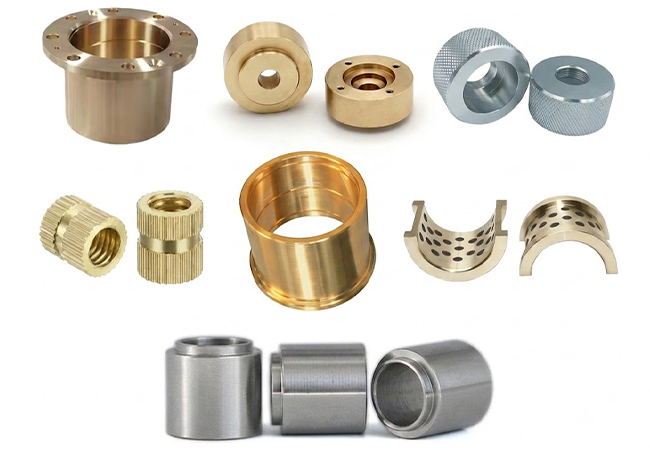

A bushing costs a few dollars, but the downtime from its failure can cost thousands per hour. Saving pennies but costing a fortune, right? This is why a bushing manufacturer evaluation is far more than a purchasing formality but a critical reliability engineering decision.
Custom bushings sit at the intersection of rotating shafts, sliding assemblies, and load-bearing pivots.When a bushing wears prematurely, seizes under thermal expansion, or drifts out of concentricity, the failure cascades: shaft scoring, bearing housing damage, assembly misalignment, unscheduled maintenance. The root cause is rarely the bushing material itself. It is almost always a manufacturing variable that was poorly specified, uninspected, or untraceable.
This guide outlines the core criteria that make a highly capable custom bushing manufacturer: machining capability, material expertise, tolerance control, inspection rigor, certifications, production stability, and commercial transparency. At the very end, VMT’s approach to bushing manufacturing is presented as an excellent case.
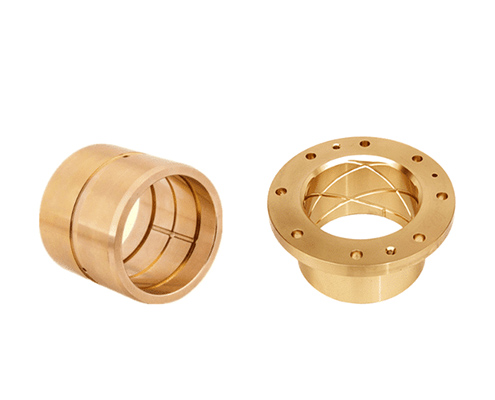
A bushing is a deceptively simple part: a cylinder with a bore, often with a flange, a groove, or internal threads. The simplicity of the geometry hides the difficulty of the process. You may know that CNC machining is the most used method to produce these custom bushes—through various cutting tools with designed paths to process the bushes. Usually, a precision of ±0.01mm( dimensional and geometric tolerances) can be achieved. But what trouble will happen if it goes wrong? To prevent 0.01 mm out of round on the inner diameter which will bind on the shaft at operating temperatures, a qualified manufacturer must demonstrate mastery across these essential processes:
Evaluation Tip: Request a process flowchart with your quotation. A competent manufacturer will clearly map the sequence (e.g., turning → drilling → deburring → heat treatment → grinding → honing → final inspection) and specify the inspection gate at every single step.
Material selection quickly reveals a manufacturer’s engineering depth. A supplier that blindly quotes whatever is on the drawing without verifying the material’s suitability for your actual conditions is not a strategic manufacturing partner.
| Material | Wear Resistance | Corrosion Resistance | Max Service Temp | Typical Application | Lubrication Need |
| C93200 Bronze (SAE 660) | High | Moderate | 230°C | Heavy machinery, construction pivots | Regular grease |
| C36000 Brass | Moderate | Good | 150°C | General industrial, low-load pneumatics | Moderate |
| 304/316 Stainless Steel | High | Excellent | 300°C+ | Marine, food-grade, chemical processing | Low to moderate |
| PTFE-Lined Composite | Moderate | Excellent | 260°C | Aerospace controls, clean-room automation | Self-lubricating |
| SAE 841 Sintered Bronze | Moderate | Low (porous) | 200°C | Low-speed, inaccessible lube points | Oil-impregnated |
| C86300 Manganese Bronze | Very High | Moderate | 230°C | High-impact, heavy-load oscillating joints | Regular |
A capable manufacturer will evaluate three baseline factors before processing an order:
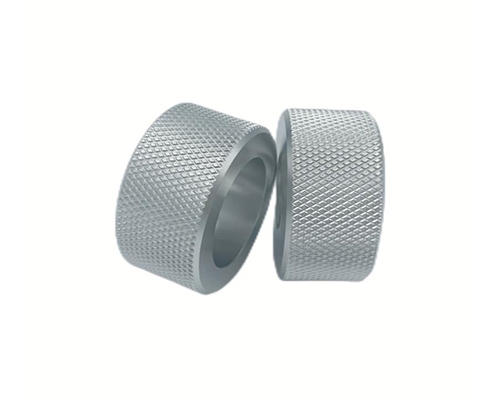
Bushing tolerance is about knowing which dimensions control the mechanical function and which are merely reference geometry. Over-tolerancing non-critical features spikes production costs unnecessarily, while under-tolerancing the ID or concentricity guarantees field failure.
Critical Dimensions for Custom Bushings
| Dimension | Standard Tolerance | Precision Tolerance | Why It Matters |
| Inner Diameter (ID) | H7 (+0.015 / 0 mm for 10–18 mm bore) | ±0.005 mm | Dictates running clearance and oil film thickness. |
| Outer Diameter (OD) | h6 or press-fit spec | ±0.005 mm | Regulates retention force; a loose OD causes the bushing to spin inside the housing. |
| Concentricity (ID to OD) | 0.02 mm TIR | ≤0.01 mm TIR | Eccentricity causes uneven clearance, localized wear, and severe vibration. |
| Surface Roughness (ID) | Ra 0.8–1.6 µm | Ra 0.4–0.8 µm | Above Ra 0.8 breaks the oil film; below Ra 0.2 prevents oil from adhering. |
| Flange Face Perpendicularity | 0.03 mm | 0.01 mm | A tilted flange face introduces uneven axial loads. |
Essential Inspection Tools
Please assure your supplier will use these following tools. In addition, you can ask for a sample CMM and surface roughness report from a past production run, not just a first-article sample—which can help evaluate if their process is genuinely stable over time.
During a factory audit, pull an entry from the material receiving log. Trace it forward to ensure that the incoming heat numbers perfectly match the numbers printed on the final inspection reports.
For custom bushings going into regulated industries, the relevant certifications climb from there:
| Certification | Relevance to Bushing Manufacturing |
| ISO 9001:2015 | Baseline quality management—ensures documented processes and standardized corrective actions. |
| IATF 16949 | Automotive standard—mandates strict PPAP (Production Part Approval Process), FMEA risk analysis, and continuous statistical process control for volume production. |
| AS9100 Rev D | Aerospace standard—requires stringent configuration management, frozen manufacturing processes, and strict FOD (Foreign Object Debris) control. |
A shop that crafts 50 flawless prototypes but misses the deadline on a run of 5,000 is not a production partner. True capacity requires structural consistency:
Evaluation Tip: Look for specific lead-time commitments. A confident manufacturer states a strict window, like “4 weeks ±3 days.” Vague answers like “about a month” usually point to unpredictable scheduling.
Before signing a supply agreement, use these questions to spot underlying performance risks:
Understanding these cost drivers helps you avoid two mistakes: paying a premium for unnecessary tolerances, or accepting a lowball price that cuts vital quality corners.
| Cost Driver | Impact | Optimization Strategy |
| Material Grade | C93200 bronze costs 3–5× more than C36000 brass; 316 stainless is double the cost of 304. | Only specify high-grade alloys where operating environments strictly demand them. |
| Tolerance Band | Tightening an ID tolerance from ±0.02 mm to ±0.005 mm doubles or triples machining costs. | Keep tight tolerances reserved exclusively for functional faces (ID, concentricity). Leave ODs at standard tolerances. |
| Surface Finish | Honing or grinding to Ra 0.4 adds a 30–50% premium over a turned Ra 1.6 finish. | Specify low Ra limits strictly on matching wear surfaces, not non-functional exterior profiles. |
| Production Quantity | Small runs (1–50 pcs) bear high setup costs. Unit prices drop sharply at 500+ pcs. | Lock your design with small prototype runs before ordering mass production quantities. |
| Secondary Operations | Added cross-holes, keyways, and internal grooves require extra machine setups. | Partner with a shop using live-tooling CNC turning centers to finish these features in a single setup. |
| Heat Treatment | Through-hardening increases raw processing times; case-hardening is faster but shallower. | Use case-hardening if your component only requires surface-level wear protection. |
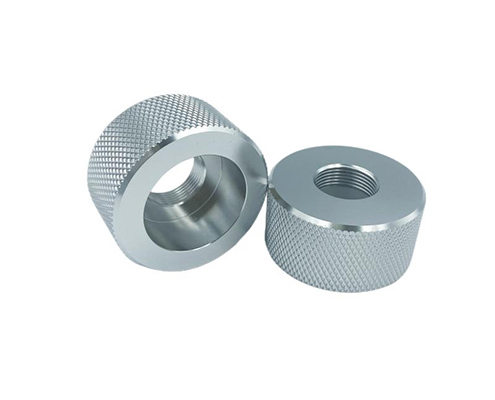
An industrial automation client required custom threaded bushings for a high-speed pick-and-place robotic joint. The design combined an internal M20×1.5 thread with a precision-ground 25 mm OD and a flanged face acting as a thrust bearing surface.
The Challenges
VMT’s Production Approach
The Result: These custom bushings have run continuously in the field for 18 months with zero dimensional non-conformance returns.
Evaluating a custom bushing manufacturer comes down to objective engineering capabilities, not a race to the lowest price. When auditing potential partners, focus heavily on three distinct traits:
Verifiable tolerance control: Shortlist companies that readily provide production-run CMM data rather than pristine, one-off first-article sheets.
Active material traceability: If raw heat numbers do not follow the component through to your final shipping invoice, they are not being tracked.
Upfront DFM analysis: Choose the manufacturing partner that reviews your blueprints to flag tolerance conflicts before they cut raw material.
For custom threaded bushings, flanged variants, and high-precision cylindrical wear parts, VMT delivers single-setup CNC machining backed by transparent material traceability and complete CMM reporting.
[Explore VMT’s Precision Bushing Capabilities]
 WhatsApp/WeChat/Mobile:
+86-15099911516
WhatsApp/WeChat/Mobile:
+86-15099911516 Tel: 86-150-9991-1516
 QQ: 939020977
 E-Mail: service@vimetal.com.cn


What industries require custom CNC machined bushings?
Custom bushings are essential for automotive (powertrains, suspensions), industrial automation (robot joints, linear guides), mining, agriculture, marine, and aerospace (flight controls). In these fields, bushing failure causes costly operational downtime.
How important are tolerances in bushing production?
They dictate whether a part runs for 20,000 hours or seizes in 200. Tight ID-to-shaft clearance prevents thermal seizing, while eliminating looseness avoids shaft rattle. Precise ID-to-OD concentricity ensures even lubrication and prevents dry runs.
What documents should buyers request during supplier evaluation?
Request three key verifications with your quote:
What is the typical surface roughness for a precision bushing ID?
An Ra 0.4–0.8 µm finish is ideal. Below Ra 0.2 µm, the surface is too smooth for oil to adhere; above Ra 1.6 µm, rough peaks tear the oil film, causing metal-to-metal contact. This finish requires grinding or honing after turning.
How does material choice affect lead time?
Standard brass (C36000) and aluminum (6061-T6) are readily stocked, adding zero lead time. Specialty bearing bronzes (C93200, C86300) carry a 2–8 week mill lead time. Choosing a supplier who inventories these specialty alloys saves weeks.
What packaging standard should be specified for shipping?
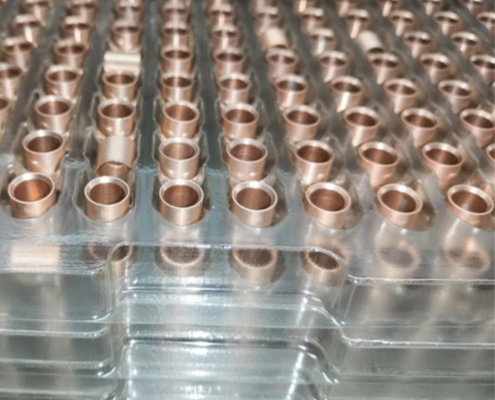
Bushings with an ID finish of Ra 0.8 µm or finer must be individually separated via VCI paper, poly bags, or compartment trays. Bulk packing causes in-transit friction and scratches that ruin precision-honed surfaces before inspection.

 Press Fit: A Complete Guide to Interference Fit in Precision Manufacturing