What is Hybrid Manufacturing and How It Benefit Your Custom Parts
By JunWen Liu | May. 13, 2026
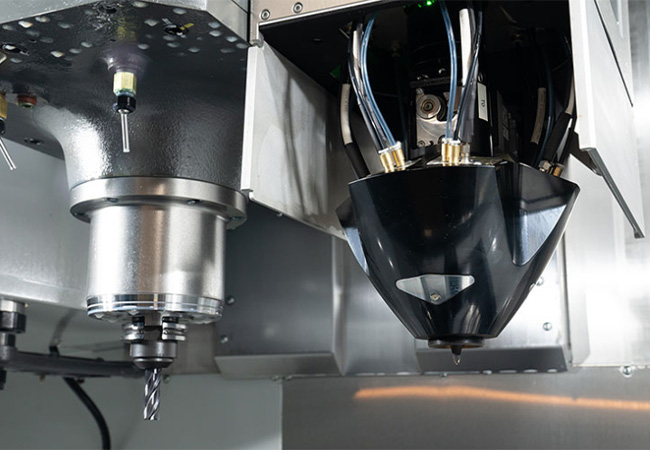

Maybe you have heard of subtractive manufacturing– CNC machining. Usually, you give the drawing of designed parts to factory engineers. And then, they control the CNC machines through computer programming to cut, drill, turn, or grind a piece of material— removing the extra material to obtain the final parts. It’s clear that it can keep the parts’ structural stability and precision control. You might also have heard about the totally different additive manufacturing— 3D printing. The factory prints metal or plastic powder layer by layer using specialized adhesives to form component shapes. It’s also clear that it has the capability of flexible and complex shape making.
But what if you are currently worried that 3D printing can’t achieve the precision and CNC machining can’t achieve the complex internal cavity? This is what we will introduce in this blog— hybrid manufacturing, which can give you the benefits of higher efficiency, flexibility, and high precision for key portions (to ensure perfect assembly or sealing). At the end of the blog, we will also share a case study of how our factory utilizes hybrid manufacturing to help clients achieve high-precision, efficient, and flexible production of complex components.
Hybrid manufacturing is a process where you can simultaneously leverage both:
for the same batch of your custom parts. Then,
There is no fixed requirement for the sequence of hybrid manufacturing. Just tell the factory your requirements of the final wanted parts—complex or precision. As long as the hybrid manufacturing achieves the part requirements in the most rapid, efficient, and flexible way.
In the most common workflow, your partner factory will use 3D printing to create a “near-net shape” (a part that is very close to its final form but lacks precision). Then, the factory performs post-processing for AM using CNC milling to achieve the final dimensions and precise threaded holes. This sequence ensures that only the areas requiring high precision are machined, saving both time and material.
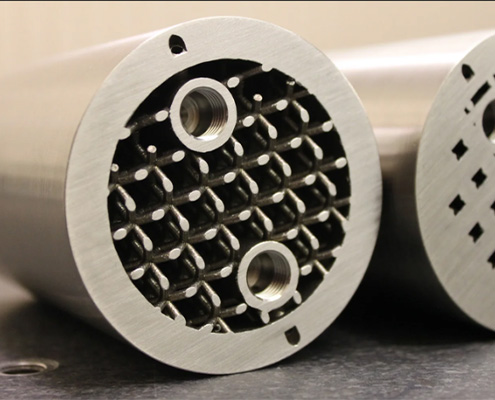
Alternatively, a factory may first CNC machining a high-precision part and then use additive manufacturing to build extremely complex features onto that existing component if you have this requirement.
In some advanced scenarios, subtractive and additive steps are interspersed, alternating throughout the production cycle to achieve internal complexities that would otherwise be impossible to machine.
Hybrid manufacturing rapidly solves the challenge of parts that require both high complexity and high precision. Your complex components can now be completed in a single facility in a “one-stop” process. This eliminates the need to transport parts between different specialized factories for multiple stages of processing, considerably shortening lead times— you can receive the parts earlier!
Traditional CNC machining is often limited by ‘tool access’—if the drill can’t reach it, you can’t make it. Hybrid manufacturing breaks these limits. If you want internal cooling channels or complex lattice structures for your products (e.g. Intricate hydraulic manifolds), then first use 3D printing for channels and then use CNC to ensure the assembly points meet tight tolerances.
This approach is highly effective at reducing costs through two main strategies:
On the current market, dedicated hybrid machines are relatively rare. Most facilities operate with standalone equipment—either 3D printers for additive manufacturing or CNC lathes and milling machines for subtractive processes.
However, the core of hybrid manufacturing lies in “process integration” rather than a “single machine.” While true all-in-one systems are often expensive and hard to find, a factory that houses both 3D printing and CNC machining capabilities can achieve the exact same results. By managing the workflow under one factory, it can also make your parts from the printing bed to the milling center, delivering the benefits of hybrid manufacturing. At VMT factory, we provide you with the same end-to-end advantages at a more competitive cost by synergizing 3D printing with precision CNC machining.
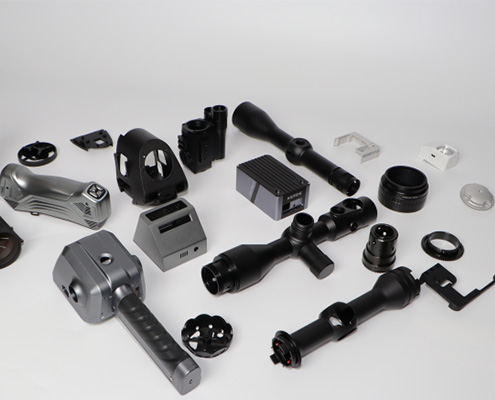
Not necessarily. If you need small precision parts such as gears and shafts in the automotive industry, optical mounts, small drone brackets, tablet housings, or other electronic components, working with a qualified and experienced CNC machining factory is sufficient. Hybrid manufacturing is not required for these standard applications.
High-Precision Complex Hydraulic Manifold
A client approached us requiring a complex Hydraulic Fluid Manifold made from 45# steel(1045 steel). The project presented two critical technical challenges. First, the extreme internal complexity: the design featured curved cooling channels essential for fluid dynamics, which are impossible to create using traditional CNC drilling as drill bits cannot maneuver through curves. Second, the stringent interface requirements: all assembly connection points demanded a precision tolerance of ±0.01mm and high-grade sealing surfaces—specifications that standalone 3D printing cannot consistently achieve.
Our engineering team implemented an integrated hybrid workflow to leverage the strengths of both technologies. We began with Metal 3D Printing (PBF/SLM) to build the “near-net shape” of the block, successfully incorporating the intricate curved internal channels directly into the structure. Following the additive stage, the part was transferred to our 5-Axis CNC Machining Center. Our engineers performed high-precision finishing on the mounting flanges, threaded holes, and critical sealing faces, followed by professional surface treatment to ensure durability and performance.
By combining additive flexibility with CNC precision, we achieved a perfect, leak-proof assembly while maintaining the complex internal geometries required for optimal fluid flow. We finally provide high-performance, corrosion-resistant parts that meet tight tolerances, ensuring a seamless fit for our client’s advanced hydraulic systems.
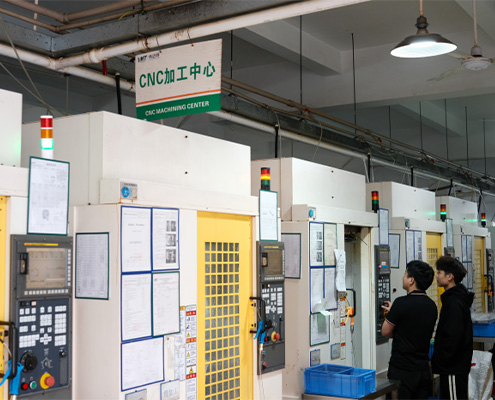
Hybrid manufacturing offers fantastic benefits of cost-efficiency, geometric flexibility, and high precision. Whether you are sourcing custom parts made of metals like aluminum, brass, stainless steel, and carbon steel, or various high-performance plastics, this integrated approach ensures you don’t have to compromise between complexity and accuracy.
Are you ready to optimize your next project? We can help you navigate the complexities of hybrid manufacturing from design to final delivery. Contact our engineering team now for a professional consultation and a competitive quote for your custom parts.
 WhatsApp/WeChat/Mobile:
+86-15099911516
WhatsApp/WeChat/Mobile:
+86-15099911516 Tel: 86-150-9991-1516
 QQ: 939020977
 E-Mail: service@vimetal.com.cn


How to improve surface finish of 3D printed parts?
While 3D printing is great for geometry, it often struggles with tight tolerances and smooth surface finishes. By integrating CNC machining as a post-processing step, we can hit tolerances as precisely as ±0.01mm on critical mating surfaces. Using CNC milling or grinding to fine tune the 3D-printed surfaces ensure the part meets both aesthetic and functional requirements for assembly.
What are the main 3D printing processes (DED and PBF)?
Is rapid prototyping with hybrid manufacturing a good option?
Yes, it is an excellent option. It allows engineers to test fully functional prototypes that have both the complex internal features of 3D printing and the high-precision interfaces of CNC. This “functional prototyping” ensures that the part will perform exactly like a mass-produced component, reducing the risk of failure during the move from R&D to final production.
What are the advantages of hybrid manufacturing?
Hybrid manufacturing compensates for the precision limitations of 3D printing, especially for critical areas, precision holes, and threading. Conversely, it allows CNC-machined parts to incorporate complex geometries in non-mounting areas. For complex parts that demand both high efficiency and intricate shapes, hybrid manufacturing offers a more efficient, economical, and flexible possibility.
How does hybrid manufacturing save costs?
Hybrid manufacturing saves costs by optimizing material usage and reducing labor. For expensive alloys (like Titanium or Inconel), 3D printing a “near-net shape” uses significantly less raw material than carving a part from a solid block. Additionally, it reduces costs by applying high-precision CNC only where it’s truly needed—such as assembly interfaces—rather than over-engineering the entire component, which saves machine time and tooling wear.

 Grade 2 vs. Grade 5 Titanium: Which is Best for Your Project?