Chromate Conversion Coating: Is This Suitable for Your Aluminum CNC Machined Parts?
By JunWen Liu | Aug. 29, 2026
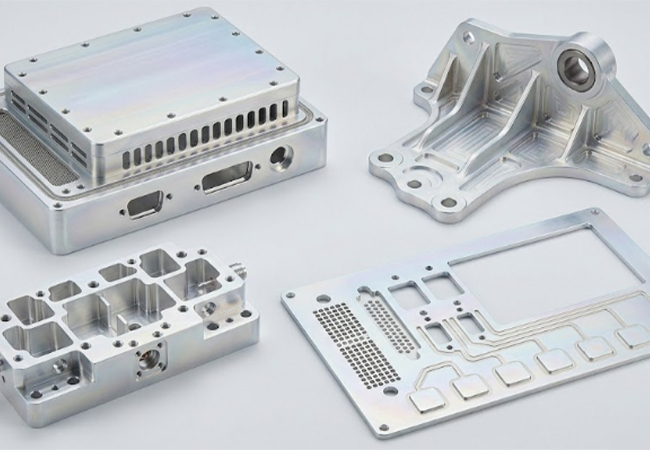
It is easy to understand that you will choose chromate conversion finish for high-precision aluminum CNC machined parts, which brings an ultra-thin(0.25-2.5 μm), conductive, and corrosion-resistant chromate layer with a cheap price. And the common aluminum anodizing, power coating, or painting can’t be electrical conductive and the relative thick film can also affect precision fit assembly with higher cost( even though they can be more scratch-resistant). Special uses like aluminum heat sinks with grounding interfaces, grounding electronic chassis and aerospace assemblies are something that other common aluminum surface finishes cannot replace the chromate conversion coating.
In this guide, you can explore its properties, industrial standards, design considerations, limitations, and applications to help you decide if it is suitable for your next aluminum components’ project. At the end, we will share a case study of how we use chem film to make aluminum aerospace electronics boxes to achieve precision assembly, EMI grounding and corrosive resistance required by a client.
Chromate conversion coating (frequently referred to as chem film, Alodine, or Surtec 650) is what we have mentioned in the introduction section that it provide thin film, conductivity and corrosion resistance to aluminum alloys or other metals(like copper, titanium, zinc, steel alloys, etc.). We know that aluminum is popular for cnc machining and used in all kinds of industries due to it cost-effective, light yet strong, easy to be coated and machined, so what we discuss in this blog is the aluminum chromate conversion coating.
Achieving a durable chemical bond on chromating aluminum requires precise chemical balancing and clean surface preparation. Here is a the simple workflow for you to quick learn the aluminum chromate conversion process.
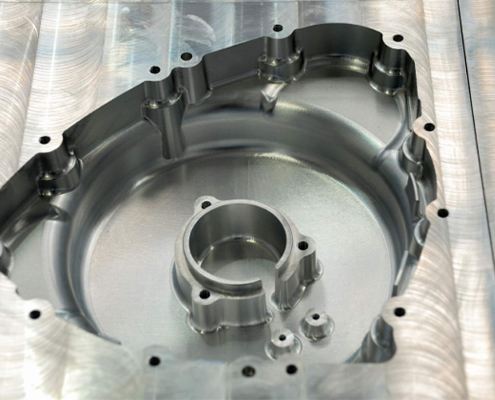
When the CNC aluminum products’ project demands tight dimensional accuracy, active corrosion resistance, and reliable electrical contact, chromate conversion coating for aluminum offers a highly reliable, cost-effective finish.
Micro-Thin Layer (0.00001 to 0.00004 inches / 0.25 to 2.5 µm)
The defining advantage of chemical conversion coating on precision parts is its microscopic film thickness. Measuring between 0.00001 and 0.00004 inches (0.25 to 2.5 µm), the process alters the surface chemistry rather than depositing a heavy physical shell. As a result, you will no need to adjust dimensions or thread pitch calculations to compensate for coating growth.
High Electrical Conductivity
Unlike anodized surfaces, power coating, or painting, which create a dielectric insulator, chromated aluminum (e.g., chem film with MIL-DTL-5541 Class 3) retains excellent surface electrical conductivity, maintaining a surface contact resistance of 0.001 to 0.005 Ω/in² (under 200 psi) with a thin film thickness under 0.25 μm. This makes chromate coating ideal for grounding electronic chassis, EMI/RFI shielding enclosures, and critical aerospace assemblies where static charge dissipation and electrical continuity are mandatory.
Reliable Corrosion Resistance
Though micro-thin, the conversion layer acts as a passive barrier against moisture, saltwater atmosphere, and environmental contaminants. It significantly retards oxidation without alterating mechanical fit.
Versatile Application (Standalone or Primer)
An aluminum chromate conversion layer functions effectively as a standalone finish for protected internal assemblies. Alternatively, its chemical bonding properties make it an exceptional primer layer, improving paint and powder coat adhesion while providing secondary corrosion protection if topcoats are scratched.
Aesthetic Expectation
This is the side benefit. The chromate conversion process adds a distinct visual aspect to the aluminum parts. Type I coatings produce a vibrant iridescent gold-to-tan hue, while Type II coatings offer a clear or faint iridescent finish(clear/light blue). It is important to note that aluminum chromate conversion coating services prioritize functional performance over cosmetic perfection, and the process is generally not treated as a purely decorative finish.
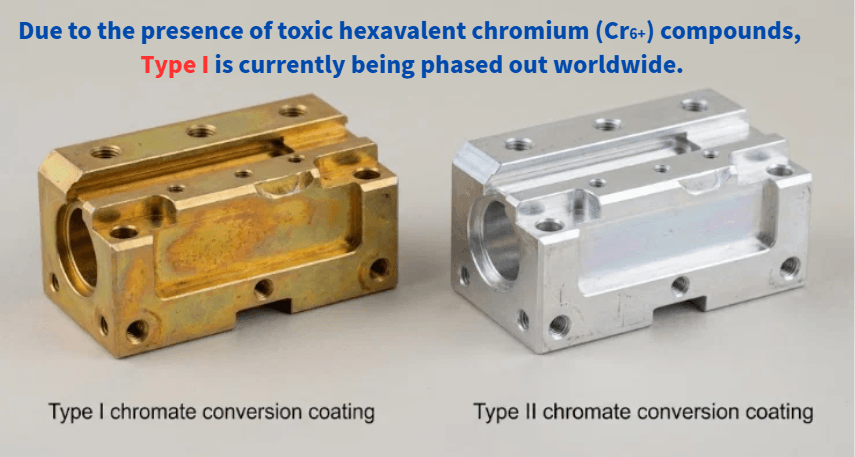
To ensure repeatable quality across defense, commercial, and precision manufacturing applications, chromate conversion coatings are governed by strict international specifications. And among these ones, you may better to choose a supplier that can provide type II class 1A ,or type II class 3 chromate conversion coating (environmental RoHS-compliant) on aluminum under military specification MIL-DTL-5541.
Industry Standards
Types (Chemical Composition)
Classes (Function & Thickness)
Chromate conversion coating provides effective atmospheric corrosion resistance, low electrical contact resistance, and prevents surface galling. To ensure optimal performance and manufacturability, you consider the following guidelines during design:
Fit & Tolerance
Because chromate conversion coating for aluminum CNC machined parts adds almost zero thickness, you do not need to alter machine drawings or tolerance blocks. Fits remain identical before and after processing.
Electrical Grounding Areas
Specify MIL-DTL-5541 Class 3 on your technical drawings for parts requiring EMI shielding or chassis grounding. Specify Class 1A for exterior surfaces prioritizing maximum environmental defense.
Torque & Thread Engagement
Threaded fasteners installed into chromate conversion aluminum exhibit lower friction coefficients than in uncoated raw aluminum. Friction testing confirms that chromated threads glide more smoothly without galling during torque checks and assembly.
However, aluminum has low shear strength, so the chromate coating alone cannot prevent internal thread stripping under load. Maintain sufficient engagement depth when driving steel fasteners into chromate-treated aluminum parts:
Masking Requirements
If specific high-precision mating faces require bare metal contact or must be isolated from chemical baths, precise masking must be applied before processing.
Technical Drawing Callouts
You may use standardized engineering callouts on technical prints.
Example Drawing Callout:
FINISH: CHROMATE CONVERSION COATING PER MIL-DTL-5541F, TYPE II, CLASS 3, CLEAR.
While chromate conversion coating for aluminum offers substantial benefits for tight-tolerance CNC machined parts, you may account for its limits during component design and vendor selection.
Soft Surface Texture: Not Suitable for Wear Applications
While chromate conversion coating (chem film) is ideal for tight-tolerance aluminum CNC parts, its physical limitations must guide your design choices. This soft chemical film provides passive corrosion defense rather than physical wear resistance. You should avoid using chromated coatings on components subjected to sliding contact, continuous mechanical friction, or heavy tool abrasion, reserving them instead for static structural assemblies, electronic housings, or low-friction mating zones.
Surface Flaw Sensitivity: Partnering with Right Manufacturers
Part handling during processing also requires strict quality control. Freshly treated conversion coatings remain sensitive to skin oils, moisture, and fingerprints during their initial 24-hour curing phase. Rather than worrying about the surface defects, partner with an integrated one-stop supplier that handles both precision CNC machining and chromating. Certified suppliers will follow strict requirements, using clean gloves and climate-controlled drying, to ensure parts arrive immaculate and smudge-free.
Regulatory Shift: Universal Standardizing on Type II
Finally, traditional Type I coatings (hexavalent chromium) are practically obsolete due to global RoHS health and environmental restrictions. Modern manufacturing universally standardizes on environmentally safe Type II (trivalent chromium), which yields a clear to light-blue finish. Your decision simply comes down to choosing Class 1A for maximum corrosion protection or Class 3 for ultra-thin, high-conductivity electrical grounding.
As you have learnt, aluminum chromate conversion has its limits of too soft and prone to be scratched, anodizing and powder coating don’t have this cons. But anodizing and powder coating can have its own limits(in other use conditions, limits can also be the pros) depending on your uses of aluminum products. And the selection among them requires balancing dimensional tolerance, electrical properties, wear resistance, and cost. Below is a clear table comparing key features of aluminum chromate conversion vs. anodizing vs. powder coating:
| Feature | Chromate Conversion (Chem Film) | Aluminum Anodizing (Type II / Type III) | Powder Coating |
| Coating Thickness | Ultra-Thin (0.25-2.5 μm) | Moderate (Type II 5-20 μm; Type III 20-50 μm) | Very Thick (50-150 μm) |
| Tolerance Impact | Negligible dimensional change | Moderate to severe (requires offset) | High (requires heavy masking) |
| Electrical Conductivity | Electrically Conductive | Insulator (Non-conductive) | Insulator (Non-conductive) |
| Corrosion Resistance | Moderate to High (168+ hrs salt spray) | Very High (336+ hrs salt spray) | Excellent physical barrier |
| Scratch Resistance | Low | High to Very High | High |
| Cosmetic Appeal | Type II (Iridescent clear with light blue tune) | High (Vibrant dyes, uniform matte/gloss) | High (Wide array of colors/textures) |
| Relative Cost | Low to Moderate | Moderate | Moderate to High |
From aerospace chromate coating requirements to high-frequency telecommunications, applying a chromate conversion coating for aluminum CNC machined parts provides the essential balance of tight-tolerance corrosion protection and surface electrical conductivity across critical industries.
Here are a few of the examples:
Aerospace & Defense
Electronics & Telecommunications
How we use chem film to make aluminum aerospace electronics boxes to achieve precision assembly, EMI grounding and corrosive resistance.
A leading aerospace industry client approached us to manufacture custom 6061-T6 aluminum electronics enclosures for an airborne radar assembly. The project presented a strict set of engineering demands: critical internal pocket features and mating faces required tight tolerances within ±0.005 mm, the entire chassis needed seamless EMI/RFI grounding, and the exterior had to withstand aggressive 168-hour salt spray corrosion testing without adding weight or altering dimensional fit.
To meet these specs, our team first executed high-speed 5-axis CNC milling using precision carbide end mills and adaptive toolpath strategies to prevent thermal deformation across thin wall sections. The next is aluminum surface treatment stage: anodizing was immediately ruled out because its thick dielectric layer acts as an electrical insulator, preventing ground continuity across the chassis panels. Instead, our team implemented a precision-controlled MIL-DTL-5541, Type II, Class 3 chromate conversion coating (Surtec 650) process. By utilizing a micro-thin trivalent chromium conversion film measuring under 1 µm, we delivered high-grade chemical corrosion resistance while fully preserving the micro-inch tolerances of the CNC-milled mating faces and threaded mounting features.
The final housing achieved an electrical contact resistance of less than 2.5 mΩ across panel interfaces while passing the full 168-hour ASTM B117 salt fog test with zero evidence of pitting or oxidation. By integrating precision 5-axis machining with in-house chemical conversion finishing, it no need to do any rework, reduced total manufacturing lead time by 27%, and lowered overall component production costs by 22% while remaining 100% RoHS compliant.
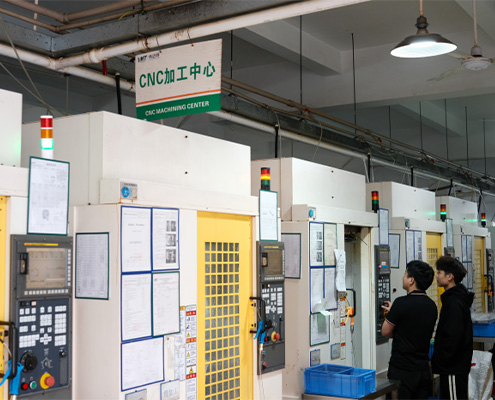
When evaluating surface finishes for precision aluminum CNC machined parts, chromate conversion coating stands out for its unique combination of micro-thin dimensioning, active corrosion protection, and high electrical conductivity. By understanding standards like MIL-DTL-5541 and specifying the right Type and Class, you can safeguard tight machining tolerances while ensuring reliable performance in demanding environments. Partnering with qualified aluminum chromate conversion coating services ensures your parts meet exact technical specifications from initial machining to final surface delivery. Still unsure of aluminum chromate conversion suitable for your project or not, or considering other aluminum surface finishes? Welcome to contact us to do the best-suit machining and surface treatments for your next precision aluminum component project. [2D Drawings (PDF files), 3D Drawings (IGS/STP/STEP files)].
 WhatsApp/WeChat/Mobile:
+86-15099911516
WhatsApp/WeChat/Mobile:
+86-15099911516 Tel: 86-150-9991-1516
 QQ: 939020977
 E-Mail: service@vimetal.com.cn


Q1: Is chromate conversion coating the only surface finish that maintains electrical conductivity on aluminum parts?
A: No. While chromate conversion (chem film) is the most common choice for maintaining low contact resistance, other options include conductive anodizing (using specialized secondary sealing or selective stripping processes), non-chromate chemical conversion coatings (such as titanium or zirconium-based films), and electroless nickel or silver plating.
Q2: Are standard aluminum anodizing, powder coating, and liquid painting electrically insulating?
A: Yes. Although anodizing, powder coating, and painting offer superior scratch and wear resistance compared to chromate conversion, they all create an electrically insulating barrier that prevents chassis grounding and electrical conductivity.
Q3: Does chromate conversion coating alter the dimensional tolerances of precision CNC machined aluminum parts?
A: Virtually no. The typical coating thickness ranges from 0.25 to 2.5 µm (0.00001 to 0.00004 inches). Because this chemical layer is micro-thin, it nearly zero alter the dimensional tolerances of precision CNC machined aluminum parts.
Q4: What is the practical difference between Type I and Type II chromate conversion coatings?
A: Type I relies on hexavalent chromium (Cr6+), producing a classic gold/yellow finish with maximum self-healing corrosion resistance, but it is largely obsolete due to global RoHS regulations. Type II uses trivalent chromium (Cr3+), yielding a clear to light-blue iridescent finish that is fully RoHS-compliant and standard for modern manufacturing.
Q5: What is the difference between MIL-DTL-5541 Class 1A and Class 3?
A: Class 1A provides maximum corrosion protection and is used for exterior unpainted surfaces or as a primer base for liquid paint or powder coating. Class 3 is specifically formulated to provide low contact resistance for electrical conductivity and chassis grounding applications.
Q6: Can chromate conversion coating be used on internal threads and tight mating surfaces?
A: Yes. Due to its micro-thin layer, chromate conversion protects internal threads without causing binding or pitch alteration. Furthermore, friction testing shows that chromated aluminum threads glide more smoothly during assembly compared to raw aluminum, reducing the risk of galling.
 Written By JunWen Liu
JunWen Liu holds a Mechanical Engineering degree from Esslingen University of Applied Sciences and spent seven years as a CNC Process Engineer, accumulating extensive hands-on experience. She now shares that knowledge through her writing, drawing from real problems she encountered on actual projects. Outside of work, she enjoys hiking and is always chasing the next summit view.

 Comprehensive Guide to Rapid Prototyping Methods: Types, Comparison and Sel...