6063 aluminum: Key properties and Common uses
By Luca Xie | Nov 12, 2025


Have you ever struggled with metal parts that corrode too soon, fail to fit precisely, or lose their finish after assembly? The wrong alloy can silently damage both your product quality and reputation. 6063 aluminum offers strength, corrosion resistance, and a smooth finish, solving these common issues.
6063 aluminum is the focus of this guide. You’ll learn what is aluminum 6063, its key properties, common uses, and how it compares with 6061 vs 6063 aluminum. Whether you’re an engineer, designer, or sourcing specialist, this article helps you understand the 6063 aluminum material properties you need to select the right alloy for your next project.

6063 aluminum, also known as aluminium 6063 or aluminum 6063 alloy, is a medium-strength alloy primarily composed of aluminum, magnesium, and silicon. It belongs to the 6xxx series—recognized for excellent extrudability and corrosion resistance. Because of its smooth surface and ability to form complex shapes, 6063 aluminium alloy properties make it one of the most preferred materials for extrusion and decorative applications.
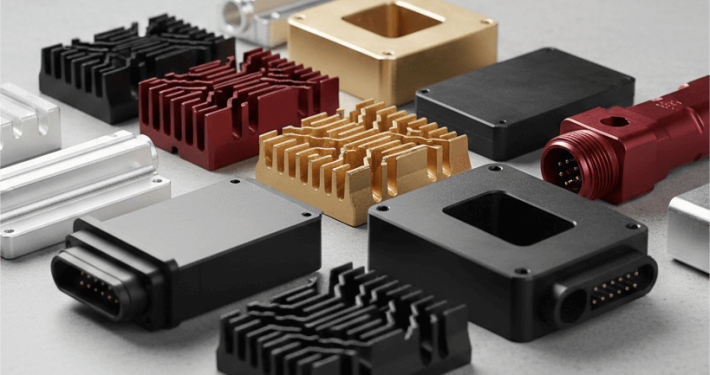
While 6063 is famous for extrusions, it truly shines when it comes to high-end CNC machining.Click the sections below to see how we transform 6063 alloy into precision-engineered masterpieces using our advanced machining and finishing techniques.
The 6063 aluminum material properties are what make this alloy stand out in both extrusion and precision machining. Its unique balance of mechanical strength, corrosion resistance, and surface quality allows you to create products that perform reliably while looking flawless. Let’s explore the major al 6063 properties that define its performance and usability.
The chemical composition of 6063 aluminium alloy mainly includes aluminum (Al), magnesium (Mg), and silicon (Si). The precise mix of these elements determines its mechanical behavior and ability to achieve a fine finish after extrusion or machining.
The combination of magnesium and silicon forms magnesium silicide (Mg₂Si), which gives 6063 aluminum its strength and excellent thermal conductivity.
The density of aluminium alloy 6063 is around 2.70 g/cm³, which makes it lightweight yet strong enough for demanding applications like architectural frameworks and precision-machined components.
| Element | Content (%) |
| Aluminum (Al) | Balance |
| Magnesium (Mg) | 0.45 – 0.9 |
| Silicon (Si) | 0.2 – 0.6 |
| Iron (Fe) | ≤ 0.35 |
| Copper (Cu) | ≤ 0.10 |
| Manganese (Mn) | ≤ 0.10 |
| Zinc (Zn) | ≤ 0.10 |
| Titanium (Ti) | ≤ 0.10 |
Thanks to its high aluminum content and magnesium-silicon combination, 6063 aluminum shows excellent corrosion resistance in most atmospheric environments. It performs exceptionally well in marine, industrial, and architectural settings. After anodizing, the surface becomes even more resistant to oxidation, moisture, and wear.
This makes 6063 aluminium properties especially valuable for outdoor applications, where exposure to air and humidity is constant. When anodized, it not only gains protection but also achieves a refined visual appeal ideal for decorative designs or high-end CNC-finished housings.
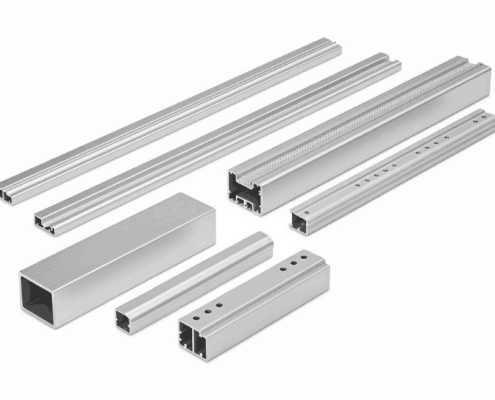
One of the defining 6063 aluminium alloy properties is its exceptional extrudability. Among all 6xxx series alloys, 6063 aluminum is one of the easiest to extrude into complex, precise, and smooth profiles. This makes it a top choice for producing shapes with tight tolerances, thin walls, and intricate geometries.
During extrusion, aluminium 6063 maintains uniform surface quality, allowing manufacturers to produce long, defect-free sections—perfect for architectural, automotive, and industrial components. For CNC machining, this also means that pre-extruded 6063 stock requires less surface finishing and delivers higher efficiency in cutting and shaping.
Because of this property, 6063 aluminum is often used when appearance and dimensional accuracy must coexist, such as in decorative trims, LED housings, and precision brackets.
When it comes to finishing, few alloys can match 6063 aluminium properties. Its fine grain structure and clean surface make it ideal for anodizing, powder coating, and polishing. After anodizing, the surface becomes harder, more resistant to scratches, and capable of achieving various colors or matte effects.
For engineers and product designers, this means aluminum 6063 alloy offers a perfect balance between visual quality and durability. The surface finish can reach a mirror-like reflection or a uniform matte texture depending on your finishing process—making it a preferred alloy for visible precision parts and architectural details.
6063 aluminum is available in several tempers, each designed for different strength and formability needs. The most common are 6063-T5 and 6063-T6, both frequently used in extrusion and precision machining, but other tempers like T4 and T832 are also used for specific performance requirements.
For most industrial applications, 6063-T5 provides the best combination of extrusion quality and aesthetic finish. When higher strength and hardness are necessary, 6063-T6 or 6063-T832 are often preferred for precision components and structural profiles.
| Temper | Process | Key Characteristics |
| 6063-O | Annealed | Very soft, easy to form and bend |
| 6063-T1 | Naturally aged after cooling | Moderate strength with good ductility |
| 6063-T4 | Solution heat-treated and naturally aged | Higher ductility, suitable for complex forming before final hardening |
| 6063-T5 | Artificially aged after extrusion | Balanced strength and surface finish |
| 6063-T6 | Solution heat-treated and artificially aged | Maximum strength and hardness for structural parts |
| 6063-T832 | Cold worked and stabilized after heat treatment | High dimensional stability and improved mechanical strength |
Other tempers
T52, T53, T54, T55: These tempers are created by artificial aging to achieve specific mechanical properties.
T62: This temper is produced by a different aging process than T6, though they are similar.
Because of its balance of strength, corrosion resistance, and smooth surface finish, 6063 aluminum has become one of the most widely used alloys across industries. From architectural profiles to CNC machined components, it offers versatility that supports both function and design. Let’s look at some of the most common applications where 6063 aluminium properties deliver outstanding results.

In the architectural industry, 6063 aluminum is known as the “architectural alloy.” Its excellent extrudability and ability to hold fine surface finishes make it perfect for applications like window frames, door frames, curtain walls, and decorative trims.
The alloy’s corrosion resistance ensures that these structures maintain their appearance even in harsh outdoor conditions. After anodizing, 6063 aluminum achieves an elegant, durable finish that resists fading and weathering for years. Its low density of aluminium alloy 6063 also reduces overall building weight without sacrificing strength.
In the automotive field, 6063 aluminum is used for structural and decorative parts such as roof rails, trim components, and radiator tubes. Engineers value the 6063 aluminium alloy properties for their lightweight nature and strong heat dissipation.
Thanks to its high al 6063 thermal conductivity, it helps manage temperature in engine and electric vehicle systems. The smooth surface and excellent formability allow complex CNC machining of parts that combine aesthetics with precision performance.
The high electrical conductivity of aluminium 6063 makes it a great choice for electrical bus bars, connectors, and enclosures. Although slightly lower in conductivity than pure aluminum, it provides far better mechanical strength, allowing durable yet lightweight electrical assemblies.
In industrial applications, 6063 aluminum material properties enable efficient current flow while withstanding mechanical stress, making it ideal for both stationary and mobile electrical components.
In irrigation systems, 6063 aluminum is often used for tubing, connectors, and frames due to its corrosion resistance and smooth inner surface. Its resistance to water and chemicals ensures long-term reliability, while its light weight allows easy installation and maintenance in large agricultural fields.
Because of its formability, aluminum 6063 alloy tubing can be extruded or machined into custom shapes that optimize water flow and pressure control—critical for precision irrigation systems.
The lighting industry relies heavily on 6063 aluminium properties, especially for LED housings, reflectors, and heat sinks. The excellent al 6063 thermal conductivity ensures efficient heat dissipation, extending the lifespan of LEDs and electronic components.
Moreover, its smooth surface finish supports anodizing and polishing, helping achieve premium visual quality in architectural and consumer lighting designs. Many modern lighting systems use CNC machined 6063 housings for seamless assembly and aesthetic appeal.
For furniture manufacturing, 6063 aluminum offers both form and function. Its lightweight structure, smooth surface, and ability to take on various finishes make it perfect for modern, minimalist designs. Chairs, tables, and frame structures benefit from its high strength-to-weight ratio and corrosion resistance.
The alloy’s 6063 aluminum material properties allow easy shaping, joining, and polishing, enabling designers to produce pieces that combine strength, elegance, and long-term durability.
When choosing the right aluminum for your project, the comparison between 6061 vs 6063 aluminum is one of the most common. Both belong to the 6xxx series and share similar chemistry—mainly aluminum, magnesium, and silicon,but their material properties and performance differ in key ways.
The table below highlights the major differences between 6061 and 6063 aluminum alloys, helping you decide which one best fits your specific application:
| Property | 6061 Aluminum | 6063 Aluminum |
| Strength | Higher tensile and yield strength | Medium strength, excellent for extrusion |
| Machinability | Very good, suitable for heavy-duty machining | Good, smoother surface finish |
| Corrosion Resistance | Excellent | Excellent, especially after anodizing |
| Surface Finish | Coarser, not ideal for decorative use | Smooth, ideal for anodizing and aesthetic purposes |
| Extrudability | Moderate | Excellent — best in the 6xxx series |
| Formability | Moderate | High — suitable for complex profiles |
| Thermal Conductivity | ~167 W/m·K | ~200 W/m·K (al 6063 thermal conductivity) |
| Common Uses | Aerospace, fixtures, automotive parts | Architecture, lighting, precision CNC parts |
The main difference lies in strength and appearance. 6061 aluminum is chosen when higher strength and rigidity are needed, such as for mechanical parts or aircraft components. 6063 aluminum, on the other hand, is selected when surface quality and extrudability are more important—especially in architectural and decorative applications.
From a CNC machining perspective, 6061 cuts slightly better due to its higher hardness, but 6063 provides cleaner surface finishes and less tool wear. If your goal is precision combined with a refined aesthetic—like housings, trims, or visible components—6063 aluminium alloy properties make it the superior choice.

Many manufacturers encounter similar problems when working with 6063 aluminum. Thin-walled parts deform under cutting stress, surface roughness fails to meet design standards, and anodized finishes often show inconsistent color or gloss. These issues not only raise costs but also make it difficult to achieve the visual and dimensional precision modern products demand.
VMT addressed these challenges by refining every process step. Our engineers optimized toolpaths to reduce vibration, designed custom fixtures for better clamping, and adjusted surface preparation before anodizing to match 6063 aluminium alloy properties. The results were precise, stable, and consistent—accuracy within ±0.01 mm, a mirror-like surface of Ra 0.2 μm, and uniform anodizing across all batches. With over 15 years of CNC expertise, VMT turns machining difficulties into dependable, high-quality production. Contact us today to get a quote for your 6063 aluminum project.
6063 aluminum combines excellent corrosion resistance, smooth surface finish, and good strength, making it perfect for architecture, automotive, lighting, furniture, and precision CNC parts. Its high extrudability, 6063 aluminium properties, and thermal conductivity ensure reliable, visually appealing components across a wide range of applications.
Can 6063 aluminum be bent?
Yes. 6063 aluminum offers excellent formability, especially in the T4 or T5 temper. It can be bent or shaped without cracking, which makes it ideal for curved frames, architectural extrusions, and furniture parts.
Can 6063 aluminum be anodized in different colors?
Absolutely. 6063 aluminum responds very well to anodizing and can achieve a wide range of colors, including silver, black, bronze, and gold. The anodized finish not only enhances its aesthetic appeal but also provides improved corrosion and wear resistance.
Is 6061 or 6063 more expensive?
In most cases, 6063 aluminum is slightly less expensive than 6061. This is because 6063 has lower strength but better extrudability, making it easier and cheaper to produce complex shapes like architectural profiles or decorative trims. However, prices may vary depending on temper, finish, and supplier.

 Cnc Material: Types and Manufacturing Performance