Grade 2 vs. Grade 5 Titanium: Which is Best for Your Project?
By JunWen Liu | May. 14, 2026
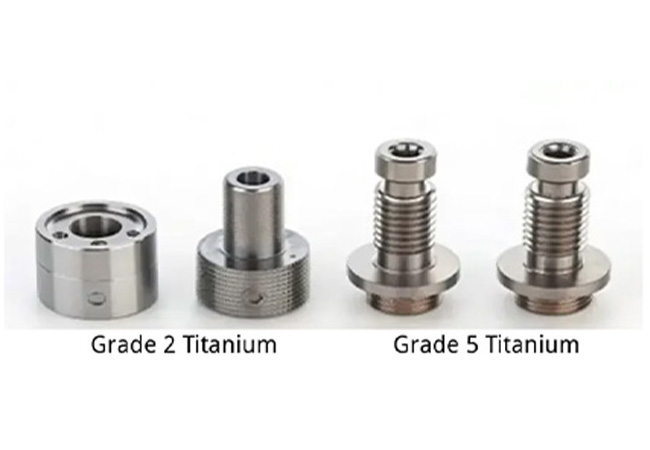

Suppose you are currently sourcing titanium joints for a hydraulic system, or designing a lightweight titanium robot joint requiring frequent disassembly and assembly; how would you choose between grade 2 titanium and grade 5 titanium?
Grade 2 titanium is softer but has higher ductility, while grade 5 titanium is stronger but priced almost twice as much as grade 2, and also carries risks of galling if used in two contacting parts with friction. You should be careful of the differences between grade 2 and grade 5 titanium regarding the parts’ usage life, assembly precision, and the budget. At the end of this blog, a case study from our factory will also be shared: how we addressed the susceptibility to damage of automotive titanium suspension components for our clients.
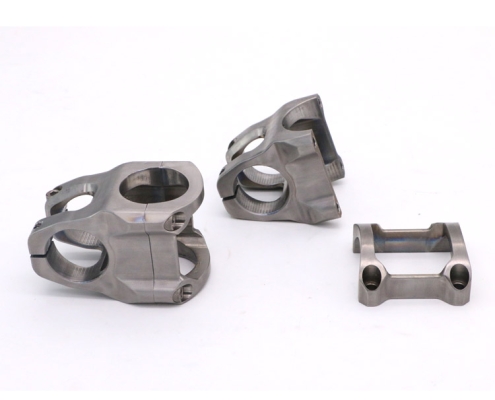
When choosing between grade 2 and grade 5 titanium, understanding the core mechanical trade-offs is essential for the integrity of your design. Below is a breakdown of their performance across key metrics:
The most significant difference lies in their load-bearing capacity. Grade 5 titanium boasts a yield strength of approximately 880 MPa, which far exceeds the approx 275MPa offered by grade 2. This high strength-to-weight ratio also correlates with superior tensile strength(grade 5: over 895MPa , grade 2: over 345 MPa), making it well-performed in high-stress environments. If your components serve as load-bearing structural parts or fasteners for pressure vessels, grade 5 is the suitable choice.
Beyond raw strength, grade 5 titanium offers significantly better fatigue resistance. It can withstand much higher alternating stress cycles before developing cracks, whereas grade 2 is more prone to fatigue failure under repeated mechanical loading. For parts subject to constant vibration or cyclic motion—such as connecting rods, springs, or the robot joints mentioned earlier—grade 5 will provide a much longer service life.
While grade 5 is stronger, grade 2 titanium offers significantly higher ductility, with an elongation rate typically 20%. This makes the material much easier to deform without fracturing. If your custom parts require fine-tuning, bending, or cold-forming after assembly, grade 2 provides a much higher margin of error and workability.
Grade 5 titanium is considerably harder than grade 2. This increased hardness directly enhances the part’s wear resistance, allowing it to withstand abrasive environments more effectively. However, this same hardness is what increases the risk of galling in high-friction interfaces, requiring careful consideration of surface treatments or lubrication during the design phase.
To be honest, the gap between these two isn’t as wide as you might think—both are absolute excellent when it comes to corrosion resistance. However, since grade 2 is commercially pure titanium (99.5% inert titanium), it does have a slight edge in being more corrosion-resistant . Combine that with its excellent ductility, and it becomes a perfect, cost-effective choice for chemical processing like tube or pipe uses—far more budget-friendly than grade 5.
On the other hand, if your product is intended for deep-sea high-pressure assembly, grade 5 is the more suitable choice. It provides both strong corrosion resistance and the structural integrity to resist deformation under intense pressure.
Additionally, both grades are biocompatible, making either one a viable option for medical implants or devices that come into contact with the human body. The only critical caveat is temperature: while grade 2 has slightly better corrosion resistance, it begins to lose its strength at temperatures above 300°c, rendering its durability ineffective. in contrast, grade 5 titanium maintains its high-performance properties even at 400°C.
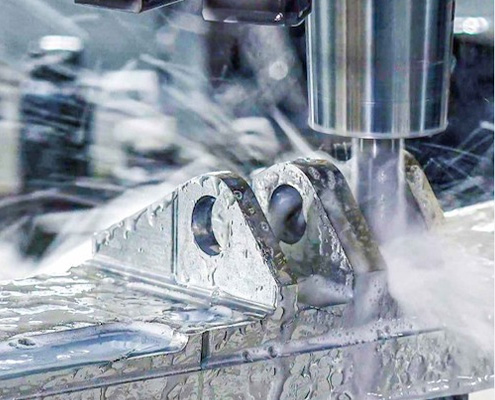
When it comes to titanium CNC machining, the choice of titanium grade directly dictates your project’s timeline and budget.
Grade 5 titanium, due to its low thermal conductivity(6.7 W/m·K), causes heat to concentrate at the cutting edge. This forces machine shops to reduce cutting speeds, resulting in machining times that are typically 40% to 150% longer than those of grade 2. Since CNC costs are often billed by the minute, this directly means higher costs and longer lead times.
On the other hand, while grade 2 is softer, it is notoriously “gummy.” During cutting, the chips tend to stick together and smear, which can compromise the surface quality compared to the cleaner performance of grade 5. If your project demands high precision for grade 2 components, you may face additional expenses for secondary finishing. In fact, the higher hardness of grade 5 makes it much easier to achieve a high-quality mirror finish with a low Ra value(roughness). While grade 2 is prone to developing micro-burrs during precision milling, grade 5 produces “crisper” chips, ensuring a more perfect mating surface for your precision assemblies.
Ultimately, the success of your custom parts depends on how they integrate into your final assembly.
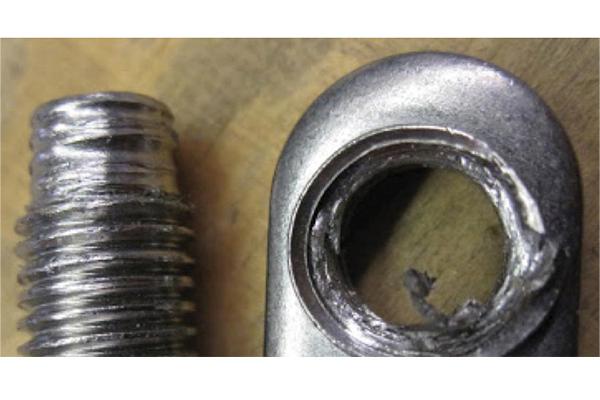
Thread galling is a common challenge when assembling titanium components. Due to its higher hardness, grade 5 offers slightly better resistance to galling than Grade 2. However, regardless of the grade you choose, we strongly recommend addressing this during the design phase. To ensure smooth assembly, consider specifying specialized lubrication coatings to minimize friction, or just not put two tianium parts’ friction.
If your project involves extensive welding, Grade 2 is the favorite. It is exceptionally “welder-friendly” and produces joints with excellent toughness. While grade 5 is certainly weldable, it requires much more stringent process controls. To prevent the welds from becoming brittle and cracking, grade 5 often necessitates post-weld heat treatment, which can add complexity and cost to your fabrication cycle.
How we addressed the susceptibility to damage of automotive titanium suspension components for our clients.
A client recently approached VMT to resolve an issue with automotive suspension components that were prone to premature failure. The original parts could not withstand the high-frequency vibrations and cyclic stress encountered during performance driving, leading to micro-cracking and fatigue damage. This not only compromised the vehicle’s safety but also resulted in frequent and costly replacements.
After a thorough evaluation, our engineering team recommended transitioning the material to grade 5 titanium (Ti-6Al-4V). Given the application’s demand for high-stress endurance, grade 5’s superior fatigue resistance and high yield strength were essential to prevent structural degradation. We also optimized our CNC machining parameters to handle the material’s low thermal conductivity, ensuring high-precision tolerances while maintaining the alloy’s structural integrity throughout the manufacturing process.
The switch to Grade 5 titanium delivered exceptional results, considerably extending the service life of the suspension components. Field testing confirmed that the parts could now endure prolonged high-vibration conditions without signs of fatigue or failure. By addressing the susceptibility to damage through advanced material selection and precision machining, we provided our client with a reliable, high-performance solution that reduced long-term maintenance costs and enhanced their product’s reputation for durability.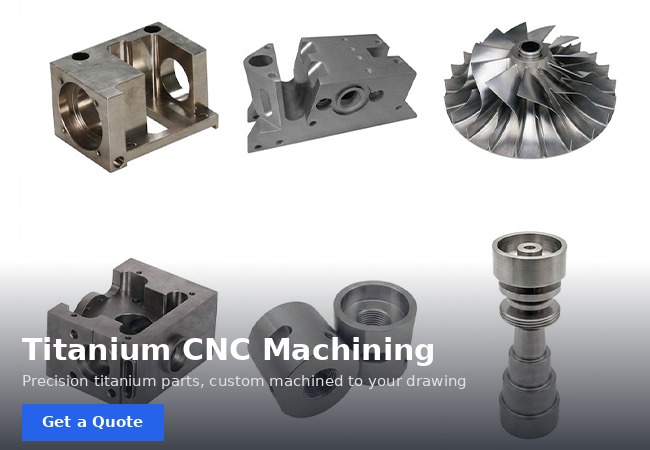
In this guide, we have explored the key differences between grade 2 and grade 5 titanium, covering aspects from mechanical strength and corrosion resistance to machining efficiency and assembly challenges. Whether your priority is the high-ductility and cost-effectiveness of grade 2 or the better fatigue resistance and structural integrity of grade 5, the right choice ultimately depends on your project’s specific operational environment and budget.
Ready to start your next project? Send us your part drawings today. Our engineering team at VMT will analyze your assembly requirements and recommend the optimal machining solution—whether Grade 2 or Grade 5—to ensure the best balance of performance and cost. Contact us now for a professional consultation and an instant quote.
 WhatsApp/WeChat/Mobile:
+86-15099911516
WhatsApp/WeChat/Mobile:
+86-15099911516 Tel: 86-150-9991-1516
 QQ: 939020977
 E-Mail: service@vimetal.com.cn


Is grade 5 titanium harder to machine than grade 2?
Yes, grade 5 is significantly harder to machine due to its high strength and low thermal conductivity, often requiring 40% to 150% more machining time than grade2.
What is the cost difference between grade 2 and grade 5 titanium?
Grade 5 titanium is generally much more expensive, often costing nearly twice as much as grade 2 due to its complex alloying elements and higher processing costs.
Which is the best titanium grade for medical devices?
Both are excellent due to their biocompatibility, but grade 2 is often preferred for its formability in simple implants, while grade 5 is chosen for high-strength structural applications like orthopedic screws.
When to choose grade 2 titanium over grade 5?
Choose grade 2 when your project requires high ductility for cold-forming, superior corrosion resistance in chemical environments, or when you need to minimize material and machining costs.
When to choose grade 5 titanium over grade 2?
Opt for Grade 5 titanium when your project demands high mechanical performance, such as in load-bearing structural components, high-pressure environments, or applications subject to intense vibration and fatigue. It is the superior choice for precision parts—like robot joints or engine components—where resisting deformation and maintaining a high strength-to-weight ratio are more critical than cost savings or ductility.
The technical information and manufacturing advice shared on the VMT website are for general guidance only. While we strive for accuracy, VMT does not guarantee that the processes, tolerances, or material properties mentioned are applicable to every specific project. Any reliance you place on such information is strictly at your own risk. It is the buyer’s responsibility to provide definitive engineering specifications for any production orders. Final specifications and service terms shall be subject to the formal contract or quotation confirmed by both parties.


 Top 10 CNC Camera Parts Manufacturers in China