Austenitic vs Martensitic Stainless Steel: Key Differences
By Luca Xie | Dec .15, 2025
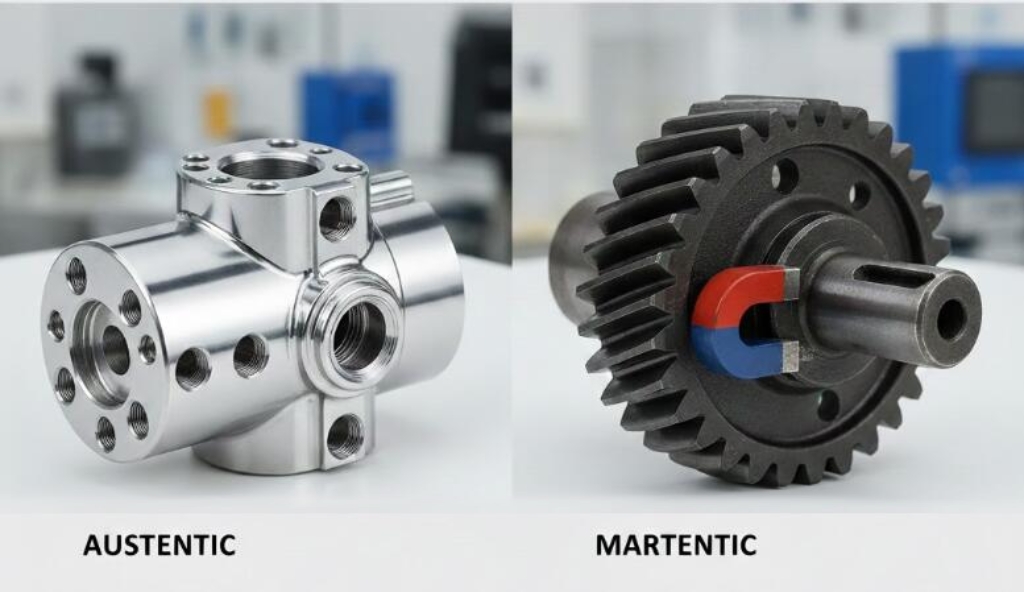

Selecting the wrong stainless steel often leads to premature wear, unexpected corrosion, and mechanical failure. Many engineers still confuse martensitic vs austenitic stainless steels. This misunderstanding increases redesign risk, delays projects, and raises total manufacturing costs.
Austenitic vs martensitic stainless steel selection depends on structure, strength, corrosion resistance, and magnetism. Austenitic steel offers high ductility and corrosion resistance. Martensitic stainless steel delivers higher hardness and strength. Understanding martensitic vs austenitic behavior helps you avoid material mismatch, performance loss, and long-term reliability risks.
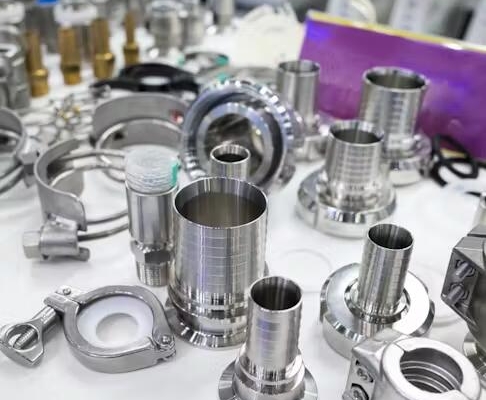
Austenitic stainless steel is defined by a stable austenite structure with a face centered cubic FCC crystal form. This structure gives austenitic steel excellent ductility and corrosion resistance. It is usually non-magnetic and remains stable under temperature changes. These traits make it suitable for complex parts and tight tolerance designs.
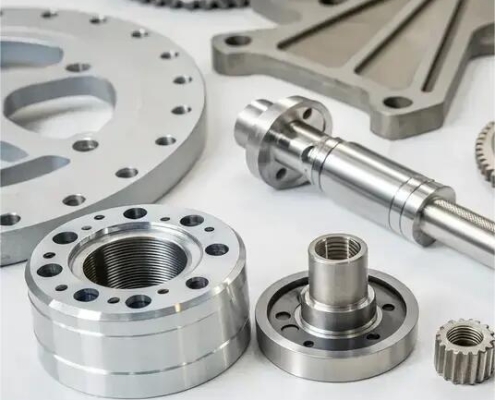
Martensitic stainless steel is defined by a martensite structure with a body centered tetragonal BCT crystal form. This structure enables high hardness and strength after heat treatment. Martensitic steel is magnetic and less ductile than austenitic grades. It is chosen when wear resistance and load capacity matter most.
Chemical composition is the root cause of the difference between austenitic vs martensitic stainless steel. Element content controls phase stability, heat response, and long-term performance. This is where martensite vs austenite truly begins.
Austenitic stainless steel relies on chromium and nickel to stabilize austenite. Low carbon preserves ductility and corrosion resistance. Martensitic stainless steel reduces nickel and increases carbon. This allows martensite formation after quenching, which raises hardness and strength.
The table below summarizes the typical elemental ranges that define austenitic and martensitic stainless steels used in engineering applications.
| Element | Austenitic stainless steel | Martensitic stainless steel |
| Chromium Cr | 16.0–20.0 % | 11.5–18.0 % |
| Nickel Ni | 8.0–14.0 % | 0.5–2.0 % |
| Carbon C | 0.03–0.08 % | 0.10–1.20 % |
| Manganese Mn | ≤ 2.0 % | ≤ 1.0 % |
| Silicon Si | ≤ 1.0 % | ≤ 1.0 % |
| Molybdenum Mo | 0–3.0 % | 0–1.0 % |
| Iron Fe | Balance | Balance |
Grades define commonly used austenitic and martensitic stainless steel for specific applications. Selecting the right grade ensures proper strength, corrosion resistance, and CNC machinability. Engineers often rely on standardized grades to quickly identify material and plan machining processes.
The table below lists common austenitic stainless steel grades, including their AISI, ASTM/UNS, EN, and JIS designations. These grades are widely used for corrosion-resistant and high-precision CNC parts.
| Stainless Steel Family | AISI | ASTM / UNS | EN | JIS |
| Austenitic | 301 | S30100 | 1.4310 | SUS301 |
| Austenitic | 302 | S30200 | 1.4305 | SUS302 |
| Austenitic | 304 | S30400 | 1.4301 | SUS304 |
| Austenitic | 304L | S30403 | 1.4307 | SUS304L |
| Austenitic | 316 | S31600 | 1.4401 | SUS316 |
| Austenitic | 316L | S31603 | 1.4404 | SUS316L |
| Austenitic | 321 | S32100 | 1.4541 | SUS321 |
| Austenitic | 347 | S34700 | 1.4550 | SUS347 |
| Austenitic | 309 | S30900 | 1.4828 | SUS309 |
| Austenitic | 310 | S31000 | 1.4845 | SUS310 |
The following table shows common martensitic stainless steel grades with international designations.
| Stainless Steel Family | AISI Grade | ASTM / UNS | EN | JIS |
| Martensitic | 410 | S41000 | 1.4006 | SUS410 |
| Martensitic | 416 | S41600 | 1.4005 | SUS416 |
| Martensitic | 420 | S42000 | 1.4021 | SUS420 |
| Martensitic | 431 | S43100 | 1.4057 | SUS431 |
| Martensitic | 440A | S44003 | 1.4125 | SUS440A |
| Martensitic | 440B | S44004 | 1.4125 | SUS440B |
| Martensitic | 440C | S44004 | 1.4125 | SUS440C |
| Martensitic | 403 | S40300 | 1.4028 | SUS403 |
| Martensitic | 405 | S40500 | 1.4003 | SUS405 |
Austenitic steel is generally non-magnetic in the annealed condition. This behavior comes from the stable austenite structure. In practice, austenitic vs martensitic selection often favors austenitic materials where magnetic interference must be avoided, such as electronic housings or precision assemblies.
Martensitic stainless steel is magnetic by nature. Its structure allows magnetic domains to align easily. When comparing martensitic vs austenitic stainless steel, magnetism becomes critical for components near sensors, motors, or magnetic fixtures. Engineers must account for this property during design and material selection.
Austenitic steel cannot be hardened by heat treatment. Heating and rapid cooling do not change its strength significantly. Heat treatment mainly relieves stress and improves corrosion resistance. During CNC machining,this stability helps maintain tight tolerances and consistent surface quality.
Martensitic stainless steel responds strongly to heat treatment. Quenching and tempering increase hardness and strength. This process transforms martensite vs austenite and allows property control. Engineers often machine parts in the annealed state, then heat treat for final performance.
Austenitic steel provides moderate hardness and strength with excellent stability. It strengthens mainly through cold working. In CNC machining, cutting forces remain stable, but work hardening increases tool wear if feeds are too low.
Martensitic stainless steel achieves much higher hardness and tensile strength after heat treatment. This makes it suitable for shafts, wear parts, and load-bearing components. When comparing martensitic vs austenitic, mechanical strength is the most decisive factor.
The table below compares typical hardness and tensile strength ranges for common grades.
| Stainless Steel Type | Typical Grade | Hardness HB | Hardness HRC | Tensile Strength MPa |
| Austenitic | 304 | 150–190 | — | 515–720 |
| Austenitic | 316L | 140–180 | — | 485–620 |
| Austenitic | 321 | 150–200 | — | 515–750 |
| Martensitic | 410 | 170–200 | 20–25 | 700–850 |
| Martensitic | 420 | 200–240 | 48–52 | 900–1100 |
| Martensitic | 440C | 230–260 | 58–60 | 950–1200 |
Austenitic steel shows excellent ductility and impact toughness. It maintains toughness even at low temperatures. During CNC machining, this reduces cracking risk but increases the chance of work hardening and built-up edge.
Martensitic stainless steel has lower ductility, especially after heat treatment. Toughness decreases as hardness increases. When comparing austenite vs martensite, martensitic materials resist deformation but are more sensitive to impact and stress concentration.
The table below highlights typical ductility and toughness values for both types.
| Stainless Steel Type | Typical Grade | Elongation % | Impact Toughness J |
| Austenitic | 304 | 40–55% | 150–200 |
| Austenitic | 316L | 45–60% | 160–220 |
| Austenitic | 321 | 35–50% | 140–190 |
| Martensitic | 410 | 15–25% | 20–40 |
| Martensitic | 420 | 10–20% | 15–30 |
| Martensitic | 440C | 5–12% | 5–15 |
Austenitic steel provides strong corrosion resistance due to higher chromium and nickel content. This structure forms a stable passive layer that protects against oxidation and pitting. In real applications, austenitic vs martensitic selection often favors austenitic materials for medical devices, food equipment, and chemical components.
Martensitic stainless steel offers lower corrosion resistance. Reduced nickel content and heat treatment can weaken the passive layer. When comparing martensitic stainless steel vs austenitic, martensitic grades perform best in dry or controlled environments where mechanical strength outweighs corrosion demands.
Austenitic steel has excellent weldability. Its stable structure minimizes cracking during welding. Most grades do not require preheating or post-weld heat treatment. This makes austenitic and martensitic comparisons favor austenitic materials for complex welded CNC assemblies.
Martensitic stainless steel presents welding challenges due to higher carbon content. Cracking and hardness increase near weld zones. Preheating and post-weld heat treatment are often necessary. These steps raise production cost and extend lead time, limiting use in welded structures.
Austenitic steel is challenging to machine because of strong work hardening. During cutting, material hardens at the tool edge, increasing cutting force and heat. This leads to faster tool wear, built-up edge, and poor surface finish. CNC machining often requires higher feed rates, rigid fixturing, and coated carbide tools to maintain dimensional stability.
Martensitic stainless steel machines more predictably in the annealed condition. Chips break cleanly, and cutting forces remain stable. Standard turning and milling operations achieve consistent tolerances. After heat treatment, hardness rises sharply, requiring slower speeds, stronger tooling, and sometimes grinding instead of cutting.
Austenitic steel carries higher overall cost mainly because of alloy content and machining behavior. Nickel significantly increases raw material price. Grades such as 304 often fall around 2.8–3.5 USD per kg, while 316L can exceed 4.0 USD per kg. During CNC machining, work hardening raises cutting force and heat. This shortens tool life, increases tool changes, and extends cycle time, all of which push up production cost.
Martensitic stainless steel is generally more economical. Lower nickel content keeps raw material cost down. For example, 410 stainless steel commonly ranges near 1.9–2.4 USD per kg. In the annealed condition, cutting is stable and efficient, reducing tooling and machining time. Although heat treatment adds an extra process, the total cost often remains lower for strength-focused components.
Prices may change due to market fluctuations. For the latest price quote, please contact VMT for a free quote.
Austenitic stainless steel is commonly selected for applications that demand corrosion resistance and dimensional stability:
Martensitic stainless steel is preferred when strength and wear resistance are critical:
In a recent project, a medical equipment company from Germany needed precision housings. They were unsure whether to use austenitic stainless steel 316L or martensitic stainless steel 410. Key requirements included corrosion resistance, high dimensional accuracy, non-magnetic properties, and a flawless surface finish suitable for surgical instruments.
VMT provided a step-by-step solution:
The project successfully delivered parts meeting all precision and surface requirements. Tool life improved, cycle time stabilized, and overall production cost was controlled. The German client was extremely satisfied and plans to expand future orders with VMT. If you want the same results for your CNC projects, contact us today for a free quote.
Choosing the right stainless steel requires balancing multiple factors. Austenitic stainless steel offers excellent corrosion resistance, high ductility, non-magnetic properties, and stable CNC machinability. Martensitic stainless steel provides higher hardness, strength, and wear resistance but lower ductility and more challenging welding. Understanding these differences ensures reliable performance and efficient production.
 WhatsApp/WeChat/Mobile:
+86-15099911516
WhatsApp/WeChat/Mobile:
+86-15099911516 Tel: 86-150-9991-1516
 QQ: 939020977
 E-Mail: service@vimetal.com.cn


Is 316 stainless steel austenitic or martensitic?
316 stainless steel is austenitic, containing high chromium and nickel. It is non-magnetic in the annealed state, offers excellent corrosion resistance, and maintains good ductility and toughness for CNC machining and industrial applications.
What is disadvantage of using martensitic stainless steel?
Martensitic stainless steel has lower corrosion resistance, reduced ductility, and is prone to cracking during welding. Heat treatment is required to achieve high hardness, increasing processing complexity and cost.
What is disadvantage of using austenitic stainless steel?
Austenitic stainless steel work-hardens rapidly, making machining more difficult. It has lower hardness and wear resistance, and higher material cost due to nickel content compared to martensitic grades.

 Duplex Stainless Steel: Grades, Properties, Machining