Duplex Stainless Steel: Grades, Properties , Machining
By Luca Xie | Dec .16, 2025


High-strength stainless steels often look perfect on paper but fail during machining. Tool wear increases, surfaces suffer, and tolerances drift. Duplex stainless steel promises strength and corrosion resistance, yet many projects struggle without proper material understanding and CNC process control.
Duplex Stainless Steel defines alloys that combine strength, corrosion resistance, and machinability. This article explains what is duplex stainless steel, how duplex stainless steel grades differ, and why machining duplex stainless steel requires specific CNC strategies. By understanding material behavior and process control, you can select the right grade and achieve stable, high-precision results.
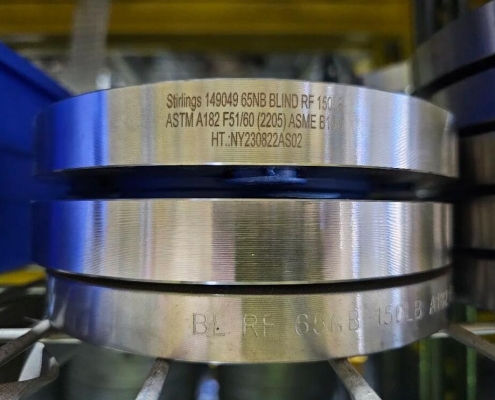
Duplex Stainless Steel is a Duplex material with two metallurgical phases: Austenite for toughness and ductility, and Ferrite for strength and corrosion resistance. It combines high yield strength with good dimensional stability for CNC machining. Duplex Stainless Steels are usually categorized as Lean Duplex, Super Duplex, and Hyper Duplex, each offering different strength and corrosion resistance levels.
Duplex Stainless Steel composition including several key elements that define its properties. It generally includes Chromium, Nickel, Molybdenum, Nitrogen, and small amounts of other alloying elements. Chromium provides corrosion resistance and usually ranges from 21% to 26%. Nickel stabilizes the austenite phase and typically ranges from 4% to 8%.
Different Duplex materials adjust these elements for performance. Lean Duplex has lower Nickel and Molybdenum for moderate corrosion resistance. Super Duplex increases Molybdenum and Nitrogen for harsh environments. Hyper Duplex maximizes alloying elements for extreme applications.
Duplex Stainless Steel covers Lean Duplex, Super Duplex, and Hyper Duplex types. This chapter explains typical grades, standard equivalents to select the right material and achieve precise, high-quality parts.
Lean Duplex Stainless Steel offers moderate corrosion resistance with lower alloy content. It balances cost and strength for general industrial components. CNC machining Lean Duplex Stainless Steel is easier than Super or Hyper Duplex. It produces less tool wear and maintains good dimensional accuracy. Lean Duplex is suitable for structural parts and moderate chemical exposure.
The following table lists Material and Equivalent Standards for Lean Duplex Stainless Steel:
| Grade | UNS | EN | ASTM | JIS | DIN | NORSOK | ISO |
| 2304 | S32304 | 1.4362 | A240 | SUS323L | 1.4362 | MDS | 15510 |
| 2324 | S32323 | 1.4362 | A240 | SUS32323 | 1.4362 | MDS | 15510 |
| 2404 | S32404 | 1.4460 | A240 | SUS32404 | 1.4460 | – | 15510 |
| 2405 | S32405 | 1.4462 | A240 | SUS32405 | 1.4462 | – | 15510 |
Super Duplex Stainless Steel is designed for harsh environments with higher chromium, molybdenum, and nitrogen content. It offers strong corrosion resistance and high yield strength. CNC machining Super Duplex Stainless Steel requires optimized cutting parameters, stable fixturing, and advanced toolpath strategies to maintain surface finish and tight tolerances.
The following table lists Material and Equivalent Standards for Super Duplex Stainless Steel:
| Material | UNS | EN | ASTM | JIS | DIN | NORSOK | ISO |
| 2507 | S32750 | 1.4410 | A182 / A240 | SUS32750 | 1.4410 | MDS | 15510 |
| 2550 | S32760 | 1.4501 | A182 / A240 | SUS32760 | 1.4501 | MDS | 15510 |
| 254SMO | S31254 | 1.4547 | A182 / A240 | SUS254 | 1.4547 | MDS | 15510 |
Hyper Duplex Stainless Steel maximizes alloying elements to withstand extreme corrosion and high-stress conditions. It offers exceptional strength, pitting resistance, and durability for the harshest environments. CNC machining Hyper Duplex Stainless Steel is possible but requires careful parameter control to preserve material performance.
The following table lists Material and Equivalent Standards for Hyper Duplex Stainless Steel:
| Material | UNS | EN | ASTM | JIS | DIN | NORSOK | ISO |
| 32707 | S32707 | 1.4652 | A182 / A240 | SUS32707 | 1.4652 | MDS | 15510 |
| 32750HD | S32750HD | 1.4501 | A182 / A240 | SUS32750HD | 1.4501 | MDS | 15510 |
Duplex Stainless Steel offers a unique combination of strength, corrosion resistance, and thermal stability. This chapter explains its key properties and performance characteristics. You will learn how mechanical strength, physical traits, corrosion resistance, and heat resistance vary across sub-types.
Duplex Stainless Steel exhibits high strength and toughness due to its balanced austenite-ferrite microstructure, making it ideal for components requiring both load-bearing capacity and corrosion resistance. The following table lists typical mechanical properties of common Duplex Stainless Steel alloys:
| Grade | Tensile Strength (MPa) | Proof Stress 0.2% (MPa) | Elongation A5 (%) |
| 2205 | 620 | 450 | 25 |
| UR52N+ | 770 | 550 | 25 |
Duplex Stainless Steel combines high strength with stable physical characteristics. Its density, elasticity, and thermal properties make it suitable for precise components in automotive, medical, and industrial applications.The following table lists typical physical properties of common Duplex Stainless Steel alloys:
| Property | 2205 | UR52N+ |
| Density (g/cm³) | 7.805 | 7.810 |
| Modulus of Elasticity (GPa) | 200 | 205 |
| Electrical Resistivity (Ω·m) | 0.85 x 10⁻⁶ | 0.85 x 10⁻⁶ |
| Thermal Conductivity (W/m·K) | 19 at 100 °C | 17 at 100 °C |
| Thermal Expansion (m/m·K) | 13.7 x 10⁻⁶ to 100 °C | 13.5 x 10⁻⁶ to 200 °C |
Duplex Stainless Steel is highly corrosion resistant. Its balanced austenite-ferrite structure provides strong resistance to intergranular corrosion. Even in chloride and sulphide environments, Duplex Stainless Steel resists stress corrosion cracking effectively.
Super Duplex Stainless Steel grades offer even higher corrosion resistance, suitable for harsh chemical and marine environments. Understanding corrosion behavior helps in selecting the right grade for demanding applications and ensures CNC-machined parts maintain long-term durability.
Duplex Stainless Steel has high chromium content, which protects against corrosion but can cause embrittlement above 300°C. At low temperatures, Duplex Stainless Steel maintains better ductility than ferritic and martensitic grades. Duplex grades can be used safely down to at least -50°C.
Note: Temperature sensitivity affects CNC machining and post-machining heat treatments. Proper cooling and process control help maintain material integrity and dimensional accuracy.
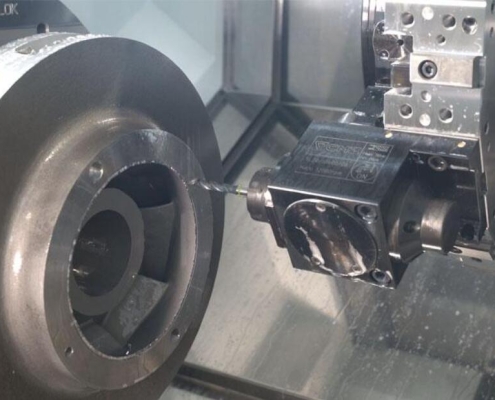
Duplex Stainless Steel machining requires understanding how each sub-type behaves under different processes. This chapter explains CNC machining, cold and hot working, heat treatment, weldability, and formability.
Duplex Stainless Steel has high strength and work hardening tendencies, which increases cutting forces. Based on VMT’s experience, during CNC milling or turning, tool selection and spindle speed are critical. Use sharp carbide or coated tools, maintain stable fixturing, and apply moderate feed rates to avoid surface galling. Coolant ensures thermal stability and surface quality. Lean duplex is easier to machine, whereas super and hyper duplex require slower feeds and stepwise cutting to maintain precision.
Duplex Stainless Steel can be cold worked to enhance strength and dimensional stability. The ferrite-austenite balance allows moderate deformation without cracking. Excessive strain, especially on super and hyper duplex grades, can induce work hardening, making subsequent machining more difficult. Controlled rolling or bending achieves desired shapes while preserving corrosion resistance.
Hot working Duplex Stainless Steel improves formability and reduces work hardening. Temperatures between 1000–1200°C allow safe forging, rolling, or extrusion. Rapid cooling after hot working preserves the austenite-ferrite balance. Super duplex grades require careful temperature control to prevent intermetallic phase formation, which can reduce toughness and corrosion resistance.
Duplex Stainless Steel is generally supplied in solution-annealed condition. Additional heat treatment can relieve stresses after forming. Avoid prolonged exposure above 300°C, especially for high-chromium grades, to prevent embrittlement. Proper annealing restores ductility and corrosion resistance while maintaining mechanical properties.
Duplex Stainless Steel welds well using GTAW or GMAW, but careful control of heat input is essential. Excessive heat can shift the ferrite-austenite ratio, reducing corrosion resistance. Super duplex requires controlled interpass temperatures and post-weld solution annealing to maintain microstructure. Pre-machining edge preparation ensures better weld quality and reduces distortion.
Duplex Stainless Steel can be formed into sheets, tubes, and complex shapes. Lean duplex forms easily, while super and hyper duplex require higher forces and gradual deformation. Bending radii should be generous to prevent cracking.
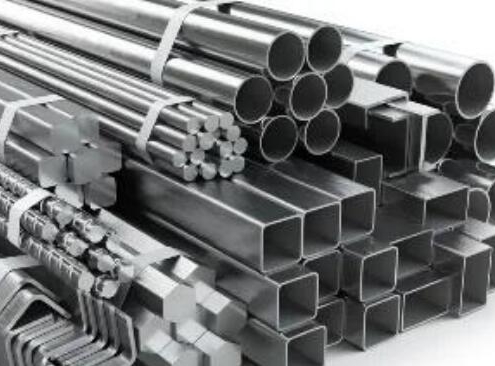
Duplex Stainless Steel is available in multiple forms suitable for various applications.
Duplex Stainless Steel is widely used where high strength, corrosion resistance, and durability are required. This chapter highlights key industries and components to help select the right grade for specific applications.
Duplex Stainless Steel price per kg varies by grade, form, and alloy content. Lean duplex typically ranges around $5–$7 per kg, standard duplex around $6–$9 per kg, and super or hyper duplex can reach $12–$18 per kg. Factors affecting price include chromium, nickel, and molybdenum content, as well as global raw material trends and processing complexity.
Prices fluctuate with market demand and supply. For the latest Duplex Stainless Steel price per kg and guidance on selecting cost-effective grades for CNC machining or industrial use, contact VMT. Our experts provide updated pricing and free advice to optimize material choice and processing.
Duplex Stainless Steel has higher strength, excellent stress corrosion resistance, and a balanced austenite-ferrite structure. It performs well in chloride-rich and aggressive environments. CNC machining requires careful tool selection, slower feeds, and stepwise cutting. 316 Stainless Steel is more ductile and easier to machine but has lower yield strength and less resistance to stress corrosion cracking.
Choosing the right material depends on application needs. Use Duplex Stainless Steel for demanding conditions requiring high strength and corrosion resistance. Choose 316 for moderate corrosion environments and simpler machining. Consider material cost, CNC process complexity, and long-term performance when making your decision.
A European automotive supplier needed high-strength 2205 Duplex Stainless Steel steering knuckles for a limited production run. The parts required tight tolerances of 0.01 mm and flawless surface finish. High strength and rapid work hardening of duplex steel caused frequent tool wear, surface galling, and inconsistent dimensions during CNC machining.
VMT applied a stepwise strategy to overcome these challenges:
The final steering knuckles met dimensional tolerance of 0.01 mm and flawless surface finish. Tool life improved significantly, and production timelines were maintained. For detailed Duplex Stainless Steel pricing and tailored machining solutions, contact VMT to get a free quote and expert guidance.
Duplex Stainless Steel combines high strength, corrosion resistance, and dimensional stability. Understanding its grades, chemical composition, mechanical and physical properties, and machining behavior allows engineers to select the right material for specific applications. Proper handling of CNC machining, forming, welding, and heat treatment ensures reliable performance across industries.
 WhatsApp/WeChat/Mobile:
+86-15099911516
WhatsApp/WeChat/Mobile:
+86-15099911516
 Tel: 86-150-9991-1516
 QQ: 939020977
 E-Mail: service@vimetal.com.cn


Is duplex stainless steel magnetic?
Duplex stainless steel is partially magnetic due to its ferrite phase. The ferrite contributes to magnetism, while the austenite phase is non-magnetic. Magnetic response varies by grade and cold working; lean and super duplex grades show slightly stronger magnetism than standard duplex, but they remain less magnetic than fully ferritic steels.
Is 304 a duplex stainless steel?
No, 304 stainless steel is an austenitic stainless steel, not a duplex type. It contains high nickel content, providing excellent corrosion resistance and ductility, but it lacks the ferrite phase that gives duplex stainless steel its higher strength and stress corrosion resistance.
Does duplex stainless steel rust?
Duplex stainless steel is highly corrosion resistant, but it can rust under extreme conditions, such as prolonged exposure to chloride-rich environments without proper maintenance. Super and hyper duplex grades further reduce this risk. Regular cleaning and passivation help maintain long-term corrosion resistance.
Is 2205 duplex stainless steel?
Yes, 2205 is a standard Duplex Stainless Steel grade. It balances austenite and ferrite phases, offering high strength, excellent corrosion resistance, and good weldability. It is widely used in chemical, marine, and industrial applications.
What is lean duplex stainless steel?
Lean duplex stainless steel is a lower-alloy duplex grade with reduced nickel and molybdenum content. It offers moderate corrosion resistance, good strength, and cost efficiency. Lean duplex is easier to machine and suitable for standard industrial applications where extreme corrosion resistance is not required.

 What are the properties of A36 steel?