Mild Steel vs Stainless Steel: Understanding Key Differences
By JunWen Liu | Jan .29, 2026
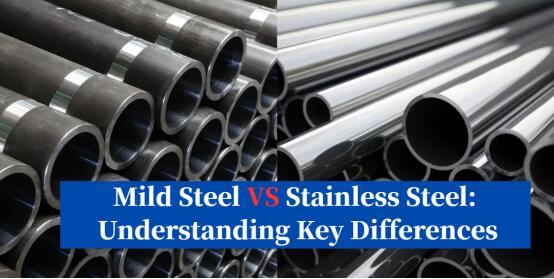

We define a steel mainly composed of iron content of more than 98% while carbon content lower than 0.3% as mild carbon steel or the low carbon steel. Alloying element of mild steel is only the 0.3% -0.9% Manganese is used for deoxidation and to enhance the strength and wear resistance of steel; Trace amounts of silicon, phosphorus and sulfur are impurities.
For stainless steel, iron as the balanced base element but alloy elements of chromium must contain more than 10.5% to form a protective layer for corrosion resistance; other elements of manganese, molybdenum, nitrogen, titanium, or copper depend on different grades to enhance strength, ductility, workability, corrosion resistance and so on.
Although they are both iron-based alloys, their chemical structures determine significant differences in strength, corrosion resistance, and cost, processing and applications. Read on and you can get a fully understanding of these differences between mild steel vs stainless steel in this article.
Differences between mild steel vs stainless steel are decided by their alloying elements. Mild steel(low carbon steel) contains a high percentage of iron (98%) and low carbon content (usually less than 0.3%). It lacks significant amounts of other alloying elements, making it highly magnetic and prone to oxidation. Stainless steel is defined by the addition of Chromium (minimum 10.5%). This chromium reacts with oxygen to form a microscopic, “self-healing” chromium oxide layer that prevents rust and corrosion; other alloy elements addition is based on stainless steel grade which also increase material costs or alter other properties. Below simple table showcases core differences of mild steel vs stainless steel for quick check:
Table 1: Core Differences Table of Mild Steel vs Stainless Steel
| Feature | Mild Steel | Stainless Steel |
| Main Elements | Iron + Carbon (<0.3%) | Iron + Chromium (min. 10.5%) |
| Corrosion Resistance | Low (Rusts without coating) | High (protective layer) |
| Density | ~7.85 g/cm³ | ~8.00 g/cm³(slightly higher) |
| Strength | Lower | Higher |
| Hardness | Lower | Higher (varies by grade) |
| Weldability | Excellent | Good (but prone to warping) |
| Initial Cost | Economical | Higher (4–5x more) |
| Maintaining Cost | Higher | Lower |
| Magnetism | Magnetic | Often Non-magnetic (Austenitic) |
| Aesthetics | Dull, matte finish | Shiny, polished appearance |
Generally, stainless steel is harder than mild steel. Due to the presence of chromium, nickel, and sometimes molybdenum, stainless steel (especially the 400 series or work-hardened 300 series) offers superior resistance to indentation and scratching. Mild steel is softer, which contributes to its excellent ductility but makes it less wear resistant. Here take some common grades of mild steel and stainless steel as examples to show the hardness differences:
Complementary table for quick check hardness of common grades of MS and SS
Table 2: Stainless Steel vs Mild Steel Hardness with Common Grades
| Material Grade | Hardness (Brinell – HB) | Hardness (Rockwell – HRC) |
| Mild Steel (A36) | 120 – 140 | < 20 HRC |
| Mild Steel (1018) | 126 – 150 | < 20 HRC |
| Stainless Steel 304 | 170 – 200 | ~20 HRC |
| Stainless Steel 316 | 150 – 190 | ~20 HRC |
| Stainless Steel 440C | Up to 600 (Annealed) | 58 – 60 HRC (Hardened) |
When comparing strength, we must distinguish between Ultimate Tensile Strength and Yield Strength. Stainless steel generally provides higher mechanical strength, though mild steel offers superior ductility. For example,
Density of mild steel (~7.85 g/cm³) is slightly lower than stainless steel (~8.00 g/cm³) but strength of mild steel is largely lower than stainless steel; Thus, it causes to stainless steel has a higher strength-to-weight ratio than mild steel. Because stainless steel is significantly stronger (especially high-strength or cold-worked grades), engineers can use thinner material sections to achieve the same structural load capacity; that is, for example, in pressure vessel or piping design, a wall thickness of 3mm in stainless steel 316 might provide the same safety factor as a 5mm wall in mild Steel. Despite a little higher density of stainless steel, the overall weight of the final assembly is reduced by nearly 40% due to the reduction in material volume.
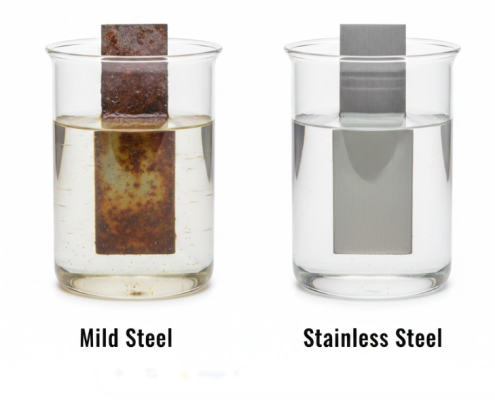
Without a protective layer like stainless steel, mild steel will oxidize (rust) almost immediately when exposed to moisture; Surface treatments like zinc plating, powder coating, or painting are required for enhance corrosion resistance of mild steel parts.
Stainless steel is inherently resistant to rust. Even if the surface is scratched, the chromium oxide layer reforms instantly. Additionally, surface treatment of passivation is the most applied solution for further improving stainless steels’ corrosion resistance. This makes it the good choice for hygiene-sensitive environments like food processing or medical facilities where carbon steel is unsuitable.
Therefore, mild steel (low carbon steel) requires recurring costs for re-painting and rust prevention. Stainless steel is virtually maintenance-free, requiring only simple cleaning to maintain its grade.
Machinability is a measure of how easily a metal can be cut while providing a satisfactory surface finish and reasonable tool life. In the CNC machining, mild steel is the good choice for high-efficiency production, while stainless steel presents significant challenges.
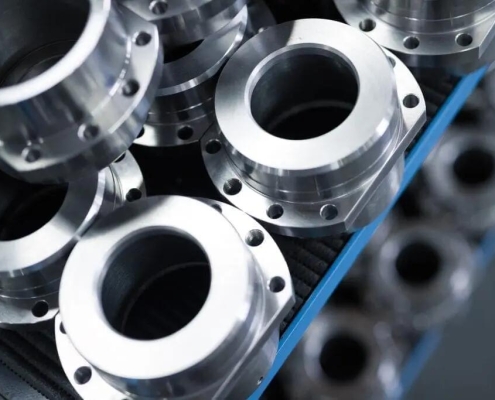
When machining mild steel (such as 1018 or A36), the primary objective is to maximize material removal rates (MRR) and throughput. Because these materials are relatively soft and have high thermal conductivity, they are forgiving of higher cutting speeds (SFM) and aggressive feed rates. To ensure a high-quality surface finish, it is recommended to use standard carbide tooling with a general-purpose geometry. While mild steel is easy to cut, it can be “gummy,” leading to Built-Up Edge (BUE) on the tool tip; therefore, utilizing a consistent flow of flood coolant is essential to lubricate the interface and effectively evacuate chips during high-speed operations.
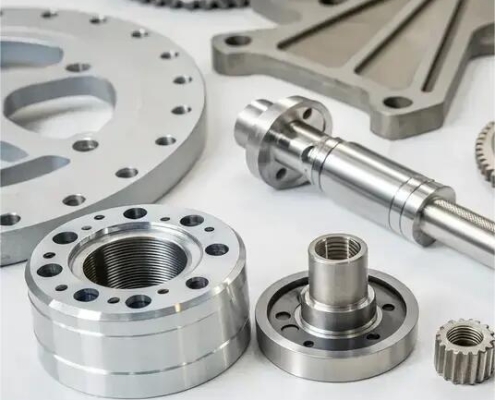
Machining stainless steel (particularly 304 and 316) requires a “positive and aggressive” approach to overcome its inherent work-hardening characteristics. You must maintain a constant feed rate and avoid “dwelling” (the tool rubbing against the material without cutting), as this will immediately harden the surface and cause tool failure on the next pass. It is critical to use rigid setups and sharp, specialized carbide tools—often with TiAlN or AlTiN coatings—to manage the high heat generated by the material’s low thermal conductivity. Reducing cutting speeds while increasing the depth of cut, combined with high-pressure coolant directed at the cutting zone, will help stabilize temperatures and extend tool life.
The primary difference in welding performance stems from Thermal Conductivity and the Coefficient of Thermal Expansion. Mild steel has high thermal conductivity (~45 W/m·K), meaning heat dissipates quickly through the material. This reduces the risk of localized overheating and warping. It also has a lower thermal expansion rate, keeping the part dimensionally stable after cooling. Stainless steel has low thermal conductivity (~15 W/m·K), causing heat to stay concentrated at the weld pool. Combined with a higher expansion rate (approx. 50% higher than mild steel), stainless steel is highly prone to warping and distortion during the welding process.
When welding stainless steel, if the temperature stays between 450°C and 850°C for too long, chromium carbides can precipitate at the grain boundaries. This “depletes” the chromium and makes the weld area susceptible to rust. To prevent this, low-carbon grades like 304L or 316L are used. Unlike mild steel, which can be welded with standard CO2/Argon mixes, stainless steel often requires back-purging with Argon gas on the reverse side of the weld to prevent oxidation.
Mild steel vs stainless steel price: Upfront, mild steel is significantly cheaper. Stainless steel can be 4 to 5 times more expensive due to the cost of alloying elements like Nickel and Chromium, plus the added expense of surface polishing.
Mild steel vs stainless steel cost (Life Cycle): From a long-term perspective, stainless steel is often cheaper. If you factor in the cost of painting, rust repairs, and eventual replacement of mild steel parts, the “expensive” stainless steel often pays for itself within a few years.
Because of its lower cost and excellent machinability, mild steel is widely used in applications such as:
Thanks to its higher corrosion resistance and higher strength, as well as the easy-to-clean characteristics, stainless steel is used applications such as:
This article introduced the fundamental mechanical and chemical distinctions between mild steel and stainless steel, specifically comparing their hardness, tensile strength, machinability, and weldability. While mild steel offers better ductility and lower production costs, stainless steel is the better one for higher corrosion resistance and strength-to-weight ratios requirements.
In a recent project, VMT was tasked with manufacturing a complex hydraulic manifold using 1018 Mild Steel. While 1018 is generally considered “easy” to machine, the high-precision requirements and the “gummy” nature of the material presented technical hurdles.
Our Engineering Solutions
By optimizing the tooling geometry and coolant delivery, VMT achieved the following data-driven improvements:
 WhatsApp/WeChat/Mobile:
+86-15099911516
WhatsApp/WeChat/Mobile:
+86-15099911516
 Tel: 86-150-9991-1516
 QQ: 939020977
 E-Mail: service@vimetal.com.cn


Is stainless steel stronger than mild steel?
Yes, stainless steel generally has higher tensile strength and hardness due to its complex alloying elements. While mild steel is tough, it lacks the structural reinforcement provided by the chromium and nickel found in stainless steel.
Can mild steel be heat treated?
Mild steel cannot be hardened through traditional quenching because its carbon content is too low to form a martensitic structure. To increase surface hardness, it must undergo case-hardening (carburizing), which adds carbon to the outer layer.
Why is mild steel more malleable?
Mild steel has a simpler crystalline structure with fewer large alloy atoms to obstruct the movement of iron layers. This allows the atoms to slide over each other more freely, making it easier to bend and shape without cracking.
Does stainless steel lose its strength at high temperatures?
No, stainless steel retains its structural integrity and oxidation resistance at much higher temperatures than mild steel. Mild steel begins to soften and lose significant load-bearing capacity starting around 300°C (572°F).
Why is mild steel used in exhaust if it rusts?
It is primarily used because it is significantly cheaper and much easier to weld and form into complex pipe shapes. Many budget exhaust systems use aluminized mild steel to provide a balance between low cost and basic corrosion protection.
Is all stainless steel non-magnetic?
No, magnetism depends on the microscopic grain structure. Austenitic grades (like 304 and 316) are generally non-magnetic, while Ferritic and Martensitic grades (like 430 and 440C) are strongly magnetic.


 Duplex vs Super Duplex Stainless Steel: What are They and 6 Key Differences