Ferritic Stainless Steel: Everything You Need to Know
By Luca Xie | Dec .25, 2025
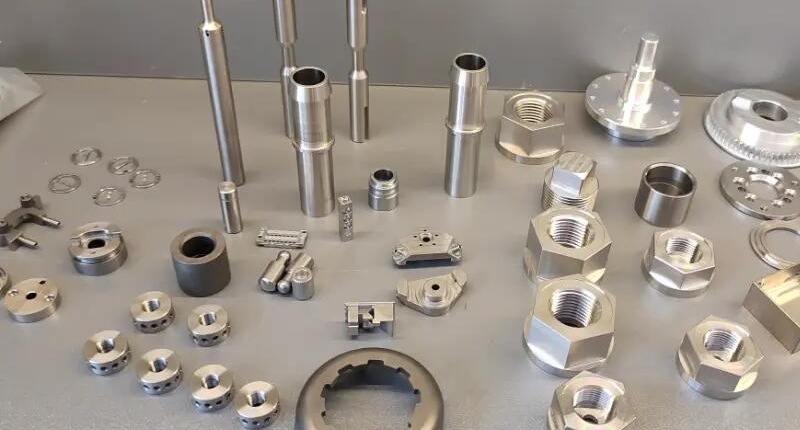

Choosing the wrong stainless steel can cause CNC machining issues, costly rework, or poor durability. Many engineers struggle with corrosion, magnetic requirements, or forming limits. Without proper guidance, selecting a material wastes time and drives up production costs. Understanding Ferritic Stainless Steels helps you avoid these pitfalls and ensures high-quality parts.
Ferritic Stainless Steels feature a Ferritic Structure with low carbon content. They provide strong Ferritic Stainless Steel Properties, including good formability and magnetic behavior. This article explains Ferritic Stainless Steel Composition, Grades, Microstructure, and key characteristics. You will learn how to choose the right grade, compare with other stainless steels.
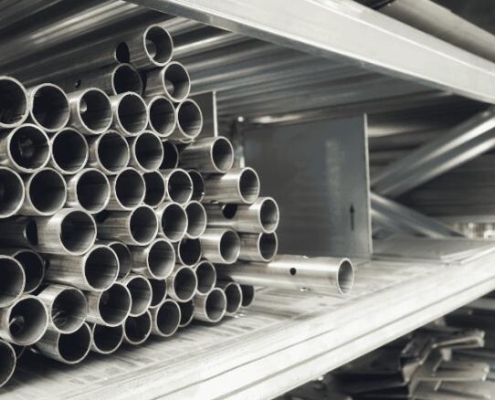
Ferritic Stainless Steels are a category of stainless steel defined by their Ferritic Structure, which is primarily composed of chromium with very low carbon content. This structure gives the steel natural corrosion resistance and makes it magnetic. They are often referred to as plain chromium stainless steel or magnetic stainless steel. These steels generally have a simple microstructure, which provides stable mechanical properties and good dimensional stability.
The chemical composition of Ferritic Stainless Steels determines their corrosion resistance, magnetic properties, and machinability. Chromium is the main element, ranging from 10.5 to 30 percent, while carbon is very low, typically below 0.12 percent. Other common elements include nickel, molybdenum, manganese, silicon, titanium, and aluminum, which help improve corrosion resistance, strength, and heat stability.
Below is a table showing common Ferritic Stainless Steel Grades and their typical composition, which helps engineers select the right material for CNC machining and forming.
| Grade | Chromium (%) | Carbon (%) | Nickel (%) | Molybdenum (%) | Manganese (%) | Silicon (%) | Titanium (%) | Aluminum (%) |
| AISI 430 | 16 – 18 | ≤ 0.12 | ≤ 0.75 | 0 – 0.75 | 1 | 1 | 0 | 0 |
| AISI 439 | 17 – 19 | ≤ 0.03 | ≤ 0.5 | 0 – 0.5 | 1 | 1 | 0.2 | 0 |
| AISI 446 | 23 – 27 | ≤ 0.2 | ≤ 0.5 | 2 – 3 | 1 | 1 | 0 | 0 |
| AISI 409 | 10.5 – 11.75 | ≤ 0.08 | ≤ 0.5 | 0 | 0.5 | 0.5 | 0 | 0 |
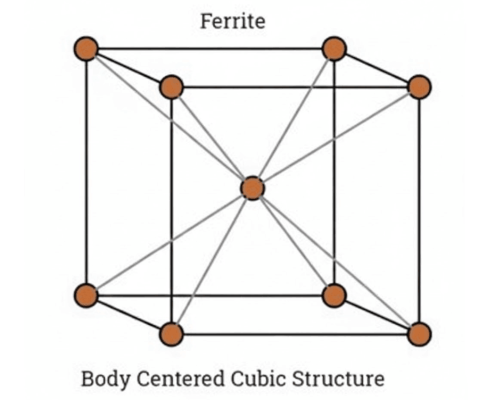
The Ferritic Stainless Steel Microstructure consists of a body-centered cubic crystal(BCC), known as Ferritic Structure. This structure gives the steel magnetic properties and stable mechanical behavior. It also provides excellent dimensional stability during CNC machining. Unlike other stainless steels, the Ferritic Structure contains no significant austenite, which reduces distortion during forming and heat treatment.
Ferritic Stainless Steels can be divided into five distinct groups. Each group differs in metal content and performance. Below are typical grades and their equivalent materials across multiple standards.
Group 1 ferritic steels are among the least expensive types of stainless steel. They have extremely low chromium levels, which makes them prone to developing a thin layer of localized surface rust over time. These steels are typically selected for applications where cost is a priority, and corrosion resistance is not critical.The table below lists the most common Group 1 ferritic steels and their equivalents in different standards:
| AISI | EN / DIN | JIS | GB | UNS | BS |
| 409 | 1.4512 | SUS 445J1 | 06Cr19 | S40900 | 409S |
| 430 | 1.4016 | SUS 430 | 06Cr17 | S43000 | 430S |
| 439 | 1.4510 | SUS 439 | 06Cr18Mo | S43900 | 439S |
Group 2 ferritic steels are the most commonly used type. Because of their higher chromium levels, these steels possess greater corrosion resistance. They are generally applied in building features, interior appliances, and other CNC-machined parts where moderate corrosion resistance is sufficient. These steels provide a good balance of cost, formability, and corrosion protection.The table below shows typical Group 2 ferritic steels with equivalents across different standards:
| AISI | EN / DIN | JIS | GB | UNS | BS |
| 430 | 1.4016 | SUS 430 | 06Cr17 | S43000 | 430S |
| 434 | 1.4116 | SUS 434 | 08Cr17 | S43400 | 434S |
| 436 | 1.4510 | SUS 436 | 06Cr18Mo | S43600 | 436S |
| 439 | 1.4510 | SUS 439 | 06Cr18Mo | S43900 | 439S |
Group 3 ferritic steels are well known for their ease of forming and welding. This makes them suitable for a wide range of applications, including CNC-machined components that require moderate strength, excellent ductility, and consistent dimensional stability. Their combination of formability, weldability, and corrosion resistance makes them highly versatile in both industrial and consumer products.The table below lists common Group 3 ferritic steels and their equivalent materials in multiple standards:
| AISI | EN / DIN | JIS | GB | UNS | BS |
| 444 | 1.4521 | SUS 444 | 19Cr19Ni | S44400 | 444S |
| 445 | 1.4541 | SUS 445 | 18Cr20Ni | S44500 | 445S |
| 439 | 1.4510 | SUS 439 | 06Cr18Mo | S43900 | 439S |
Group 4 ferritic stainless steels contain higher amounts of molybdenum, further improving their corrosion resistance. This type of steel is commonly used for high-moisture applications like exhaust systems, hot water tanks, and other environments exposed to moisture or mild chemicals. Their enhanced corrosion resistance allows CNC-machined parts to maintain durability under harsher conditions.The table below shows Group 4 ferritic steels with their equivalent materials:
| AISI | EN / DIN | JIS | GB | UNS | BS |
| 446 | 1.4864 | SUS 446 | 24Cr20Ni | S44600 | 446S |
| 447 | 1.4529 | SUS 447 | 23Cr18Ni | S44700 | 447S |
| 444 | 1.4521 | SUS 444 | 19Cr19Ni | S44400 | 444S |
Group 5 ferritic steels have the highest chromium levels, giving them a degree of corrosion resistance which is unmatched by all but a handful of other metals. These steels are used for highly demanding applications where both corrosion resistance and mechanical stability are critical. CNC-machined components made from Group 5 steels can endure aggressive environments and provide long-term reliability.The table below lists Group 5 ferritic steels and their equivalents in multiple standards:
| AISI | EN / DIN | JIS | GB | UNS | BS |
| 445 | 1.4541 | SUS 445 | 18Cr20Ni | S44500 | 445S |
| 446 | 1.4864 | SUS 446 | 24Cr20Ni | S44600 | 446S |
| 454 | 1.4529 | SUS 454 | 25Cr22Ni | S45400 | 454S |
Confused about which grade suits your CNC project? Our engineers can help you balance corrosion resistance and cost. [Get a Material Recommendation]
Ferritic Stainless Steels have key characteristics including strong magnetism, good corrosion resistance, excellent ductility and formability, thermal stability, moderate weldability, toughness, and resistance to oxidation. These properties make them ideal for CNC-machined components. The table below summarizes these characteristics:
| Characteristic | Typical Performance | Notes |
| Magnetic | Ferromagnetic | BCC structure, strong magnetism retained after machining |
| Corrosion Resistance | Good | Oxidizing environments, SCC resistant |
| Ductility / Formability | Good | Cold-workable, maintains tight tolerances |
| Thermal Properties | Good | Low thermal expansion, good conductivity |
| Weldability | Moderate | Thick sections may require annealing |
| Toughness | Lower than Austenitic | Not suitable for cryogenic |
| Oxidation Resistance | High | Stable at elevated temperatures |
They have a Body-Centered Cubic (BCC) structure, which makes them inherently ferromagnetic. Unlike austenitic grades, they retain strong magnetism even after forming or machining. This property is critical for CNC parts used in magnetic sensors, electric motors, and actuators. Their magnetic behavior also allows for easy detection and separation in industrial processes.
These steels resist corrosion effectively in oxidizing environments, such as air and mild acids. They are immune to chloride stress corrosion cracking (SCC), which is a common failure mode in harsh environments. This makes them suitable for automotive components, household appliances, and industrial equipment exposed to moisture or moderate chemicals. Surface treatments can further enhance longevity and prevent surface staining.
Ferritic stainless steels exhibit good ductility, allowing them to be cold-worked into complex shapes. They are not heat-treatable for hardening, but their formability ensures CNC-machined parts can maintain tight tolerances and smooth finishes. This combination of flexibility and dimensional stability makes them ideal for precision enclosures, brackets, and decorative metal parts.
They have good thermal conductivity and low thermal expansion, ensuring dimensional stability during temperature fluctuations. This is valuable for precision CNC parts in machinery and electronics.
Weldability is moderate. Thick sections may experience grain growth, requiring annealing to restore toughness. Proper welding procedures are necessary to prevent stress and ensure structural integrity in CNC-fabricated components.
Toughness is lower than austenitic steels, making them unsuitable for sub-zero or cryogenic applications. They perform reliably at room temperature and moderate heat.
Ferritic stainless steels resist oxidation effectively at elevated temperatures. This ensures that CNC-machined parts maintain their appearance and structural integrity even under prolonged exposure to air and heat.
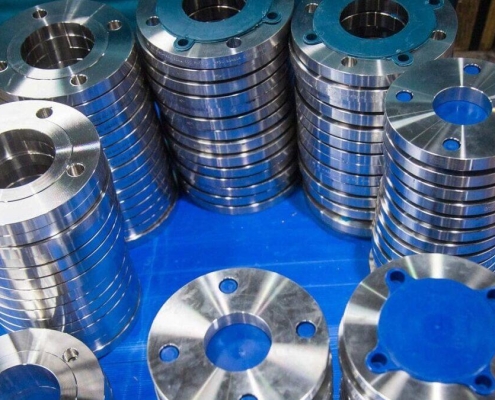
Ferritic Stainless Steels are widely used in many industry due to their combination of Ferritic Stainless Steel Properties, corrosion resistance, and magnetic behavior. Typical Ferritic Stainless Steel Uses include:
The Ferritic Stainless Steel Price varies depending on grade, chemical composition, thickness, and market conditions. Steels with higher chromium or molybdenum content offer better corrosion resistance but cost more. CNC machining requirements, such as complex geometries, tight tolerances, and fine surface finishes, can also increase the overall price. Production volume, supply chain fluctuations, and regional availability further influence costs. Generally, ferritic steels are more affordable than austenitic grades, making them a cost-effective choice for CNC-machined parts that need durability, magnetic behavior, and corrosion resistance without a high expense.
The Difference Between Austenitic and Ferritic Stainless Steel is mainly in structure and performance. Ferritic Stainless Steels have a Body-Centered Cubic (BCC) structure, are magnetic, and offer good corrosion resistance and formability. Martensitic Stainless Steels have a Body-Centered Tetragonal (BCT) structure, are harder and stronger after heat treatment, but less corrosion-resistant and magnetic.
The table below shows the comparison between Ferritic and Martensitic Stainless Steels.
| Feature | Ferritic Stainless Steel | Martensitic Stainless Steel |
| Crystal Structure | BCC (Body-Centered Cubic) | BCT (Body-Centered Tetragonal) |
| Magnetic | Yes | Yes, but weaker after machining |
| Corrosion Resistance | Good | Moderate, less than ferritic |
| Hardness | Moderate | High after heat treatment |
| Ductility / Formability | Good | Lower, harder to machine complex shapes |
| CNC Machining Suitability | Excellent for precision parts | Suitable for high-strength parts, more tool wear |
| Typical Applications | Automotive panels, appliance components, architectural parts | Cutting tools, shafts, pump components |
A German automotive supplier approached VMT with a challenge. They needed CNC-machined exhaust system brackets made of Ferritic Stainless Steels with tight tolerances (±0.01 mm), smooth surface finish, and consistent magnetic behavior. Previous suppliers struggled with work hardening, dimensional deviations, and surface defects, causing assembly delays and performance inconsistencies.
VMT addressed the problem with a structured approach:
The results exceeded expectations. The client received brackets with precise dimensions, excellent surface finish, and stable magnetic behavior. Production efficiency improved, and assembly issues were eliminated. If you also want your CNC parts to achieve the same high-quality standards, or if you face similar challenges with Ferritic Stainless Steels, contact VMT to Get a free quote and customized CNC machining solution.
Ferritic Stainless Steels combine magnetic behavior, good corrosion resistance, ductility, and thermal stability. They are suitable for CNC-machined components in automotive, appliances, architecture, industrial, electrical, and food & beverage sectors. Proper grade selection, machining, and surface treatment ensure parts meet tight tolerances, maintain durability, and perform reliably in demanding applications.
 WhatsApp/WeChat/Mobile:
+86-15099911516
WhatsApp/WeChat/Mobile:
+86-15099911516
 Tel: 86-150-9991-1516
 QQ: 939020977
 E-Mail: service@vimetal.com.cn


Does ferritic stainless steel rust?
Ferritic stainless steels resist corrosion in oxidizing environments but can develop surface rust in harsh conditions or when protective coatings are absent. Grades with higher chromium content, proper surface treatment, and regular maintenance minimize rusting, making them suitable for many industrial, automotive, and household applications.
Is ferritic stainless steel magnetic?
Yes, ferritic stainless steels are inherently magnetic due to their Body-Centered Cubic (BCC) structure. Unlike austenitic grades, they retain strong magnetism even after forming or machining, which is useful for magnetic sensors, electric motors, and components requiring easy magnetic detection or separation.
Does ferritic stainless steel contain nickel?
No, ferritic stainless steels generally contain very low or negligible nickel, typically below 0.5%. This distinguishes them from austenitic stainless steels, which rely on higher nickel content for corrosion resistance and non-magnetic properties. Low nickel content reduces cost while maintaining corrosion resistance and magnetic behavior.
Is ferritic stainless steel safe for cooking?
Yes, ferritic stainless steels are safe for food contact. They resist corrosion, do not leach harmful substances, and maintain durability under normal cooking conditions. However, grades with very low corrosion resistance may require proper cleaning and maintenance to avoid surface staining in acidic or salty foods.
How to identify ferritic stainless steel?
Ferritic stainless steels can be identified by their magnetic behavior, lower nickel content, and BCC crystal structure. Simple tests include checking magnetism, comparing corrosion resistance, or consulting grade markings like AISI 430, 409, or 444. Professional analysis may involve chemical composition testing or metallographic inspection.

 Super Duplex Stainless Steel: The Ultimate Guide