316h stainless steel UNS S31609: The Ultimate Guide
By Luca Xie | Dec .04, 2025
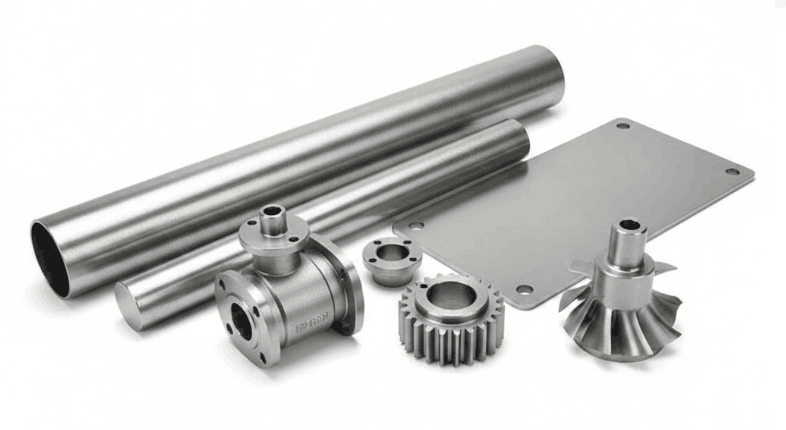

High-temperature systems often deform, crack, or lose strength during long operation. Many engineers face repeated failures because standard alloys cannot handle heat and stress. 316H stainless steel provides stronger stability, better creep resistance, and more reliable performance in demanding environments.
316H stainless steel is a high-carbon austenitic alloy designed for high-temperature strength, corrosion resistance, and reliable fabrication.This guide explains 316H stainless steel composition, 316H stainless steel properties, machining behavior, pricing, and comparisons like 316H vs 316L stainless steel. Users gain clear knowledge to select the right grade for CNC-machined parts.

316H stainless steel is a high-carbon austenitic alloy designed for stronger performance at elevated temperatures. The higher carbon content increases creep strength and structural stability during long heat exposure. Because of this, type 316H stainless steel is widely used in boilers, heaters, reformers, and CNC-machined parts that must operate in demanding thermal and corrosive environments.
Users often check equivalent grades to ensure correct material sourcing across regions. 316H stainless steel matches multiple international standards that define similar chemistry and elevated-temperature strength. This helps engineers select 316H pipe, 316H stainless steel plate, or 316H stainless steel tubing from different markets with confidence.
| Country or Region | Standard System | Equivalent Grade |
| United States | UNS | S31609 |
| United States | ASTM | 316H |
| United States | AISI | AISI 316H stainless steel |
| Europe | EN | 1.4912 |
| Japan | JIS | SUS316H |
| China | GB | 022Cr17Ni12Mo2H |
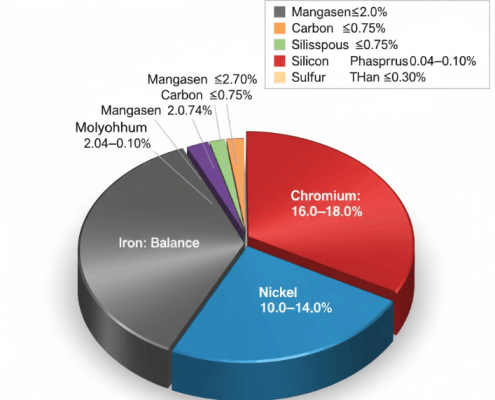
316H stainless steel composition includes carbon, chromium, nickel, molybdenum, manganese, silicon, phosphorus, sulfur, and iron. The carbon content is higher than standard 316 to improve creep resistance, while chromium and nickel provide corrosion protection and molybdenum enhances resistance in chloride environments. These elements ensure 316H stainless steel maintains stability during CNC machining and high-temperature operation.
| Element | Content Percent |
| Carbon | 0.04–0.10 |
| Chromium | 16.0–18.0 |
| Nickel | 10.0–14.0 |
| Molybdenum | 2.0–3.0 |
| Manganese | ≤2.0 |
| Silicon | ≤0.75 |
| Phosphorus | ≤0.045 |
| Sulfur | ≤0.030 |
| Iron | Balance |
316H stainless steel properties include high tensile strength, good yield strength, excellent elongation, and stable hardness. Tensile strength ranges from 515 to 690 MPa, which is considered high and allows parts to withstand heavy stress. Yield strength is moderate at 205–310 MPa, providing a balance between strength and ductility. Elongation is high at 40% minimum, ensuring the material can deform slightly without cracking. Hardness is moderate at 70–90 HRB, giving sufficient surface resistance without brittleness. The higher carbon content improves creep resistance at elevated temperatures, making the alloy suitable for high-temperature applications.
The table below lists the key mechanical properties of 316H stainless steel under standard annealed conditions.
| Property | Condition/Temper | Typical Value/Range (Metric) | Typical Value/Range (Imperial) | Reference Standard for Test Method |
| Tensile Strength | Annealed | 515–690 MPa | 75–100 ksi | ASTM E8 |
| Yield Strength (0.2% offset) | Annealed | 205–310 MPa | 30–45 ksi | ASTM E8 |
| Elongation | Annealed | 40% min | 40% min | ASTM E8 |
| Hardness (Rockwell B) | Annealed | 70–90 HRB | 70–90 HRB | ASTM E18 |
| Impact Strength (Charpy) | -20°C | 40 J | 30 ft-lbf | ASTM E23 |
316H stainless steel Physical Properties are critical for high-temperature and structural applications. Its density is moderate at 8.0 g/cm³, providing strength without excessive weight. The melting point is high at 1375–1400 °C, allowing the alloy to maintain hardness and shape under extreme heat. Thermal conductivity is relatively low at 16.2 W/m·K, which limits heat transfer and helps prevent thermal distortion. Specific heat capacity is medium at 500 J/kg·K, supporting even temperature distribution. Electrical resistivity is low at 0.72 µΩ·m, ensuring stable performance in conductive environments. The coefficient of thermal expansion is moderate at 16.0 x 10⁻⁶/K, minimizing dimensional changes during temperature fluctuations.
The table below lists the key physical properties of 316H stainless steel.
| Property | Condition/Temperature | Value (Metric) | Value (Imperial) |
| Density | Room Temperature | 8.0 g/cm³ | 0.289 lb/in³ |
| Melting Point | – | 1375–1400 °C | 2500–2550 °F |
| Thermal Conductivity | Room Temperature | 16.2 W/m·K | 112 BTU·in/ft²·h·°F |
| Specific Heat Capacity | Room Temperature | 500 J/kg·K | 0.12 BTU/lb·°F |
| Electrical Resistivity | Room Temperature | 0.72 µΩ·m | 0.72 µΩ·in |
| Coefficient of Thermal Expansion | 20–100 °C | 16.0 x 10⁻⁶/K | 8.9 x 10⁻⁶/°F |
316H stainless steel exhibits excellent resistance to various corrosive agents, particularly in marine environments. Its performance in chloride-rich conditions is superior to 304 and 316L stainless steel, which are more prone to pitting corrosion. While 316H resists many acidic environments, it can still be vulnerable to localized attack under strong acids like hydrochloric acid.
The table below lists the typical corrosion resistance of 316H stainless steel in different environments.
| Corrosive Agent | Concentration (%) | Temperature (°C / °F) | Resistance Rating | Notes |
| Chlorides | 3.5% | 20°C / 68°F | Excellent | Risk of pitting |
| Sulfuric Acid | 10% | 25°C / 77°F | Good | Limited resistance |
| Hydrochloric Acid | 5% | 25°C / 77°F | Fair | Risk of localized corrosion |
| Sea Water | – | Ambient | Excellent | Highly resistant |
| Acetic Acid | 10% | 25°C / 77°F | Good | Susceptible to stress corrosion cracking |
316H stainless steel maintains excellent mechanical properties at elevated temperatures, making it suitable for high-temperature applications such as furnace components, heat exchangers, and chemical processing equipment. Its maximum continuous service temperature is high at 800°C (1472°F), allowing long-term exposure without significant loss of strength. For short-term exposure, it can withstand up to 870°C (1598°F). The scaling temperature reaches 925°C (1697°F), above which oxidation may occur. Creep resistance begins to decrease above 600°C (1112°F), which should be considered in long-term high-temperature designs.
The table below lists the typical heat resistance limits of 316H stainless steel.
| Property/Limit | Temperature (°C) | Temperature (°F) | Remarks |
| Max Continuous Service Temp | 800°C | 1472°F | Suitable for high-temperature applications |
| Max Intermittent Service Temp | 870°C | 1598°F | Short-term exposure only |
| Scaling Temperature | 925°C | 1697°F | Oxidation occurs above this temperature |
| Creep Strength Considerations Begin | 600°C | 1112°F | Creep resistance decreases above this temperature |
This section explains how 316H stainless steel behaves in various fabrication processes, including machining, forming, welding, heat treatment, and surface finishing.
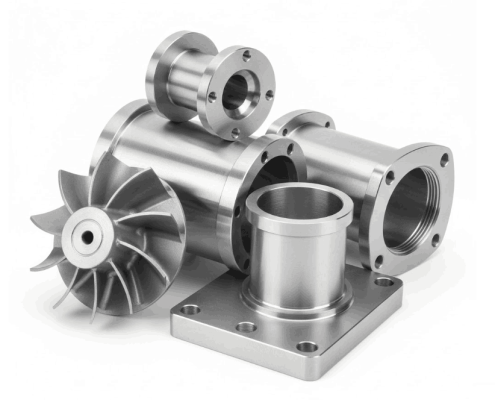
316H stainless steel is challenging to machine due to high strength and work-hardening tendency. At VMT, we address this by using sharp carbide tools with optimized coatings, applying controlled feed rates, and maintaining stable cutting speeds to minimize work hardening. For deep cuts or complex geometries, we use multi-pass strategies and carefully manage tool engagement to prevent overheating and surface damage. Our engineers also monitor part temperature and vibration during milling and turning, ensuring tolerances within 0.01 mm and smooth finishes. This approach allows us to produce high-precision 316H stainless steel components consistently while maintaining material integrity.
316H stainless steel performs well under cold working thanks to its high ductility. Yield strength increases with deformation, improving hardness, but excessive work can reduce elongation. Operations like bending, rolling, and drawing should control strain levels to avoid cracking. Moderate hardness allows shaping without excessive tool wear.
316H stainless steel responds well to hot working at temperatures above 1150°C. The alloy becomes more ductile and less prone to work hardening, facilitating forging, extrusion, and hot rolling. Proper temperature control is necessary to prevent oxidation and maintain uniform mechanical properties.
316H stainless steel is typically annealed to relieve stresses from forming and welding. Standard annealing at 1010–1120°C improves ductility while retaining corrosion resistance. Overheating can cause carbide precipitation, which may reduce corrosion resistance.
316H stainless steel is highly weldable with common methods like TIG, MIG, and resistance welding. Preheating is usually not required, and post-weld annealing can restore mechanical properties if necessary. High carbon content may increase the risk of carbide precipitation, so appropriate filler metals and techniques are recommended.
The alloy exhibits good formability due to its austenitic structure. Moderate yield strength and excellent elongation allow bending, stretching, and shaping with minimal cracking. Tooling should minimize surface scratches, which can become corrosion initiation points.
316H stainless steel achieves smooth finishes through standard polishing, grinding, or electropolishing. Its moderate hardness allows high-quality surfaces without excessive tool wear. Surface finish impacts corrosion resistance and is critical for sanitary or aesthetic applications.
Annealing 316H stainless steel at 1010–1120°C softens the material, reducing hardness from 70–90 HRB to around 60–70 HRB. Elongation improves to 40% minimum, and internal stresses are relieved, stabilizing mechanical properties for further forming or welding.
316H stainless steel is priced higher than standard 304 or 316L grades due to its high carbon content and superior high-temperature performance. The cost reflects its enhanced mechanical properties, creep resistance, and corrosion stability, making it suitable for demanding applications in chemical, power generation, and marine industries. Price varies depending on product form, as well as regional market conditions.
The table below lists typical 316H stainless steel price ranges for different product forms globally and in China. Prices are based on publicly available market data and supplier quotations as of 2025 and are intended for reference only.Prices fluctuate with global supply, raw material costs, and demand. For real-time pricing and customized quotes, readers are encouraged to contact VMT directly.
| Product Form | Global Price (USD/kg) | China Price (USD/kg) | Notes |
| Plate | 6–9 | 5–8 | Market-dependent |
| Round Bar | 7–10 | 6–9 | Diameter affects cost |
| Pipe | 8–12 | 7–11 | Wall thickness affects cost |
| Tubing | 8–11 | 7–10 | Seamless or welded |
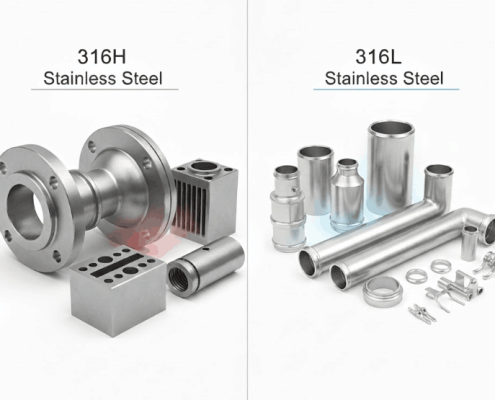
316H stainless steel contains higher carbon content than 316L, which gives it superior strength and creep resistance at elevated temperatures. While both alloys offer excellent corrosion resistance, 316H performs better in high-temperature applications, whereas 316L is easier to weld and more suitable for general-purpose chemical environments. The higher carbon in 316H can lead to slightly lower ductility compared to 316L, but its mechanical stability under stress makes it preferable for pressure vessels, heat exchangers, and high-temperature piping systems.
A German chemical equipment manufacturer required high-temperature 316H stainless steel piping and valve components for handling corrosive chemicals. Previous suppliers struggled to maintain tight tolerances while preserving corrosion resistance under elevated temperatures.
The components met the client’s specifications for high-temperature operation and chemical resistance. The German manufacturer reported improved assembly efficiency, long-term reliability, and consistent quality, demonstrating VMT’s expertise in handling challenging 316H stainless steel projects. If you face similar machining challenges, please contact VMT to discuss customized solutions and precision machining strategies.
316H stainless steel combines high-temperature strength, excellent corrosion resistance, and good ductility, making it suitable for demanding applications in chemical processing, power generation, marine, medical, and food industries. Understanding its mechanical, physical, and fabrication properties is essential for successful machining, forming, and welding. Proper handling ensures components maintain dimensional stability, surface quality, and long-term performance under challenging conditions.
 WhatsApp/WeChat/Mobile:
+86-15099911516
WhatsApp/WeChat/Mobile:
+86-15099911516
 Tel: 86-150-9991-1516
 QQ: 939020977
 E-Mail: service@vimetal.com.cn


What are the advantages of 316H stainless steel?
316H stainless steel offers superior high-temperature strength, excellent corrosion resistance, good ductility, and creep stability. It maintains mechanical properties under prolonged heat and pressure, making it ideal for chemical processing, power generation, marine, and other demanding applications.
What are the disadvantages of 316H stainless steel?
Higher carbon content in 316H stainless steel can make welding more challenging and slightly reduce ductility compared to 316L. It is also more expensive, and improper heat treatment may cause carbide precipitation, reducing corrosion resistance.
What is the difference between 316L and 316Ti?
316Ti stainless steel contains titanium, which stabilizes carbon and prevents carbide precipitation during high-temperature exposure, improving intergranular corrosion resistance. 316L has low carbon but no titanium, making it less resistant to high-temperature sensitization. Both have excellent corrosion resistance, but 316Ti is preferred for prolonged high-temperature applications.


 304L vs 316Lstainless steel:how to choose