304 vs 304L Stainless Steel: How to Choose
By Luca Xie | Dec .02, 2025
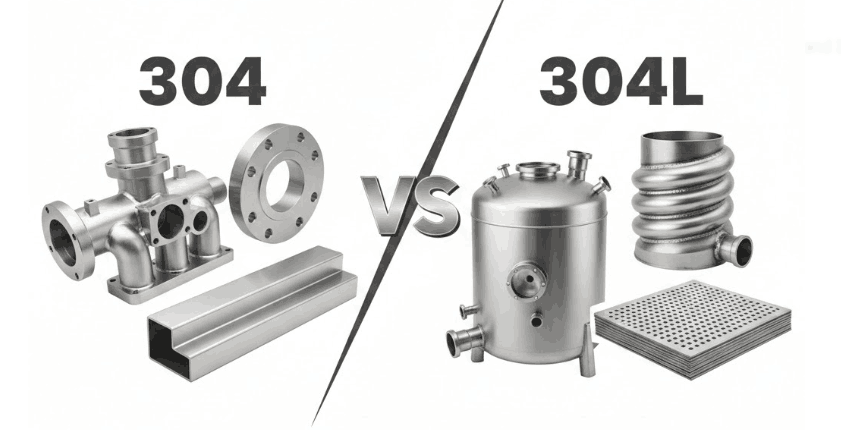

Choosing between 304 and 304L can feel confusing. The wrong choice can trigger weld failures, surface corrosion, tolerance shifts after machining, and unnecessary production costs. These problems disrupt timelines and create quality risks. You can avoid these issues by reading this article.
304 vs 304L stainless steel often confuses engineers, so this guide explains every key factor you need to choose correctly. You will learn the difference between 304 and 304L, including 304 vs 304L chemical composition, corrosion behavior, strength, CNC performance, weld response, applications, and the real 304 vs 304L price difference. These insights help you avoid production errors and select the right alloy with confidence.
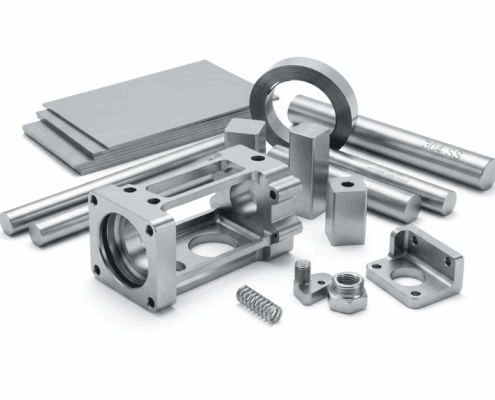
304 stainless steel is an austenitic chromium nickel alloy defined by AISI 304 and SAE 304 standards. It belongs to the 18/8 steel family and is recognized for its stable structure, good corrosion resistance, and reliable performance in general industrial use. It is widely used because its composition and behavior remain consistent across global manufacturing systems.

304L stainless steel is a low-carbon variant of 304, defined by AISI 304L and SAE 304L standards. Its reduced carbon content minimizes sensitization during welding, which prevents intergranular corrosion. Engineers often select it for welded assemblies and parts that need long-term corrosion resistance while maintaining the austenitic structure of standard 304.
304 vs 304L stainless steel has multiple names and equivalents across global standards.The following table lists the common equivalents of 304 and 304L stainless steel in different regions and standards, making it easier to identify the correct alloy for your project.
| Region / Standard | 304 Equivalent | 304L Equivalent |
| Europe (EN) | 1.4301, X5CrNi18-10 | 1.4307, X2CrNi18-9 |
| Japan (JIS) | SUS304 | SUS304L |
| USA (UNS) | S30400 | S30403 |
| China (GB) | 06Cr19Ni10 | 06Cr19Ni10L |
| Russia (GOST) | 08Х18Н10 | 08Х18Н10Л |
| Australia | 304S15 | 304LS15 |

The difference between 304 and 304L stainless steel mainly lies in carbon content. 304 contains up to 0.08% carbon, while 304L keeps it below 0.03%. Both grades have similar chromium and nickel levels, giving good corrosion resistance and CNC machinability. The following table shows the chemical composition of 304 and 304L.
| Element | 304 | 304L |
| Carbon (C) | ≤0.08% | ≤0.03% |
| Chromium (Cr) | 18–20% | 18–20% |
| Nickel (Ni) | 8–10.5% | 8–10.5% |
| Manganese (Mn) | ≤2% | ≤2% |
| Silicon (Si) | ≤1% | ≤1% |
| Phosphorus (P) | ≤0.045% | ≤0.045% |
| Sulfur (S) | ≤0.03% | ≤0.03% |
| Nitrogen (N) | ≤0.1% | ≤0.1% |
| Iron (Fe) | Balance | Balance |
In terms of 304 vs 304L strength, 304 has higher tensile and yield strength than 304L. This makes 304 better for structural parts that must bear higher loads or resist deformation during CNC machining. 304L’s lower strength is offset by its superior weldability and reduced risk of sensitization, making it ideal for welded assemblies. Both grades have the same elongation and hardness, ensuring reliable formability and impact resistance. Choosing between them depends on whether load-bearing capacity or welding performance is more critical for your part.
The following table shows key mechanical properties of 304 vs 304L:
| Property | 304 Stainless Steel | 304L Stainless Steel |
| Tensile Strength | 515 MPa | 485 MPa |
| Yield Strength | 205 MPa | 170 MPa |
| Elongation at Break | 40% | 40% |
| Hardness (Rockwell B) | 82 | 82 |
| Impact Toughness | High | High |
Both 304 vs 304L stainless steel share very similar physical properties, which makes them predictable during CNC machining and industrial applications.The following table lists the key physical properties of 304 and 304L, including density, thermal conductivity, thermal expansion, melting point, and electrical resistivity.
| Property | 304 Stainless Steel | 304L Stainless Steel |
| Density | 8.0 g/cm³ | 8.0 g/cm³ |
| Thermal Conductivity | 16.2 W/m·K | 16.2 W/m·K |
| Thermal Expansion | 17.2 µm/m·°C | 17.3 µm/m·°C |
| Melting Point | 1400–1450°C | 1400–1450°C |
| Electrical Resistivity | 0.72 µΩ·m | 0.72 µΩ·m |
This chapter describes how the two grades, 304 and 304L stainless steel, behave during key fabrication and processing steps. It covers their performance in CNC machining, cold and hot working, heat treatment, welding, forming, and annealing.
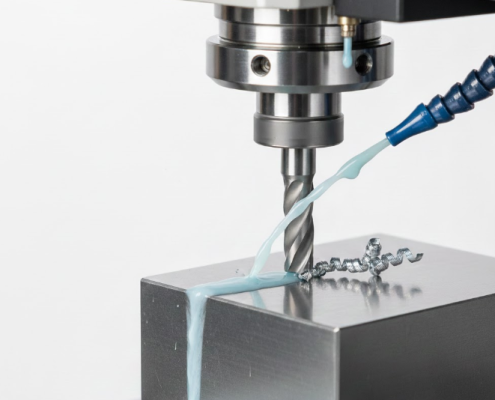
304 vs 304L machinability is similar, but 304 is slightly harder due to higher carbon content. It cuts cleanly with sharp tools on 4- and 5-axis CNC centers, maintaining tight tolerances. 304L is easier on tools during long runs but may need slower feeds for optimal surface finish.
When machining stainless steels like 304, 304L, and similar austenitic alloys, VMT’s CNC secrets include optimizing cutting speed and feed rates for each grade, controlling tool paths to prevent surface scratches, and applying intermediate annealing when necessary. These methods ensure iPhone-level appearance and atomic clock-level precision. For more detailed machining secrets, please contact VMT.
Both alloys respond well to cold forming. 304 provides slightly higher strength after work hardening, while 304L remains more ductile. For precision bends or stamped parts, 304L reduces the risk of cracking in welded assemblies.
304 and 304L can be hot worked at high temperatures without significant grain growth. 304L’s lower carbon helps prevent sensitization during heat, making it safer for post-weld forming.
Neither 304 nor 304L benefits from conventional heat hardening. Annealing restores ductility after cold working. 304L anneals slightly faster due to its lower carbon content, preserving weld integrity.
Welding 304 vs 304L shows a clear advantage for 304L. Its low carbon minimizes intergranular corrosion, reducing the risk of weld decay. 304 may require careful control or post-weld annealing to prevent sensitization.
Both grades are easily formed into complex shapes. 304 offers higher strength for structural components, while 304L excels in parts that require extensive welding and stress relief.
304 is slightly tougher on cutting tools due to higher carbon. 304L cuts easier with less tool wear, making it preferable for high-volume CNC production where consistent surface finish is critical.
Annealing restores ductility and reduces residual stress. 304L’s low carbon content allows faster annealing cycles and better stability in welded or heavily worked parts.
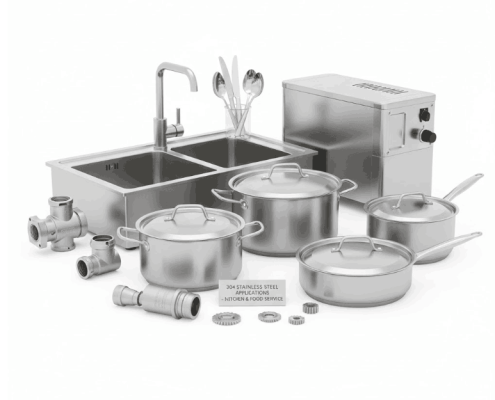
304 vs 304L stainless steel finds use in many industries. This chapter highlights the typical applications of each grade, showing where 304 is preferred for strength and general-purpose parts, and where 304L is chosen for welded assemblies, corrosion resistance, and hygienic or chemical environments.
304 vs 304L price difference is generally small, but 304L tends to be slightly higher due to lower carbon content and better weldability. Market fluctuations, supplier, and region also affect pricing. Stainless steel price comparison often shows 304 as more cost-effective for general applications, while 304L is chosen when long-term corrosion resistance and welded assemblies are critical.Understanding stainless steel price comparison helps engineers balance material cost and performance for CNC-machined parts.
The following table lists approximate prices of 304 and 304L stainless steel in different regions, all in USD per kilogram for easy comparison. The table data is updated as of November 2025. Due to market fluctuations, 304 vs 304L price difference may vary. Contact VMT to get the latest quote.
| Region | 304 Stainless Steel (USD/kg) | 304L Stainless Steel (USD/kg) |
| China | 1.70 – 2.20 | 1.80 – 2.30 |
| Europe | 2.10 – 2.80 | 2.20 – 2.90 |
| USA | 2.30 – 3.50 | 2.40 – 3.60 |
| India / South Asia | 1.90 – 2.40 | 2.00 – 2.50 |
A German chemical equipment manufacturer approached VMT to produce a welded processing tank for their pharmaceutical division. They initially considered 304 stainless steel due to its strength and lower cost. However, the tank required multiple welded joints and would handle corrosive chemicals, raising concerns about intergranular corrosion and long-term reliability.
VMT engineers recommended 304L stainless steel for its low carbon content and superior corrosion resistance after welding. Using our advanced CNC machining capabilities, we optimized cutting parameters, applied intermediate annealing where needed, and ensured key procedures met CPK ≥1.68. Our 4- and 5-axis centers and surface treatment experts delivered parts with atomic clock-level precision and iPhone-level surface finish.
The finished tank met all specifications and passed strict pharmaceutical industry inspections in Germany. The customer praised the durability, corrosion resistance, and precision of the tank, as well as VMT’s ability to deliver high-quality, welded stainless steel components on schedule. If you want to achieve the same high standards in your CNC-machined components, contact VMT to get professional guidance and the latest stainless steel solutions.
Choosing between 304 and 304L stainless steel depends on the specific requirements of your project, including welding, corrosion exposure, and mechanical performance. 304 offers strength and versatility for general applications, while 304L provides enhanced corrosion resistance for welded structures and harsh environments.
 WhatsApp/WeChat/Mobile:
+86-15099911516
WhatsApp/WeChat/Mobile:
+86-15099911516
 Tel: 86-150-9991-1516
 QQ: 939020977
 E-Mail: service@vimetal.com.cn


What are the disadvantages of 304 stainless steel?
304 stainless steel can be prone to sensitization and intergranular corrosion after welding. It has lower corrosion resistance in chloride-rich or highly acidic environments compared to 316 or 304L. Its higher carbon content can also reduce performance in welded assemblies, making it less ideal for harsh or marine conditions.
Is 304 stainless steel ok for outdoor use?
Yes, 304 stainless steel is suitable for outdoor use in mild environments. It resists corrosion in rain, humidity, and general atmospheric conditions. However, in coastal or highly polluted areas with high chloride exposure, its corrosion resistance may be insufficient, and 304L or 316 stainless steel may be a better choice.
Does 304L stainless steel rust?
304L stainless steel is highly resistant to rust due to its low carbon content and protective chromium oxide layer. In normal atmospheric conditions, it rarely rusts. However, prolonged exposure to chloride-rich environments or stagnant water may cause localized corrosion if protective maintenance is neglected.


 Austenitic Stainless Steel: Types, Properties and Uses