1018 vs. A36 Steel: Differences and How to choose
By Luca Xie | Dec .23, 2025
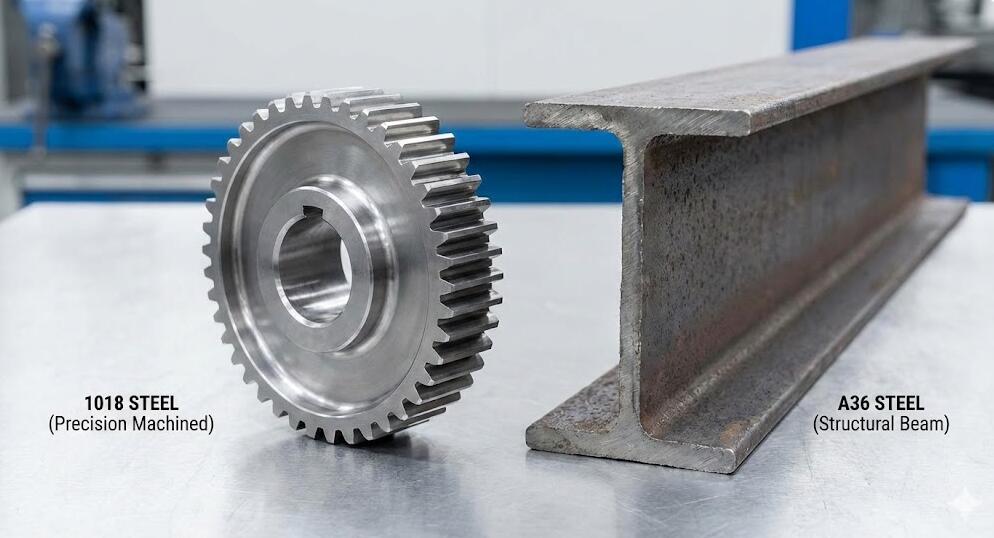

Choosing between 1018 and A36 steel often puzzles engineerss. Selecting the wrong steel can lead to warping during CNC machining, assembly mismatches, or even part failure. 1018 steel vs a36 offers different strengths, hardness, and machinability, but choosing without understanding these differences wastes time and money.
Struggling to choose between 1018 and A36 steel?This article compares these two materials, including chemical composition, mechanical properties, hot and cold rolling, and CNC machining considerations. By understanding 1018 steel vs a36, you can make precise material choices that improve quality and reduce production costs.
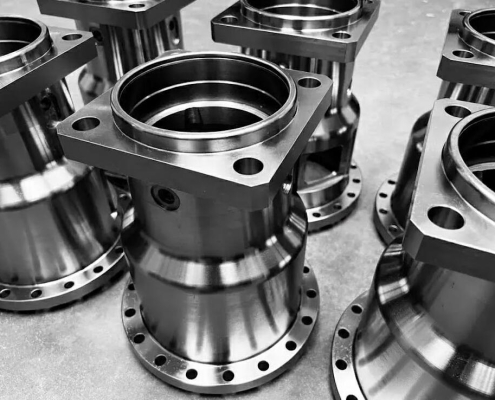
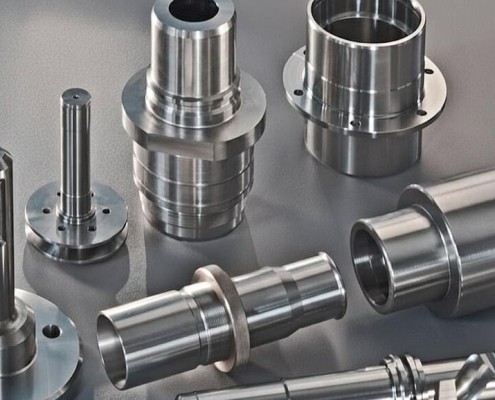
1018 steel is a low-carbon mild steel. It is known for good ductility, weldability, and smooth finish after CNC machining. Some engineers call it AISI 1018, and in cold-rolled form, it is sometimes referred to as 1018 CRS. Its versatility makes it suitable for shafts, pins, and precision components.
A36 steel is a common structural mild steel widely used in construction and industrial applications. It is also called ASTM A36 steel or simply A36 carbon steel. Known for good strength and weldability, it is often used in beams, plates, and structural frameworks.
Equivalent materials are steels in different standards that match chemical composition and performance. 1018 vs a36 steel are not the same. Knowing its equivalents avoids selection mistakes.
| Material System | Country | Equivalent Grade |
| ASTM | USA | 1018 |
| EN | Europe | C22 |
| JIS | Japan | S20C |
| DIN | Germany | 1.1141 |
| GB | China | Q215 |
| ISO | International | C22 |
| UNS | USA | G10180 |
| NORSOK | Norway | MDS 1018 |
| Material System | Country | Equivalent Grade |
| ASTM | USA | A36 |
| EN | Europe | S235JR |
| JIS | Japan | SS400 |
| DIN | Germany | 1.0038 |
| GB | China | Q235 |
| ISO | International | S235 |
| UNS | USA | K02600 |
| NORSOK | Norway | MDS A36 |
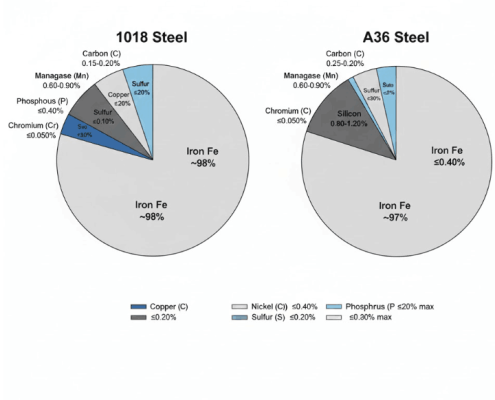
1018 vs a36 steel differ mainly in carbon content and alloying elements. 1018 steel has low carbon and excellent machinability for precision CNC machining. A36 steel has a higher carbon content around 0.25% and slightly more manganese. This provides higher strength but reduces ease of achieving fine tolerances, providing more strength for structural applications.
The following table shows the main chemical elements of 1018 vs a36 steel.
| Element | 1018 Steel (wt%) | A36 Steel (wt%) |
| Carbon (C) | 0.15–0.20 | 0.25–0.29 |
| Manganese (Mn) | 0.60–0.90 | 0.80–1.20 |
| Phosphorus (P) | ≤0.040 | ≤0.040 |
| Sulfur (S) | ≤0.050 | ≤0.050 |
| Silicon (Si) | ≤0.030 | ≤0.40 |
| Copper (Cu) | ≤0.20 | 0.20 max |
| Nickel (Ni) | ≤0.30 | — |
| Chromium (Cr) | ≤0.10 | — |
This section compares 1018 vs a36 steel properties, covering mechanical and physical characteristics. We will look at tensile strength, hardness, elasticity, density, and other key properties.
Mechanical properties for 1018 vs a36 steel focus on four key dimensions: yield strength, tensile strength, elongation, and hardness. Among these, yield strength and tensile strength are critical for load-bearing and structural applications, while elongation and hardness influence machinability and surface performance. 1018 steel balances strength and precision, making it ideal for CNC components, whereas A36 vs 1018 favors structural strength over fine finish.
The table below compares these key properties for easy reference.
| Property | 1018 Steel (Cold Drawn) | A36 Steel (Hot Rolled) |
| Yield Strength | ~53,700 psi | ~36,000 psi |
| Tensile Strength | ~63,000–63,800 psi | ~58,000–79,800 psi |
| Elongation | ~15% (in 2″) | ~20% (in 2″) |
| Hardness (Brinell) | ~126 HB | Varies, generally softer |
Physical properties of 1018 vs a36 steel influence how the material behaves under temperature, load, and environmental conditions. Key dimensions include density, thermal expansion, thermal conductivity, and melting point. These properties affect CNC machining precision, heat treatment, and performance in structural or industrial applications.
The table below compares the main physical properties of both steels.
| Property | 1018 Steel (Cold Drawn) | A36 Steel (Hot Rolled) |
| Density | 7.87 g/cm³ | 7.85 g/cm³ |
| Thermal Conductivity | 51.9 W/m·K | 54 W/m·K |
| Coefficient of Thermal Expansion | 12.3 µm/m·°C | 12.0 µm/m·°C |
| Melting Point | 1,425–1,530 °C | 1,425–1,540 °C |
This section examines the main manufacturing processes of 1018 vs a36 steel, focusing on CNC machining, welding, heat treatment, surface finish, hardening, and rolling methods.
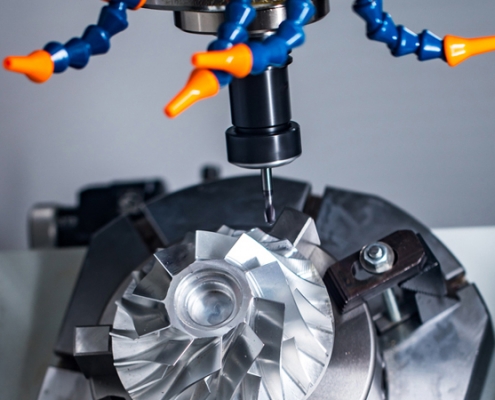
1018 steel is easier to machine due to its low carbon content, making it ideal for precise CNC components. A36 vs 1018 can also be machined, but slower cutting speeds and increased tool wear may occur. Multi-axis CNC allows tight tolerances for both materials.
A36 steel is typically hot-rolled, producing larger sections and structural shapes. Hot rolling enhances ductility but leaves a rougher surface, requiring post-processing for precise applications. 1018 steel, if hot-rolled instead of cold-rolled, would have lower surface finish quality and looser tolerances, making it less suitable for high-precision CNC components.
1018 steel is often cold-rolled to improve surface finish, dimensional accuracy, and hardness. Cold rolling reduces tolerances, making it suitable for high-precision CNC components. A36 steel, if cold-rolled, would achieve a smoother surface, but the process is less economical for structural shapes and large sections, limiting its typical applications.
1018 steel welds well with MIG, TIG, or arc methods because of low carbon. A36 steel vs 1018 is commonly welded for structural frameworks. Preheating is generally not required for 1018, but A36 may benefit from it for thicker sections.
1018 steel is usually used in as-rolled or normalized condition; minor heat treatments improve machinability. A36 steel can be stress-relieved or normalized to enhance structural stability but is rarely hardened.
Cold-rolled 1018 steel achieves smooth surfaces for precision parts, while hot-rolled A36 steel vs 1018 has a rougher finish suitable for structural applications. Surface finishing processes include grinding, polishing, or coating depending on requirements.
1018 steel has limited hardening potential due to low carbon; surface hardening methods like carburizing can improve wear resistance. A36 steel vs 1018 is generally not hardened and relies on structural strength.
1018 vs a36 steel are available in different forms depending on production and CNC machining needs. 1components. A36 steel vs 1018 is more common in various shapes and larger quantities, usually hot-rolled, suitable for structural applications.
Common forms include:
| Steel | Availability | Typical Shapes |
| 1018 Steel | Widely available, cold-rolled | Bars (round, square, flat), Sheets, Plates, Rods, CNC machined parts |
| A36 Steel | Widely available, hot-rolled | Plates, Sheets, Structural Beams, Angles, Channels, Bars, CNC machined parts |
This section explores 1018 vs a36 steel applications to help engineers and designers understand where each material is best used. We will cover typical uses.
1018 steel is ideal for parts requiring precision, smooth finishes, and CNC machinability. Typical applications include:
A36 steel vs 1018 is widely used for structural and heavy-duty applications. Key uses include:
Cost is a practical factor when choosing between 1018 vs a36 steel. 1018 steel can be more expensive due to its specific properties and cold-rolled process. A36 steel vs 1018 is generally more cost-effective and widely available because it is hot-rolled for structural applications. Regional supply, processing, and steel market conditions influence prices.
The table below shows approximate steel prices per kg (USD) by region, The prices in the table were updated in December 2025, and prices may change due to market fluctuations. For the latest pricing, please contact VMT for a free quote.
| Region | 1018 Steel (Cold Rolled, USD/kg) | A36 Steel (Hot Rolled, USD/kg) |
| USA | ~$0.90–1.05 | ~$0.84–0.95 |
| Europe | ~$1.10–1.25 | ~$1.00–1.15 |
| China | ~$0.80–0.95 | ~$0.75–0.90 |
| Australia | ~$1.20–1.35 | ~$1.10–1.25 |
Choose 1018 steel when precision, surface finish, and machinability are critical. Typical situations include:
Choose A36 steel vs 1018 when structural strength, durability, and cost-effectiveness are more important than surface precision. Typical situations include:
A European automotive supplier needed precision 1018 vs a36 steel components for high-performance vehicle gear assemblies. They faced issues with tight tolerances, surface finish, and on-time delivery. The client required CNC machined shafts and pins with tolerances under 0.01 mm, comparable to 1018 steel properties, while also needing structural A36 steel parts for supporting brackets.
VMT addressed the client’ s challenges through the following steps:
As a result, the client received all parts on schedule with zero tolerance failures. CNC components met strict precision standards, and structural parts achieved required strength. The client praised VMT for high-quality machining, reliable delivery, and professional support. They now rely on VMT for ongoing production.If you also need high-precision CNC machining or structural steel parts, contact VMT today to get a free quote and customized solution tailored to your project.
Choosing between 1018 vs a36 steel depends on the balance between precision and structural strength. 1018 steel excels in CNC machining, tight tolerances, and smooth surface finishes, while A36 steel vs 1018 is better suited for load-bearing and large-scale structural applications.
 WhatsApp/WeChat/Mobile:
+86-15099911516
WhatsApp/WeChat/Mobile:
+86-15099911516
 Tel: 86-150-9991-1516
 QQ: 939020977
 E-Mail: service@vimetal.com.cn


What is 1018 steel equivalent to?
1018 steel is equivalent to SAE 1018, EN C15E, JIS SS400, and other low-carbon mild steels across different international standards.
Is 1018 steel good for welding?
Yes, 1018 steel is suitable for welding due to its low carbon content. It welds easily with standard methods, including MIG and TIG, with minimal risk of cracking or distortion. Post-weld machining and finishing are usually straightforward.
What is stronger, A36 or 1018?
A36 vs 1018 steel differs in strength. A36 steel has higher structural strength, making it better for load-bearing applications. 1018 steel offers balanced tensile strength and ductility, preferred for precision CNC parts rather than heavy structural loads.
What makes A36 steel so popular?
A36 steel is popular due to its wide availability, cost-effectiveness, and versatility. It combines good strength, weldability, and ease of fabrication, making it ideal for construction, structural, and general engineering applications.
Does A36 steel rust easily?
Yes, A36 steel can rust if exposed to moisture without protection. Proper surface treatments, coatings, or painting are recommended to prevent corrosion in outdoor or humid environments.

 1018 vs 1045 steel:Which One Should You Choose