What is A36 Steel: A Comprehensive Overview
By Luca Xie | Dec .18, 2025
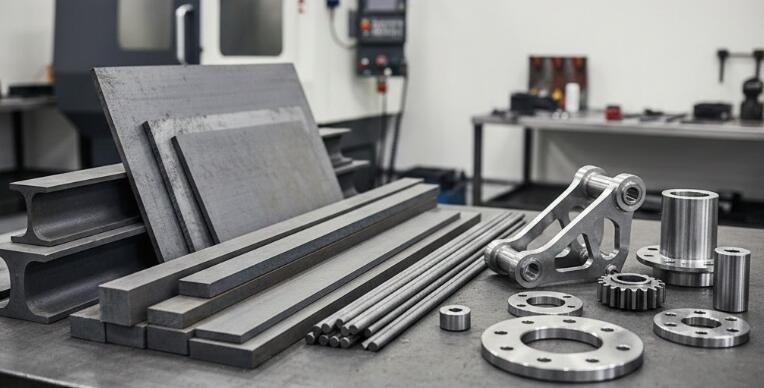

When you choose the wrong steel, machining costs rise and part quality drops. Many engineers face unstable tolerances and poor weld results. What is A36 steel becomes the answer because it balances strength, machinability, and cost for structural and CNC machining projects.
A36 steel is a low-carbon structural material known for stable performance and easy fabrication. It offers reliable strength, good ductility, and excellent weldability. This article provides a complete overview of ASTM A36 steel, covering composition, mechanical properties, equivalents, fabrication methods, applications, forms, and pricing.
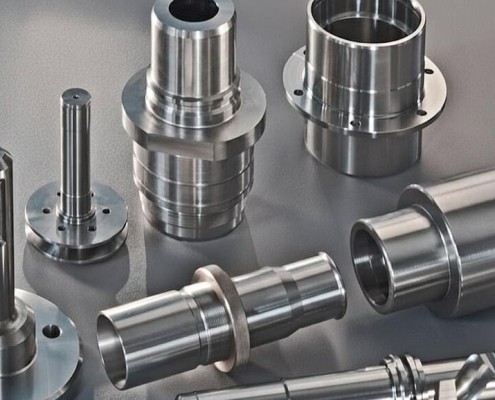
What is A36 steel refers to a standard low-carbon material defined under ASTM A36 steel specifications. It is commonly known as A36 structural steel and sometimes called A36 carbon steel in fabrication and CNC machining environments.You mainly use this grade for general structural and industrial purposes.
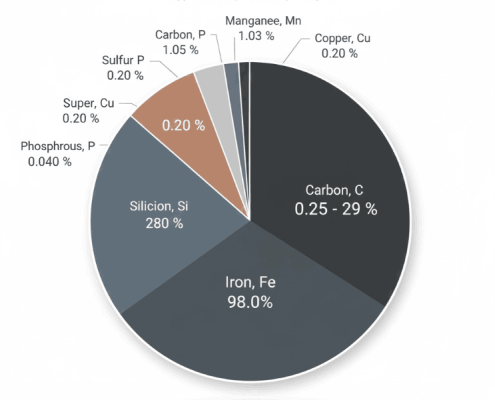
The chemical composition of A36 steel includes several key elements such as carbon, manganese, silicon, phosphorus, sulfur, iron, and small amounts of copper. Each element affects the steel’s performance during fabrication and CNC machining.
Carbon has the most significant influence on A36 metal. With a content of about 0.25–0.29%, it controls strength, hardness, and ductility. The low carbon level ensures A36 carbon steel remains easy to weld, form, and machine while maintaining reliable structural performance.Here is a typical composition table for reference:
| Element | Content |
| Carbon, C | 0.25 – 0.29 % |
| Copper, Cu | 0.20 % |
| Iron, Fe | 98.0 % |
| Manganese, Mn | 1.03 % |
| Phosphorus, P | 0.040 % |
| Silicon, Si | 0.280 % |
| Sulfur, S | 0.050 % |
This section covers both mechanical and physical characteristics, Knowing these properties ensures reliable fabrication, accurate machining, and optimal performance in your applications.
A36 steel mechanical properties include yield strength, ultimate tensile strength, elongation, and hardness, which together describe its load-bearing capacity and ductility. In addition, its modulus of elasticity, bulk modulus, and shear modulus define the material’s stiffness and deformation behavior under mechanical stress, providing a complete mechanical profile for structural and CNC-machined applications.
Here is a summary table of A36 steel mechanical properties:
| Mechanical Property | Metric | Imperial | Notes |
| Tensile Strength, Ultimate | 400–550 MPa | 58,000–79,800 psi | Maximum load before failure |
| Tensile Strength, Yield | 250 MPa | 36,300 psi | Stress before permanent deformation |
| Elongation at Break (200 mm) | 20 % | 20 % | Ductility over 200 mm gauge |
| Elongation at Break (50 mm) | 23 % | 23 % | Ductility over 50 mm gauge |
| Hardness (Brinell) | 119–162 HB | 119–162 HB | Machinability and wear resistance |
| Modulus of Elasticity (E) | 200 GPa | 29,000 ksi | Resistance to linear elastic deformation |
| Shear Modulus (G) | 79.3 GPa | 11,500 ksi | Resistance to shear deformation |
| Bulk Modulus (K) | 140 GPa | 20,300 ksi | Resistance to volumetric compression |
| Poisson’s Ratio (ν) | 0.26 | 0.26 | Lateral contraction vs axial elongation |
A36 steel physical properties include density, melting point, and thermal conductivity, which define its weight characteristics, thermal behavior, and stability during fabrication and service. These physical properties provide the baseline for predicting material performance in structural components, welding operations, and CNC machining processes.
Here is a summary table of A36 steel physical properties:
| Physical Property | Metric | Imperial | Notes |
| Density | 7.85 g/cm³ | 0.284 lb/in³ | Moderate weight, affects handling and support |
| Melting Point | 1420–1465 °C | 2,590–2,670 °F | High enough for welding and heat treatment |
| Thermal Conductivity | 50–60 W/(m·K) | 348 Btu-in/hr-ft² °F | Moderate, ensures heat dissipation during CNC machining |
A36 steel equivalent grades vary across international standards. Exact matches are rare due to small differences in composition and mechanical properties, but comparable grades help engineers select suitable substitutes for structural or CNC-machined parts. Here is a summary of A36 steel equivalent grades by region and standard:
| Country / Region | Material System | Equivalent Grade |
| Europe | EN | S235JRG2 |
| Germany | DIN | St 37-2 |
| Canada | ASTM | 260W |
| Japan | JIS | SS400 |
| India | IS | E250 |
| China | GB | Q235B |
| ISO | ISO | E235 |
Understanding how A36 metal can be machined, welded, formed, and heat-treated helps you understand its workability and why it is widely used in structural and CNC-machined parts.
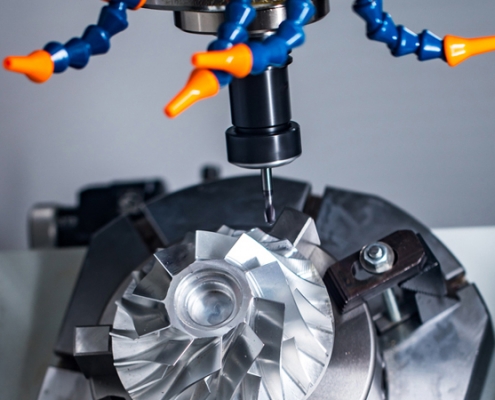
Based on VMT’s 15 years of manufacturing experience, we can share the following tips:A36 metal has moderate machinability, allowing smooth milling, turning, and drilling. Compared to AISI 1018 steel, slightly more force is needed due to higher strength. Using sharp tools and proper feeds ensures precise dimensions, tight tolerances, and smooth surfaces.
Weldability of A36 structural steel is excellent. Low phosphorus and sulfur reduce brittleness and cracking. Welded joints maintain mechanical strength and dimensional stability, making it suitable for MIG, TIG, or arc welding.
Formability is good. Low to moderate carbon provides ductility, while manganese ensures toughness. A36 metal can be bent, punched, or stamped without cracking or springback when proper tooling and process control are applied.
Heat treatments, including stress relieving, normalizing, annealing, carburizing, and hardening, improve dimensional stability and reduce residual stress. These methods prepare A36 steel for CNC machining or forming. Typical temperature ranges are:
| Process | Temperature Range (°C) |
| Normalizing | 899–954 |
| Annealing | 843–871 |
| Stress Relieving | 677–927 |
| Carburizing | 899–927 |
| Hardening | 788–816 |
With its balanced strength, ductility, and ease of fabrication, A36 metal is ideal for real-world applications across multiple industries.
A36 metal is available in various forms to meet different structural, manufacturing, and CNC machining needs.
The price of A36 steel varies depending on form, thickness, size, and market conditions. Factors such as supply and demand, processing requirements, CNC machining needs, and regional availability influence costs. Thicker plates and complex CNC-machined components are generally more expensive, while standard bars and sheets remain cost-effective for general fabrication. Here is a rough reference of A36 steel price by form and region, The information in this table was updated in December 2025, and prices may change due to market fluctuations. For the latest pricing, please contact VMT for a free quote.
| Region | Bars (USD/kg) | Plates & Sheets (USD/kg) | Structural Shapes (USD/kg) | Pipes & Tubes (USD/kg) |
| China | 0.38–0.60 | 0.40–0.65 | 0.42–0.68 | 0.45–0.70 |
| United States | 0.60–0.80 | 0.65–0.90 | 0.62–0.85 | 0.70–0.95 |
| Europe | 0.65–0.85 | 0.70–0.95 | 0.68–0.90 | 0.75–1.00 |
| Southeast Asia | 0.55–0.75 | 0.58–0.82 | 0.60–0.85 | 0.65–0.90 |
A36 steel and 1018 steel are both commonly used low-carbon steels, but they have notable differences in strength, machinability, and applications. A36 metal has a higher yield strength of 250 MPa compared to 1018’s 215 MPa, making it better suited for structural applications and load-bearing CNC-machined components. 1018 steel offers slightly better machinability due to lower strength and carbon content, allowing faster cutting and smoother surface finishes for precision parts.
While A36 structural steel excels in welded structures, beams, and plates, 1018 steel is preferred for gears, shafts, pins, and other CNC components where precise dimensions and surface quality are critical. Choosing between them depends on whether strength and structural stability or superior machinability and surface finish are the priority.
A European automotive supplier required precision A36 metal suspension brackets for their latest vehicle line. The parts had extremely tight dimensional tolerances of 0.01 mm, complex geometries, and high surface finish requirements. Previous suppliers struggled with issues such as warping during cutting, maintaining flatness after welding, and achieving consistent hardness across critical features.
VMT Solution by steps:
The final suspension brackets met all dimensional and surface quality requirements. Production efficiency improved, and tool life was extended. The client praised the precision, reliability, and on-time delivery. If your project requires high-precision A36 metal CNC components, contact us to get tailored solutions to meet your exact specifications.
A36 steel is a versatile, low-carbon structural steel with balanced strength, ductility, and machinability. Its chemical composition, mechanical and physical properties, and workability make it suitable for a wide range of applications, from construction and transportation to CNC-machined components. Understanding its forms, equivalents, advantages, and limitations helps engineers select the right material for precise, durable, and cost-effective designs.
 WhatsApp/WeChat/Mobile:
+86-15099911516
WhatsApp/WeChat/Mobile:
+86-15099911516
 Tel: 86-150-9991-1516
 QQ: 939020977
 E-Mail: service@vimetal.com.cn


Is A36 the same as carbon steel?
A36 steel is a type of low-carbon steel, containing primarily iron with small amounts of carbon, manganese, and other elements. It offers moderate strength and good ductility, suitable for structural and CNC-machined parts.
Can A36 steel be hardened?
A36 steel has low carbon content, so it cannot be deeply hardened by standard quenching. Surface hardening, like carburizing, is possible, but its main strength comes from mechanical processing and heat treatment for dimensional stability.
Is A36 steel bulletproof?
No, A36 steel is not bulletproof. Its low carbon content and moderate tensile strength provide structural support, but it cannot stop bullets or withstand extreme high-velocity impacts.
Does A36 steel rust easily?
Yes, A36 steel has low corrosion resistance. It rusts when exposed to moisture and requires protective coatings such as paint, galvanization, or plating to prevent corrosion.
Is A36 hot rolled or cold rolled?
A36 steel is typically hot-rolled. Hot rolling produces a rougher surface and mill scale, which can be machined or treated for smooth finishes in CNC applications.

 1018 vs. A36 Steel:Differences and How to choose