What is 304H stainless steel:The Ultimate Guide
By Luca Xie | Dec .10, 2025

High-temperature equipment often fails when the material cannot handle continuous heat and mechanical stress. Many buyers struggle to select the right stainless steel for demanding environments. Understanding 304H stainless steel properties helps avoid these risks and ensures reliable long-term performance.
304H stainless steel composition, 304H stainless steel temperature limits, and 304H stainless steel properties define how this alloy performs under high heat and continuous stress. This guide explains these factors in clear detail so you can select the right grade faster, avoid material failure, and improve reliability in boilers, piping, and heat-exchanger systems.
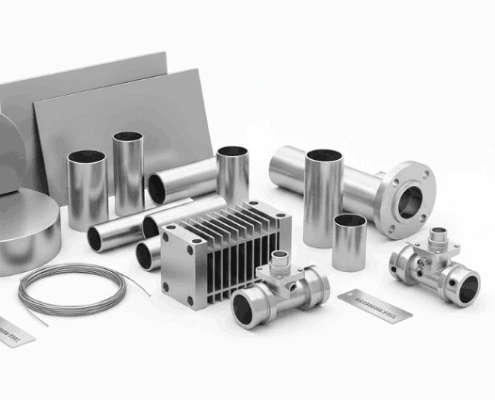
304H stainless steel is a high-carbon austenitic alloy designed for elevated-temperature service. The added carbon improves creep resistance and long-term stability under heat. This grade supports demanding environments where components face thermal cycling, stress, and continuous load.
304H stainless steel appears in many global material systems, which helps engineers match specifications during purchasing, inspection, and CNC machining.
| Standard System | Country or Region | Equivalent Designation |
| UNS | United States | S30409 |
| ASTM | United States | ASTM 304H |
| ASME | United States | SA-240 / SA-312 304H |
| EN | Europe | 1.4948 |
| DIN | Germany | X6CrNi18-10 (High-carbon variant) |
| JIS | Japan | SUS304H |
| GB | China | 06Cr19Ni10H |
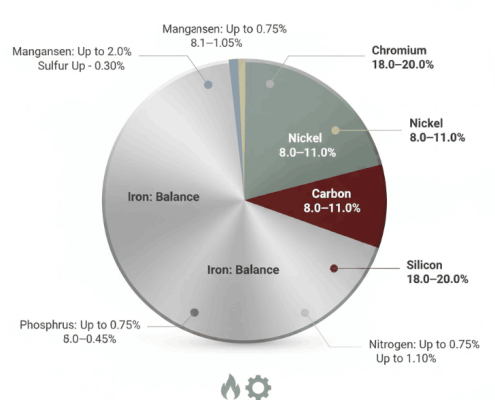
The 304H stainless steel composition features a higher carbon content than standard 304. This increased carbon is the key factor that boosts high-temperature strength and improves creep resistance. The alloy also contains chromium, nickel, manganese, The table below shows the key alloying elements commonly found in 304H stainless steel.
| Element | Typical Content Range |
| Carbon | 0.04–0.10 |
| Chromium | 18.0–20.0 |
| Nickel | 8.0–11.0 |
| Manganese | Up to 2.0 |
| Silicon | Up to 0.75 |
| Phosphorus | Up to 0.045 |
| Sulfur | Up to 0.030 |
| Nitrogen | Up to 0.10 |
| Iron | Balance |
This section provides an overview of how 304H performs in strength, physical behavior, corrosion resistance, and high-temperature conditions, offering a clear snapshot of its overall material capabilities.
304H stainless steel properties offer strong tensile performance, reliable yield strength, and stable behavior under long-term heat exposure. These traits help CNC-machined parts maintain accuracy and strength when exposed to pressure, vibration, and thermal cycling. The table below shows the typical mechanical properties of 304H stainless steel used in engineering evaluation.
| Property | Condition or Temper | Test Temperature | Typical Value or Range Metric | Typical Value or Range Imperial | Reference Standard |
| Tensile Strength | Annealed | Room Temperature | 520 to 750 MPa | 75 to 109 ksi | ASTM E8 |
| Yield Strength 0.2 percent offset | Annealed | Room Temperature | 205 to 310 MPa | 30 to 45 ksi | ASTM E8 |
| Elongation | Annealed | Room Temperature | 40 percent minimum | 40 percent minimum | ASTM E8 |
| Hardness Rockwell B | Annealed | Room Temperature | 70 to 90 HRB | 70 to 90 HRB | ASTM E18 |
| Impact Strength Charpy at 20°C | Annealed | 20°C | 40 J minimum | 29.5 ft lbf | ASTM E23 |
The physical behavior of 304H stainless steel properties supports stable performance in high-temperature and high-pressure systems. Its density, thermal expansion rate, and conductivity help CNC-machined parts maintain precision even when exposed to repeated heating and cooling cycles.The table below shows the main physical properties of 304H stainless steel.
| Property | Condition or Temperature | Value Metric | Value Imperial |
| Density | Room Temperature | 7.93 g/cm³ | 0.286 lb/in³ |
| Melting Point or Range | — | 1400 to 1450 °C | 2552 to 2642 °F |
| Thermal Conductivity | Room Temperature | 16.2 W/m·K | 112 BTU·in/h·ft²·°F |
| Specific Heat Capacity | Room Temperature | 500 J/kg·K | 0.12 BTU/lb·°F |
| Electrical Resistivity | Room Temperature | 0.72 µΩ·m | 0.72 µΩ·in |
| Coefficient of Thermal Expansion | Room Temperature | 16.0 x 10⁻⁶/K | 8.9 x 10⁻⁶/°F |
304H stainless steel provides reliable corrosion resistance, but its performance changes depending on the specific chemical environment and temperature. High-chloride media still pose a pitting risk, while mild organic acids and seawater conditions are generally well-tolerated.The table below summarizes how 304H stainless steel performs in common corrosive environments.
| Corrosive Agent | Concentration (%) | Temperature (°C / °F) | Resistance Rating | Notes |
| Chlorides | 3–5% | 20–60°C / 68–140°F | Fair | Risk of pitting |
| Sulfuric Acid | 10% | 20–40°C / 68–104°F | Poor | Not recommended |
| Acetic Acid | 10% | 20–60°C / 68–140°F | Good | Moderate resistance |
| Sea Water | — | Ambient | Good | Suitable for marine environments |
304H stainless steel delivers dependable performance in high-temperature environments where dimensional stability and oxidation resistance are critical. Its higher carbon content strengthens the alloy against creep, allowing components such as heater tubes, boiler sections, and high-temperature manifolds to perform reliably under continuous thermal loads.The table below summarizes the key heat-resistance limits of 304H stainless steel.
| Property or Limit | Temperature °C | Temperature °F | Remarks |
| Max Continuous Service Temperature | 870 | 1600 | Suitable for long exposure |
| Max Intermittent Service Temperature | 925 | 1700 | Supports short high-heat cycles |
| Scaling Temperature | 800 | 1472 | Resists oxidation before scale formation |
| Creep Strength Consideration | 600 | 1112 | Strength begins to decrease |
This section explains how 304H stainless steel behaves during CNC machining, forming, welding, heat treatment, and finishing. It highlights key considerations to achieve precision, surface quality, and high-temperature stability.
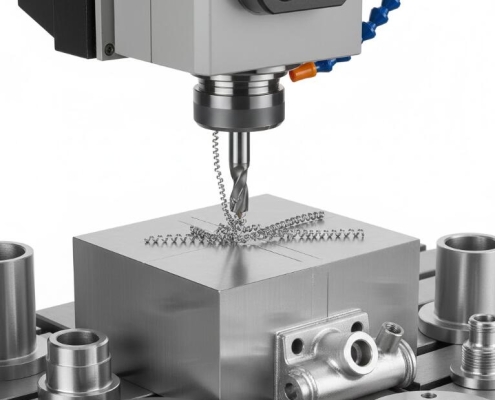
304H stainless steel machines well, but its higher carbon content can make maintaining precision challenging. Many engineers struggle with chip control, surface finish, and dimensional accuracy under high-temperature alloy conditions. Here’s a tip from VMT’s CNC processing experience: using sharper tooling with controlled feed rates ensures stable chip formation and consistent tolerances. Optimizing tool paths and spindle speeds also helps preserve surface quality, making it easier to achieve precision parts that can withstand long-term high-heat service.
Cold forming is moderate due to increased work-hardening. Intermediate annealing may be necessary to relieve stress and prevent cracking during bending, rolling, or other cold processes.
Hot working performs excellently between 980°C and 1175°C. Proper cooling after hot-forming prevents carbide precipitation and maintains corrosion resistance.
Annealing improves ductility and relieves internal stresses. Full anneal at 1050–1100°C followed by rapid cooling enhances formability, though 304H cannot be hardened by conventional heat treatment.
Welding 304H stainless steel is feasible using TIG, MIG, or SMAW. Controlled heat input minimizes carbide precipitation, and post-weld annealing may be needed for parts exposed to high temperatures.
304H can be bent, rolled, or deep-drawn, but higher carbon increases spring-back. Tooling and pressure adjustments help achieve precise shapes in CNC-fabricated components.
The alloy achieves smooth, bright surfaces through grinding, polishing, or CNC machining. Its stability under heat and stress ensures a consistent finish for critical applications.
304H stainless steel is ideal for high-temperature and high-pressure environments across multiple industries:

The price of 304H stainless steel depends on material form, dimensions, market fluctuations in nickel, chromium, and iron, order quantity, and delivery location. Plates, sheets, pipes, and round bars have different production costs, and larger orders or nearby delivery locations can lower the unit price. High-precision or specialty items, such as seamless tubing, also affect cost due to manufacturing complexity and dimensional tolerances.
The table below shows typical market price examples for 304H stainless steel as of December 2025.Prices may change due to market fluctuations. For the latest price quote, please contact VMT for a free quote.
| Form | Price Range |
| Sheets / Plates | ~$1,100 – $3,000+ per ton (cold-rolled, hot-rolled) |
| Bars / Rods (Square, Hex, Flat) | ~$2,100 – $2,800+ per metric ton |
| Tubes / Pipes | ~$44,000 – $45,500+ per ton (welded/seamless specialty), or $11 – $20+ per meter depending on size |
| General / Per kg | ~$2.50 – $60+ per kg, depending on form |
304H vs 304L mainly differs in carbon content. 304H has higher carbon, which improves high-temperature strength and creep resistance, while 304L has lower carbon to reduce carbide precipitation and improve weldability. Both share similar corrosion resistance and general mechanical properties at room temperature, but 304H performs better under continuous high-heat service, making it ideal for boilers, superheaters, and high-temperature piping.
304H vs 304 differs primarily in carbon content. 304H contains higher carbon, which enhances strength and creep resistance at elevated temperatures, while standard 304 is optimized for general corrosion resistance and ease of fabrication at room temperature. Both grades have similar chromium and nickel levels, providing good overall corrosion resistance, but 304H is preferred for long-term high-temperature service, such as boilers, superheater tubes, and high-heat CNC-machined components.
A client from Germany’s power generation industry needed 304H stainless steel components for a high-temperature boiler system. They faced challenges with CNC machining precision, surface finish, and ensuring the parts could withstand continuous high-heat service. Maintaining tight tolerances while avoiding warping or stress cracking was critical.
VMT Solution and Steps:
The client successfully received components that met high-temperature strength requirements, precise tolerances, and smooth finishes. Parts performed reliably in the boiler system, and production schedules were maintained. For similar high-performance CNC machining needs, contact us to explore solutions and best practices.
304H stainless steel offers a combination of high carbon strength, excellent creep resistance, reliable corrosion performance, and stable behavior at elevated temperatures. it suitable for boilers, heat exchangers, high-temperature piping, and precision CNC components. Understanding its mechanical, physical, and fabrication properties ensures engineers select the right material for high-heat and high-stress applications.
 WhatsApp/WeChat/Mobile:
+86-15099911516
WhatsApp/WeChat/Mobile:
+86-15099911516
 Tel: 86-150-9991-1516
 QQ: 939020977
 E-Mail: service@vimetal.com.cn


What are the advantages of 304H stainless steel?
304H stainless steel offers high-temperature strength, excellent creep resistance, stable mechanical properties, and good corrosion resistance. Its higher carbon content makes it ideal for boilers, heat exchangers, high-temperature piping, and CNC-machined precision components.
What are the disadvantages of 304H stainless steel?
Higher carbon increases sensitization risk during welding, reduces low-temperature ductility slightly, and makes machining more demanding. It is also more expensive than standard 304 due to enhanced high-temperature performance.
When to choose 304H stainless steel?
Select 304H when components must withstand prolonged high temperatures and maintain strength, dimensional stability, and corrosion resistance, such as in boilers, superheaters, heat exchangers, and high-temperature piping systems.


 Martensitic Stainless Steel : Grades, Characteristics, Machining