4 Washer Types: Material and Application
By Luca Xie | Nov 10, 2025
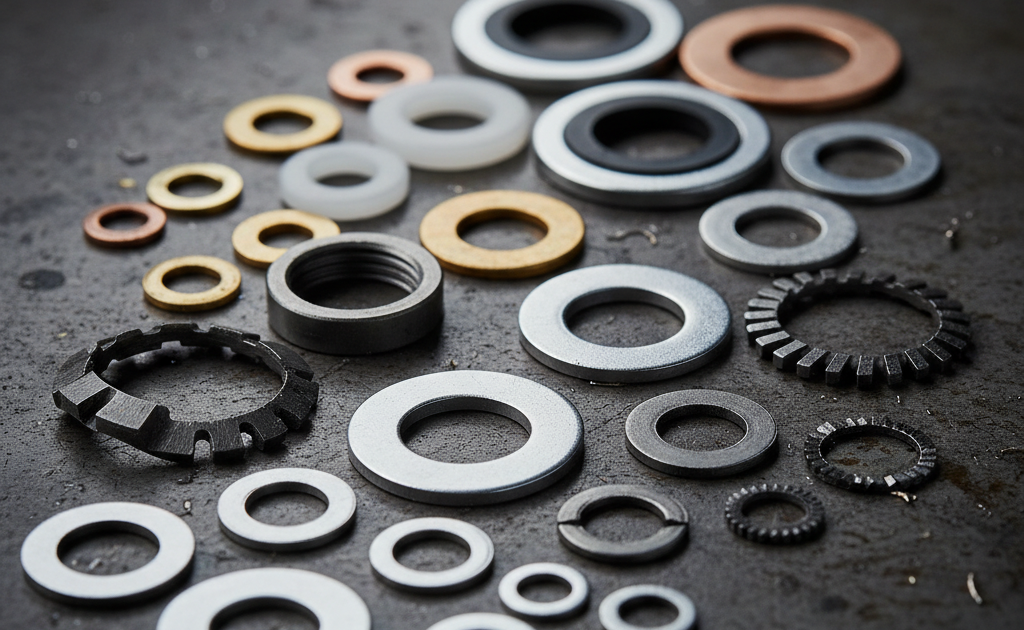

Selecting the right washer type can make or break the reliability of your mechanical assembly. When a joint loosens, leaks, or wears out too soon, the problem often lies in the smallest component—the washer. In CNC machining, understanding how different washers work, how they are manufactured, and which material best fits your project can save both cost and performance failures.
This article introduces four main types of washers, explaining their functions, strengths. It also explores how washer materials and applications vary across industries, helping you make an informed choice for your next project.
A washer is a thin disk-shaped component placed between a fastener and the surface it clamps. Its primary purpose is to distribute load, prevent surface damage, and support the stability of the fastening system. Some washers also provide locking or sealing effects depending on the joint’s working environment.
The four most common washer types used in CNC and industrial applications are:Plaint Washer, Spring Washer, Lock Washer, and Specialized washer. Each serves a specific purpose depending on the mechanical, thermal, and environmental conditions of your project.
Definition & Function
A flat washer is the simplest and most widely used type of washer. It is a thin, round metal disk with a central hole designed to distribute the load of a bolt or screw evenly over a larger surface area. This prevents damage to the assembled parts, ensures uniform torque during tightening, and improves joint stability. Flat washers also act as a smooth bearing surface, reducing friction between fasteners and workpieces.
Advantages & Disadvantages
Flat washers are cost-effective, easy to manufacture, and highly versatile across mechanical, electronic, and structural applications. Their simplicity allows for mass production in various sizes and materials. However, they do not prevent loosening under vibration or dynamic stress. When exposed to continuous motion or thermal cycling, flat washers alone cannot maintain clamping force without additional locking components.
Here are 5 Types of Plaint Washers:
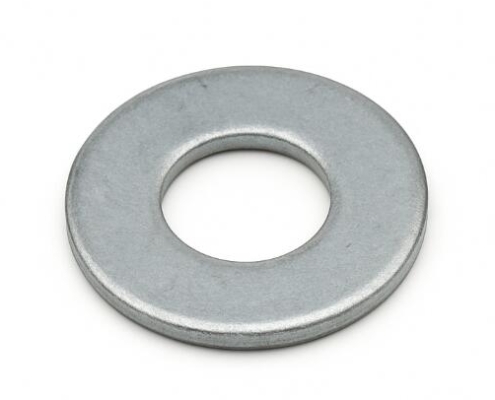 Flat washers come in two main types: Type A, with a smaller outer diameter (OD) for general-purpose applications, and Type B, with a larger OD and thickness designed for heavier loads or larger fasteners.
They are used to evenly distribute load, protect the surface, and prevent the fastener head or nut from embedding into soft materials.
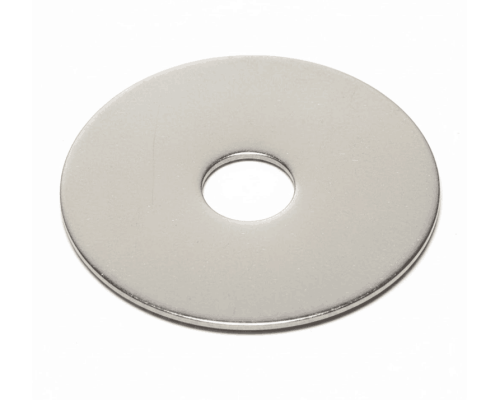 Fender washers have a large outer diameter (OD) and a small inner diameter (ID).
They are used to spread the load over a wider area, making them ideal for thin materials or oversized holes, and are often found in automotive and sheet metal applications.
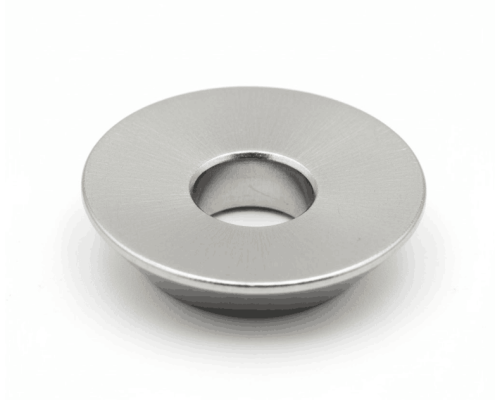 Countersunk washers have an angled shape that fits flat or oval head screws.
They are used to allow the screw to sit flush with the surface, providing a neat appearance and secure alignment, often seen in furniture and decorative assemblies.
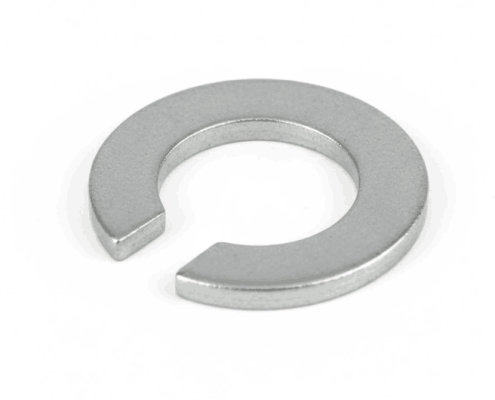 C-washers feature a slot that allows them to be installed or removed from the side without fully taking off the bolt.
They are used in applications requiring frequent adjustments or quick part changes, such as machinery maintenance or assembly systems.Their open design saves time during installation and maintenance, making them ideal for dynamic or modular setups.
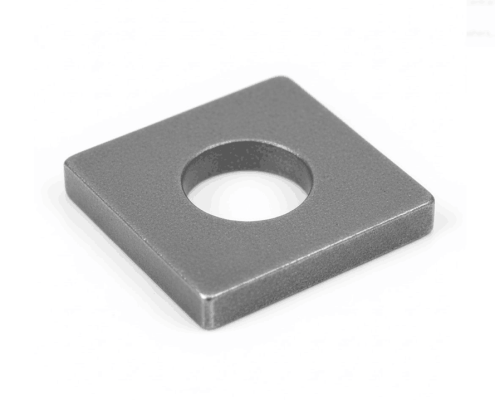 Square washers have a square shape with a central hole for bolts or screws.
They are thicker and larger than standard washers, providing higher strength and preventing rotation, commonly used in structural, timber, or heavy-duty applications.
Definition & Function
A spring washer, also called a split lock washer, has a helical cut that creates tension when compressed. This tension maintains clamping force and prevents the fastener from loosening under vibration, load shifts, or thermal expansion. The spring action provides a self-locking effect, making it ideal for assemblies exposed to movement or shock.
Advantages & Disadvantages
Spring washers are effective at resisting vibration and maintaining tight joints in dynamic environments. They are commonly used in automotive, machinery, and aerospace applications where secure fastening is critical. However, they can lose elasticity over time due to continuous compression or exposure to high temperatures. Improper use or over-tightening may also reduce their locking efficiency.
Here are 5 Types of Spring Washers:
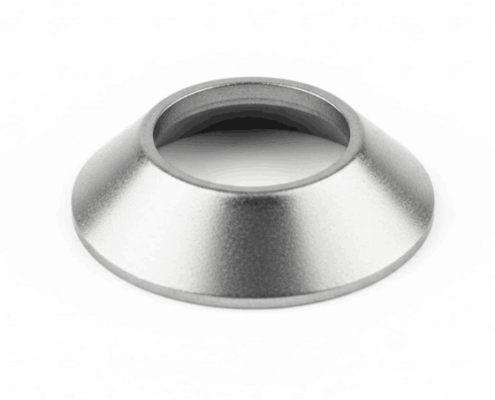 A Belleville washer is a conical-shaped disc that functions like a spring. It delivers high load capacity within limited axial space and is ideal for applications needing compact yet powerful spring force.
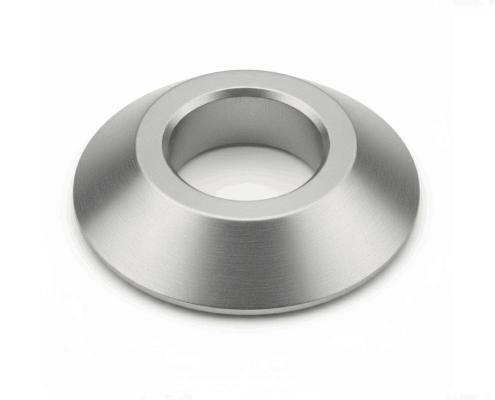 A dome spring washer features a rounded or domed profile that compresses to create tension. It works similarly to a Belleville washer but provides a gentler spring effect, maintaining steady pressure in assemblies.
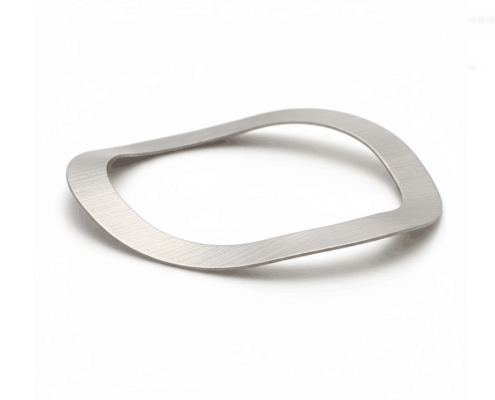 A wave spring washer has a wavy surface that flexes under compression. The wave design provides elastic force, helping absorb vibration, control movement, and maintain consistent tension in mechanical joints.
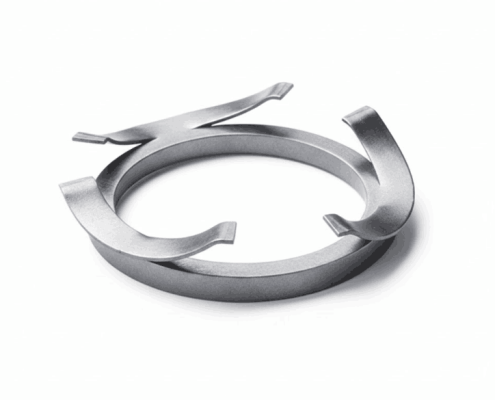 A finger spring washer consists of multiple flexible metal fingers arranged in a ring. When compressed, the fingers bend to absorb vibration and maintain tension, reducing loosening in dynamic assemblies.
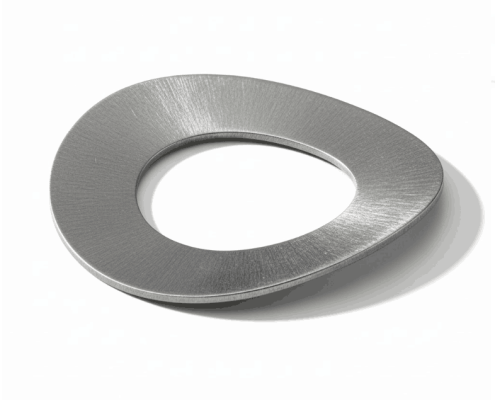
A crescent spring washer has a thin, curved profile resembling a crescent. It offers steady tension and vibration resistance while maintaining a low profile, suitable for compact or sensitive assemblies.
Definition & Function
A lock washer is engineered to prevent nuts and bolts from loosening under vibration or dynamic loads. It features teeth, serrations, or tabs that bite into the mating surface, increasing friction and locking the fastener in place. This design provides a mechanical hold that resists rotation, making lock washers essential for applications requiring secure and long-lasting joints.
Advantages & Disadvantages
Lock washers deliver stronger anti-loosening performance than standard flat or spring washers. They are highly effective in machinery, automotive, and heavy equipment assemblies where constant vibration is present. However, the biting action can mark or damage the contact surface, which may not be suitable for delicate or finished components. Removal during maintenance can also be more difficult, and reuse is generally not recommended once deformed.
Here are 4 Types of Locking Washers:
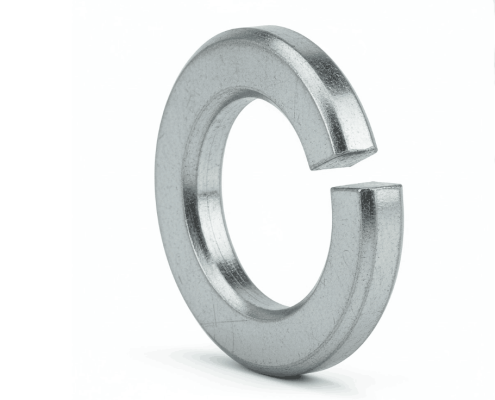 A split lock washer is a helical-shaped ring with a single cut that creates two raised ends. When tightened, these ends bite into the fastener and surface, generating friction and mechanical grip to prevent loosening. It is widely used for general locking purposes, though its effectiveness can decrease in high-vibration conditions
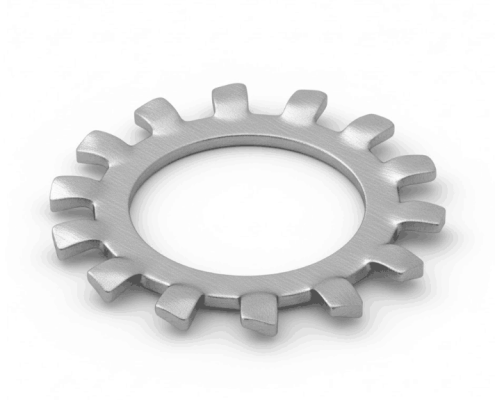 An external tooth lock washer has teeth that extend outward from its outer edge. These teeth dig into both the fastener head and the surface, providing excellent resistance against loosening or rotation. It works best on softer materials like aluminum or plastic, though the teeth may leave marks or damage coatings.
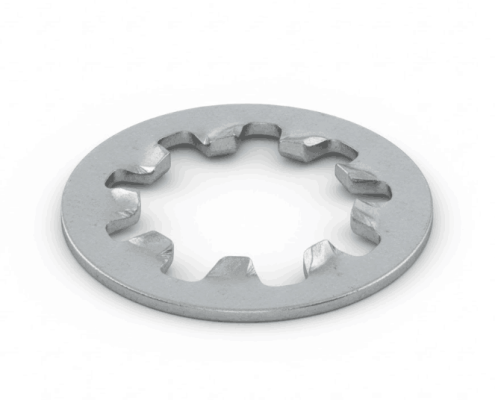 An internal tooth lock washer features sharp teeth around its inner edge that grip the fastener head or nut. It is ideal for compact spaces and small-headed fasteners, such as in electrical or electronic assemblies, though less suitable for soft materials where teeth cannot grip firmly.
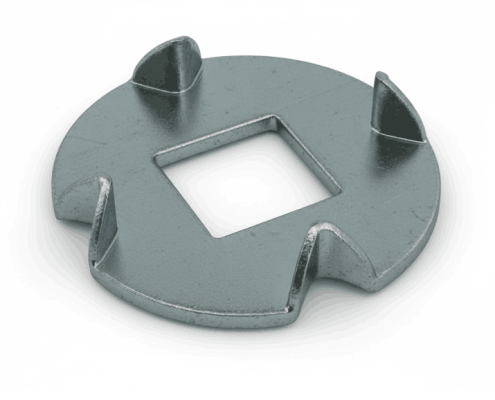 A torque washer, sometimes called a wedge lock washer, has multiple prongs or ridges that bite into the mating surface to prevent bolt movement. It provides strong anti-loosening performance and is commonly used in woodworking or applications where vibration may loosen standard fasteners.
Beyond the common types of washers—Plain Washers, Spring Washers, and Lock Washers—there are also specialized designs created for specific engineering or assembly needs. These washers provide enhanced performance, reliability, or adaptability in unique applications.
Here are 8 Types of Special Washers:
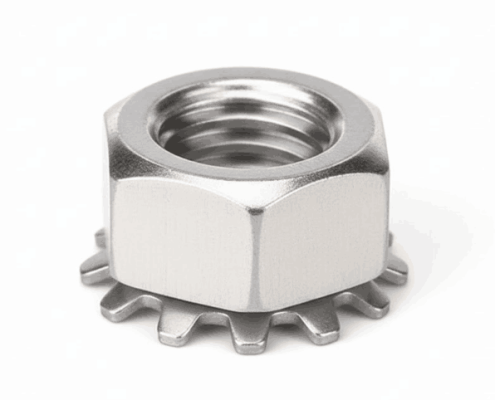 A Keps nut, also called a K-Lock nut, is a hexagonal nut with a built-in lock washer attached to one side. This integrated design simplifies assembly while preventing the nut from loosening due to vibration or movement.
 Top hat washers, also known as flanged washers, have a shape resembling a top hat, featuring a flat top and a flared bottom. The wide flange spreads the load and prevents damage to delicate, soft, or thin materials.
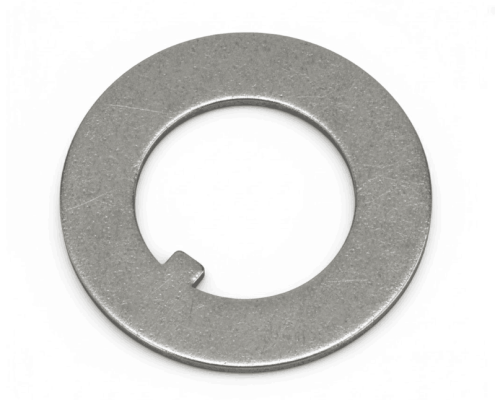 Keyed washers have a slot or key that fits into a matching groove on a shaft. This prevents the washer from rotating or shifting, making them ideal for components that experience torque or rotational movement, such as gears or pulleys.
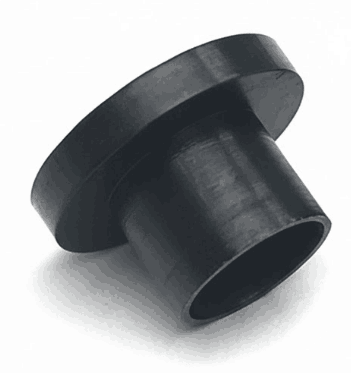 Insulating washers, also called shoulder washers or insulating bushings, have a raised cylindrical shoulder that separates the fastener from the base material. This structure provides electrical insulation and spacing between components.
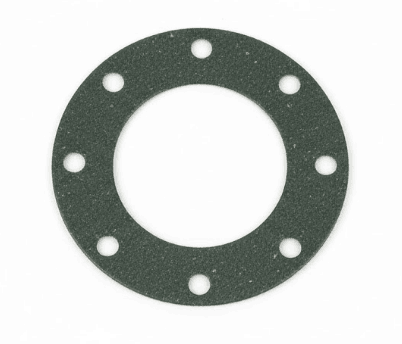 Gaskets are sealing components, usually circular or rectangular, placed between two surfaces to prevent leakage of liquids or gases. Made from flexible materials, they conform to irregular surfaces to ensure a tight seal.
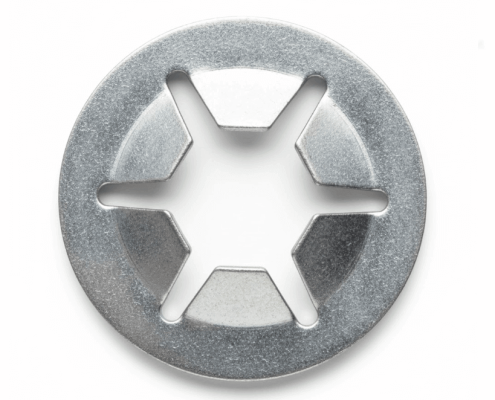 Retaining push nuts, also known as push-on retainers, are fasteners that grip tightly onto a shaft or stud when pressed on. Made of spring steel, their internal teeth create strong friction to secure components without additional threading.
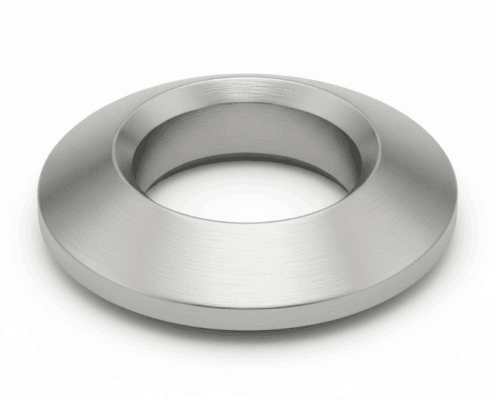 A spherical washer features a concave surface that allows limited angular adjustment between parts. This ensures full contact and even load distribution, even when components are slightly misaligned.
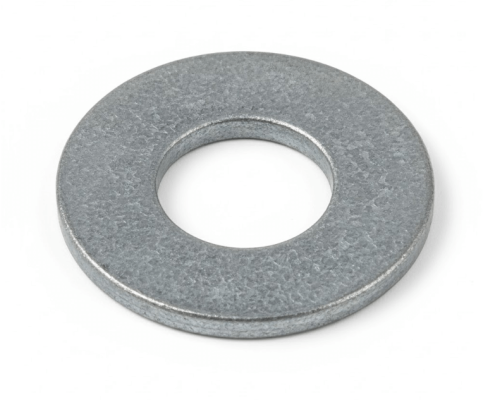
Structural washers, also known as high-strength or load-indicating washers, are thick and durable. Designed for use with high-tensile bolts, they provide strong support in steel constructions such as bridges, buildings, and heavy machinery.
Material selection is critical for washer performance, durability, and reliability. Washers are generally grouped into three categories: metal, plastic, and rubber. Each category has several materials with distinct properties suited for different applications.
Metal washers provide excellent strength, load-bearing capacity, and long-term durability. Stainless steel is highly corrosion-resistant and maintains its strength in humid or outdoor environments.Its chemical composition often adheres to specific ASTM standards, which dictate the grade and material properties for critical applications. It is often used in medical devices, food processing, and other applications where hygiene and durability are essential. Carbon steel offers high strength at a lower cost but requires protective treatment to prevent rust. It is widely applied in heavy machinery and automotive assemblies. Aluminum is lightweight and has good thermal conductivity, making it ideal for aerospace, electronics, and any assembly requiring reduced weight without sacrificing strength. Brass and copper are decorative and electrically conductive, often used in electrical components and assemblies where appearance or conductivity is important.
Plastic washers are lightweight, corrosion-resistant, and electrically insulating. Nylon is durable, resists wear, and can absorb vibration, making it suitable for electronics and light machinery. PTFE is chemically resistant and has a low coefficient of friction, which ensures smooth operation in precision assemblies or applications exposed to chemicals. PEEK is a high-performance thermoplastic that offers excellent mechanical strength, wear resistance, and thermal stability, often used in aerospace, medical devices, and other high-demand technical applications.
Rubber washers are flexible, elastic, and provide excellent sealing and vibration absorption. Natural rubber is elastic and compressible, maintaining a tight seal under moderate temperatures. Silicone rubber offers high-temperature resistance and flexibility, making it suitable for sealing applications in harsh environments. EPDM and nitrile rubber have excellent chemical and weather resistance, frequently used in hydraulic systems and outdoor applications where exposure to fluids and varying weather conditions is expected.
| Material | Key Properties |
| Stainless Steel | Corrosion-resistant, durable |
| Carbon Steel | High strength, cost-effective |
| Aluminum | Lightweight, thermally conductive |
| Brass / Copper | Decorative, conductive |
| Nylon | Lightweight, insulating, vibration-resistant |
| PTFE | Chemically resistant, low friction |
| PEEK | High strength, wear-resistant, heat-stable |
| Natural Rubber | Elastic, compressible |
| Silicone Rubber | Heat-resistant, flexible |
| EPDM / Nitrile | Chemical and weather resistant |
Washers are used across various industries, each with unique requirements for load, vibration, temperature, and environmental conditions. Choosing the correct type, material, and size ensures reliable performance in critical assemblies.
In vehicles, spring washers and lock washers made of carbon steel or stainless steel are commonly used to secure engine components, suspension systems, and brake assemblies. They are installed under bolts connecting cylinder heads, transmission housings, shock absorbers, and control arms, preventing loosening due to vibration and thermal cycling. Flat washers are often added under nuts and bolts in body panels and chassis mounts to distribute load and protect painted surfaces.
Aerospace assemblies demand lightweight and high-performance flat washers and sealing washers. Aluminum flat washers are used under fasteners in airframe structures, control surfaces, and interior panels to reduce weight while maintaining load distribution. PTFE or composite sealing washers are employed in hydraulic actuators, fuel lines, and pressurized fluid systems to prevent leakage under extreme temperatures and pressure. Precision machined washers ensure uniform clamping and reliability for critical flight components.
Electronic devices use flat washers or shoulder washers in nylon, brass, or aluminum to provide insulation and protect delicate circuitry. Washers are installed under screws securing circuit boards, heat sinks, or enclosures, preventing electrical shorts, absorbing minor vibrations, and maintaining precise spacing. Custom machined washers in non-conductive materials allow tight tolerances and smooth surface contact in sensitive assemblies.
Medical devices require hygienic, corrosion-resistant washers. Stainless steel sealing washers are commonly used under fasteners in surgical instruments, diagnostic machines, and sterilizable equipment housings. They ensure leak-proof assembly in fluid conduits, protect surfaces from mechanical damage, and maintain precise clamping in assemblies that undergo repeated sterilization cycles.
Heavy machinery relies on lock washers and spring washers in alloy steel to maintain torque and prevent loosening in high-stress joints. They are applied under bolts securing gearboxes, conveyor frames, pump housings, and press assemblies. Flat washers are added under large-diameter bolts in structural frames and machine bases to evenly distribute load and prevent surface indentation, especially in vibration-heavy environments.
Selecting the correct washer type is a balance of mechanical design, environment, and manufacturability. Here’s a simplified decision framework to guide your choice:
| Requirement | Recommended Washer Type | Material Suggestion |
| Load distribution, surface protection | Flat Washer | Stainless Steel, Aluminum |
| Anti-loosening under vibration | Spring or Lock Washer | Carbon Steel, Alloy Steel |
| Fluid or gas sealing | Sealing Washer | Stainless Steel + Rubber |
| Lightweight application | Flat Washer | Aluminum, Nylon |
| Electrical insulation | Flat or Shoulder Washer | Nylon, PTFE |
Step-by-step selection process:
1.Define the mechanical load and vibration level.
2.Consider the operating temperature and corrosion exposure.
3.Match the washer’s mechanical properties to the bolt and substrate.
4.Evaluate CNC machinability for tolerances, geometry, and surface finish.
5.Test the prototype and validate torque retention through CPK analysis.
Manufacturing high-precision washers involves challenges such as maintaining tight tolerances, achieving perfect flatness, and ensuring consistent surface finishes across different materials. Composite washers, elastomer layers, and lightweight metals can complicate machining and assembly, leading to potential performance issues if not carefully controlled.
Understanding washer types helps you make informed design choices that enhance durability, stability, and cost-effectiveness. Whether you need custom machined washers or high-performance metal washers, CNC precision ensures every piece performs perfectly in your assembly.Contact us now to discuss your custom gasket project and receive a free tolerance analysis and quote from VMT’s professional engineers.
Can washers be reused after removal?
Flat and some metal washers can be reused if they remain undamaged. Spring, lock, and sealing washers often lose tension or sealing ability after removal, so reuse is not recommended for critical applications.
How does washer thickness affect performance?
Thicker washers can distribute load more effectively and reduce surface indentation, while thinner washers are suitable for compact assemblies. CNC precision ensures consistent thickness for reliable performance.
Can washers be customized for non-standard sizes or materials?
Absolutely. CNC machining allows production of custom diameters, thicknesses, hole sizes, and materials, including metals, plastics, and composites, tailored to specific project requirements.


 6063 aluminum: Key properties and Common uses