Top 5 Strongest Metals: Metals with Highest Ultimate Tensile Strength
By JunWen Liu | Mar .04, 2026
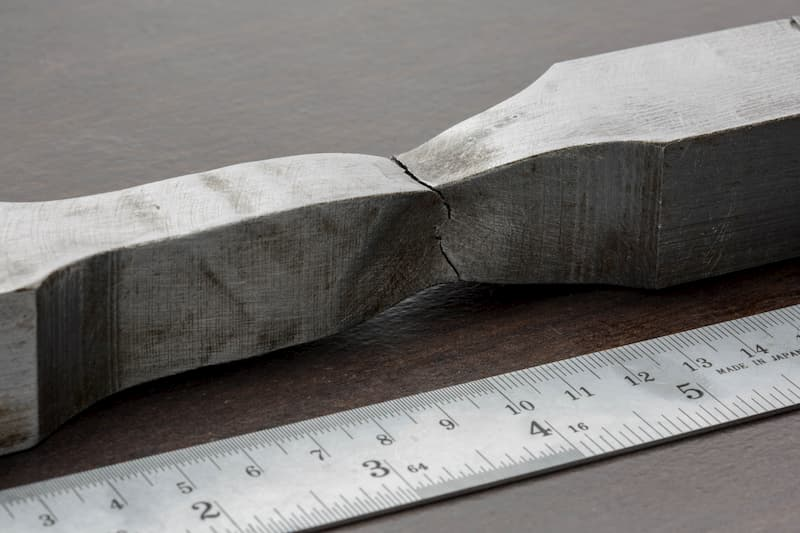

You might be confused by the concept of “strong.” After all, hardness (the ability to resist local plastic deformation such as surface indentation) and yield strength (the force a metal can withstand before beginning to undergo permanent deformation) can both be referred to as “strong.” However, in materials science, “strongest” typically refers to Ultimate Tensile Strength (UTS)—the maximum stress that a material can withstand while being stretched or pulled before necking and eventual fracture.
Even for single metals with high tensile strength, such as tungsten, there are alloys that are even stronger; alloying can even improve the limitations of a single metal (for instance, pure tungsten is too brittle). Furthermore, the ultimate strength of a metal depends not only on its composition but even more so on its microstructure. For any alloy that can be strengthened by heat treatment, its tensile strength can be significantly enhanced through controlled heat treatment processes.
Below are the top 5 strongest metals ranked based on Ultimate Tensile Strength (UTS):
Table 1: Top 5 Strongest Metals
| Rank | Metal Alloy | Heat Treatment | Tensile Strength (UTS) |
| 1 | AerMet 340 Steel | Quenched & Aged | 2,430 MPa |
| 2 | Maraging Steel (350) | Solution & Aged | 2,415 MPa |
| 3 | AISI 4340 Steel | Quenched & Tempered | ~1,900+ MPa |
| 4 | Tungsten Alloy (W-Ni-Fe) | Sintered/Cold Worked | ~1,600 – 1,800 MPa |
| 5 | Beta-Titanium (Ti-10-2-3) | Solution & Aged | ~1,400 – 1,550 MPa |
AerMet 340 is a cutting-edge ultra-high strength alloy steel whose core chemical composition contains significant amounts of cobalt (13% Co) and nickel (9% Ni), supplemented by chromium (3% Cr), molybdenum (1.2% Mo), and approximately 0.4% carbon. Within the alloy’s microstructure, the primary role of cobalt is to increase the martensitic transformation temperature and enhance the matrix’s resistance to tempering, while nickel provides excellent fracture toughness. Its staggering strength primarily stems from the dispersion precipitation of fine carbides on the martensitic matrix during the tempering process.
The heat treatment process for this material is extremely rigorous, typically requiring solution treatment at 885°C, followed by mandatory cryogenic treatment (-73°C) to ensure the complete transformation of retained austenite into martensite. Finally, a long-duration aging (tempering) treatment is performed at approximately 480°C. Since its hardness after heat treatment reaches as high as HRC 56-60, CNC turning or milling is nearly impossible(basically for all really hard and strong metals), causing extremely rapid tool wear. Therefore, in industrial practice, most shaping is completed in the annealed state, while final precision after heat treatment relies entirely on precision grinding or Electrical Discharge Machining (EDM).
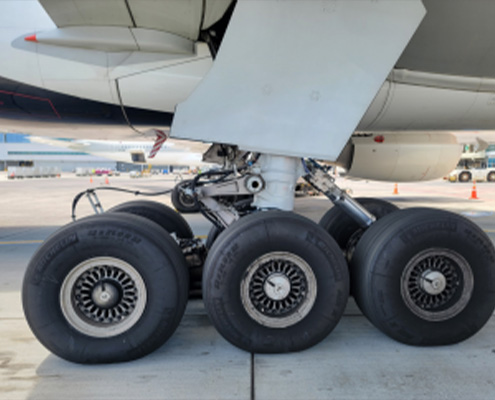
With an ultimate tensile strength of up to 2,430 MPa, AerMet 340 is one of the most perfect commercial solutions currently available for combining strength and toughness. It is primarily used to manufacture jet aircraft landing gear, high-load transmission shafts, and structural components for top-tier racing cars. Its core advantage lies in solving the stress corrosion cracking (SCC) challenges common in high-strength steels; its disadvantages include the extremely high cost of raw materials (especially cobalt and nickel), as well as long processing cycles and very high technical barriers to entry.

Unlike ordinary steels that rely on carbon for strengthening, Maraging Steel (Grade 350) is an ultra-low carbon iron-nickel alloy. Its main components include 18% nickel, 12% cobalt, nearly 5% molybdenum, and about 1.5% titanium. Its strengthening does not depend on the solid solution of carbon atoms in the lattice, but is achieved through the precipitation of extremely fine intermetallic compounds onto an ultra-low carbon iron-nickel martensitic matrix. This chemical structure allows the material to maintain good ductility while achieving high strength.
The heat treatment process for this material is known as “aging.” First, solution treatment is performed at 815°C to form soft martensite. At this stage, the material has moderate hardness (about HRC 30-35) and good machinability, allowing for complex CNC machining. This is followed by an aging treatment at approximately 480°C for 3 to 12 hours.
Its ultimate tensile strength is stable at around 2,415 MPa. It is widely used in scenarios requiring extremely high fatigue strength and dimensional stability, such as ultra-high-speed centrifuge rotors for uranium enrichment, rocket engine casings, and high-performance bearings. Its advantages include good process flexibility, excellent weldability, and extremely high strength; its disadvantages are the extremely high price caused by the high nickel and cobalt content, and the fact that the material’s strength drops rapidly in environments exceeding 400°C.
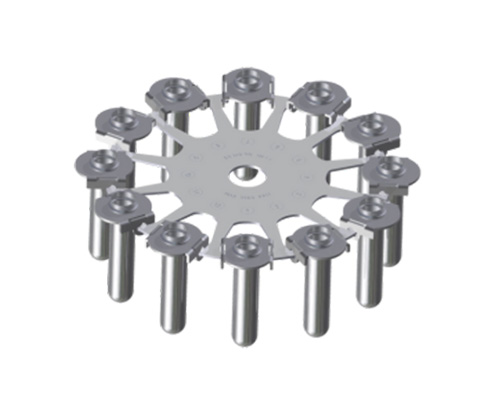
While pure tungsten possesses extremely high atomic bonding forces, its room-temperature brittleness makes it difficult to use as a tensile structural component. The strongest industrial tungsten alloys typically contain 90%-97% tungsten, with the remainder being nickel and iron. This alloy is manufactured through a liquid-phase sintering process, forming a unique microstructure: hard and strong tungsten particles are embedded within a highly ductile nickel-iron-tungsten binder phase. This “hard particle + ductile matrix” structure effectively solves the problem of brittle fracture inherent in pure tungsten.
The performance of tungsten alloys depends primarily on the sintering process and subsequent cold working (such as swaging). After sintering, the material is usually rapid-quenched to prevent impurity elements from segregating at grain boundaries, followed by cold working to further compress the crystal lattice, raising the tensile strength from 1,000 MPa to the 1,600-1,800 MPa range.
It is mainly used for kinetic energy penetrator cores, precision counterweights, and radiation shielding components. Its advantages include unparalleled density (17-19 g/cm³) and extremely high tensile strength, providing high kinetic energy transfer efficiency; its disadvantages are very high processing costs, the material itself being virtually non-magnetic, and price fluctuations tied to the tungsten market. Additionally, its weight is an absolute disadvantage in scenarios requiring lightweighting.
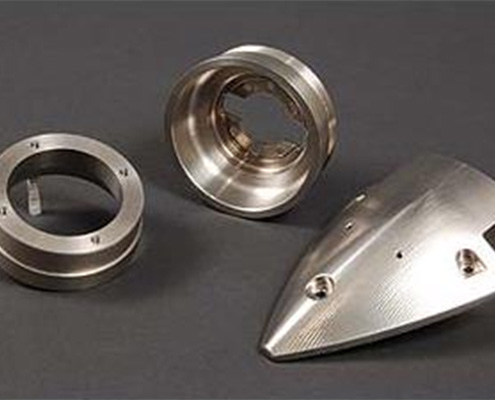
This is a near-beta titanium alloy containing 10% vanadium, 2% iron, and 3% aluminum. In the chemical structure of titanium alloys, vanadium and iron are powerful beta-phase stabilizing elements, allowing the material to maintain a metastable beta structure at room temperature. The jump in its strength stems from the precipitation of a large amount of extremely fine, needle-like alpha phases from the beta matrix during the aging process; these fine, dispersed phases act as a powerful barrier to dislocation slip.
The standard strengthening workflow is “Solution + Aging.” It is first solution-treated at around 760°C followed by water quenching, then aged for a long duration near 500°C.
The ultimate tensile strength can reach 1,400-1,550 MPa. It is a critical material for the fuselage frames and landing gear struts of large commercial aircraft (such as the Boeing 777). Its greatest advantage is its superior strength-to-weight ratio and excellent corrosion resistance, which can significantly reduce airframe weight; its disadvantages include expensive material costs and the fact that its creep strength at high temperatures is inferior to nickel-based alloys.
AISI 4340 is a classic medium-carbon alloy steel containing nickel (1.8%), chromium (0.8%), and molybdenum (0.25%). Its chemical structure is precisely balanced to provide extremely high hardenability. This means that even for heavy parts with large cross-sections, a uniform martensitic structure can be obtained through structural transformation in the center during quenching. This ensures consistency in strength throughout the entire part under tensile loads, avoiding the phenomenon of a “strong surface and weak core.”
The standard process route is “Quenching + Tempering.” After heating the part to 830°C, it is oil-quenched and then tempered between 200°C and 500°C depending on the strength requirements. To achieve maximum strength (approximately 1,900+ MPa), low-temperature tempering is usually employed.
AISI 4340 is an excellent material for heavy machinery, power transmission devices (such as crankshafts and gears), and fasteners for high-pressure vessels. Its advantage lies in its extremely high cost-performance ratio, mature processing technology, and outstanding impact resistance; its disadvantage is its poor corrosion resistance, requiring surface treatments (such as cadmium plating or phosphating) in humid or acidic environments, and its strength-to-weight ratio is inferior to that of titanium alloys.
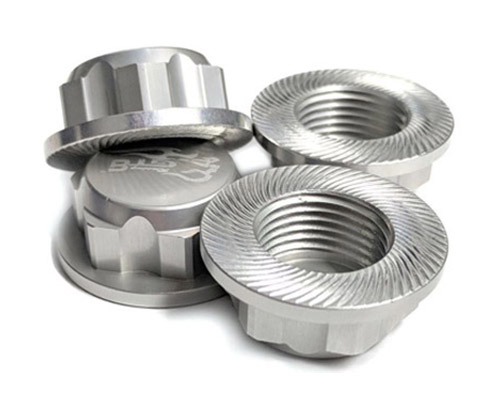
The five metals mentioned above are primarily used in specialized fields such as aerospace and defense. In daily industrial production, we must place greater emphasis on the feasibility of CNC machining (the most common parts processing technology), forming efficiency, and overall cost. Below are several common high-strength industrial metals for reference:
Table 2: Common High-Strength Industrial Metals Reference
| Metal Material | Typical Strength (UTS) | Suitable Methods | Industrial Applications |
| 7075 Aluminum | ~572 MPa | CNC Machining, Extrusion | Widely used for drone structural components and high-strength sports equipment. |
| Inconel 718 | ~1,200 – 1,400 MPa | Precision Casting, Slow CNC | The strongest machinable alloy for gas turbines and high-temperature environments. |
| 17-4 PH Stainless Steel | ~1,100 MPa | CNC Machining, Cold Forming | Commonly used for manufacturing high-strength, corrosion-resistant pumps, valves, and chemical parts. |
| TC4 Titanium Alloy (Gr5) | ~900 – 1,000 MPa | CNC Machining, Forging | The most widely used titanium alloy in the industrial sector. |
This article has introduced the underlying causes of metal strength—alloying and heat treatment—and listed the five metals with the highest ultimate tensile strength, all of which are specialized alloys created for specific purposes. Additionally, to supplement other common “strong” metals better suited for CNC machining and forming applications, this article provided further examples for reference. However, please finally note that strength is not the sole indicator for industrial applications; sometimes a combination of requirements such as lightweighting, corrosion resistance, or impact resistance is needed, requiring you to carefully evaluate specific materials.
 WhatsApp/WeChat/Mobile:
+86-15099911516
WhatsApp/WeChat/Mobile:
+86-15099911516
 Tel: 86-150-9991-1516
 QQ: 939020977
 E-Mail: service@vimetal.com.cn


Why isn’t pure tungsten at the top of this list?
Although pure tungsten possesses extremely high theoretical atomic bonding forces in a single-crystal state, in actual macroscopic testing, pure tungsten exhibits extreme brittleness due to its high “ductile-to-brittle transition temperature” at room temperature. During tensile testing, it often undergoes brittle fracture due to stress concentration caused by tiny surface defects before it even has a chance to undergo plastic deformation (i.e., before it can exert its true tensile potential). Therefore, its measured tensile strength is actually lower than that of high-density tungsten alloys improved with nickel and iron for better toughness.
Does higher tensile strength mean it is harder to machine?
In most cases, yes. Ultra-high-strength alloys (such as AerMet 340) have extremely high hardness, and traditional CNC cutting tools (such as high-speed steel or even ordinary cemented carbide) wear out extremely quickly when in contact with them. For these types of materials, industry often requires the use of ceramic tools, diamond-coated tools, or low-efficiency, high-cost processing methods such as Electrical Discharge Machining (EDM) and precision grinding.
Can all metals be strengthened through heat treatment?
No. Whether heat treatment can strengthen a material depends on its chemical structure and phase transformation characteristics. For example, pure aluminum or certain single-phase stainless steels (such as 304 austenitic stainless steel) show minimal strength improvement regardless of how they are heated or quenched; they rely primarily on cold working (work hardening). Only alloys that meet the conditions for “precipitate phases” (such as Maraging steel) or “allotropic transformation” (such as carbon steel) can have their lattice structures significantly altered through heat treatment to increase strength.
How does chemical structure determine strength?
Chemical structure determines the strength of atomic bonds and the lattice type (such as face-centered cubic or body-centered cubic). Alloying changes this chemical structure by introducing “solute atoms.” The size difference between these atoms and the matrix atoms creates local stress fields; these microscopic stress fields hinder dislocation movement. The more difficult it is for dislocations to move, the higher the yield strength and tensile strength appear macroscopically.
In non-extreme scenarios, why not just use the highest strength steel?
The main considerations are cost-performance ratio and processing difficulty. The price of AerMet 340 can be dozens of times that of ordinary AISI 4340. Furthermore, extremely high-strength materials are often very sensitive to notches and cracks; without extremely strict flaw detection and maintenance procedures, high strength can actually become a safety hazard. Therefore, general industry prefers materials like 17-4 PH or 4340, which have mature processes and moderate costs.
What are the 10 heaviest single metals in the world?
“Heavy” here typically refers to density. Below are the 10 pure metals ranked by density (Unit: g/cm³):


 Carbon Steel vs. Stainless Steel: Key Differences