What are the properties of Mild Steel?
By Luca Xie | Jan .07, 2026
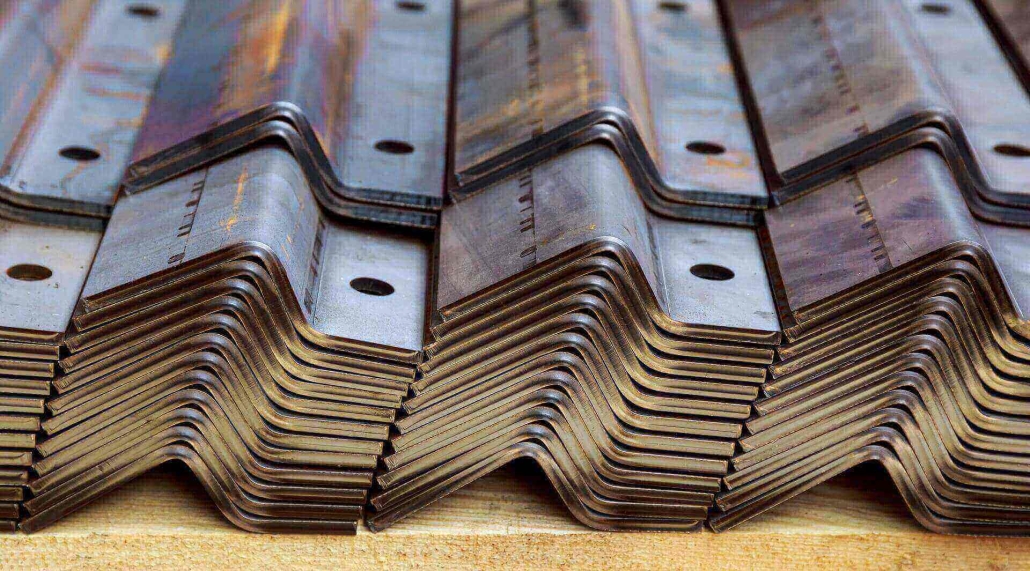

Parts may warp, crack, or wear prematurely if the material cannot handle stress, heat, or machining forces. Engineers often overlook the properties of mild steel, which control strength, ductility, corrosion behavior, and machinability. Understanding these characteristics ensures CNC parts meet tight tolerances, maintain surface finish, and achieve long-term durability.
Mild steel Properties include grades, chemical composition, mechanical properties of mild steel, physical properties of mild steel, and workability. This article helps engineers and designers understand material behavior and select mild steel for CNC machining, industrial equipment, and structural applications.
Different engineering projects require precise mild steel uses. To ensure predictable mild steel yield strength and reliable tensile properties of mild steel, engineers rely on well-defined grades and standards. Commonly referenced grades include AISI 1006, 1008, 1010, 1015, 1018, 1020, 1030, and 1045. Each grade corresponds to multiple international standards, which ensures consistent mild steel composition across regions.
The following table summarizes the main mild steel grades and their equivalents across the most widely used international standards.
| Grade (AISI/SAE, USA) | ASTM (USA) | GB (China) | EN (Europe) | JIS (Japan) | DIN (Germany) |
| 1006 | A36 | Q215A | S235JR | SS400 | St37-2 |
| 1008 | A36 | Q215B | S235JR | SS400 | St37-2 |
| 1010 | A36 | Q235C | S235J0 | SS400 | St37-3 |
| 1015 | A36 | Q235D | S275 J0 | SS400 | St37-3 |
| 1018 | A36 | Q235 | S235JR | SS400 | St44-2 |
| 1020 | A36 | Q235B | S235JR | SS400 | St44-2 |
| 1030 | A36 | Q345A | S355 J0 | SS400 | St44-3 |
| 1045 | A572-50 | Q345A | S275JR | S45C | C45 |
The mild steel composition shares common characteristics across grades. Low carbon content provides excellent ductility and formability, making it easy to machine and weld. Manganese increases strength and wear resistance, while silicon improves toughness. Controlled amounts of phosphorus and sulfur enhance machinability without compromising mechanical properties of mild steel. Trace elements like copper, nickel, and chromium can slightly improve corrosion resistance and hardness.Below are typical ranges for key elements in common grades:
| Grade | C (%) | Mn (%) | Si (%) | P (%) | S (%) | Cu (%) | Ni (%) | Cr (%) |
| 1006 | 0.06–0.08 | 0.30–0.60 | 0.10–0.30 | ≤0.04 | ≤0.05 | ≤0.25 | ≤0.10 | ≤0.10 |
| 1008 | 0.08–0.10 | 0.30–0.60 | 0.10–0.30 | ≤0.04 | ≤0.05 | ≤0.25 | ≤0.10 | ≤0.10 |
| 1010 | 0.08–0.13 | 0.30–0.60 | 0.10–0.30 | ≤0.04 | ≤0.05 | ≤0.25 | ≤0.10 | ≤0.10 |
| 1015 | 0.13–0.18 | 0.30–0.60 | 0.10–0.30 | ≤0.04 | ≤0.05 | ≤0.25 | ≤0.10 | ≤0.10 |
| 1018 | 0.15–0.20 | 0.30–0.60 | 0.10–0.35 | ≤0.04 | ≤0.05 | ≤0.25 | ≤0.10 | ≤0.10 |
| 1020 | 0.18–0.23 | 0.30–0.60 | 0.10–0.35 | ≤0.04 | ≤0.05 | ≤0.25 | ≤0.10 | ≤0.10 |
| 1030 | 0.28–0.33 | 0.60–0.90 | 0.15–0.35 | ≤0.04 | ≤0.05 | ≤0.30 | ≤0.20 | ≤0.15 |
| 1045 | 0.43–0.50 | 0.60–0.90 | 0.15–0.35 | ≤0.04 | ≤0.05 | ≤0.30 | ≤0.20 | ≤0.15 |
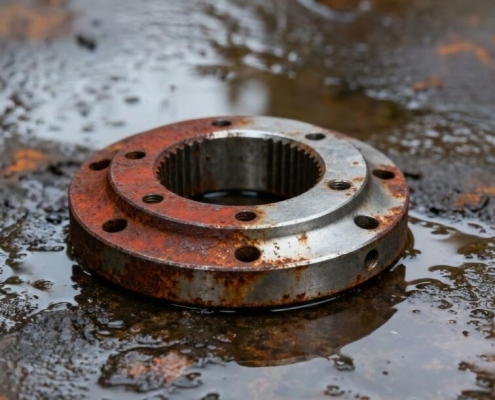
All the common mild steel grades listed, including AISI 1006 to 1045, have limited natural corrosion resistance due to their low alloy c ontent. Mild steel corrosion can occur quickly in humid, acidic, or salty environments. Rust affects appearance and can reduce mechanical properties of mild steel and dimensional accuracy during CNC machining.
Some grades with slightly higher manganese or trace copper, like 1030 and 1045, may resist corrosion a little better, but protection is still necessary. Engineers typically apply galvanizing, powder coating, or painting. Proper handling, storage, and cutting fluids further minimize mild steel corrosion.
This section explores the mechanical properties of mild steel. We cover Yield Strength, Tensile Strength, Elongation at Break, Hardness, and Toughness.The following table provides specific values for the key mechanical properties of mild steel across commonly used grades.
| Grade (AISI/SAE) | Yield Strength (MPa) | Tensile Strength (MPa) | Elongation (%) | Hardness (HB) | Toughness (J) |
| 1006 | 140–160 | 260–310 | 28–32 | 70–85 | 40–50 |
| 1008 | 160–180 | 300–350 | 26–30 | 80–95 | 50–60 |
| 1010 | 180–200 | 340–400 | 24–28 | 85–100 | 55–65 |
| 1015 | 200–220 | 360–420 | 22–26 | 90–105 | 60–70 |
| 1018 | 220–250 | 400–460 | 20–24 | 95–110 | 65–75 |
| 1020 | 230–260 | 420–480 | 20–24 | 100–115 | 65–75 |
| 1030 | 250–280 | 480–550 | 18–22 | 110–130 | 70–85 |
| 1045 | 370–430 | 570–650 | 16–20 | 170–210 | 90–110 |
Yield strength of mild steel properties ranges from 140 MPa to 430 MPa across the common grades. Lower yield strength means the material deforms easily under stress, making it suitable for parts requiring bending or shaping during CNC machining. Some grades like 1030 and 1045 have slightly higher yield strength, giving stronger structural support.
Tensile properties of mild steel generally range from 260 MPa to 650 MPa. Lower tensile strength allows safe forming and reduces risk of cracking, but limits load-bearing capacity. Grades such as 1030 and 1045 reach the upper range, providing higher resistance to tension.
Elongation ranges from 16% to 32%, indicating flexibility and ductility. Higher elongation makes it easier to bend, form, or assemble parts without cracking. Lower elongation slightly reduces flexibility but increases structural stiffness.
Mild steel has low to medium hardness, typically 70–210 HB. Most grades fall between 70–130 HB, making them easy to machine and cut with standard tooling. Grades 1030 and 1045 are slightly harder (110–210 HB), which improves wear resistance but requires sharper tools and careful machining. Low hardness allows smooth CNC operations but may lead to surface scratches or dents if handling is improper.
Toughness ranges from 40 J to 110 J, reflecting energy absorption before fracture. Moderate toughness ensures parts resist cracking or sudden failure under impact. Higher toughness in grades like 1030 and 1045 enhances durability for load-bearing applications.
This section explores the physical properties of mild steel, we cover Density, Melting Point, Thermal Conductivity, Modulus of Elasticity, Electrical Resistivity, and Magnetism.
The following table provides a preview of typical physical properties across commonly used mild steel grades:
| Grade (AISI/SAE) | Density (g/cm³) | Melting Point (°C) | Thermal Conductivity (W/m·K) | Young’s Modulus (GPa) | Electrical Resistivity (μΩ·cm) | Magnetism |
| 1006 | 7.85 | 1450–1520 | 50 | 210 | 10.0 | Ferromagnetic |
| 1008 | 7.85 | 1450–1520 | 50 | 210 | 10.0 | Ferromagnetic |
| 1010 | 7.85 | 1450–1520 | 51 | 210 | 10.1 | Ferromagnetic |
| 1015 | 7.85 | 1450–1520 | 51 | 210 | 10.1 | Ferromagnetic |
| 1018 | 7.85 | 1450–1520 | 52 | 210 | 10.2 | Ferromagnetic |
| 1020 | 7.85 | 1450–1520 | 52 | 210 | 10.2 | Ferromagnetic |
| 1030 | 7.85 | 1450–1520 | 53 | 210 | 10.3 | Ferromagnetic |
| 1045 | 7.85 | 1450–1520 | 53 | 210 | 10.3 | Ferromagnetic |
Density of mild steel is consistently around 7.85 g/cm³. This uniform density allows predictable weight calculations for CNC-machined components. Slight variations in grade do not significantly affect machining, but engineers must consider density for load-bearing or precision parts, where weight impacts performance and handling.
Mild steel melts between 1450–1520°C across all grades. This high melting point ensures stability during welding or heat treatment. Slight differences between grades are negligible for most CNC machining processes, but understanding melting behavior helps in designing thermal operations and avoiding warping.
Thermal conductivity ranges from 50–53 W/m·K. Lower values mean heat builds up slower, reducing risk of thermal distortion during machining. Grades like 1030 and 1045 conduct heat slightly better, helping dissipate heat under high-speed cutting. Engineers must balance thermal properties with machining speed and tool wear.
Mild steel Young’s modulus is around 210 GPa for all grades. This high stiffness ensures parts maintain dimensional accuracy under stress. Similar values across grades make deflection predictable, which is crucial for CNC precision components and assemblies.
Electrical resistivity ranges from 10.0 to 10.3 μΩ·cm. Low resistivity allows some conductivity but is generally not used for electrical applications. Slight differences between grades are negligible but may matter in precision electro-mechanical components.
All mild steel grades are ferromagnetic, which affects CNC applications near magnetic sensors or tooling. Magnetism can influence part handling, fixturing, and inspection, so engineers must account for it during design and machining setup.
This section covers Machinability, Weldability, and Formability. Each property influences how the material behaves during cutting, joining, or shaping, ensuring parts meet design and production requirements.
Machinability of mild steel is generally good due to its low hardness and uniform composition. Most grades can be cut, milled, or turned efficiently using standard CNC tooling. Grades like 1030 and 1045 are slightly harder, requiring slower feeds or sharper tools, but still maintain acceptable cutting performance. High machinability reduces tool wear, shortens cycle time, and ensures consistent surface finish.
Weldability of mild steel is excellent across all common grades. Low alloy content minimizes cracking, and parts can be welded using MIG, TIG, or arc welding with standard filler materials. Slightly stronger grades like 1030 or 1045 may need controlled heat input to prevent distortion. Good weldability allows CNC-machined components to be joined reliably, maintaining dimensional accuracy and structural integrity.
Formability of mild steel reflects how easily it can be bent, pressed, or shaped without cracking. High ductility allows engineers to produce complex CNC-machined parts, sheet components, or assemblies. Grades with slightly higher strength, such as 1030 and 1045, require greater force to form but still offer good flexibility.
A European automotive supplier faced challenges producing lightweight suspension brackets. The client struggled with dimensional inconsistencies and surface scratches during CNC machining. They needed parts with reliable mechanical properties of mild steel, consistent hardness, and stable formability to withstand stress and assembly processes. Previous suppliers failed to meet tolerance and finish requirements, causing delays in production and quality control issues.
VMT provided a tailored solution to address these material-related issues:
The result exceeded client expectations. All brackets were machined with tolerances of ±0.02 mm and a surface finish of Ra 0.8 μm, maintaining dimensional stability throughout assembly. Parts passed all stress tests and functional inspections without deformation or defects. If you also want your parts to achieve the same high quality, Contact VMT to get customized solutions and free quote.
Mild steel is a low-hardness, ductile material with moderate strength and good formability. Its consistent density, stiffness, and machinability make it easy to process with CNC machines. While it has limited corrosion resistance, proper coatings and handling ensure reliable performance. These characteristics define how mild steel behaves under stress, during machining, and in final applications.
 WhatsApp/WeChat/Mobile:
+86-15099911516
WhatsApp/WeChat/Mobile:
+86-15099911516
 Tel: 86-150-9991-1516
 QQ: 939020977
 E-Mail: service@vimetal.com.cn


What are the benefits of mild steel?
Mild steel offers good ductility, machinability, and weldability. It is cost-effective, easy to form, and provides consistent mechanical performance. Its moderate strength and low hardness make it ideal for structural, automotive, and general engineering applications, especially where high precision in CNC machining is required.
What are the disadvantages of mild steel?
Mild steel has low hardness and moderate strength, making it susceptible to surface scratches, wear, and corrosion. It also requires protective coatings in harsh environments and may not be suitable for applications demanding high tensile strength or superior corrosion resistance.
Does mild steel rust easily?
Yes, mild steel has limited corrosion resistance. Without protective coatings such as painting, galvanizing, or powder coating, it can rust quickly in humid, acidic, or salty environments. Proper handling and storage help minimize mild steel corrosion.
Is MS stronger than SS?
No. Stainless steel (SS) generally has higher tensile and yield strength, better hardness, and superior corrosion resistance. Mild steel is easier to machine and form, but SS is stronger and more durable in demanding environments.


 Carbon Steel: Types, Properties and Uses