What are the properties of A36 steel?
By Luca Xie | Dec .17, 2025
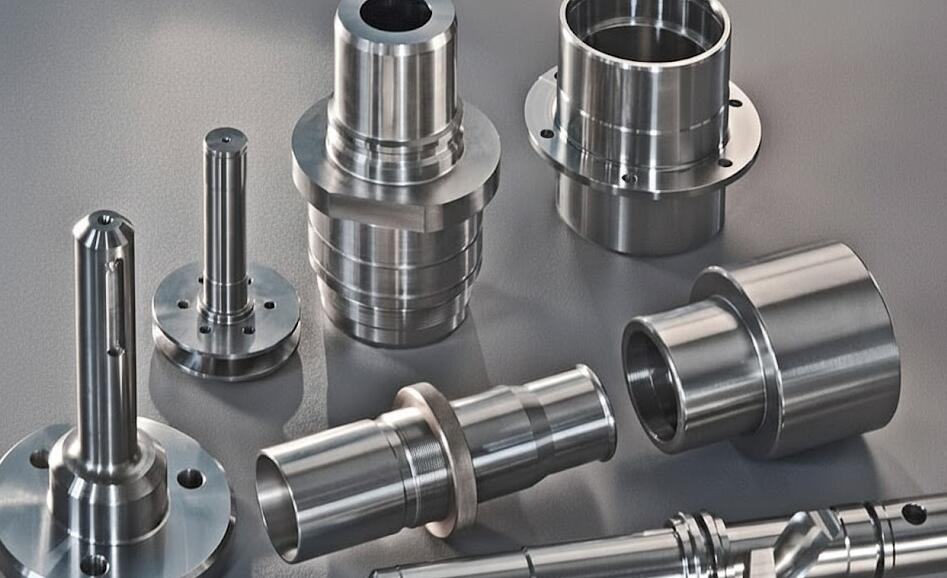

Choosing the wrong steel can ruin precision parts, delay production, and increase costs. Many engineers underestimate A36 metal. Improper understanding of ASTM A36 composition leads to welding cracks, machining issues, and unexpected corrosion. Knowing properties prevents failures and ensures high-quality CNC machining.
A36 steel properties including the chemical composition, mechanical strength, and physical characteristics essential for CNC machining and manufacturing. The article covers workability, including CNC machining, weldability, formability, and heat treatment. Engineers will gain practical guidance for evaluating A36 steel and optimizing part production.
This section explains the chemical makeup of A36 steel and its corrosion behavior.
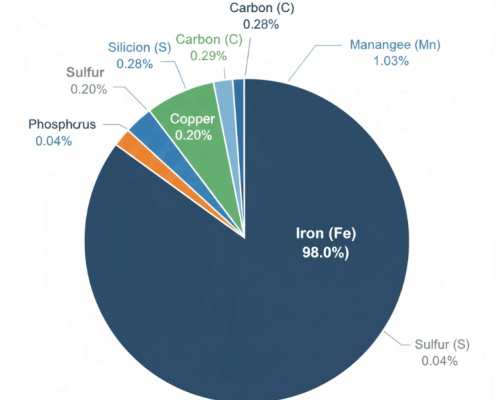
A36 steel material properties are determined by several key elements. ASTM A36 steel composition is iron, Fe, which forms the structural framework. Carbon, C is the most influential element, controlling strength and hardness. Manganese, Mn improves toughness and wear resistance. Silicon, Si supports structural stability during heat treatment. Phosphorus, P and sulfur, S are kept low to reduce brittleness. Small amounts of copper, Cu slightly improve corrosion resistance.
The table below shows the typical chemical composition of A36 steel and highlights which elements are present and their ranges:
| Element | Content |
| Carbon, C | 0.25–0.29 % |
| Copper, Cu | 0.20 % |
| Iron, Fe | 98.0 % |
| Manganese, Mn | 1.03 % |
| Phosphorus, P | 0.040 % |
| Silicon, Si | 0.280 % |
| Sulfur, S | 0.050 % |
A36 carbon steel properties indicate moderate corrosion susceptibility. Engineers must consider the environment when designing parts. In indoor dry conditions, corrosion is minimal, and no protective treatment is usually required. For outdoor applications, corrosion risk increases, so painting or coating is recommended. In humid or marine environments, corrosion is high, and galvanizing or other protective finishes are necessary to ensure long-term durability.
Mechanical performance determines how A36 steel behaves under load and stress. Key mechanical factors of A36 steel include yield strength, ultimate tensile strength, elongation, hardness, and elastic moduli.
Yield Strength is 250 MPa and indicates the stress at which permanent deformation begins. It is mainly controlled by carbon content; higher carbon increases strength but reduces ductility. Engineers use this value to ensure structural parts will not deform under load.
Ultimate Tensile Strength ranges from 400 to 550 MPa and defines the maximum stress the steel can withstand before failure. Carbon and manganese together increase this limit. Higher tensile strength allows CNC-machined parts to endure heavy loads without breaking.
Elongation ranges from 20 percent to 23 percent and measures ductility. It is affected by carbon, manganese, and impurities. Greater elongation allows parts to bend or stretch slightly under stress without cracking.
Hardness ranges from 119 to 162 HB and reflects resistance to surface indentation and wear. Carbon is the dominant factor, while manganese contributes to toughness. Appropriate hardness balances machinability and long-term durability.
Modulus of Elasticity is 200 GPa and represents resistance to elastic deformation under tension or compression. Bulk modulus is 140 GPa and shear modulus is 79.3 GPa, describing volumetric and shear responses. These moduli help engineers predict deflection, vibration, and load distribution in CNC-machined components.
The table below summarizes A36 steel mechanical properties in metric and imperial units:
| Mechanical Property | Metric | Imperial | Notes |
| Tensile Strength, Ultimate | 400–550 MPa | 58,000–79,800 psi | Maximum load before failure |
| Tensile Strength, Yield | 250 MPa | 36,300 psi | Stress before permanent deformation |
| Elongation at Break (200 mm) | 20.0 % | 20.0 % | Ductility over 200 mm gauge |
| Elongation at Break (50 mm) | 23.0 % | 23.0 % | Ductility over 50 mm gauge |
| Hardness (Brinell) | 119–162 HB | 119–162 HB | Machinability and wear resistance |
| Modulus of Elasticity (E) | 200 GPa | 29,000 ksi | Resistance to linear elastic deformation |
| Shear Modulus (G) | 79.3 GPa | 11,500 ksi | Resistance to shear deformation |
| Bulk Modulus (K) | 140 GPa | 20,300 ksi | Resistance to uniform volumetric compression |
| Poisson’s Ratio (ν) | 0.260 | 0.260 | Lateral contraction vs. axial elongation |
Physical characteristics of A36 steel determine weight, thermal behavior, and stability during use.A36 Steel Physical Properties include density, melting point, and thermal conductivity.
Density is 7.85 g/cm3 or 0.284 lb/in3. It is primarily determined by iron content, with minor contributions from carbon, manganese, and other elements. Density affects part weight, structural load calculations, and material handling. Heavier parts require stronger supports and may influence machining speeds.
Melting Point ranges from 1420 to 1465 °C or 2,590 to 2,670 °F. This property is influenced by alloy composition, particularly carbon and iron. Knowing the melting point is crucial for welding, heat treatment, and high-temperature applications. Parts exposed to high heat must stay below this limit to avoid deformation or structural failure.
Thermal Conductivity is 50 to 60 W/(m·K) or 348 Btu-in/hr-ft² °F. It depends on iron purity and alloying elements. Thermal conductivity determines how quickly heat dissipates during processes like welding or high-speed CNC cutting. Poor heat dissipation can lead to warping, residual stress, or surface defects.
| Physical Property | Metric | Imperial |
| Density | 7.85 g/cm3 | 0.284 lb/in3 |
| Melting Point | 1420 to 1465 °C | 2,590 to 2,670 °F |
| Thermal Conductivity | 50 to 60 W/(m·K) | 348 Btu-in/hr-ft² °F |
Workability defines how A36 steel can be machined, welded, formed, and heat-treated. Understanding these properties helps engineers optimize CNC machining, assembly, and surface quality.
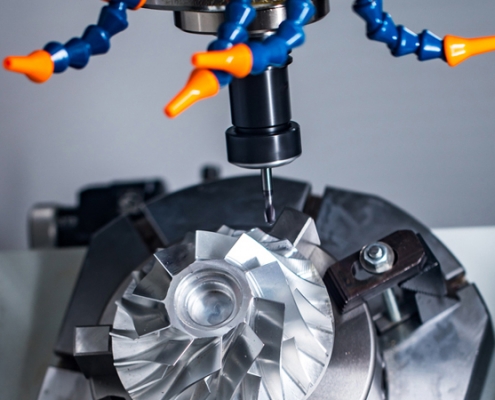
Based on VMT’s 15 years of manufacturing experience, we can share the following tips: A36 steel machinability is moderate, with a machinability rate of 72 percent. The recommended cutting speed is 120 ft/min. Compared to AISI 1018 steel, machining A36 requires slightly more force due to higher strength. Engineers should select sharp tools, proper feeds, and speeds to achieve precise dimensions, tight tolerances, and smooth surfaces.
A36 steel weldability is excellent. It can be welded with MIG, TIG, or arc welding. Low phosphorus and sulfur reduce the risk of brittleness and cracking. Welded joints maintain good mechanical strength and dimensional stability. Proper heat input and joint design prevent distortion.
A36 steel formability is good, supporting bending, punching, and stamping operations. Low to moderate carbon allows ductility, while manganese maintains toughness. Proper tooling and process control prevent surface cracking and springback. Understanding formability helps design complex parts without compromising strength.
A36 steel heat treatment includes stress relieving, normalizing, annealing, carburizing, and hardening. Standard methods suitable for AISI 1018 steel also apply. These treatments improve dimensional stability, reduce residual stress, and prepare the steel for machining or forming.
The table below summarizes A36 steel heat treatment processes and their temperature ranges:
| Process | Temperature Range |
| Normalizing | 899 to 954 °C |
| Annealing | 843 to 871 °C |
| Stress Relieving | 677 to 927 °C |
| Carburizing | 899 to 927 °C |
| Hardening | 788 to 816 °C |
A36 steel equivalent grades vary across international standards. While exact matches are difficult due to slight differences in composition and mechanical properties, comparable grades help engineers select substitutes for structural or CNC-machined parts.The table below summarizes A36 steel equivalent grades with country, material system, and corresponding grade:
| Country / Region | Material System | Equivalent Grade |
| Europe | EN | S235JRG2 |
| Germany | DIN | St 37-2 |
| Canada | ASTM | 260W |
| Japan | JIS | SS400 |
| India | IS | E250 |
| China | GB | Q235B |
| ISO | ISO | E235 |
A European automotive supplier required precision A36 steel suspension brackets for their latest vehicle line. The parts demanded tight tolerances of 0.01 mm and smooth surfaces for assembly. A36 steel’s moderate machinability and balanced carbon content increased cutting forces, causing faster tool wear. Thermal conductivity required careful heat management, and low ductility in some areas led to minor burr formation during high-speed CNC milling.
VMT addressed these challenges with a step-by-step approach:
The customer reported excellent satisfaction with the suspension brackets, noting flawless surface finish and precise dimensional tolerances. Tool life improved significantly, and production efficiency increased. Stress-relieved, precision-machined parts met all structural and aesthetic requirements.If you face similar CNC machining challenges, contact us to get a quote and a tailored solution.
A36 steel properties, including chemical composition, mechanical strength, physical characteristics, corrosion behavior, and workability, directly influence performance in machining, forming, welding, and heat treatment. Understanding these properties allows engineers to plan processes, select appropriate tools, and maintain dimensional accuracy and surface quality.
 WhatsApp/WeChat/Mobile:
+86-15099911516
WhatsApp/WeChat/Mobile:
+86-15099911516
 Tel: 86-150-9991-1516
 QQ: 939020977
 E-Mail: service@vimetal.com.cn


Is A36 similar to 1018 in properties?
A36 steel and 1018 steel share low carbon content, good weldability, and moderate strength. A36 has slightly higher carbon and lower machinability than 1018, making it better for structural applications but less ideal for high-speed CNC machining. Both are widely used in fabrication, but 1018 is preferred for precision-machined parts.
Is A36 ductile or brittle?
A36 steel is ductile, allowing bending, forming, and welding without cracking under normal conditions. Its balanced carbon and manganese content provide toughness and moderate strength. While not as hard as high-carbon steels, A36 maintains good elongation, making it suitable for structural components and parts requiring moderate flexibility.
What is A36 used for?
A36 steel is primarily used for structural applications such as beams, plates, channels, and frames. It is also employed in CNC-machined components, automotive parts, and industrial equipment where moderate strength, weldability, and formability are required. Its versatility makes it suitable for both fabrication and light-to-moderate load-bearing applications
What makes A36 steel so popular?
A36 steel is popular due to its low cost, availability, excellent weldability, and balanced mechanical properties. It provides sufficient strength and ductility for structural and CNC-machined parts while remaining easy to form, weld, and machine. Its consistent performance across multiple applications contributes to its widespread use in industry.
Is A36 steel bulletproof?
No, A36 steel is not bulletproof. Its moderate carbon content and mechanical strength provide structural integrity but are insufficient to stop bullets. For ballistic protection, higher-hardness steels or specialized armor-grade materials are required. A36 is intended for structural, fabrication, and machining applications, not ballistic defense.


 What is A36 Steel: A Comprehensive Overview