Mild Steel Price per kg: 2026 Market Guide and Pricing Factors
By JunWen Liu | Feb .07, 2026
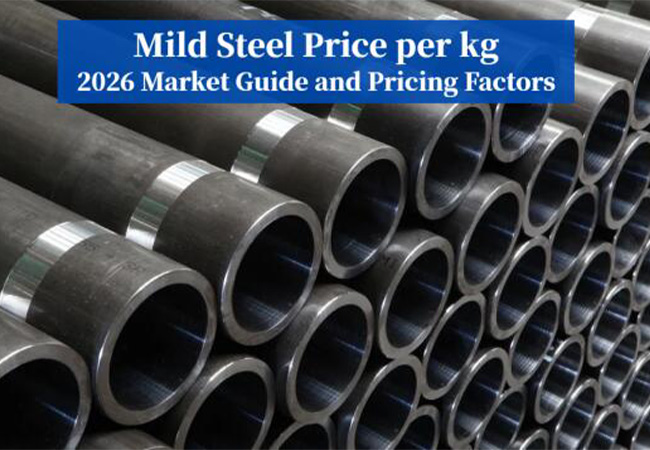

Mild steel is highly favored for its excellent weldability, machinability, and its relatively low cost within the carbon steel family. Whether it’s automotive components like chassis, bicycle accessories, electronic enclosures, or general engineering parts such as fasteners and brackets, CNC machined mild steel parts play a vital role in modern engineering. Regarding the market trends for mild steel price per kg in 2026, the primary driver remains the fluctuation in production demand. Additionally, factors such as delivery forms (cold-rolled vs. hot-rolled steel), scrap metal recycling, raw material price volatility, and tariff policies all significantly impact the final price. This article introduces the latest prices for common mild steel grades across different countries and analyzes the key factors influencing these costs.
Mild steel is the most cost-effective option among carbon steels primarily due to its simple chemical composition and streamlined manufacturing process. Unlike high-carbon or alloy steels, mild steel has a relatively low carbon content (typically between 0.05% and 0.25%) and a simple chemical structure of Body-Centered Cubic (BCC) lattice.(Noted: typical composition is ~98%–99% Iron (Fe), 0.30–0.90% Manganese (Mn),≤0.40% Silicon (Si) , 0.05%–0.25% Carbon (C), trace impurities of Phosphorus (P) and Sulfur (S)).
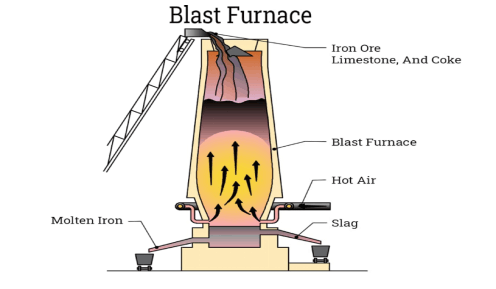
Because it does not require the addition of expensive alloying elements (like chromium, nickel, or molybdenum) to achieve its basic properties, the smelting process in blast furnaces is significantly easier and more efficient. The reduced complexity in refining and the lower energy consumption during production allow manufacturers to maintain a high output at a lower cost, making it the “budget-friendly” material of the industrial world.
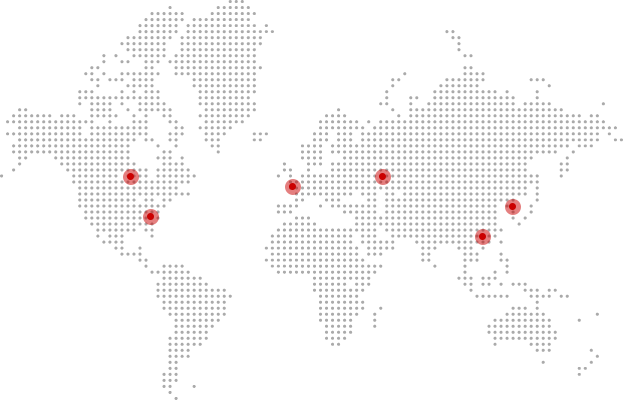
The following table provides a breakdown of the estimated current price of mild steel per kg based on common industrial grades and regional markets. Just noted that prices will change depending on global market conditions.
Table 1: Referenced Mild Steel Price per kg Globally
| Country | AISI 1006/1008 | AISI 1010/1015 | AISI 1018 | AISI 1020/1025 | AISI 1022 | AISI 1215 |
| China | $0.58 – $0.65 | $0.55 – $0.62 | $0.58 – $0.65 | $0.60 – $0.68 | $0.62 – $0.70 | $0.65 – $0.75 |
| Russia | $0.53 – $0.60 | $0.50 – $0.58 | $0.53 – $0.60 | $0.55 – $0.63 | $0.58 – $0.65 | $0.60 – $0.70 |
| Japan | $0.63 – $0.73 | $0.60 – $0.70 | $0.63 – $0.75 | $0.65 – $0.78 | $0.68 – $0.78 | $0.70 – $0.80 |
| Australia | $0.68 – $0.78 | $0.65 – $0.75 | $0.68 – $0.80 | $0.70 – $0.85 | $0.72 – $0.82 | $0.75 – $0.85 |
| Germany / UK | $0.72 – $0.85 | $0.70 – $0.82 | $0.73 – $0.85 | $0.75 – $0.90 | $0.78 – $0.90 | $0.85 – $0.95 |
| Norway | $0.78 – $0.92 | $0.75 – $0.88 | $0.78 – $0.90 | $0.80 – $0.95 | $0.82 – $0.95 | $0.90 – $1.05 |
| United States | $0.80 – $0.95 | $0.75 – $0.90 | $0.78 – $0.95 | $0.82 – $1.00 | $0.85 – $1.00 | $0.90 – $1.10 |
China remains the global leader in steel production, offering the most competitive mild steel price per kg due to massive economies of scale and integrated supply chains. Russia also maintains lower prices as a major exporter of raw materials, though its export prices can be volatile due to geopolitical factors and trade sanctions.
The price in the United States and Norway is significantly higher. This is driven by several factors: higher labor costs, strict environmental regulations, and energy surcharges (especially in the UK and Germany). Furthermore, import tariffs in the US often protect domestic pricing, keeping the local mild steel plate price per kg at a premium compared to Asian markets.
Japan & Australia sit in the middle. Japan benefits from advanced manufacturing technology but relies on imported raw materials, while Australia, a major iron ore producer, faces high domestic processing and logistics costs.
The final price of mild steel is heavily influenced by its physical form and the secondary processing it undergoes. While the base metal remains the same, the complexity of rolling, drawing, or coating creates a price hierarchy. Generally, hot-rolled products like heavy plates and structural beams are the most economical. They are processed at high temperatures, which is faster but leaves a scaly surface finish. In contrast, cold-rolled steel—often used for thin sheets and precision bars—commands a premium of approximately $0.10 to $0.20 per kg. This additional cost accounts for the room-temperature processing that yields superior surface smoothness, tighter dimensional tolerances, and increased strength (here is a more detailed info about hot rolled vs cold rolled steel ).
Among specific shapes, mild steel plates and bars usually sit at the lower end of the pricing spectrum due to high-volume standardized production. However, specialized forms like mild steel pipes and tubes involve more complex manufacturing steps, such as welding or seamless drawing, which adds to the labor and energy costs. Furthermore, value-added products like checkered coils (used for anti-slip flooring) or colour-coated steel represent the higher end of the market, as they require additional embossing or chemical coating stages to enhance durability and aesthetics.
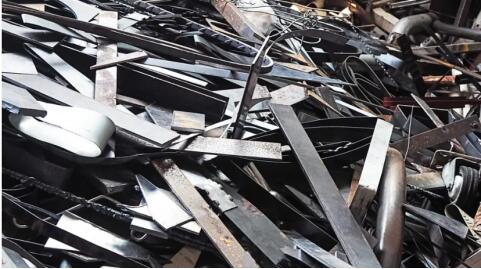
The secondary market plays a crucial role in stabilizing global steel costs. Historically, the mild steel scrap price per kg tracks at roughly 40% to 60% of the price of new “prime” steel. As of early 2026, market data suggests that scrap prices are hovering between $0.25 and $0.40 per kg, depending on the grade and cleanliness of the metal.
The recycling market is highly efficient; mild steel is 100% recyclable without losing its structural integrity. The demand for scrap is currently being driven by the global shift toward Electric Arc Furnace (EAF) steelmaking, which relies far more heavily on scrap feedstock than traditional blast furnaces. When the demand from these “green steel” mills increases, scrap prices rise, which in turn puts upward pressure on the price of new mild steel. For manufacturers and CNC shops, maintaining a high recovery rate of clean, sorted scrap can offset the net cost of raw materials by capturing these secondary market values.
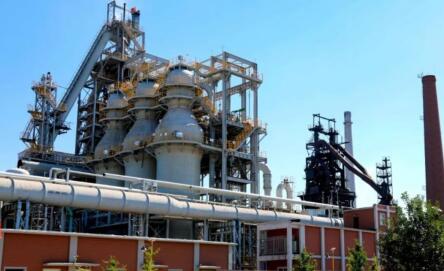
Mild steels’ primary raw materials are iron ore and coking coal, which typically account for 60% to 70% of the total production cost. If iron ore prices rise by $10 per ton, the price of mild steel typically increases by roughly $15–$20 per ton (since it takes about 1.6 tons of ore to make 1 ton of steel).In traditional Blast Furnaces (BF), coking coal is used both as a fuel and as a reducing agent to strip oxygen from iron ore, and coking coal is highly volatile.
Many mills are trying to replace coking coal with Hydrogen or Natural Gas to create “Green Steel” for the environmental asks. But producing Green Steel currently costs 20% to 40% more than traditional methods due to much higher cost of using Hydrogen-based DRI or Renewable-powered EAF. In 2026, buyers in Europe and North America are paying a “Green Premium” of approximately $100 to $200 extra per ton ($0.10–$0.20 per kg) to meet sustainability goals.
Policies of tariffs and export rebates can cause the price of the exact same mild steel to differ largely between a producing country and an importing country. Higher cost of mild steel in imported countries such as USA, Australia, it is because of high protective duties designed to keep local mills.
Ocean freight and port logistics prices also impact mild steel prices for imported counties. Mild steel weighs high, and shipping costs represent a much higher percentage of its total price; another is the “storage fees” that steel sits in a port for an extra week due to congestion. These factors can wipe out any profit margin for the importer if there are accident situations.
These are two most important factors to the mild steel price which we’ve discussed in the above sections: “Mild Steel Price per kg by Product Form”, “Mild Steel Scrap Price per kg: The Recycling Market”.
Understanding the current mild steel price per kg is more than just a procurement exercise; it is a vital step in project budgeting and financial forecasting as this mild steel price serves as the foundational component of the total production cost for machined mild steel parts. By staying informed about the raw material factors, “Green Steel” premiums, and regional price gaps, you can better optimize their sourcing and manufacturing strategies and maintain a competitive edge in the marketplace.
At VMT CNC Machining Factory, we recognize that while the mild steel price per kg is a critical baseline, true cost-efficiency comes from engineering precision and smart lifecycle management. Here is how we helped a long-term partner significantly reduce their expenditure on high-volume mild steel components:
Material Selection: For a project involving industrial sensor housings, our team performed a technical audit of the client’s specifications. We suggested transitioning from expensive cold-rolled sheets to high-quality hot-rolled mild steel (A36/Q235B equivalent) followed by a precision grinding process. This shift reduced the initial material procurement cost by 18% while still meeting the required dimensional tolerances and surface finish.
Designing Optimization: Mild steel projects often involve large plates or sheets. By utilizing AI-driven nesting software, VMT engineers optimized the layout of structural brackets for a renewable energy client. This increased material utilization from 78% to 91%, effectively lowering the “cost per part” by minimizing the amount of unused “skeleton” scrap generated during the laser cutting and CNC milling phases.
Closed-Loop Scrap Value Recovery: To counter the rising prices of new steel, VMT implements a rigorous chip management system. For a 10,000-unit production run of mild steel bushings, we segregated clean, non-contaminated mild steel turnings. By selling these high-quality scraps back to the mills at the peak of the recycling market ($0.35/kg), indirectly offsetting the raw material premium for clients.
 WhatsApp/WeChat/Mobile:
+86-15099911516
WhatsApp/WeChat/Mobile:
+86-15099911516
 Tel: 86-150-9991-1516
 QQ: 939020977
 E-Mail: service@vimetal.com.cn


What is the current average price of mild steel per kg?
As of 2026, the global average price typically ranges from $0.55 to $0.95 per kg, depending on the region, grade, and product form.
Why is the price of mild steel lower than stainless steel?
Mild steel has a simpler chemical composition with lower carbon levels and lacks expensive alloying elements like Chromium or Nickel, which are essential for stainless steel’s corrosion resistance.
How does cold-rolled mild steel price differ from hot-rolled?
Cold-rolled mild steel usually costs $0.10–$0.20 more per kg because it undergoes additional processing at room temperature to achieve a smoother finish and higher precision.
Which countries offer the most competitive mild steel prices?
China and Russia generally offer good prices due to their massive production capacities, proximity to raw materials, and optimized supply chain infrastructures.
What is the current mild steel scrap price per kg?
The recycling market currently values mild steel scrap at approximately $0.25 to $0.40 per kg, which is roughly 40%–60% of the price of new “prime” steel.
Does "Green Steel" increase the price per kg?
Yes, choosing “Green Steel” (produced via Hydrogen or EAF) can add a premium of $0.10 to $0.20 per kg to meet sustainability requirements.

 Understanding Super Duplex Stainless Steel 2507: Definition, Properties, Processing,...