Mild Steel: Grades, Properties, and Processing
By Luca Xie | Jan .06, 2026
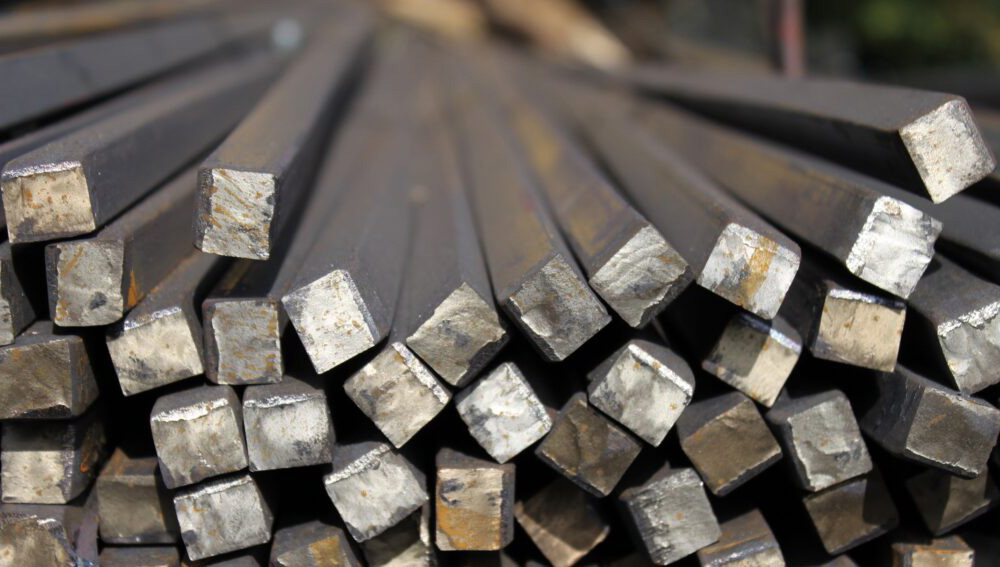

Are you struggling to achieve precise dimensions, high durability, and reliable performance in your metal parts? Low-quality materials often cause wasted time and costly errors. Mild steel provides consistent properties, excellent machinability, and stable behavior under CNC machining.
Mild steel grades, properties, and composition determine its suitability for CNC machining and industrial applications. This guide covers grades, properties, manufacturing methods, cost, and comparisons to stainless steel, giving engineers and designers a clear reference for selecting and processing mild steel effectively.
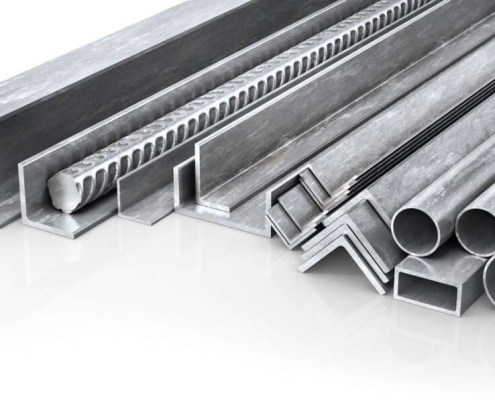
Mild steel, also called low-carbon steel, is a versatile and widely used alloy in engineering and manufacturing. It offers good machinability, a stable structure, and easy formability, allowing it to be hot formed or cold formed into sheets, rods, plates, and custom components. Engineers rely on it for automotive parts, industrial machinery and structural frameworks.
Mild steel is primarily composed of iron with a small amount of carbon and minor elements. Common additions include manganese, silicon, and trace sulfur or phosphorus. These elements help balance strength, formability, and machinability. Some variations are classified as mild steel alloys to meet specific fabrication or durability needs. The table below shows the typical composition ranges for common mild steel alloys.
| Element | Typical Content | Purpose |
| Carbon | 0.05–0.25% | Controls hardness and ductility |
| Manganese | 0.3–1.0% | Improves strength and toughness |
| Silicon | 0.1–0.3% | Enhances deoxidation during processing |
| Sulfur / Phosphorus | ≤0.05% | Improves machinability in some grades |
Mild steel comes in various grades used worldwide. Engineers select grades based on machinability, formability, and project requirements. Knowing equivalent grades simplifies sourcing and ensures consistency across suppliers and supply chains.The table below lists typical mild steel grades and their equivalents in major international standards.
| Grade (AISI / SAE, USA) | ASTM (USA) | GB (China) | EN (Europe) | JIS (Japan) | DIN (Germany) |
| 1006 | A36 | Q215A | S235JR | SS400 | St37-2 |
| 1008 | A36 | Q215B | S235JR | SS400 | St37-2 |
| 1010 | A36 | Q235C | S235J0 | SS400 | St37-3 |
| 1015 | A36 | Q235D | S235J0 | SS400 | St37-3 |
| 1018 | A36 | Q235 | S235JR | SS400 | St44-2 |
| 1020 | A36 | Q235B | S235JR | SS400 | St44-2 |
| 1045 | A572-50 | Q345A | S275JR | S45C | C45 |
This section covers six main properties: ductility, strength, hardness, toughness, magnetic behavior, and corrosion resistance. Each property affects how mild steel behaves during processing and in service, influencing design choices and manufacturing efficiency.
Mild steel exhibits high ductility, allowing it to stretch and deform without breaking. Typical elongation at break ranges from 20% to 40%, depending on the grade. High ductility reduces the risk of cracks during stamping, deep drawing, or complex shaping. Engineers rely on this property for automotive panels, structural parts, and industrial components where precise forming is required.
The tensile strength of mild steel generally ranges from 370 to 700 MPa, while yield strength is typically 250–500 MPa, depending on grade and heat treatment. Adequate strength ensures that mild steel can withstand static and dynamic loads. This makes it suitable for machinery frames, automotive chassis, and heavy equipment.
Mild steel has a Brinell hardness of approximately 120–180 HB, depending on the grade. Moderate hardness allows for efficient cutting, milling, and turning without excessive tool wear. Hardness also contributes to wear resistance in components exposed to friction.
Toughness measures the energy a material can absorb before fracturing. Mild steel exhibits excellent toughness at room temperature, with impact strength around 27–55 J (Charpy V-notch, 20°C). High toughness is essential for structural components and machinery parts that experience shocks, vibrations, or dynamic loads. It ensures that mild steel parts maintain integrity under stress.
Mild steel is ferromagnetic, meaning it responds strongly to magnetic fields. This property is important for electromagnetic applications, electric motors, and sensors. Magnetic behavior also influences some fabrication processes such as induction heating and magnetic particle inspection.
Mild steel is prone to corrosion if left unprotected. Its corrosion rate typically ranges from 0.1 to 0.5 mm/year in atmospheric conditions. Surface treatments such as galvanizing, painting, or powder coating improve durability in outdoor or humid environments.
This section explains the main manufacturing and fabrication processes for mild steel. covering CNC machining, welding, hot forming, and cold forming, highlighting key considerations for each process.
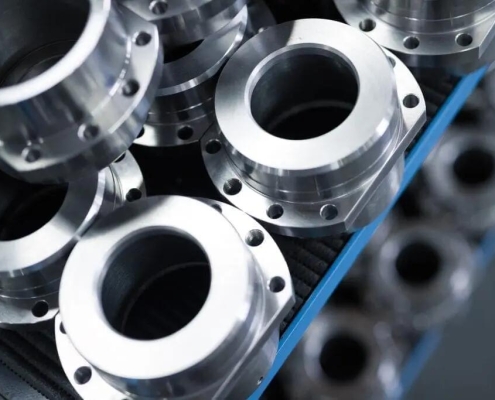
With 15 years of experience at VMT, we have learned key lessons in machining mild steel. Tool selection is critical to reduce wear and maintain surface quality. Proper cutting speeds and feed rates help achieve tolerances as tight as 0.01 mm. Overheating can distort parts, so roughing and finishing passes should be carefully planned. Watching chip formation and adjusting feeds in real time improves consistency and prevents surface defects.
When welding mild steel, the material’s low carbon content makes it easy to fuse, but it can distort or crack if heat is uneven. Experience shows that controlling heat input, using proper clamping, and allowing gradual cooling prevent warping and residual stress. Clean surfaces and well-fitted joints reduce the risk of weak spots. Inspecting the weld for uniform penetration ensures consistent strength in structural or industrial components.
When mild steel is heated above 900–1250°C, it becomes softer and more ductile. This makes it easier to form complex shapes without cracking. Key points are uniform heating and gradual cooling to avoid warping and residual stress. Typical elongation during hot forming is 30–40%, and careful handling ensures consistent mechanical properties.
Cold forming shapes mild steel at room temperature. The material resists deformation more, so higher force is needed. Spring-back can occur, and low-carbon grades perform best with elongation around 20–30%. To prevent cracking or surface defects, pay attention to bending radius, lubrication, and gradual deformation. Cold forming suits thin sheets and precision components.
The cost of mild steel parts depends on several key factors, including grade and quality, material form, processing complexity, and regional market conditions.
| Region | Typical Hot Rolled Steel Price (USD/kg) |
| China (FOB) | 0.58–0.64 |
| Europe (Rotterdam) | 0.72–0.78 |
| USA (Gulf Coast) | 0.85–0.92 |
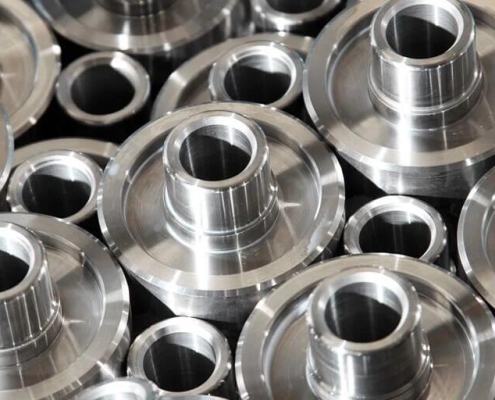
Mild steel is highly versatile due to its balance of strength, ductility, machinability, and affordability, making it suitable for a wide range of applications.
Mild steel and stainless steel differ mainly in composition, mechanical properties, corrosion resistance, cost, and typical applications. Choosing the right material depends on whether budget or corrosion resistance is the priority. The table below summarizes their key differences with numerical values:
| Property | Mild Steel | Stainless Steel |
| Carbon Content | 0.05–0.25% | 0.08–0.20%, plus 10–20% Cr, 8–10% Ni |
| Tensile Strength | 370–500 MPa | 520–750 MPa |
| Yield Strength | 250–350 MPa | 210–550 MPa |
| Elongation | 20–30% | 40–60% |
| Density | 7.85 g/cm³ | 7.9 g/cm³ |
| Corrosion Resistance | Low, requires coating | High, self-protecting |
| Typical Price (USD/kg) | 0.58–0.64 (China FOB) | 2.0–3.0 (China FOB) |
| Typical Applications | Construction, automotive, machinery, appliances, general goods | Medical, food processing, chemical, marine, high-corrosion environments |
A European automotive manufacturer needed custom mild steel brackets for a new electric vehicle chassis. They struggled with tight tolerances, complex geometries, and consistent surface finish. Previous suppliers failed to meet the required precision, causing delays in assembly and affecting production schedules.
VMT solve the problem:
As a result, the customer received high-quality mild steel brackets that achieved dimensional tolerances within 0.01 mm, while the surface finish reached Ra 0.8 μm. If you are also facing similar challenges with tight tolerances, high-quality surface finishes, or complex geometries, contact VMT today to get custom CNC components that meet your exact requirements.
Mild steel is a versatile, cost-effective material that balances strength, ductility, hardness, and toughness, making it suitable for a wide range of applications. Its good machinability allows precise CNC machining, while its magnetic properties and moderate corrosion resistance make it ideal for structural components, automotive parts, machinery, fabricated products, household appliances, and general goods.
 WhatsApp/WeChat/Mobile:
+86-15099911516
WhatsApp/WeChat/Mobile:
+86-15099911516
 Tel: 86-150-9991-1516
 QQ: 939020977
 E-Mail: service@vimetal.com.cn


What alloy number is mild steel?
Mild steel is typically low-carbon steel with low alloy content. Common alloy numbers include AISI 1018, AISI 1020, and AISI 1045.
Is mild steel stronger than stainless steel?
Mild steel has good strength but is generally less strong than many stainless steels, especially austenitic or martensitic grades. However, mild steel offers higher ductility and easier machinability at a lower cost.
Does mild steel rust easily?
Yes, mild steel is susceptible to rust and corrosion because it lacks significant chromium or nickel. Protective coatings, painting, or galvanizing are often required for outdoor or humid applications. Without protection, exposure to moisture and oxygen can cause surface oxidation and gradual weakening over time.
What are other names for mild steel?
Mild steel is also called low-carbon steel, soft steel, or plain carbon steel. These names reflect its low carbon content, good ductility, and machinability, distinguishing it from medium- or high-carbon steels and alloy steels used in more demanding mechanical or wear-resistant applications.
What is the most popular mild steel?
The most widely used mild steel grades are AISI 1018 and AISI 1020, favored for their balance of strength, ductility, and machinability. These grades are commonly applied in CNC machining, structural components, automotive parts, and general fabrication.


 What are the properties of Mild Steel?