Lean Duplex Stainless Steel:Grades, Properties & Uses
By Luca Xie | Jan .02, 2026


Selecting the right stainless steel can be challenging when you need both strength and corrosion resistance. Engineers often struggle with materials that either lack precision or fail in harsh environments. Lean Duplex Stainless Steel solves these problems by offering superior strength, excellent corrosion resistance, and compatibility with high-precision CNC machining.
Lean Duplex Stainless Steel combines high strength, excellent corrosion resistance, and weldability for demanding applications. This guide explores its grades, properties, composition, cost, uses, and comparison with 304 stainless steel.Reading this article helps you select the right material and optimize your engineering decisions.
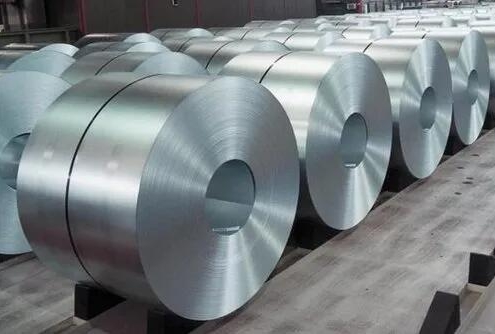
Lean Duplex Stainless Steel is a type of stainless steel that balances high strength and excellent corrosion resistance. It has a mixed ferrite and austenite microstructure, giving it superior mechanical properties compared to standard austenitic stainless steel. Sometimes it is simply called Lean Duplex in industry discussions. Engineers favor it for applications requiring durability, reliability, and precise machining.
Lean Duplex Stainless Steel composition mainly includes chromium, nickel, molybdenum, and nitrogen.Chromium provides excellent corrosion resistance and stabilizes the ferrite phase. Nickel stabilizes the austenite phase and improves toughness. Molybdenum enhances resistance to pitting corrosion. Nitrogen increases strength and fatigue performance. Among these elements, chromium has the most significant impact on Lean Duplex Stainless Steel properties.
The table below summarizes the common elements and their typical ranges in this material:
| Element | Typical Range |
| Chromium (Cr) | 19% – 23% |
| Nickel (Ni) | 4% – 6% |
| Molybdenum (Mo) | 1% – 3% |
| Nitrogen (N) | 0.08% – 0.2% |
Lean Duplex Stainless Steel has a mixed microstructure consisting of roughly equal proportions of body-centered cubic ferrite and face-centered cubic austenite. This biphasic structure provides a unique combination of high mechanical strength and excellent corrosion resistance. The ferrite phase contributes to strength and resistance to stress corrosion cracking, while the austenite phase enhances toughness and ductility. This balance makes Lean Duplex Stainless Steel ideal for precise CNC machining, ensuring parts maintain durability and fatigue resistance under demanding conditions.
Lean Duplex Stainless Steel grades each have distinct characteristics suited for demanding applications.
These grades also have equivalents in various international standards. The table below lists common grades and their corresponding standards across regions:
| Grade | ASTM (USA) | EN (Europe) | ISO (International) | JIS (Japan) | GB (China) | DIN (Germany) | BS (UK) |
| S32304 | S32304 | 1.4362 | X2CrNiMoN 22-5-3 | SUS 329J3L | Z2CrNiMoN22-5-3 | X2CrNiMoN22-5-3 | 32304 |
| S32101 | S32101 | 1.4162 | X2CrNiN 22-5-3 | SUS 329J1L | Z2CrNiN22-5-3 | X2CrNiN22-5-3 | 32101 |
| S32205 | S32205 | 1.4462 | X2CrNiMoN 22-5-3 | SUS 32750 | Z2CrNiMoN22-5-3 | X2CrNiMoN22-5-3 | 32205 |
| S32404 | S32404 | 1.4501 | X2CrNiMoN 22-5-3 | SUS 329J4L | Z2CrNiMoN22-5-3 | X2CrNiMoN22-5-3 | 32404 |
This section explains the key Lean Duplex Stainless Steel properties that make it suitable for demanding applications. You will learn about High Strength, Fatigue Strength, Corrosion Resistance, Good Weldability, and Magnetic behavior.
Lean Duplex Stainless Steel offers high tensile strength and hardness, allowing parts to withstand heavy mechanical loads without deformation. Its balanced ferrite-austenite structure provides superior strength compared to standard austenitic stainless steels, making it ideal for structural components and machinery requiring precise load-bearing performance. CNC machining benefits from this property by maintaining dimensional stability during tight-tolerance production.
This material exhibits excellent resistance to fatigue, which is crucial for parts exposed to repeated stress cycles. The duplex microstructure reduces crack initiation and propagation, ensuring long-lasting performance in rotating shafts, pressure vessels, and automotive components. Engineers rely on this property when designing parts that must endure dynamic loads over time.
The combination of ferrite and austenite phases provides robust Lean Duplex Stainless Steel Corrosion Resistance. It resists pitting, crevice corrosion, and stress corrosion cracking, even in chloride-rich environments such as seawater or chemical processing. This property allows CNC-machined components to maintain performance and appearance in harsh operating conditions.
Despite its high strength, Lean Duplex Stainless Steel maintains excellent weldability. Fabrication and assembly are easier, allowing engineers to produce complex shapes or join parts without compromising mechanical performance. Controlled welding procedures ensure microstructure balance and prevent localized corrosion at welds.
Due to its ferritic content, this material exhibits magnetic behavior, which can be advantageous for certain applications or quality inspection processes. While the austenite phase reduces overall magnetism compared to fully ferritic steels, it still allows parts to be checked using magnetic detection methods during CNC manufacturing.
The cost of Lean Duplex Stainless Steel depends on several key factors, which must be considered when budgeting for CNC machining projects. These factors include raw material composition, market demand and supply, processing and fabrication complexity, and regional price differences.
| Region | Approximate Duplex Stainless Steel Price (USD per tonne) |
| China* | $8,500 – $9,000 per tonne |
| United States | $10,880 per tonne |
| Europe | $9,490 – $10,150 per tonne |
| Japan | $9,450 – $9,490 per tonne |
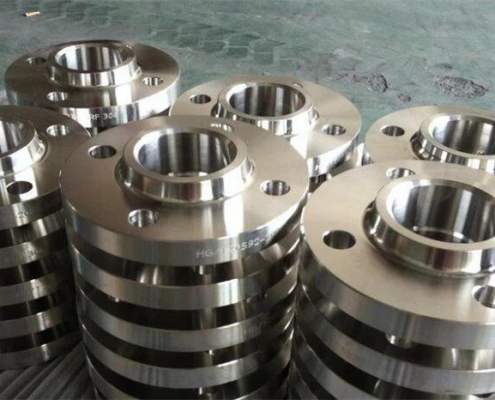
Lean Duplex Stainless Steel applications cover a wide range of industries. Key applications include:
Comparing Lean Duplex Stainless Steel with 304 Stainless Steel helps engineers choose the best material for CNC-machined parts. While both are corrosion-resistant, the key difference lies in mechanical strength and corrosion performance in harsh environments. Lean Duplex combines ferrite and austenite, giving higher strength, better fatigue resistance, and improved resistance to pitting and crevice corrosion. 304, an austenitic steel, offers excellent general corrosion resistance but lower strength and reduced performance in chloride-rich or aggressive environments.
The table below summarizes the main differences:
| Property | Lean Duplex Stainless Steel | 304 Stainless Steel |
| Tensile Strength | 620–850 MPa | 520–720 MPa |
| Yield Strength | 450–620 MPa | 215–275 MPa |
| Corrosion Resistance | Excellent, high resistance to pitting and crevice corrosion | Good, general corrosion only |
| Fatigue Resistance | High | Moderate |
| Weldability | Good, requires controlled procedures | Excellent |
| Magnetic | Slightly magnetic | Non-magnetic |
A European offshore engineering company approached VMT with a challenge. They needed high-strength, corrosion-resistant Lean Duplex Stainless Steel components for subsea valve assemblies and piping connectors. Their previous suppliers struggled to maintain tight tolerances during CNC machining, leading to assembly issues, delays, and increased costs.
How VMT Solved the Problem:
The result was a set of high-precision subsea components that fully met the customer’s stringent performance requirements. The parts achieved reliable airtight sealing under high-pressure underwater conditions and demonstrated outstanding corrosion resistance in long-term offshore testing. Assembly was smooth and repeatable, significantly reducing installation time and risk in subsea operations. If you are developing subsea or marine components with similar requirements, contact VMT to discuss your project and receive a free engineering evaluation and quote.
Lean Duplex Stainless Steel offers a balanced ferrite-austenite microstructure, providing high strength, excellent fatigue resistance, and superior corrosion resistance. Its grades, chemical composition, and mechanical properties make it suitable for CNC-machined parts across industries such as oil & gas, chemical processing, marine, construction, pulp & paper, and food & pharma.
 WhatsApp/WeChat/Mobile:
+86-15099911516
WhatsApp/WeChat/Mobile:
+86-15099911516
 Tel: 86-150-9991-1516
 QQ: 939020977
 E-Mail: service@vimetal.com.cn


What are the main advantages of Lean Duplex Stainless Steel?
Lean Duplex Stainless Steel offers high strength, excellent fatigue resistance, and superior corrosion resistance, especially against pitting and crevice corrosion. It combines ferrite and austenite phases, provides good weldability, and magnetic properties, making it ideal for CNC-machined parts in harsh, cyclic-loading, or chloride-rich environments.
What are the disadvantages of Lean Duplex Stainless Steel?
While strong and corrosion-resistant, Lean Duplex Stainless Steel can be more expensive than standard austenitic grades and requires careful welding to prevent distortion. Its slightly magnetic nature may limit some applications, and specialized machining or surface treatment may be necessary to achieve precise tolerances for critical components.
What is the difference between Duplex and Lean Duplex?
Duplex stainless steel contains higher alloy content, offering greater corrosion resistance and mechanical strength, while Lean Duplex has lower alloying elements, reducing cost but still retaining good strength and corrosion resistance. Lean Duplex is suitable for less aggressive environments or where cost efficiency is important.
Is Duplex better than 316?
Compared to 316 stainless steel, Duplex provides higher tensile and yield strength, better fatigue performance, and improved resistance to pitting and crevice corrosion in chloride environments. However, 316 may be easier to weld and more cost-effective for general-purpose applications with moderate corrosion exposure.

 Mild Steel: Grades, Properties, and Processing