Hot Rolled vs. Cold Rolled Steel: Understanding Basics and Differences
By JunWen Liu | Feb .05, 2026
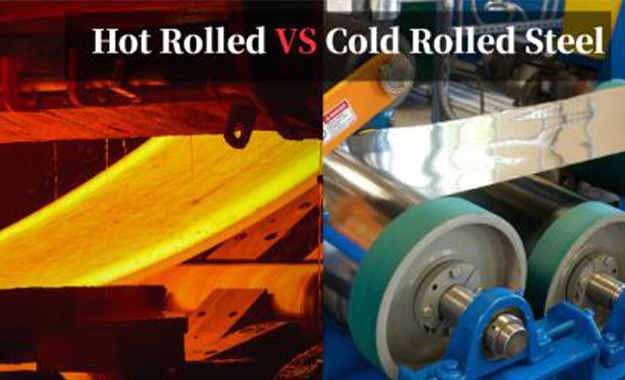

Did you know that the same grade of steel—for example, the ubiquitous 1018 steel—can behave largely different depending on its delivery state of hot rolled or cold rolled? The choice between hot rolled vs cold rolled steel impacts many to the manufactured steel parts from tensile strength and ductility to surface finish and total production cost; parts manufacturing processes of CNC machining, sheet metal fabrication, and the applications can also be different between hot vs cold rolled steel. This guide will provide a deep-dive comparison to help you better understand differences of hot vs cold rolled steel, giving you a referenced insights for your manufacturing or design needs.
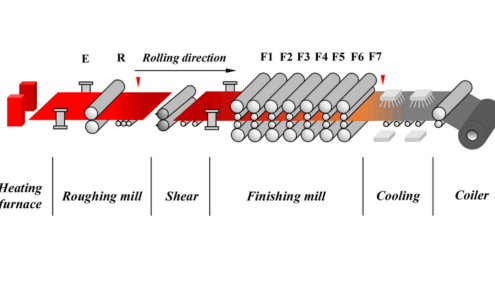
Hot rolled steel is manufactured at temperatures above 1,700∘F (927∘C), which is above most of the steels recrystallization temperature (typically 750°F–1,300°F) but below their average melting temperature (approximately 2,500°F–2,800°F). At this heat, the steel becomes highly malleable, making it easy to shape and form into massive sizes and structural profiles.
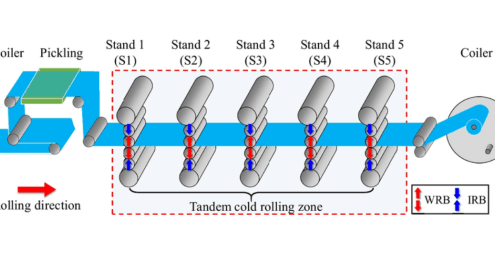
Cold rolled steel is essentially hot rolled steel that has undergone further processing. After the metal cools, it is re-rolled at room temperature. This “cold work” allows for much tighter tolerances and a polished surface.
When comparing hot rolled steel vs cold rolled steel strength, cold rolled steel is the clear winner. The cold-rolling process induces “work hardening,” which realigns the grain structure and increases the material’s yield strength. For instance, Cold Rolled 1018 steel typically has a yield strength around 54,000 psi, whereas its hot-rolled counterpart may only reach 32,000 psi.
Conversely, hot rolled steel offers much better ductility. Hot rolled steel is allowed to cool naturally, and it is essentially in an annealed state(soft). This makes it much easier to bend, stretch, and form without cracking. If you require significant steel bending, hot rolled is often the safer, more flexible choice between hot rolled vs cold rolled.
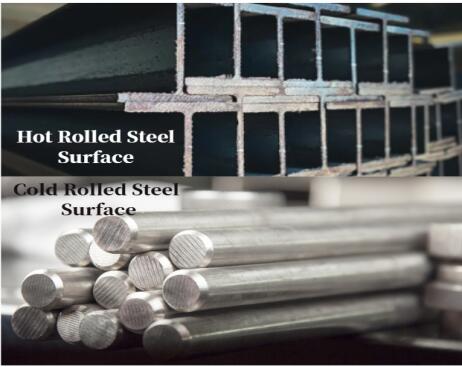
The most visible difference is the hot rolled vs cold rolled steel finish. Hot rolled steel has a porous, “scaled” surface caused by oxidation at high temperatures. In contrast, cold rolled steel is smooth and free of scale. This is why cold rolled steel is preferred for parts that require surface finishes like painting or plating, as it requires significantly less surface preparation of steel surface finishing.
For example, the measurable smoothness of 1018 steel: 1018 cold rolled steel typically boasts a surface roughness of 32–63 uin, whereas 1018 hot rolled steel can exceed 500 uin. This means the cold rolled surface is nearly 20 times smoother, providing the ideal substrate for coatings without the need for aggressive grinding or abrasive blasting.
There is a notable hot rolled steel vs cold rolled steel cost gap. Hot rolled steel is cheaper because it requires less processing time and no secondary cold working. Cold rolled steel can be 20% to 50% more expensive. However, for CNC machining, the higher material cost of cold rolled steel is often offset by reduced labor time spent on surface grinding or polishing.
Sheet metal fabrication involves cutting (laser, plasma, or waterjet), bending (press brakes), and joining (welding or riveting).
Compatibility with Hot Rolled Steel (HRS)
Compatibility with Cold Rolled Steel (CRS)
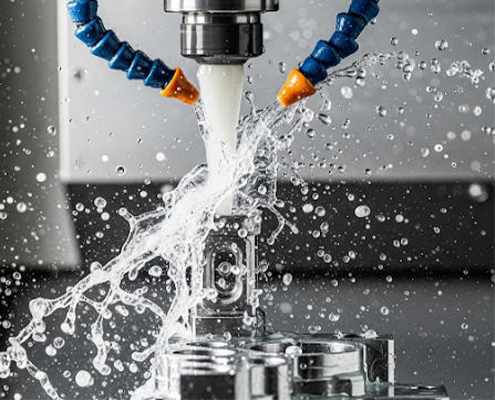
CNC (Computer Numerical Control) Machining involves removing material from a solid block or plate using high-speed rotating tools.
The choice between Hot and Cold depends entirely on whether you value cost and scale (Hot) or precision and finish (Cold). Below table shows some of the examples of hot rolled steel and cold rolled steel uses:
Table 1: Applications of Hot vs. Cold Rolled Steel
| Industry | Hot Rolled Steel (HRS) Applications | Cold Rolled Steel (CRS) Applications |
| Construction | I-beams, structural joints, and railroad tracks. | Metal roofing, siding, and steel studs. |
| Automotive | Chassis frames, suspension parts, and wheels. | Body panels, exhaust tubes, and interior seat frames. |
| Appliances | Industrial boilers and heavy water tanks. | Refrigerator shells, washing machines, and microwave ovens. |
| Infrastructure | Bridges, guardrails, and heavy piping. | Electrical cabinets and street lighting fixtures. |
| Aerospace | Engine mounting structures and large airframe support ribs. | Fasteners, hydraulic tubing, and thin-gauge interior structural members. |
| Electronics | Heavy motor housings, large transformer cores, and data center structural racking. | Precision enclosures, computer brackets, EMI shielding covers, and connectors. |
In summary, hot rolled steel is your best bet for cost-efficiency, ductility, and large-scale structural stability. Meanwhile, cold rolled steel is indispensable for precision CNC parts requiring high strength and a premium finish. Choosing the right state of steel can save your project cost and this also influences your manufacturing methods suitable or not.
A client approached VMT to scale up production for a drive shaft traditionally manufactured from Hot Rolled 1018 steel. While hot-rolled steel met the basic strength requirements, its inherent “mill scale” and looser dimensional tolerances posed a risk to long-term cost efficiency. Our initial technical assessment identified that the abrasive oxide layer would lead to accelerated tool wear, and the material’s typical out-of-roundness would necessitate frequent manual offsets to maintain the strict concentricity required for high-speed pumps.
VMT’s engineering team recommended changing the material to Cold Rolled 1018 Steel. By leveraging the material’s superior dimensional consistency and scale-free surface, we aimed to eliminate the preparatory hurdles associated with hot-rolled bars. This switch allowed us to utilize the raw material’s existing tolerance as a reliable datum point, streamlining the entire CNC turning process from the first pass.
The transition yielded immediate quantifiable gains: tool life surged by 300% as the smooth surface eliminated scale-related abrasion. Production efficiency saw a 15% reduction in cycle time because the raw stock arrived within ±0.002″ of the target diameter, requiring fewer roughing passes. Ultimately, the client received a precision shaft with a superior Ra 1.6 finish, completely bypassing the need for costly secondary polishing or grinding stages.
 WhatsApp/WeChat/Mobile:
+86-15099911516
WhatsApp/WeChat/Mobile:
+86-15099911516
 Tel: 86-150-9991-1516
 QQ: 939020977
 E-Mail: service@vimetal.com.cn


Which is stronger, hot rolled or cold rolled steel?
Cold rolled steel is stronger. The cold rolling process work-hardens the metal, significantly increasing its yield and tensile strength compared to hot rolled steel.
What are the disadvantages of hot rolled steel?
The main disadvantages are its rough surface scale, lower dimensional accuracy, and the fact that it can shrink slightly as it cools, making it unsuitable for high-precision parts.
Which is more expensive, hot or cold rolled steel?
Cold rolled steel is more expensive. It requires more labor, more processing steps, and more specialized equipment to achieve its precise finish and strength.
Why use hot rolled steel?
It is used primarily for its cost-effectiveness and lack of internal stress. It is the ideal choice for large structural projects where the surface can be painted or hidden.
Can you weld both types of steel?
Yes, both are highly weldable. However, for hot rolled steel, the mill scale must be ground off before welding to ensure a clean, strong joint.
Does cold rolled steel rust faster?
Because cold rolled steel lacks the protective (though ugly) oxide scale of hot rolled steel, it is more susceptible to rust and must be oiled or coated immediately after machining.


 Mild Steel Price per kg: 2026 Market Guide and Pricing Factors