High Carbon Stainless Steel: How’s Its Impact on Engineering Design and What’s Its CNC Machining Applications?
By JunWen Liu | Mar .27, 2026
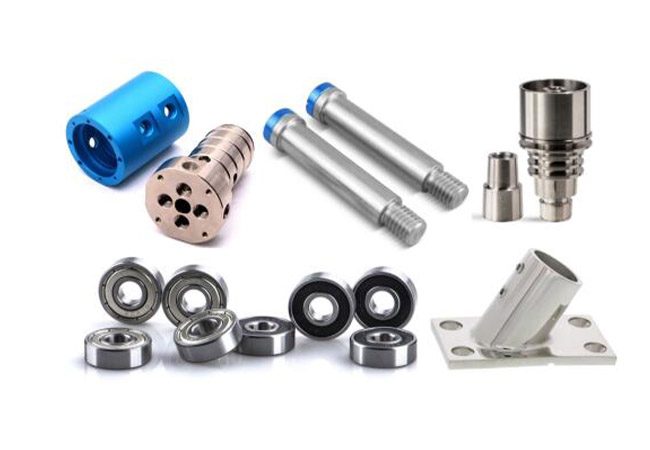

“High carbon” content often fuctioned as—— two sides of the same coin among stainless steel families:
To figure out its definition, performance impacts, and practical applications in CNC Machining, this article will take you in-depth explore fully of the high carbon stainless steel.
“High carbon” is not a fixed value or range for all stainless steels. Depending on the microstructures, we can learn that stainless steels have basic types:
Here is the “High Carbon” breakdown for these types:
| Types | “High Carbon” or Carbon Content | The Engineering Purpose |
| Martensitic | “High carbon” means ~0.60% – 1.20% | Designed to achieve extreme hardness and wear resistance through heat treatment(more specificly: the quenching. |
| Austenitic | “High carbon” means ~ 0.04% – 0.10% | Usually marked with an “H” suffix; designed to enhance creep strength at high temperatures. |
| Ferritic | Carbon content usually < 0.12% | High carbon is rarely a goal here; increasing it sharply reduces ductility and corrosion resistance(due to its structure). |
| Duplex | Carbon strictly limited below 0.03% | Carbon is considered an “impurity” here—excessive amounts will ruin its rust-proofing performance. |
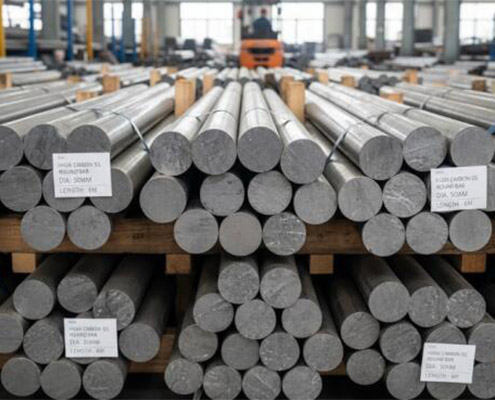
Not all stainless steel types have high-carbon versions. Essentially, only Martensitic 440 series / 420HC and Austenitic “H” suffix series fall into the high-carbon category. Additionally, there are specialized high-carbon stainless alloys—most notably Japanese grades like VG-10 and AUS-10.
Why were these grades designed with “high carbon” in mind?
| Microstructure | Representative Grades | Engineering Value |
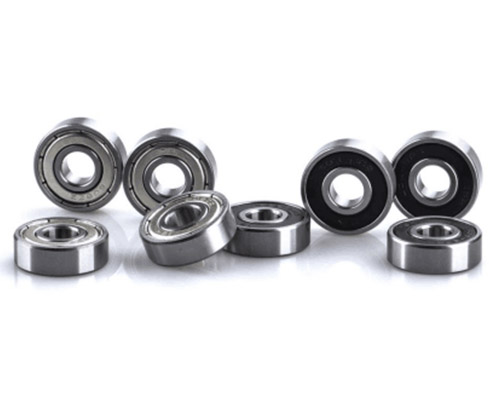
| Martensitic | 440C, 420HC | Core Need: Hardness. 440C has carbon levels up to 1.2%. Combined with chromium, it becomes one of the hardest stainless steels in the world. It’s widely used for CNC-machined bearings and stamped industrial blades. |
| Austenitic | 304H, 316H, 310H | Core Need: High-Temp Strength. The “H” version slightly raises carbon to significantly boost structural strength in 500°C+ environments. Typical applications include heat exchanger components and superheater tubing. |
| Special Alloys | VG-10, AUS-10 | Core Need: Cutting Performance. By adding Cobalt (Co) or Vanadium (V), the carbides formed by high carbon are refined, improving both toughness and edge retention. These grades are purpose-built for high-end kitchen knives and folding knives. |
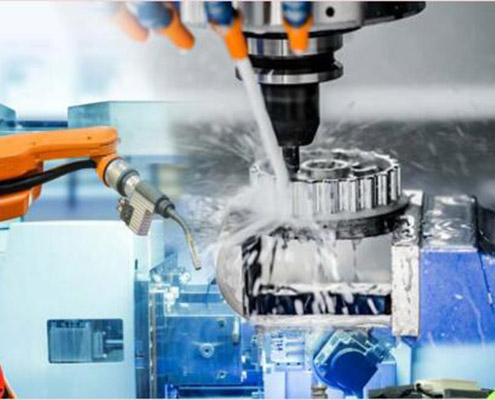
While high carbon boosts certain performance metrics, it presents challenges for others, directly influencing how we choose our manufacturing processes.
| Property | Impact of High Carbon | Recommendation |
| Corrosion Resistance | Negative. Carbon reacts with Chromium to form Chromium Carbides, creating “Chromium-depleted zones” and increasing the risk of intergranular corrosion. | Requires precise solution treatment or careful environmental assessment. (High-carbon grades are not recommended for high-corrosion applications). |
| Machinability | Highly Challenging. High carbon leads to high material hardness, significant cutting forces, and a strong tendency for work hardening. | Use Carbide Tools and lower cutting speeds. It is always easier to CNC machining in the annealed state. |
| Weldability | Poor. The Heat-Affected Zone (HAZ) is prone to carbide precipitation, which causes brittleness or corrosion. | Typically requires pre-heating and Post-Weld Heat Treatment (PWHT). |
| Formability | Lower. Reduced plasticity makes complex cold drawing or deep drawing difficult. | Form in the annealed state; prioritize stamping or hot forging processes. |
In the VMT precision machining shop, high-carbon stainless steels like Martensitic 440C or Austenitic 316H are part of our daily routine. Our customers typically use 316H for fasteners and structural parts in high-temperature environments, and 440C for high-hardness connectors in bearing and valve assemblies.
When it comes to machining High Carbon Martensitic vs. High Carbon Austenitic, here is our professional take:
CNC Machining Comparison: 440C vs. 316H
| Machining Dimension | 440C (High Carbon Martensitic) | 316H (High Carbon Austenitic) |
| Machinability | ~35% (Annealed). Hard and brittle. | ~45%. “Gummy” and extremely prone to work hardening. |
| Cutting Speed (VC) | Low-Medium: 130 – 175 m/min (Annealed). | Medium: 100 – 150 m/min (requires heavy feed). |
| Feed Rate (fn) | Constant feed to prevent tool rubbing and premature wear. | Forced continuous feed; must cut below the work-hardened layer. |
| Tool Geometry | Smaller relief angle to enhance cutting edge strength. | Large rake angle with sharp edges to reduce friction. |
| Chip Control | Brittle chips, easy to evacuate. | Tough, long stringy chips; must use chip breakers. |
| Heat Treatment | Complex: Pre-heat → 1010-1065°C Quench → Oil Cool → Low-temp Temper. | Simple: Usually just Solution Annealing (1050°C + Water Quench). |
| Cooling & Lubrication | Focus on cooling to prevent thermal cracks. | Focus on lubrication to reduce friction and prevent built-up edge (BUE). |
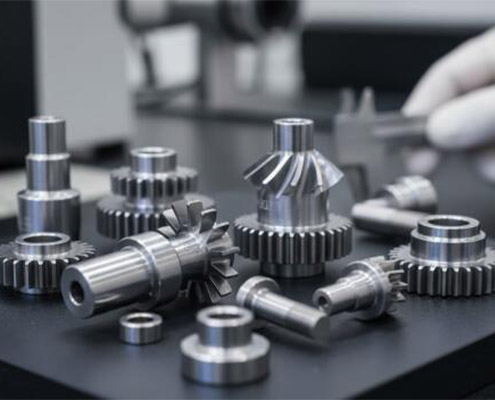
Thanks to its “Extreme Hardness” or “High-Temperature Strength,” high-carbon stainless steel is the go-to choice for:
Pros:
Cons:
 WhatsApp/WeChat/Mobile:
+86-15099911516
WhatsApp/WeChat/Mobile:
+86-15099911516
 Tel: 86-150-9991-1516
 QQ: 939020977
 E-Mail: service@vimetal.com.cn


What is high carbon stainless steel?
It refers to alloys with carbon content significantly higher than standard stainless steel. In Martensitic grades (like 440C), carbon is usually 0.6%–1.2% for hardness; in Austenitic grades (like 304H), it’s around 0.04%–0.1% to boost high-temperature strength.
Will high carbon stainless steel rust?
Yes. Compared to low-carbon grades like 304L or 316L, the carbon in these alloys consumes Chromium to form Chromium Carbides, depleting the protective layer. They are more prone to rust spots in high-humidity or salt-spray environments.
Which stainless steel has the highest carbon content?
Martensitic 440C is one of the standard grades with the highest carbon content, reaching up to 1.2%. This makes it strong among stainless steels, reaching extreme hardness after heat treatment.
How do you care for high carbon stainless steel?
Keep the surface clean and dry after machining or use. For tools or precision parts, we recommend a thin coat of rust-preventative oil. After CNC machining, a passivation treatment can effectively compensate for the corrosion resistance lost due to high carbon.
Is high carbon stainless steel good for knives?
Absolutely. It strikes an excellent balance between hardness and toughness. Compared to traditional carbon steel knives, high-carbon stainless is much more corrosion-resistant—perfect for kitchen use where you need a sharp edge that won’t rust after cutting food.
Is Precipitation Hardening (PH) steel considered high carbon?
No. PH stainless steels (like 17-4 PH) gain strength through “Aging” by adding elements like Aluminum, Copper, Niobium, or Titanium. They are actually low carbon. To ensure weldability and corrosion resistance, the carbon content in most PH steels is kept very low, usually below 0.07%.