Duplex vs Super Duplex Stainless Steel: What are They and 6 Key Differences
By JunWen Liu | Jan .30, 2026
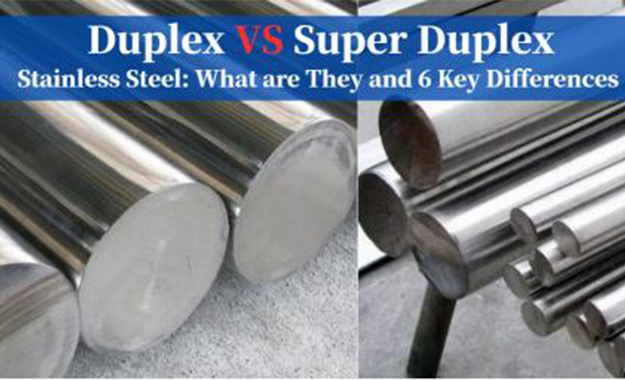

Duplex stainless steel and super duplex stainless steel—you may not be so familiar with these two materials; But if I say — 304 stainless steel and 316 stainless steel—these are more usual in daily uses right? Like your mark cups. 304 and 316 are classic austenitic stainless steel while duplex and super duplex are classic dual-phase microstructures that include austenite and ferrite; where duplex’ strength and corrosion resistance is like twice or more than 304/316 while super duplex is a even higher version of duplex stainless steel.
This article will focus on duplex vs super duplex stainless steel — what are they and their key differences in composition, properties, manufacturing, cost and other more, and final give you a selection suggestion.
Both materials belong to the family of Duplex Stainless Steels (DSS), characterized by a dual-phase microstructure of Austenite and Ferrite.
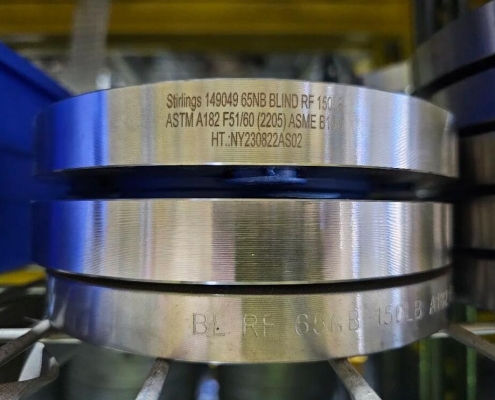
Standard duplex, most commonly duplex stainless steel 2205 (UNS S31803/S32205), consists of an approximately 50/50 mix of Austenite (for toughness and ductility) and Ferrite (for strength and corrosion resistance). It was designed to provide better corrosion resistance than 316 stainless steel and nearly double the yield strength.
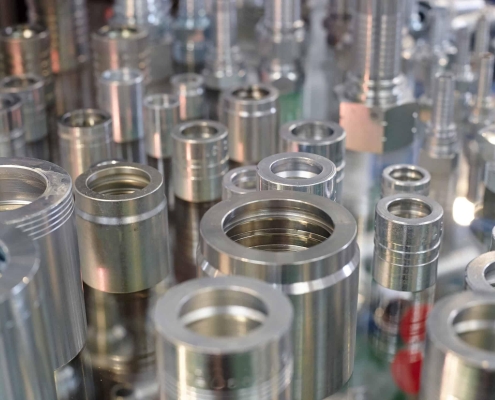
Super duplex, such as super duplex stainless steel 2507 (UNS S32750), is a high-performance of standard duplex especially in terms of corrosion resistance. To be classified as “Super,” the alloy must have a Pitting Resistance Equivalent Number (PREN) greater than 40(duplex is 28-38). This is because it contains higher element content of Chromium, Molybdenum, and Nitrogen, making it better resistant to hostile corrosive environments.
Key Features of Both:
The primary distinction of duplex vs super duplex stainless steel lies in the concentration of alloying elements. Super duplex boosts higher Chromium content to ~25% (vs. ~22% in standard duplex) and Molybdenum to ~4% (vs. ~3% in standard duplex). Super duplex also includes higher Nitrogen to stabilize the austenite phase. Here take a typical duplex 2205 and super duplex 2507 as examples to show their chemical composition as a referenced comparison:
Table 1: Chemical Composition Comparison Taking UNS S32205 vs UNS S32750 as Examples
| Element | Duplex 2205 (UNS S32205/S31803) | Super Duplex 2507 (UNS S32750) | Element Role |
| Chromium (Cr) | 22.0 – 23.0% | 24.0 – 26.0% | Increases corrosion resistance and forms the essential protective passive layer. |
| Nickel (Ni) | 4.5 – 6.5% | 6.0 – 8.0% | Stabilizes the austenite phase and improves toughness and ductility of the alloy. |
| Molybdenum (Mo) | 3.0 – 3.5% | 3.0 – 5.0% | Enhances resistance to localized pitting and crevice corrosion, especially in chloride environments. |
| Nitrogen (N) | 0.14 – 0.20% | 0.24 – 0.32% | Boosts pitting resistance and increases the yield strength of the material. |
| Carbon (C) | Max 0.030% | Max 0.030% | Kept very low to prevent intergranular corrosion by avoiding carbide precipitation. |
| Manganese (Mn) | Max 2.00% | Max 1.20% | Acts as a deoxidizer and increases the solubility of Nitrogen(N) in the steel. |
| Copper (Cu) | — (Optional traces) | 0.5% Typical | Improves resistance to strong reducing acids (like sulfuric acid) in specific environments. |
| Iron (Fe) | Balance | Balance | Acts as the base matrix metal and allows the formation of the ferritic phase. |
Both duplex and super duplex stainless steels exhibit exceptional corrosion resistance, far surpassing standard grades like 316L. They can be utilized in general marine applications without additional surface treatment. For super duplex, it contains higher content of Chromium, Molybdenum, and Nitrogen, resulting in a much higher PREN (Pitting Resistance Equivalent Number). So, super duplex is far more suitable for harsher environments such as deep-sea brine, high-acid/high-chloride chemical equipment or industrial settings.
The PREN value demonstrates a material’s resistance to localized pitting corrosion. Taking 2205 and 2507 as examples:
Duplex 2205 (PREN 30–36): Duplex 2205 (PREN 30–36): This level of corrosion resistance ensures that 2205 remains pristine even after years of exposure to coastal salt spray, whereas 316L might develop brown surface rust (coastal architectural uses). And in aerated seawater below 30°C, Duplex 2205 is virtually immune to pitting. It can meet the corrosion requirements for uses like bridge stay cables, municipal wastewater systems, and low-pressure piping in desalination plants.
Super Duplex 2507 (PREN > 40): A PREN exceeding 40 qualifies this material for the most demanding subsea applications. In high-salinity deep-sea environments that may contain hydrogen sulfide (H₂S), Super Duplex can maintain its structural integrity for decades without localized perforation. Additionally, it is essential for high-temperature seawater applications, such as chemical plant heat exchangers (50°C–60°C), where the corrosivity of seawater increases exponentially with temperature. In these extreme scenarios, the corrosion resistance of standard Duplex is insufficient. But if you apply duplex stainless steel, it can pose a risk of corrosion-induced leakage, and this could lead to catastrophic failures.
Due to their dual-phase microstructure consisting of Ferrite and Austenite, both duplex and super duplex stainless steels offer a combination of high strength and excellent toughness. However, through optimized alloying, super duplex stainless steel achieves even higher tensile and yield strengths, providing superior mechanical robustness compared to duplex stainless steel. And because of its higher content of alloying elements—specifically Nitrogen (N)—super duplex stainless steel maintains its impact toughness across a broader temperature range than duplex stainless steel. To provide a more direct comparison, the mechanical properties of examples duplex 2205 and super duplex 2507 are listed in the table below:
Table 2: Comparing Duplex 2205 vs Super Duplex 2507
| Mechanical Property | Duplex 2205 (UNS S32205) | Super Duplex 2507 (UNS S32750) |
| Ultimate Tensile Strength (UTS) | 620 – 800 MPa | 750 – 950 MPa |
| Yield Strength (0.2% Offset) | ≥ 450 MPa | ≥ 550 MPa |
| Elongation | ≥ 25% | ≥ 25% |
| Hardness (HBW) | ~217 HBW | ~270 HBW |
| Impact Toughness (Charpy V-notch) | Good (>60 J @ -20°C) | Good (>60 J @ -50°C) |
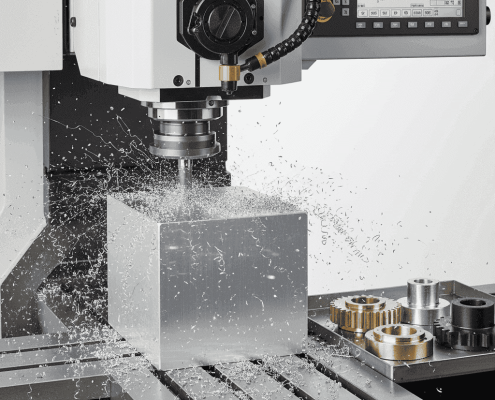
Both are generally harder to work with because of their high strength, so for these two stainless steel, CNC machining is quite difficult; It is suggested to CNC machining some small parts like flanges or connectors; But if medium or large components such as pump casings and valves , it is strongly recommended to first perform hot forging, and then process CNC precision machining.
Super duplex stainless steel is more difficult to machine than duplex stainless steel, for example, machinability rating of duplex 2205 is ~40% (relative to B1112 steel) while super duplex 2507 is about 10–20%. This difference is mainly due to super duplex stainless steels’ higher alloying elements causing it is harder and stronger to be machined. And for the necessary machining is needed: Rigidity is Mandatory: Use the strongest, most rigid machines possible to prevent vibration chatter.
While both are weldable, super duplex requires a much tighter “window” of heat input. Excess heat can lead to a loss of toughness in the Heat Affected Zone (HAZ) and precipitate intermetallic phases that destroy corrosion resistance.
Super duplex is highly sensitive to the cooling rate. If the heat input is too high, the cooling process becomes too slow, leading to the precipitation of brittle intermetallic phases (such as the Sigma phase). These phases severely compromise both mechanical toughness and corrosion resistance. Conversely, if the heat input is too low, the cooling rate is too fast, resulting in an excessive amount of ferrite in the Heat Affected Zone (HAZ). This imbalance makes the weld brittle and prone to hydrogen-induced cracking. Suggested interpass temperature for 2205, the maximum interpass temperature is typically restricted to 150°C. For 2507, this is even tighter, usually limited to 100°C – 120°C to prevent cumulative heat buildup that triggers deleterious phase transformations.
Super duplex is consistently more expensive than duplex, primarily due to its higher content of expensive alloying elements like Molybdenum, Chromium, and Nickel. For example, super duplex 2507 commands a 20% to 40% premium per ton over duplex 2205. Not only include their prices but also processing or machining costs account a lot because of their low machinability (Super duplex is even harder to be machined).
Standard duplex is the go-to for high corrosive environments where strength is also a priority:
It is reserved for the most extreme conditions where failure is not an option:
Choosing between the two involves balancing performance against project constraints, below table based on the projects’ needs for you quick check:
Table 3: Quick Check for Duplex vs Super Duplex Selection
| Consideration | Choose Duplex (2205) If… | Choose Super Duplex (2507) If… |
| Environment | Moderate chloride exposure, brackish water. | Extreme chloride exposure, seawater, or high acidity. |
| Budget | Cost is relatively lower(20% less than super) | Cost is higher due to higher alloying elements |
| Strength | High strength is needed (2x that of 316). | Maximum yield strength is required (20% higher than duplex) |
| Availability | Widely available in various forms (rods, plates). | Specialized; may have longer lead times for specific grades. |
In summary, choosing between duplex and super duplex stainless steel is a strategic decision that balances environmental severity, mechanical requirements, and budget. While duplex stainless steel provides a high-strength and corrosion-resistant solution for most industrial and coastal applications, super duplex stainless steel remains the standard for extreme, high-pressure, and highly corrosive environments.
At VMT, we recently executed a high-precision project for a leading marine equipment manufacturer. The project involved the custom CNC machining of valve seats fabricated from Duplex 2205 (UNS S32205), a stainless steel renowned for its exceptional corrosion resistance and mechanical strength. Duplex 2205 is notoriously difficult to process. We encountered two primary technical hurdles:
To address these challenges, our engineering team implemented a three-pillar optimization strategy:
The project was a resounding success, delivering measurable value to the client:
 WhatsApp/WeChat/Mobile:
+86-15099911516
WhatsApp/WeChat/Mobile:
+86-15099911516
 Tel: 86-150-9991-1516
 QQ: 939020977
 E-Mail: service@vimetal.com.cn


Is Super Duplex 2507 better than 316 Stainless Steel?
Yes, in terms of strength and corrosion. Super Duplex has more than double the strength and a PREN value over 40 (vs. 316’s ~24). However, 316 is more affordable and easier to machine for light-duty applications.
Is 2205 considered Duplex or Super Duplex?
2205 is the industry standard for Duplex Stainless Steel. It is not “Super” because its PREN value is typically below 40.
What is the difference between S32750 and S32760?
Both are Super Duplex. S32760 (Z100) contains added Tungsten and Copper, which can offer slightly better performance in specific hot, acidic environments.
Are Duplex stainless steels magnetic?
Yes. Unlike the 300-series (304/316) which are non-magnetic, Duplex alloys contain ~50% ferrite, making them magnetic.
Does Super Duplex stainless steel rust?
It is extremely resistant to rust, but in highly specific, oxygen-depleted acidic environments, it can still experience corrosion.
Is Super Duplex harder to machine than 316?
Significantly. Its high yield strength and low thermal conductivity make it one of the toughest stainless steels to machine precisely.
254 SMO vs Super Duplex: How to choose?
254 SMO is Super Austenitic steel. Choose it if you need the highest corrosion resistance without the magnetic properties or if you require higher ductility. Choose Super Duplex for higher mechanical strength.


 Hot Rolled vs. Cold Rolled Steel: Understanding Basics and Differences