Carbon Steel vs. Stainless Steel: Key Differences
By JunWen Liu | Mar .06, 2026
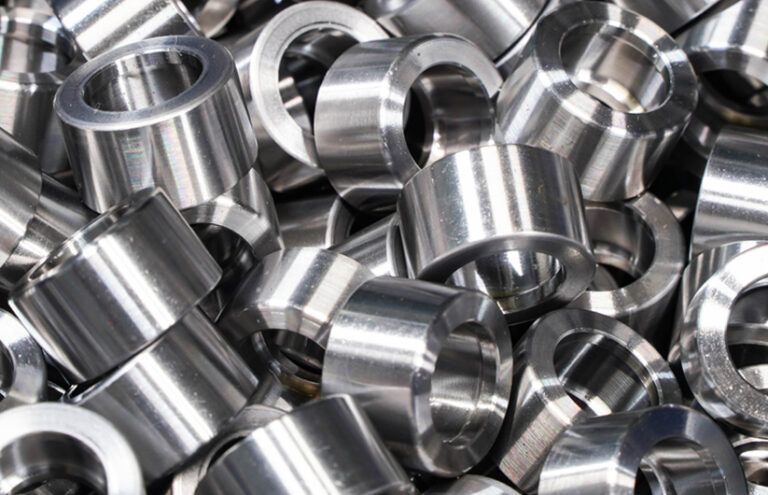

Both stainless steel and carbon steel are iron-based steels. “Stainless” itself signifies its corrosion-resistant nature, as the steel contains at least 10.5% chromium. This chromium creates a natural, dense chromium oxide film that protects the steel. Carbon steel, as the name implies, is defined by its “carbon” content, typically between 0.02% and 2%. Generally, without considering other alloying elements, the higher the carbon content, the harder the steel becomes, but its corrosion resistance decreases accordingly.
Visually, it is quite easy to tell them apart. If you look at carbon steel vs stainless, you can find that stainless steel usually has a bright silvery feel, while carbon steel appears relatively dull and dark gray. However, the differences between the two go far beyond these basic characteristics. They also vary in applications, costs, suitable manufacturing processes, heat treatment, and welding. These areas are the focus of this article, and hope to provide a useful reference for your engineering applications.
Carbon steel contains 98-99% iron, along with carbon and trace amounts of Manganese and Silicon. Steels with less than 0.3% carbon are low carbon (also known as mild steel); 0.3-0.6% carbon is medium carbon steel; and 0.6-2% carbon is high carbon steel.
Lower carbon content offers better ductility, weldability, and machinability—such as low carbon steel 1018. Higher carbon content (where carbon obstructs molecular sliding) provides greater hardness and wear resistance, but results in high brittleness and poor weldability—such as high carbon steel 1095.
Carbon steels are generally not corrosion-resistant. Beyond the reactivity of iron and carbon with the atmosphere, their structure—consisting of ferrite and cementite—allows oxygen and moisture to penetrate. Furthermore, carbon steel cannot form a protective film like stainless steel does.
Generally, low carbon steel is better suited for construction rebar, car body panels, and piping. Medium carbon steel is used in mechanical parts, gears, bearings, and rails. High carbon steel is utilized for knives, springs, and high-strength mechanical components.
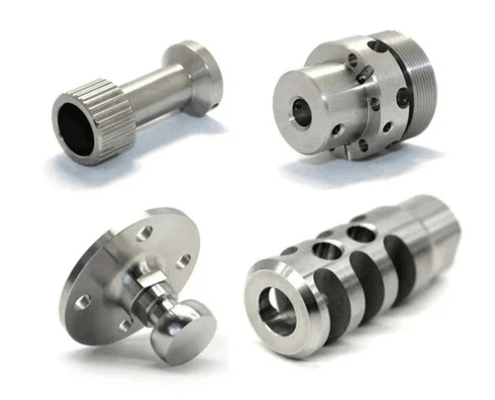
Stainless steel contains 70%–85% iron and at least 10.5% chromium. Besides chromium forming an anti-oxidation passive film, certain stainless grades also contain small amounts of Nickel (Ni) and Molybdenum (Mo) to enhance corrosion resistance.
Additionally, different stainless steels possess different chemical structures: Austenitic (highly corrosion-resistant), Martensitic (harder due to heat-treatability), Ferritic (relatively lower corrosion resistance), and Duplex (a mix of austenite and ferrite with added premium alloys, offering superior strength and corrosion resistance).
Regarding its applications, the well-known Austenitic 304 is the most common stainless steel due to its excellent formability, corrosion resistance, and ease of cleaning; it is typically used in kitchenware, food processing equipment, and surgical instruments. Martensitic 440C (after heat treatment) is hard and sharp, making it ideal for knives, bearings, valve seats, and precision mechanical parts. Coastal or marine valve components often use Austenitic 316L. For heavy chemical or deep-sea corrosive environments, such as oil projects, Duplex 2205 is the preferred choice.
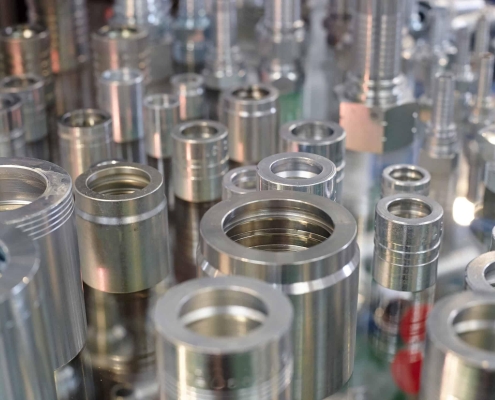
Due to the differences in microstructure and chemical composition (as I mentioned above), carbon steel and stainless steel exhibit distinct physical and chemical characteristics. Below are specific details on these properties:
Stainless steel is corrosion-resistant because its chromium content (at least 10.5%) reacts with oxygen to form an extremely dense, self-healing chromium oxide passive film on the surface. This layer effectively isolates the steel from contact with moisture and air.
In contrast, carbon steel consists primarily of iron and carbon, lacking protective alloying elements like chromium and nickel. Furthermore, its chemical structure generally cannot block the penetration of oxygen and moisture, making its corrosion resistance far inferior to that of stainless steel.
Beyond that, certain alloyed carbon steels (such as weathering steel) form an adhesive rust layer to slow down corrosion by adding small amounts of copper or phosphorus. While this is several times better than ordinary carbon steel, its corrosion resistance still does not match that of stainless steel (like the common 300 series), which can automatically repair its protective layer.
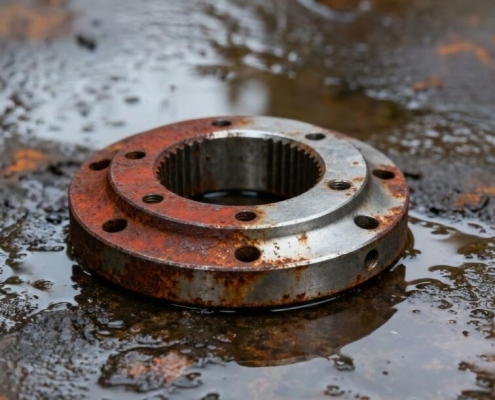
Regarding mechanical properties, carbon steel—particularly medium and high carbon varieties—can exhibit extremely high hardness and tensile strength after heat treatment (usually applicable to high carbon steel). High carbon content means more carbon atoms (limited to under 2%) are embedded in the iron lattice, providing solid solution strengthening (which facilitates heat treatment strengthening) and hindering molecular sliding.
To give some examples: the yield strength of A36 low-carbon structural steel (non-heat-treatable) is approximately 250 MPa, whereas high carbon steels like 1095 can see their strength jump from 380 MPa to over 1,000 MPa after heat treatment, with hardness reaching 55 HRC+.
Stainless steel (such as the common 304 grade) typically has an initial yield strength around 215 MPa. However, martensitic stainless steel can be heat-treated to reach 1,000 MPa+ and 55 HRC+. In other words, when comparing the tensile strength and hardness of stainless versus carbon steel, both have grades that rank on either end of the spectrum.
As for toughness, stainless steel more commonly demonstrates more reliable performance. The 300 series, for instance, has better toughness than low carbon steel (the toughest among carbon steels). Additionally, the impact toughness of stainless steel in low-temperature environments far exceeds that of carbon steel, as it does not suffer from cryogenic brittle fracture like carbon steel does.
Carbon steel has significantly higher thermal conductivity than stainless steel. Common carbon steel sits at approximately 50 W/m·K, while 304 stainless steel is only about 16 W/m·K. This means carbon steel transfers heat faster and more uniformly. Therefore, for cookware that requires efficient heat conduction, carbon steel pans and woks are essential. In industrial heat exchangers, carbon steel is also a more efficient heat transfer material than stainless steel, provided the corrosive environment allows for it.
Carbon steel has a ferritic structure and exhibits strong magnetism. The magnetism of stainless steel, however, depends on its metallographic structure. Austenitic stainless steels (like 304) are typically non-magnetic or weakly magnetic in an annealed state because the nickel content changes the crystal structure. However, once austenitic stainless steel undergoes cold working (such as deep drawing or bending), the local structure may transform into deformation-induced martensite, resulting in slight magnetism. In comparison, martensitic and ferritic stainless steels (like the 400 series) are strongly magnetic, just like carbon steel.
Whether you need magnetic carbon steel or whether stainless steel can be used to manufacture the components you need is a critical consideration for applications involving recycling sorting, electronic shielding, or MRI medical environments.
Visually, stainless steel possesses a natural silvery luster that can be enhanced through processes like polishing or brushing to achieve a “brighter” look. This shine can be maintained for years without additional coatings. Passivation surface treatments can provide even better corrosion resistance for stainless steel without compromising its appearance.
Carbon steel appears relatively dull, with a matte gray finish, and is prone to spotting due to oxidation if left untreated. To maintain appearance and prevent rust, carbon steel parts almost always require electroplating (such as zinc or chrome plating), painting, or regular oil maintenance.
This means stainless steel holds the advantage in consumer electronics, architectural decoration, and medical hygiene where product aesthetics and low maintenance are key. Carbon steel, meanwhile, is more commonly used in structural frames, car chassis, and other engineering projects where appearance is secondary to durability and wear resistance.
From a raw material perspective, common stainless steels (such as SS 316) contain expensive alloying elements like chromium, nickel, and molybdenum. As a result, their market price is typically 3 to 5 times higher than that of ordinary carbon steel (such as A36). Furthermore, the machining of stainless steel—particularly CNC machining—is more difficult, which pushes up manufacturing costs due to increased tool wear and longer processing times.
However, carbon steel parts usually require additional surface treatments (such as electroplating, painting, or oiling for rust prevention) to compensate for their lack of corrosion resistance. These parts may also require regular maintenance over time, meaning carbon steel clearly carries higher ongoing maintenance costs.
Of course, in actual engineering applications, raw material and processing prices will vary depending on the specific grades of stainless and carbon steel. When considering the total cost of manufacturing stainless vs. carbon steel, you will need to evaluate and consult based on your specific project requirements.
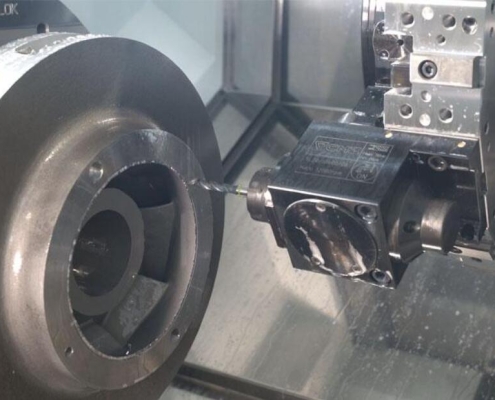
In CNC machining—the most common method for producing modern industrial parts—there is a significant “generational gap” in machinability between the two. Generally, stainless steel has higher toughness and is “stickier” during processing, making it less machine-friendly than carbon steel.
The industry typically uses 12L14 free-cutting steel as the 100% machinability benchmark. Here, we can compare the very common 1018 carbon steel with 304 stainless steel. A common low-carbon steel like 1018 has a rating of approximately 78%; its chips break easily, tool wear is relatively controllable, and it is a highly efficient material to machine. In contrast, 304 stainless steel is rated at only about 45%. Stainless steel exhibits extreme toughness and stickiness during machining and is highly prone to “work hardening”—where the hardness of the material increases rapidly at the point of tool contact.
Consequently, while ordinary tools are usually sufficient for CNC machining carbon steel, machining stainless steel requires coated carbide tools (such as TiAlN), constant feed rates, and a plentiful supply of coolant to prevent high frictional temperatures from scrapping the workpiece.
The choice of forming processes (such as cold bending, cold heading, cold rolling, hot rolling, or forging) are directly influenced by the material’s ductility and yield strength. Stainless steel—especially austenitic grades—possesses excellent ductility, making it ideal for cold-working and deep drawing processes, such as manufacturing stainless sinks or containers.
Carbon steel excels in hot forming. For example, in hot rolling or forging processes, carbon steel in a red-hot state has excellent flowability, allowing it to be forged into complex, heavy-duty structural components. For cold bending or cold heading, low carbon steel (Mild Steel) is widely used for automotive structural parts and fasteners because its lower yield point makes “springback” easier to control than with stainless steel.
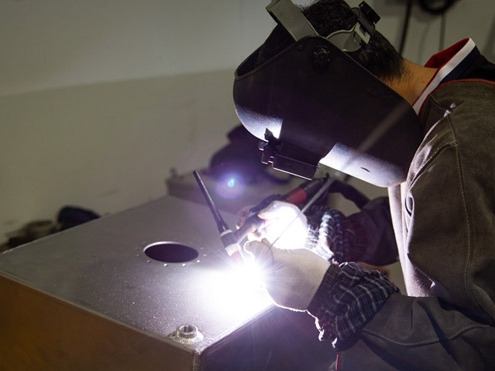
Regarding welding performance of carbon vs stainless steel, low carbon steel is excellent; its low carbon content makes it less prone to “sensitization”—the precipitation of carbides that can affect weld appearance and strength—allowing for reliable welds without complex preheating. High carbon steel requires extreme caution during welding, typically necessitating strict preheating and post-weld heat treatment (PWHT).
Stainless steel generally has good weldability, but care must be taken to prevent chromium from combining with carbon at high temperatures to form chromium carbides. This leads to a lack of chromium on the surface, which prevents the formation of a dense protective film and reduces corrosion resistance. If your project requires extensive welding of stainless steel, you can choose low-carbon versions like 304L or 316L, or use welding consumables containing stabilizing elements like titanium or niobium to mitigate this risk.
In this article, you may have got a general understanding that many carbon steels typically offer superior strength, hardness, and cost advantages. They are widely and cost-effectively used in general industrial structural parts, architectural profiles, bridges, and heavy machinery. In contrast, stainless steel is prefered in food processing, medical devices, and marine engineering due to its better toughness and corrosion resistance, despite its higher cost.
However, when choosing between carbon and stainless steel for engineering applications—given the vast array of grades with different compositions and properties—you must consider the specific requirements of the parts, the operating environment, budget, machining methods, welding needs, and so on.
In a recent CNC machining project at VMT, a client needed a batch of custom M12 high-strength fasteners. The client was torn between two options: 1045 medium carbon steel (quenched and tempered) and 304 stainless steel. From a performance standpoint, quenched and tempered 1045 provides extremely high yield strength and fatigue limits, with material costs only one-third that of stainless steel; however, it requires post-process zinc plating to compensate for its lack of corrosion resistance. In contrast, while 304 stainless steel offers natural rust protection and eliminates the need for plating, its initial unit price is higher, and its fatigue resistance under high loads is slightly inferior to that of optimized 1045 steel.
During VMT’s machining trial phase, the cutting characteristics of the two materials differed significantly. When machining 1045 carbon steel, the chips were broken and segmented, chip evacuation was extremely smooth, the cycle time was short, and tool life was exceptionally long—a single tool set could stably produce over 500 finished parts. When trial-producing 304 stainless steel, the material exhibited significant ductility and stickiness, accompanied by severe work hardening. To ensure thread precision remained strictly within 0.01mm, the technical team had to reduce cutting speeds by 30% and switch to a high-pressure internal cooling system to suppress built-up edge (BUE) on the tool tip, which inevitably increased the machining time per part.
Ultimately, considering that the fasteners were primarily for indoor industrial environments with high mechanical strength requirements, VMT recommended a composite solution: “Quenched and Tempered 1045 Medium Carbon Steel + Surface Plating.” After comparing the test samples, the client approved the strength and surface quality of this plan. In subsequent mass production, thanks to the excellent machinability of 1045 steel, the overall delivery lead time was shortened by 20% compared to the original schedule, and the total integrated manufacturing cost per part was reduced by approximately 15%.
 WhatsApp/WeChat/Mobile:
+86-15099911516
WhatsApp/WeChat/Mobile:
+86-15099911516
 Tel: 86-150-9991-1516
 QQ: 939020977
 E-Mail: service@vimetal.com.cn


Is stainless steel or carbon steel better?
There is no absolute “better”; it depends on environmental matching. For general industrial parts like hardware and fasteners, choose stainless steel for corrosion resistance. For high strength, cost-effectiveness, and dry environments, choose carbon steel.
What is the primary difference between cast iron and stainless or carbon steel?
It mainly lies in the carbon content. Cast iron contains more than 2% carbon, providing excellent flowability when molten (making it easy to “cast” complex shapes). Due to its good heat retention, strong vibration damping, and low cost, it is ideal for cookware bases, machine tool beds, and manhole covers.
What is the difference between high-carbon stainless steel and regular stainless steel?
High-carbon stainless steel combines high hardness with corrosion resistance by increasing carbon content. It is often used for professional kitchen knives (more resistant to food acids), as it maintains long-lasting sharpness (harder and sharper than regular stainless knives) without being as prone to rusting as knives made from plain carbon steel.
If stainless steel is too expensive, can I substitute it with painted carbon steel?
Yes, in indoor or low-humidity environments. However, in salt spray or acidic/alkaline environments, once the paint film develops tiny scratches or peels, carbon steel will rapidly corrode from within. In these cases, substitution is not recommended.


 Carbon Steel Vs Cast Iron: Which Material Is Best for Your Project?