Carbon Steel Vs Cast Iron: Which Material Is Best for Your Project?
By JunWen Liu | Mar .11, 2026
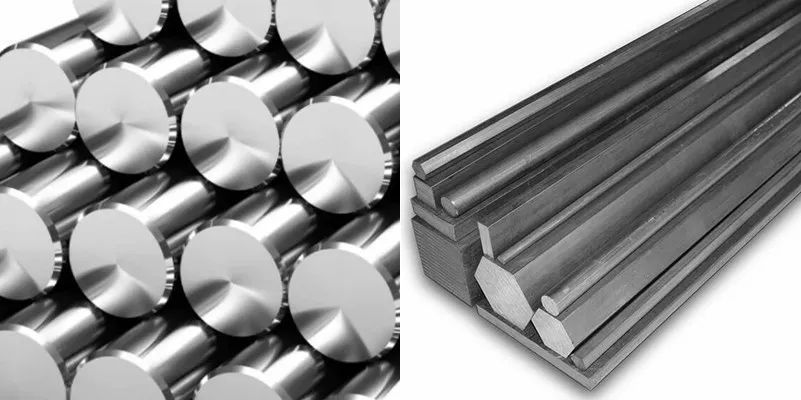

When you compare “carbon steel vs cast iron,” the first things that probably come to mind are carbon steel pans, woks, or griddle, cast iron skillets, and other cookware. While kitchen applications do offer a direct reflection of these two thermal properties, in actual engineering and part manufacturing, the differences go far beyond the kitchen:
As for their specific applications in the automotive industry, heavy machinery, tools, valve bodies, fasteners, and even cookware, you need to understand the core characteristics of each. Read on to explore the differences between cast iron vs carbon steel in terms of composition, thermal response, and mechanical strength.
You can differentiate between carbon steel and cast iron based on a 2% carbon content threshold.
Applications involving heat conduction tend to favor carbon steel—even though the thermal conductivity values of carbon steel and cast iron are similar (cast iron is sometimes slightly higher). This preference is primarily due to their different manufacturing processes, which result in different thicknesses: cast iron products are usually thicker with a slower thermal response, while carbon steel is the opposite.
Table 1: Thermal Properties and Response: Carbon Steel Vs Cast Iron
| Property | Carbon Steel | Cast Iron |
| Thermal Conductivity | 30 – 54 W/m·K | 40 – 50 W/m·K |
| Thermal Diffusivity | Higher (Conducted heat moves faster) | Lower |
| Manufacturing Impact | Usually stamped or CNC machined with thin walls (2-3mm), making it easy to transfer or dissipate heat. | Formed by casting; wall thickness is typically heavy, making it harder for heat to spread quickly. |
If you observe the appearance of carbon steel and cast iron, you will notice that carbon steel is grayish and dull but relatively smooth, while cast iron is darker with a much rougher surface and microscopic interstices . Because of this, you might assume that oxygen and moisture enter cast iron more easily, causing it to oxidize faster.
But the fact is not the same,
The carbon in gray iron exists in the form of graphite flakes (a continuous network). When cast iron begins to oxidize, the iron on the surface rusts, but the graphite flakes do not. These flakes form a physical barrier that effectively slows down the penetration of rust into the deeper layers.
Ductile iron also has strong rust resistance (thanks to high silicon content and spherical graphite), though it is slightly weaker than gray iron.
Carbon steel lacks this microscopic graphite barrier. Once exposed to a humid environment, corrosion spreads rapidly.
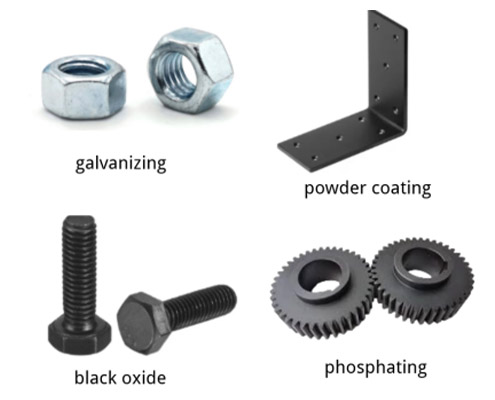
Carbon steel usually requires galvanizing, powder coating, or black oxide to enhance durability; cast iron is commonly treated with phosphating or oil maintenance.
Medium and high carbon steels (such as 1045, 1095) respond exceptionally well to heat treatment, achieving a very tough and strong performance. Low carbon steel generally maintains moderate strength (used for standard fasteners, etc.) and cannot be significantly strengthened by heat treatment.
In cast iron, only ductile iron can achieve high strength through heat treatments. However, due to its inherent brittleness compared to steel, applications like springs must still use carbon steel.
Heat treatment of gray iron is primarily used for stress relief or enhancing wear resistance, as it offers limited improvements in tensile strength. Although gray iron has low tensile strength and sees minimal gains from heat treatment, its unique microstructural characteristics provide it with exceptionally high inherent compressive strength
Table 2: Heat Treatment and Mechanical Properties: Carbon Steel Vs Cast Iron
| Property | High Carbon Steel (after heat treatment) | Ductile Iron (after heat treatment) | Gray Cast Iron (Stress Relieved) |
| Tensile Strength | 1000 – 1500+ MPa | 800 – 1400 MPa | 150 – 400 MPa |
| Compressive Strength | 1000–1500 MPa (Equal to Tensile) | 900–1600 MPa (Slightly > Tensile) | 600–1200 MPa (3-4x its Tensile) |
| Ductility (Resistance to Breaking) | Excellent | Good | Very Poor |
| Vibration Damping(Resistance to Shaking) | Low | Moderate | Excellent |
| Heat Treatment Goal | Drastic change in Hardness/Strength | Achieve Steel-like strength | Relieve internal stress & Wear resistance |
| Typical Applications | High-stress / Dynamic: Springs, Gears, Knife edges, Connecting rods | Structural / Heavy Duty: Crankshafts, Axles, Heavy brackets | Stable / Static: Machine Tool Bases, Engine Blocks, Manhole covers |
Before selecting a material, you must consider the shape complexity of the part and the required tolerance level. Generally speaking: Carbon steel —— uses CNC machining for high-precision parts and stamping for complex structural components. Cast Iron ——uses casting to achieve components with tolerances that are generally wider than those of machined steel.
Core Process Definitions
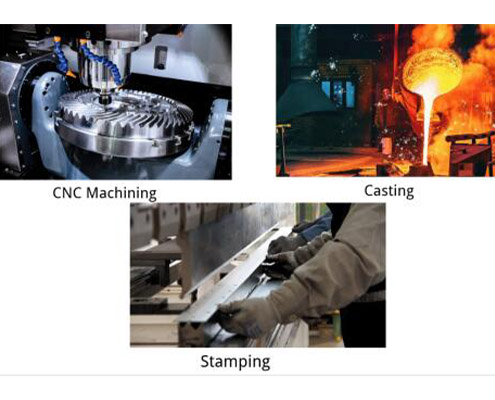
Table 3: Precision and Tolerance Comparison: Carbon Steel Vs Cast Iron
| Process Type | Suitable Material | Typical Tolerance Grade | Surface Roughness (Ra) |
| CNC Machining | Carbon Steel (1018, 1045) | ±0.01mm to 0.03mm | 0.8 – 3.2 μm (Very Smooth) |
| Investment Casting | Cast Iron / Carbon Steel | ±0.1mm to ±0.2mm | 3.2 – 6.3 μm |
| Shell Molding | Cast Iron | ±0.2mm to ±0.5mm | 6.3 – 12.5 μm |
| Sand Casting | Gray Iron / Ductile Iron | ±0.5mm to ±3.0mm | 12.5 – 25 μm (Rough) |
To facilitate your material selection, here are some common grades and their typical applications:
Table 4: Typical Application Grades and Process Matching
| Manufacturing Process | Common Grade | Typical Engineering Application |
| CNC Machining | Mild Steel 1018 | General industrial parts, fasteners, and pins in mild environments. |
| CNC Machining | Medium Steel 1045 | Medium strength parts like gears, main shafts, and connecting rods. |
| Stamping | Mild Steel 1008 | Extremely soft and ductile. Used for car body panels and appliance shells. |
| CNC / Stamping | High Carbon 1095 | Sharp tools, industrial blades, and high-strength springs. |
| Casting | Gray Iron | Engine cylinder heads, vibration-damping bases, heavy covers. |
| Casting | Ductile Iron | Pump casings, hydraulic valve bodies, heavy machinery pivots. |
If your project requires high precision (0.01mm level), high toughness, or needs to withstand tensile loads, carbon steel CNC machining is the best solution. If your parts are massive, complex in shape, primarily subjected to compressive stress, or require superior vibration damping, then cast iron casting is more cost-effective.
At VMT, we provide professional material selection advice and CNC machining solutions. Whether you are in the prototype development stage or the mass production stage needing to balance strength and cost, our engineering team can provide targeted optimization through DFM (Design for Manufacturing) analysis.
Case Sharing
Ready to start your next project? [Contact Us] to get detailed technical support and a rapid quote.
Explore more about our [Precision CNC Machining Capabilities] or [Rapid Prototyping Services].
 WhatsApp/WeChat/Mobile:
+86-15099911516
WhatsApp/WeChat/Mobile:
+86-15099911516
 Tel: 86-150-9991-1516
 QQ: 939020977
 E-Mail: service@vimetal.com.cn


Which is better cast iron or carbon steel?
Neither is objectively “better”; choose cast iron for superior heat retention and heavy searing, or carbon steel for a lighter, more responsive pan that is easier to maneuver.
Does carbon steel rust easily?
Yes, carbon steel will rust quickly if left wet or unseasoned because it lacks the protective chromium found in stainless steel. You must dry it immediately after washing and apply a thin layer of oil to protect the surface.
What are the disadvantages of carbon steel?
The main disadvantages are its tendency to warp if exposed to sudden temperature changes and its poor heat distribution, which can lead to hot spots on smaller burners. It also requires more frequent maintenance of its seasoning compared to cast iron.
What shouldn’t you cook in cast iron?
You should avoid cooking highly acidic foods (like tomatoes, wine, or citrus) for long periods as they can strip the seasoning and taste metallic. Additionally, delicate fish may stick or break apart until the pan has developed a very mature, smooth seasoning.


 Does Carbon Steel Rust?Reasons and Prevention