Alloy Steel vs Carbon Steel: A Comprehensive Comparison for Engineers and Manufacturers
By JunWen Liu | Mar .28, 2026
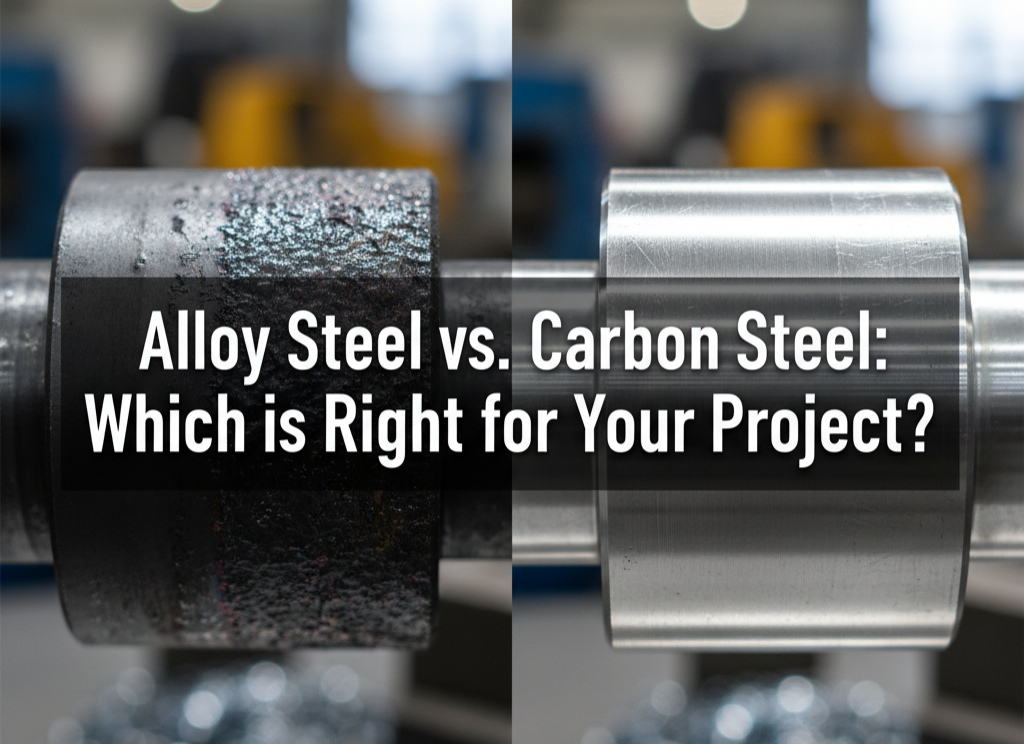

Steel is primarily made up of at least 50-99% iron content with other elements. With the name “carbon” steel, you see, its property must closely connected with the carbon elements while alloy steel is added many other elements into the steel.
When you are wondering: should I select the alloy steel or the carbon steel for a project? The debate often boils down to alloy steel vs carbon steel. Both are iron-based materials, but their chemical compositions, mechanical properties, and costs vary significantly not only their types of “alloy” and “carbon”, but also detailed grades in their internal categories. Only you understand them to choose the perfect one to avoid potential premature component failure or unnecessary production expenses.
In this guide, we break down the technical differences between these two carbon steel vs alloy steel to help engineers and manufacturers make informed decisions for CNC machining or other manufacturing processes, as well as industrial applications.
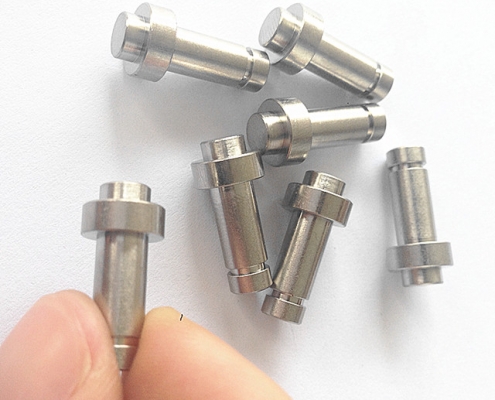
Alloy steel is created by adding various alloying elements to iron to enhance its physical properties. These elements typically make up more than 1% of the total weight(must less than 50%).
Tip: Stainless steel is a type of high-alloy steel that must contain at least 10.5% chromium. This provides the exceptional corrosion resistance that defines the category——it is the high alloy steel.
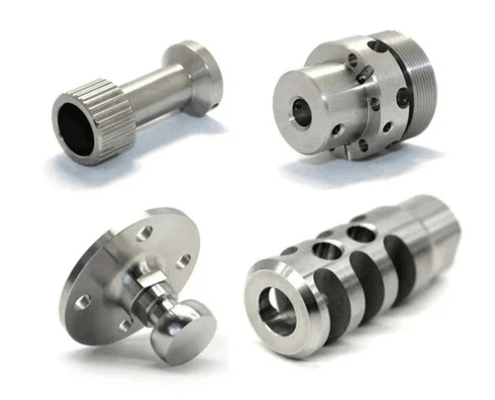
Carbon steel consists primarily of 98-99% iron and 0.02% to 2.0% carbon, with trace amounts of manganese, phosphorus, and sulfur.
Tip: If you add “precious” alloying elements to carbon steel, it can become an alloyed carbon steel—an enhanced version with improved strength or corrosion resistance depending on the additive. AISI 4340(Low-Alloy Steel) is right the one.
To better understand the practical differences in alloy steel vs carbon steel for manufacturing, we have categorized the most commonly used industrial grades that our clients preferred in our VMT CNC Machining Factory.
Alloy steels are the top choice for making into many high-performance industrial components due to the addition of specific elements that enhance their properties of thermal resistant, corrosion resistant, strength enhances or others.
| Grade | Main Alloying Elements | Key Characteristics | Recommended Processing | Typical Applications |
| AISI 4140 | Chromium (Cr), Molybdenum (Mo) | High fatigue strength, excellent toughness, and deep hardenability. | CNC Turning or CNC Milling, Heat Treatment, Grinding. | Gears, spindles, heavy-duty bolts, bearing seats. |
| AISI 4340 | Nickel (Ni), Cr, Mo | Exceptional combination of strength and toughness; hardens uniformly even in thick sections. | Precision CNC Machining, Forging. | Aircraft landing gear, crankshafts, heavy-duty transmission shafts. |
| AISI H13 | Cr, Mo, Vanadium (V) | Outstanding red hardness (retains hardness at high temperatures) and thermal fatigue resistance. | EDM, CNC Machining, Heat Treatment. | Die casting molds, extrusion dies, hot shear blades. |
| AISI 501 | Chromium (Cr) | Good oxidation resistance and heat resistance at elevated temperatures. | Hot Working, CNC Machining. | Oil refinery equipment, heat-resistant supports, pump parts. |
| AISI 304 | 18% Cr, 8% Ni | High-alloy stainless steel; exceptional corrosion resistance and formability; non-magnetic. | CNC Machining, Stamping, Welding. | Food processing equipment, medical devices, chemical containers. |
| AISI M2 | Tungsten (W), Mo, Cr, V | High-speed steel (HSS); extremely high hardness and superior wear resistance. | Grinding, Hard Milling. | Drill bits, milling cutters, broaches, cold-punching dies. |
Carbon steels are renowned for their cost-effectiveness, ranging from free-machining grades to high-hardness tool varieties depending on the carbon content.
| Grade | Main Elements | Key Characteristics | Recommended Processing | Typical Applications |
| AISI 1018 | Low Carbon (0.18%) | Excellent weldability and ductility; very easy to machine. | CNC Automatic Lathe, Cold Drawing, Welding. | Pins, rods, general structural components, washers. |
| AISI 1015 | Low Carbon (0.15%) | Extremely high ductility and formability; low strength but excellent toughness. | Cold Extrusion, Cold Bending, Welding. | Tubing, rivets, complex-shaped stamped parts. |
| AISI 1045 | Medium Carbon (0.45%) | Higher strength than 1018; responds well to heat treatment (quenching). | CNC Machining, Induction Hardening. | Shafts, racks, connecting rods, keys, bolts. |
| AISI 1035 | Medium Carbon (0.35%) | Balances strength and toughness; typically used in a quenched and tempered state. | Forging, CNC Machining. | Levers, support rods, standard load-bearing fasteners. |
| AISI 1095 | High Carbon (0.95%) | Maximum hardness and wear resistance but lower toughness. | Grinding, Annealed CNC Machining, Quenching. | Knife blades, springs, high-strength wire, wear plates. |
| AISI 1566 | High Manganese Carbon Steel | Higher yield strength and wear resistance compared to standard carbon steels. | Hot Rolling, Forging, Mechanical Machining. | Agricultural equipment parts, heavy-duty springs, wear liners. |
Suggest: In the alloy steel vs carbon steel dilemma: if your part is for a general structure with a limited budget, AISI 1018 or 1045 is the perfect choice. However, if the component must operate under extreme stress, corrosive environments, or high temperatures, choosing an alloy steel like AISI 4140 or 304 Stainless Steel will save you long-term maintenance costs.
To see how these materials perform under pressure, let’s compare six typical grades: 4140, 501, M2 (Alloy) vs. 1018, 1045, 1095 (Carbon).
| Property | AISI 1018 (Low Carbon) | AISI 1045 (Mid Carbon) | AISI 1095 (High Carbon) | AISI 4140 (Low Alloy) | AISI 501 (Mid Alloy) | AISI M2 (High Alloy) |
| Hardening Method | Case Hardening | Quench & Temper | Quench & Temper | Through Hardening | Quench & Temper | Precipitation/Red Hardness |
| Tensile Strength (MPa) | ~440 | ~570 – 700 | ~600 – 1000 | ~655 – 1100 | ~600 – 900 | 1600 – 2500 |
| Density (g/cm³) | 7.87 | 7.85 | 7.85 | 7.85 | 7.82 | 8.10 |
| Magnetism | Strong | Strong | Strong | Strong | Strong | Strong |
| Thermal Conductivity (W/m·K) | 51.9 | 49.8 | 45.0 | 42.7 | 36.0 | 24.0 |
| Elastic Modulus (GPa) | 205 | 205 | 210 | 210 | 200 | 210 |
| Machinability (Rating %) | 78% (Excellent) | 57% (Good) | 45% (Fair) | 65% (Good) | 50% (Fair) | 35% (Difficult) |
| Cold Formability | Excellent | Good | Poor (Brittle) | Moderate | Fair | Very Poor |
| Metal Flow (Hot) | Good | Moderate | Fair | Excellent | Excellent | Good |
Carbon steel relies almost entirely on quenching to harden. However, its “depth” of hardness is not thoroughly like alloy steel. Alloy steel hardens through deeper hardenability. Elements like Nickel and Chromium allow alloy steel to achieve uniform hardness through much thicker sections.
Alloy steel vs carbon steel strength is a common comparison. While high-carbon steel (1095) is very hard, alloy steels like 4340 offer significantly higher tensile strength and toughness simultaneously, making them better for high-stress structural parts.
The density of both steels is remarkably similar, typically around 7.85 g/cm³. Adding small percentages of alloys does not significantly change the weight of the material.
Does a magnet stick to carbon steel? Yes, all standard carbon steels are ferromagnetic. And for most alloy steels (like 4140) are also magnetic. The exception is Austenitic Stainless Steel (e.g., AISI 304), which is non-magnetic.
Carbon steels generally have higher thermal conductivity than alloy steels. As you add more alloying elements (like in AISI M2 or 304), the material’s ability to conduct heat decreases, which is why stainless steel stays hot longer after welding.
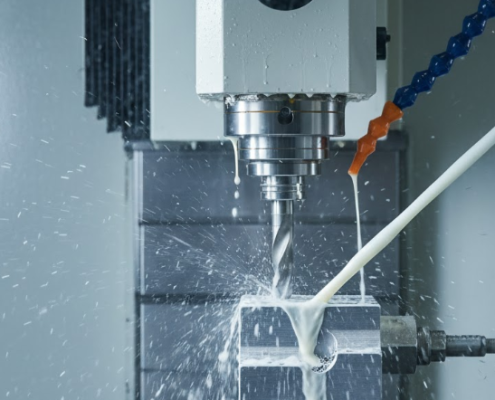
Is carbon steel better for CNC machining? Low carbon steel (AISI 1018) is widely used for CNC parts like nuts and bolts because it is easy to cut and cost-effective. Medium/High carbon steels (1045, 1095) are best machined in their annealed state (softer) and then hardened later. Alloy steels are widely used for precision CNC components but require specialized tooling and slower speeds due to their increased hardness and toughness.
Low carbon steels have superior formability for cold-working processes. In terms of metal flowability for casting or hot forging, alloy steels (especially those designed for hot work like H13) maintain better structural integrity at high temperatures compared to standard carbon steel.
| Feature | Alloy Steel (e.g., 4140, 4340, H13) | Carbon Steel (e.g., 1018, 1045, 1095) |
| Pros | ● High Strength-to-Weight Ratio: Achieves higher strength with less material. ● Superior Hardenability: Hardens deeply and uniformly through thick sections. ● Environmental Resistance: Better resistance to wear, heat, and corrosion (high-alloy). ● Toughness: Maintains high impact resistance even at high hardness levels. | ● Cost-Effective: The most affordable option for mass production and structural use. ● Excellent Machinability: Low carbon grades (1018) allow for high speeds and long tool life. ● High Surface Hardness: Can achieve a hard “case” with a ductile core. ● Weldability: Extremely easy to weld without risk of alloy embrittlement. |
| Cons | ● Higher Cost: Elements like Ni and Mo increase the price per pound. ● Machining Difficulty: Harder on tools; requires specialized CNC inserts and slower speeds. ● Complex Heat Treatment: Requires precise control to prevent cracking or distortion. | ● Corrosion Vulnerability: Will rust rapidly if not plated, painted, or oiled. ● Limited Hardenability: Deep sections cannot be hardened through to the center. ● Brittleness (High Carbon): Grades like 1095 become very brittle if not tempered perfectly. |
| Category | Alloy Steel (Performance Focus) | Carbon Steel (Efficiency & Volume Focus) |
| Aerospace | Landing gears, engine mounts, and high-strength structural fasteners (AISI 4340). | Limited use; primarily for non-critical brackets or interior support structures. |
| Automotive | High-torque axles, crankshafts, and heavy-duty transmission gears (AISI 4140). | Chassis frames, engine brackets, and simple control levers (AISI 1045). |
| Industrial Tools | Injection molds, extrusion dies, and high-speed drills/cutters (AISI H13, M2). | Hand tools, industrial springs, and wear plates (AISI 1095). |
| Infrastructure | High-pressure piping and specialized valves for the Oil & Gas sector. | Construction beams, rebar, and large structural plates (Mild Steel). |
| Fasteners | Grade 8+ high-tensile bolts for extreme load-bearing applications. | Mass-produced nuts, bolts, screws, and rivets (AISI 1018, 1035). |
| Best Processing | ● Precision CNC Machining: For complex geometries and tight tolerances. ● Hot Forging: To maximize grain structure and fatigue strength. ● Nitriding/Induction: For extreme surface wear resistance. | ● High-Speed CNC Machining: Ideal for high-volume, low-cost “turned” parts. ● Cold Forming/Heading: Perfect for high-ductility grades (1018/1015). ● Stamping & Bending: Standard for sheet metal and appliance parts. |
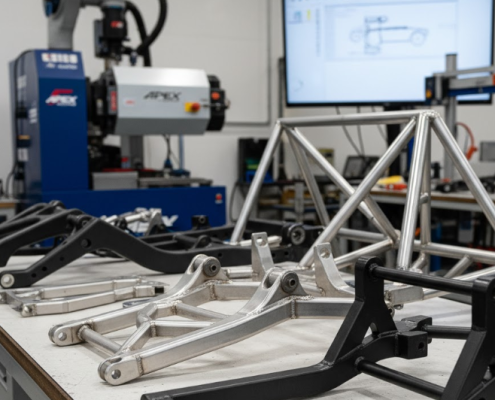
A client required a chassis part that needed to withstand intense vibrations and mechanical stress. The original design called for high-carbon steel to achieve surface hardness, but there were concerns about brittleness and long-term fatigue.
After analyzing the part’s stress points and application environment, VMT engineers recommended switching from high-carbon steel to AISI 4140 Alloy Steel.
We let our clients know that
The client accepted our recommendation, and we moved into the production phase using AISI 4140 in its annealed state to ensure the highest precision before heat treatment.
By selecting AISI 4140 alloy steel and utilizing VMT’s advanced CNC workflow, we delivered a component sample that was not only tougher but also 30% more durable than the original high-carbon design. Clients final delivered their long-term production for their chassis line to us factory with trust.
 WhatsApp/WeChat/Mobile:
+86-15099911516
WhatsApp/WeChat/Mobile:
+86-15099911516 Tel: 86-150-9991-1516
 QQ: 939020977
 E-Mail: service@vimetal.com.cn


Which is better, carbon steel or alloy steel?
It depends on your goal. If you need cost-efficiency and ease of machining, carbon steel is better. If you require extreme strength, heat resistance, or deep hardenability, alloy steel is the superior choice.
Is carbon steel or alloy steel better for a safe?
Alloy steel is generally better. High-quality safes often use alloy steel layers because they are significantly harder to drill through or cut with a torch compared to standard mild carbon steel.
What are the disadvantages of alloy steel?
The main drawbacks are higher material costs and increased machining difficulty. It also requires a more complex heat treatment process to avoid internal stresses.
Will alloy steel rust?
Yes, most alloy steels will rust if exposed to moisture, though they generally resist corrosion better than carbon steel. Only high-alloy stainless steels (like 304 or 316) are truly “rust-proof” under normal conditions.
Does a magnet stick to carbon steel?
Yes. All carbon steels are ferromagnetic. Almost all alloy steels are also magnetic, with the exception of austenitic stainless steels.
What is the best steel to avoid rust?
To maximize rust prevention, use a high-alloy steel like AISI 304 or 316 Stainless Steel, which contains high levels of Chromium and Nickel. Other the better proof grades like duplex stainless steel 2205, super duplex 2507.