All about 316Ti stainless steel(material 1.4571)
By Luca Xie | Dec .01, 2025
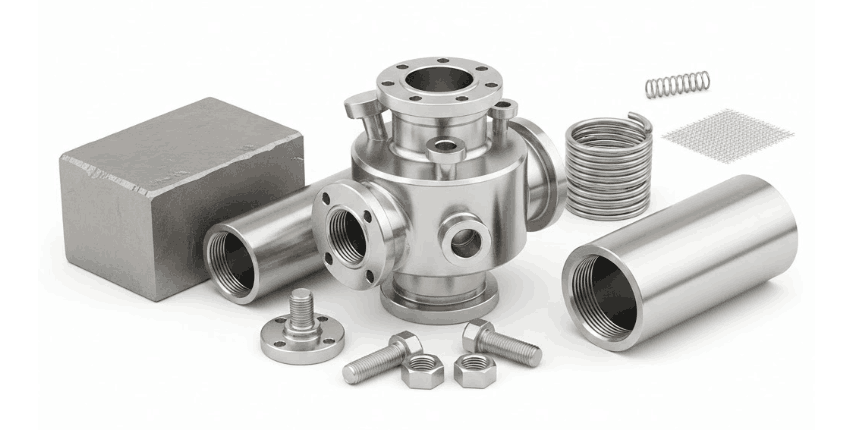

High corrosion, extreme heat and repeated welding cycles often push standard stainless steels to their limits. Pitting, cracking and distortion appear faster than expected. These failures interrupt production, increase maintenance cost and reduce the reliability of CNC-machined components. You avoid them by using 316Ti stainless steel with titanium stability.
316Ti stainless steel, also known as material 1.4571, is a stainless steel with titanium designed for high-temperature and corrosive environments. This guide explains its 316Ti material properties, 316Ti chemical composition, 1.4571 equivalent material, machining behavior, pricing, and applications.
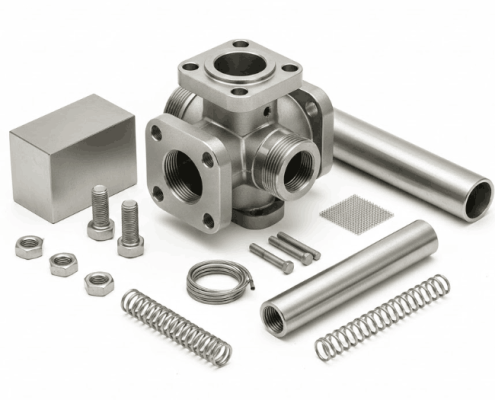
316Ti stainless steel is a titanium-stabilized modification of 316 that prevents carbide precipitation during welding and long-term heat exposure. The added titanium forms stable carbides and protects the grain structure at high temperatures. This alloy is also known as material 1.4571, 316 titanium, and stainless steel grade 316Ti in different regions.
316Ti stainless steel is recognized under many names across global material standards for steel.In the EN and DIN systems, it is identified as material 1.4571.The AISI system uses stainless steel grade 316Ti, while the UNS system assigns UNS S31635.The ASTM system covers it in plate, sheet and pressure equipment standards under ASTM 316Ti stainless steel.Although the designations vary, they point to the same chemistry and performance, making them reliable 1.4571 equivalent material options.
| Country / Region | Designation |
| Germany / EU | 1.4571 |
| United States | 316Ti, UNS S31635, ASTM 316Ti stainless steel |
| United Kingdom | 316S35 |
| France | Z6CND17-11-02 |
| Italy | X6CrNiMoTi17-12-2 |
| Russia | 08Х17Н12М2Т |
| China | 022Cr17Ni12Mo2Ti |
| International Trade | 316 titanium |
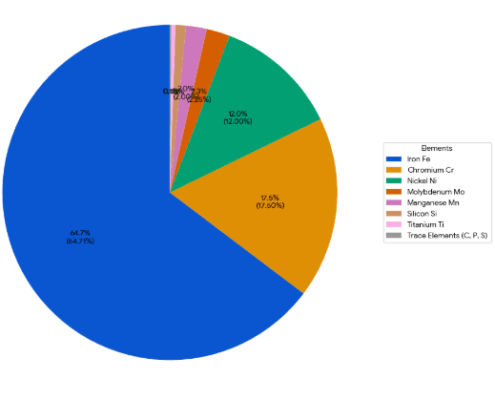
316Ti stainless steel contains chromium, nickel, molybdenum, carbon, manganese, silicon, phosphorus, sulfur, iron and titanium. 316Ti stainless steel uses chromium, nickel and molybdenum to provide excellent corrosion resistance, while added titanium binds carbon and prevents carbide formation during welding or long-term heat exposure.
This stabilized chemistry ensures material 1.4571 maintains strength, dimensional stability and reliability for CNC machining, even under high-temperature conditions. The following table lists the detailed 316Ti chemical composition elements.
| Element | Typical Content (%) |
| Chromium Cr | 16.5–18.5 |
| Nickel Ni | 10.5–13.5 |
| Molybdenum Mo | 2.0–2.5 |
| Titanium Ti | ≥ 5 × C content |
| Carbon C | ≤ 0.08 |
| Manganese Mn | ≤ 2.0 |
| Silicon Si | ≤ 1.0 |
| Phosphorus P | ≤ 0.045 |
| Sulfur S | ≤ 0.015 |
| Iron Fe | Balance |
316Ti stainless steel delivers outstanding performance in demanding engineering applications. Its strength and stability ensure CNC-machined parts maintain shape under mechanical stress, reducing the risk of deformation or failure. Excellent ductility allows components to bend, form, or assemble without cracking, supporting complex geometries and high-precision machining. The alloy’s hardness enhances wear resistance during cutting, drilling, or finishing processes, while impact resistance provides durability under shocks and vibrations. These combined properties make material 1.4571 highly reliable for high-stress structures, precision components, and long-term service in industrial environments. Specific mechanical values are detailed in the table below.
| Property | Condition/Temper | Test Temperature | Typical Value/Range (Metric) | Typical Value/Range (Imperial) | Reference Standard |
| Tensile Strength | Annealed | Room Temp | 520–720 MPa | 75–104 ksi | ASTM E8 |
| Yield Strength (0.2% offset) | Annealed | Room Temp | 205–310 MPa | 30–45 ksi | ASTM E8 |
| Elongation | Annealed | Room Temp | 40–50% | 40–50% | ASTM E8 |
| Hardness (Rockwell B) | Annealed | Room Temp | 70–90 HB | 70–90 HB | ASTM E18 |
| Impact Strength (Charpy) | Annealed | -196°C | 40 J | 29.5 ft-lbf | ASTM E23 |
316Ti stainless steel combines stability, thermal resistance, and manageable weight, making it ideal for precision CNC machining and high-performance applications. Its density allows easy handling without compromising strength. The high melting point ensures parts withstand elevated temperatures during machining or in service. Efficient thermal conductivity and specific heat capacity help dissipate heat quickly, reducing thermal distortion and maintaining tight tolerances. Low electrical resistivity allows safe use in conductive environments, while a controlled coefficient of thermal expansion ensures dimensional stability under temperature changes. These physical traits make material 1.4571 reliable for components requiring precision, consistency, and durability. Exact values are provided in the table below.
| Property | Condition/Temperature | Value (Metric) | Value (Imperial) |
| Density | Room Temp | 8.0 g/cm³ | 0.289 lb/in³ |
| Melting Point / Range | – | 1375–1400 °C | 2507–2552 °F |
| Thermal Conductivity | Room Temp | 16.2 W/m·K | 112 BTU·in/(hr·ft²·°F) |
| Specific Heat Capacity | Room Temp | 500 J/kg·K | 0.12 BTU/lb·°F |
| Electrical Resistivity | Room Temp | 0.72 µΩ·m | 0.0000143 Ω·in |
| Coefficient of Thermal Expansion | 20–100 °C | 16.0 × 10⁻⁶/K | 8.89 × 10⁻⁶/°F |
316Ti stainless steel provides outstanding corrosion resistance across a wide range of environments. Its high chromium, nickel, and molybdenum content, combined with titanium stabilization, prevents carbide precipitation and enhances durability in aggressive media. This makes material 1.4571 ideal for marine, chemical, and industrial applications where chloride exposure is common.
| Corrosive Agent | Concentration (%) | Temperature (°C) | Resistance Rating | Notes |
| Chlorides | 3–10 | 20–60 | Excellent | Risk of pitting |
| Sulfuric Acid | 10–30 | 20–50 | Good | Limited resistance |
| Hydrochloric Acid | 5–20 | 20–40 | Fair | Susceptible to localized corrosion |
| Sea Water | – | Ambient | Excellent | Resistant to marine environments |
| Acetic Acid | 5–20 | 20–50 | Good | Susceptible to stress corrosion cracking |
316Ti stainless steel exhibits excellent heat resistance, maintaining its mechanical properties at high temperatures, making it suitable for applications such as heat exchangers and furnace components. However, care must be taken to avoid prolonged exposure to conditions exceeding its maximum continuous operating temperature, as this can lead to oxidation and scaling.
| Property / Limit | Temperature (°C) | Temperature (°F) | Remarks |
| Max Continuous Service Temp | 870 | 1600 | Suitable for high-temperature applications |
| Max Intermittent Service Temp | 925 | 1700 | Short-term exposure only |
| Scaling Temperature | 800 | 1470 | Risk of scaling at high temperatures |
| Creep Strength Considerations | 600 | 1112 | Creep resistance begins to reduce |
This chapter explains how 316Ti stainless steel performs in various fabrication processes, including CNC machining, cold and hot working, heat treatments, welding, formability, surface finishing, and annealing. Understanding these characteristics helps engineers and manufacturers achieve high-precision, durable, and corrosion-resistant components.
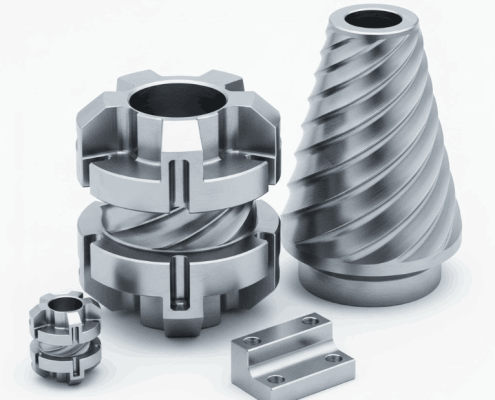
316Ti stainless steel machines well with proper tooling, cutting speeds, and cooling. Its stabilized structure reduces work hardening and maintains tight tolerances. For precision components, VMT, with 15 years of CNC expertise, recommends multi-axis milling and turning with high-speed coolant to minimize tool wear and achieve smooth surfaces. CNC-machined parts retain dimensional accuracy, high surface finish, and corrosion resistance, making material 1.4571 ideal for demanding industrial and precision applications.
The alloy can be cold-formed into sheets, tubes, or complex shapes. Titanium stabilization reduces the risk of cracking and ensures uniform mechanical properties after bending, stamping, or rolling.
Hot forging and hot rolling are possible but require controlled heating to avoid scaling. 316Ti stainless steel maintains mechanical strength at elevated temperatures, allowing hot working for thicker sections or complex geometries.
316Ti stainless steel undergoes various heat treatments to optimize mechanical properties and fabrication performance. These include annealing, solution treatment, and stress relief. Heat treatments improve ductility, reduce residual stresses from machining or forming, and stabilize the microstructure. Properly applied, they prepare the material for precision CNC machining, welding, and forming, ensuring components meet tight tolerances and durability requirements.
316Ti stainless steel welds excellently using TIG, MIG, or resistance methods. Titanium binds carbon, preventing intergranular corrosion. Post-weld annealing is recommended for heavy sections to recover full mechanical properties.
Good ductility allows bending, drawing, and deep forming without cracking. Parts maintain shape and tolerances, which is critical for CNC-machined assemblies and precision fittings.
The alloy can achieve mirror-like polishing, brushing, or passivation. CNC-machined surfaces remain corrosion-resistant and visually appealing, suitable for marine, medical, and architectural components.
Annealing specifically restores ductility and relieves internal stress in 316Ti stainless steel after cold working or heavy machining. Typical procedures heat the material to 1010–1120 °C, followed by rapid cooling to prevent carbide formation. Post-annealing, the alloy retains mechanical strength, corrosion resistance, and dimensional accuracy.
The price of 316Ti stainless steel is influenced by multiple factors.
| Product Form | Approximate Price USD per kg |
| Sheet | 4.0 – 5.5 |
| Plate | 4.2 – 5.5 |
| Round Bar | 5.0 – 6.5 |
| Square Bar | 5.2 – 6.5 |
| Tube | 5.5 – 7.0 |
| Pipe | 5.6 – 7.0 |
| Fittings | 6.0 – 7.5 |
| Region | Approximate Price USD per kg |
| China | 4.0 – 7.0 |
| Europe | 6.0 – 7.5 |
| North America | 6.2 – 7.8 |
| Middle East | 5.8 – 7.2 |
| Southeast Asia | 4.5 – 6.5 |
The market price of 316Ti stainless steel fluctuates significantly. The following data was updated in November 2025 and is for reference only. For the latest price report, please contact the VMT team.
316Ti stainless steel is widely used in industries requiring high corrosion resistance, heat stability, and precision. Key applications include:
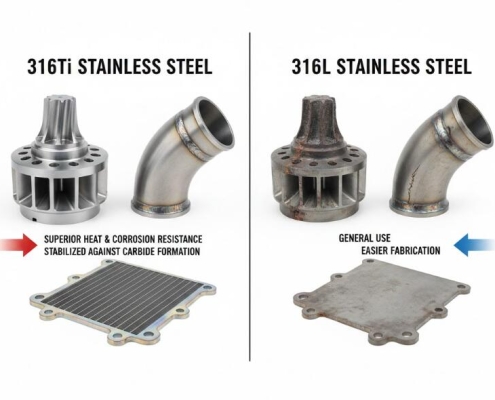
316Ti stainless steel differs from 316L stainless steel mainly due to the addition of titanium, which stabilizes the material against carbide formation during welding or long-term heat exposure. This stabilization provides better heat resistance, dimensional stability, and maintains corrosion resistance in high-temperature environments.
While 316L stainless steel is widely used for general corrosion resistance and ease of fabrication, it can suffer from sensitization and intergranular corrosion if welded or exposed to elevated temperatures for long periods. 316Ti stainless steel is preferred in applications where parts undergo CNC machining, welding, or high-temperature service, ensuring the material retains mechanical strength and surface quality.
A European chemical processing client needed 316Ti stainless steel reactor fittings that could withstand aggressive chemicals and high-temperature fluids. Their previous supplier faced issues with welding-induced carbide formation, surface imperfections, and dimensional inconsistencies, causing delays and rework.
VMT provided a complete solution. Our engineers first analyzed the part design and material selection, then optimized CNC machining parameters for precision cutting, tool path planning, and cooling. Post-machining, we performed annealing to stabilize the titanium, followed by surface finishing to meet tight tolerances and corrosion resistance requirements. Quality checks ensured every component adhered to material standards and customer specifications.
The client reported that the delivered fittings exceeded expectations, with excellent surface finish, precise dimensions, and consistent corrosion resistance. They praised VMT for reducing production delays and providing professional guidance on 316Ti stainless steel machining. and we are ready to help you achieve the same results. Reach out to VMT today to discuss your custom 316Ti stainless steel CNC machining needs.
316Ti stainless steel combines corrosion resistance, heat stability, and excellent mechanical performance, making it ideal for demanding applications across chemical processing, marine, automotive, pharmaceutical, and high-temperature industries. Its titanium stabilization prevents carbide formation during welding and long-term heat exposure, ensuring dimensional accuracy and reliable performance.
 WhatsApp/WeChat/Mobile:
+86-15099911516
WhatsApp/WeChat/Mobile:
+86-15099911516
 Tel: 86-150-9991-1516
 QQ: 939020977
 E-Mail: service@vimetal.com.cn


Is 316Ti stainless steel safe?
Yes, 316Ti stainless steel is generally safe for industrial and food-contact applications. Its titanium stabilization prevents corrosion and carbide precipitation, ensuring long-term durability even in high-temperature or chemically aggressive environments.
What are the disadvantages of 316Ti stainless steel?
The main disadvantages of 316Ti stainless steel are its higher cost compared with standard 316 or 316L grades due to added titanium and alloying elements. It is also harder to machine than lower-grade stainless steels, requiring optimized CNC processes, tooling, and skilled operators. Additionally, while it is highly corrosion-resistant, it can still be susceptible to localized corrosion in very strong acids such as hydrochloric acid.
What are the advantages of 316Ti stainless steel?
316Ti stainless steel offers excellent corrosion and heat resistance, titanium stabilization for welding and high-temperature stability, dimensional accuracy, and strong mechanical performance. It supports precision CNC machining, smooth surface finishes, and long-term durability, making it ideal for chemical, marine, pharmaceutical, and high-temperature industrial applications.


 304 vs 304L Stainless Steel: How to Choose