316L Stainless Steel: A Comprehensive Guide
By Luca Xie | Nov 21, 2025
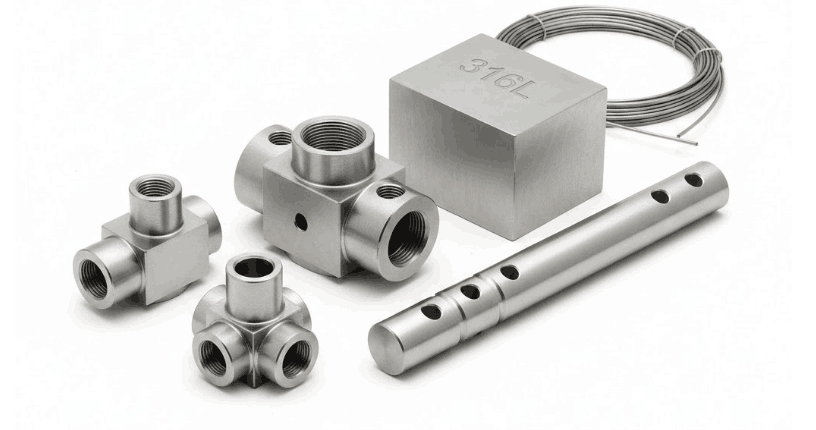

Choosing the wrong 316L stainless steel can lead to corrosion failure, reduced processing efficiency, or unstable performance, thus decreasing production productivity and increasing costs. If you require material stability, reliable processing performance, and ease of manufacturing, 316L stainless steel can help you avoid these problems.
316L stainless steel is a low-carbon molybdenum alloy known for its corrosion resistance, weldability, and cleanability. This article will explain its properties, applications, shapes, prices, and how to choose the right 316 or 316L stainless steel for your project needs.
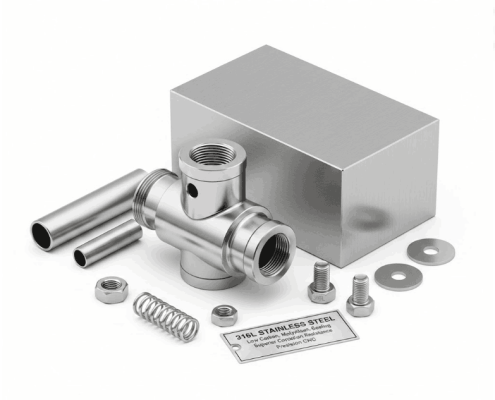
You may search what is 316L stainless steel or 316L meaning when learning about stainless alloys. 316L is a low carbon, molybdenum-bearing austenitic grade defined under AISI and SAE standards. As a 316L material, it offers stable corrosion resistance, clean performance, and excellent weldability because of its reduced carbon content, making it suitable for high-purity environments and precision CNC components.
316L stainless steel offers excellent corrosion resistance, weldability, and toughness, making it ideal for chemical, marine, medical, and high-precision CNC applications. Its low carbon content prevents carbide precipitation, ensuring long-term durability and clean welds.
However, it has trade-offs. The higher nickel and molybdenum content increase material costs. Machining 316L stainless can be challenging due to work hardening and tool wear. Its slightly lower strength compared to standard 316 requires careful handling in structural applications.
Advantages of 316L Stainless Steel
| Advantage | Benefit |
| Corrosion resistance | Protects parts from chlorides, acids, and harsh environments |
| Excellent weldability | Reduces carbide formation and ensures clean weld zones |
| High toughness | Maintains integrity over wide temperature ranges |
| Stable fabrication | Supports bending, forming, and CNC machining with tight tolerances |
| High cleanliness | Suitable for medical, pharmaceutical, and food-grade components |
Disadvantages of 316L Stainless Steel
| Disadvantage | Impact |
| Higher cost | Increased alloying elements raise material expenses |
| Machining difficulty | Work hardening and tool wear require optimized CNC strategies |
| Slightly lower strength | May limit use in heavy-load applications |
| Thermal expansion | Needs precise toolpath control to maintain dimensional accuracy |
316L stainless steel properties are summarized into four main categories: Mechanical properties, Physical properties, Thermal properties, and Fabrication properties.
Mechanical properties of 316L stainless steel determine its strength, ductility, and resistance to mechanical stress, which are crucial for CNC-machined parts and structural components. These properties ensure 316L stainless can withstand tension, shear, impact, and fatigue in demanding environments, such as automotive suspension components, precision gears, medical implants, pump shafts, and marine hardware.
| Property | Typical Value |
| Tensile Strength | 485–620 MPa |
| Yield Strength | 170–300 MPa |
| Elongation | >40% |
| Hardness | 95 HRB |
| Modulus of Elasticity | 193 GPa |
| Shear Strength | 220 MPa |
| Fatigue Strength | 240–300 MPa |
| Impact Strength | 120–150 J |
Physical properties of 316L stainless steel define how it behaves in terms of weight, conductivity, magnetism, and phase changes. These characteristics are important for CNC-machined components, precise assemblies, and applications exposed to varying environmental conditions, such as medical device housings, optical instrument frames, aerospace brackets, and marine fittings.
| Property | Typical Value |
| Density | 8.0 g/cm³ |
| Electrical Resistivity | 0.72–0.74 μΩ·m |
| Magnetic Permeability | 1.002 (approx., nearly non-magnetic) |
| Specific Gravity | 7.98–8.00 |
| Melting Range | 1371–1399°C |
Thermal properties of 316L stainless steel define how it reacts to heat, including expansion, conductivity, and maximum service temperatures. These properties are critical for CNC-machined parts exposed to high temperatures or thermal cycling, such as heat exchangers, reactor components, marine engine parts, and chemical processing equipment.
| Property | Typical Value |
| Thermal Conductivity | 16 W/m·K |
| Coefficient of Thermal Expansion | 16 μm/m·°C |
| Specific Heat Capacity | 500 J/kg·K |
| Maximum Service Temperature | 870°C (continuous) |
| Heat Resistance | Excellent oxidation resistance up to 870°C |
Fabrication properties of 316L stainless steel define how the material behaves during machining, welding, forming, and heat treatment. These characteristics are critical for achieving high-quality CNC parts, welded assemblies, and precision components.

316L stainless is moderately difficult to machine due to its tendency to work harden. Using sharp cutting tools, optimized feeds and speeds, and proper toolpath strategies can reduce tool wear and improve surface finish. CNC programmers often apply multi-axis cutting and step-down approaches to maintain dimensional accuracy.
The low carbon content of 316L stainless steel prevents carbide precipitation, ensuring excellent weldability. It can be welded using TIG, MIG, and resistance methods. Post-weld stress relief is generally not required for thin sections, making it ideal for structural components and complex assemblies.
316L stainless responds well to bending, drawing, and rolling operations. Its ductility allows for precise forming without cracking. Careful lubrication and controlled deformation rates help maintain surface finish and dimensional tolerance during CNC-assisted forming.
The alloy can be hot worked at temperatures between 1010°C and 1120°C. Hot working reduces strain hardening and improves grain structure, making it suitable for large structural parts and precision components requiring post-forming machining.
316L stainless steel work hardens rapidly during mechanical operations, including milling and turning. Proper toolpath planning, moderate feeds, and cooling strategies help manage hardness and prevent surface distortion.
Heat treatment of 316L stainless primarily involves stress relief annealing at 1010°C–1120°C followed by rapid cooling. While it does not harden significantly, annealing helps reduce residual stress, improve ductility, and stabilize dimensions for CNC-precision parts.
| Property | Key Feature |
| Machinability | Moderate, work hardens quickly |
| Welding | Excellent, low carbon prevents carbide |
| Forming | Good ductility for bending and drawing |
| Hot Working | 1010–1120°C, reduces strain hardening |
| Work Hardening | Rapid, needs proper toolpath and cooling |
| Heat Treatment | Stress relief improves ductility |
316L stainless steel finds wide use across industries due to its corrosion resistance, strength, and fabrication versatility. Its properties make it suitable for CNC-machined components that demand precision, durability, and clean surfaces.
Pharmaceutical and Food Processing
The low carbon content of 316L stainless reduces carbide precipitation in weld zones, ensuring hygienic and corrosion-resistant surfaces. It is commonly used in pharmaceutical reactors, food-grade mixing blades, and storage tanks.
Medical Devices
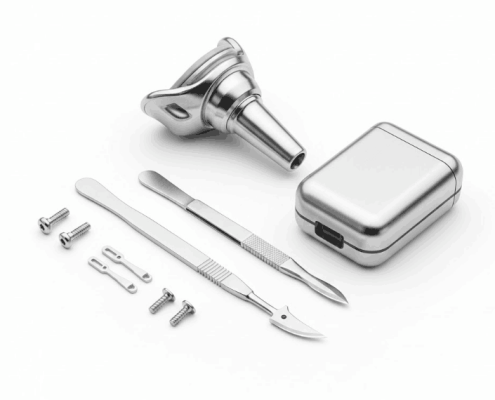
The alloy’s biocompatibility and corrosion resistance make 316L stainless steel ideal for surgical scalpels, orthopedic implants, and medical device housings. Its low carbon content ensures welded components remain strong and free from corrosion.
Marine Applications
316L stainless resists chloride-induced corrosion, making it suitable for boat propeller shafts, marine fasteners, and offshore rig components. The low carbon content helps maintain corrosion resistance in welded structures exposed to seawater.
Chemical and Petrochemical Industries
Its chemical stability and corrosion resistance allow use in chemical storage tanks, pipe fittings, and valves handling acids or alkalis. Low carbon content prevents weld corrosion in harsh chemical environments.
Welded Structures
Structural frames, supports, and welded brackets benefit from 316L stainless steel. Reduced carbon content minimizes carbide precipitation, ensuring long-lasting, durable welds.
Architecture
For aesthetic and functional applications, 316L stainless is used in exterior railings, cladding panels, and decorative handrails. Low carbon content ensures the material maintains its finish and resists corrosion over time.
316L stainless steel comes in several common forms, each designed to meet the specific needs of different industries and applications. These forms include bars, sheets, plates, strips, tubes, pipes, angles, coils, fittings, flanges, and wire. Each form has unique characteristics that make it suitable for various manufacturing processes, from structural components to precision parts in industries such as chemical processing, marine, medical, and food production.
| Form | Characteristics | Typical Uses |
| Bars | Solid, high strength | Shafts, rods, structural supports, fasteners |
| Sheets, Plates, Strips | Flat, easy to fabricate | Panels, enclosures, heat exchangers, decorative surfaces |
| Tubes and Pipes | Hollow, corrosion-resistant | Fluid and gas transport, heat exchangers, reactors |
| Angles | L-shaped, strong | Frames, structural supports, marine and chemical processing |
| Coils | Rolled, flexible | Precision components, automotive parts, electronics |
| Fittings and Flanges | Molded for connection | Piping systems, valves, pharmaceutical systems |
| Wire | Thin, flexible, strong | Mesh, springs, filters, industrial applications |
Several factors influence the price of 316L stainless steel, including the form, size, thickness, and finish. Different forms like bars, plates, and sheets have varying price points based on production costs and market demand. Thinner gauges and larger sizes tend to be more expensive; for instance, a thinner 16 GA sheet generally costs less than a thicker 11 GA sheet. The finish type, such as No. 4, 2B, or polished, also significantly impacts the price, with certain finishes requiring more processing.
Additionally, certifications such as ASTM International or ISO standards may further increase the cost. The price of 316L stainless steel is heavily influenced by the market cost of nickel and molybdenum, key alloying elements, which fluctuate based on raw material prices. Finally, market factors like supply chain disruptions, increased demand, and geopolitical events can lead to price increases or surcharges, making the overall cost subject to change.Below are examples of common pricing for different forms:
| Form | Example Size & Thickness | Price Range |
| Sheets | 12″ x 12″ (0.3″ thick) | $104.10 per sheet |
| 48″ x 120″ (11 GA) | $1664.86 per sheet | |
| 48″ x 120″ (22 GA) | $403.21 per sheet | |
| Round Bars | Example size per kg | ₹265 per kg |
| Plates | 40 mm thick | $3429 per ton |
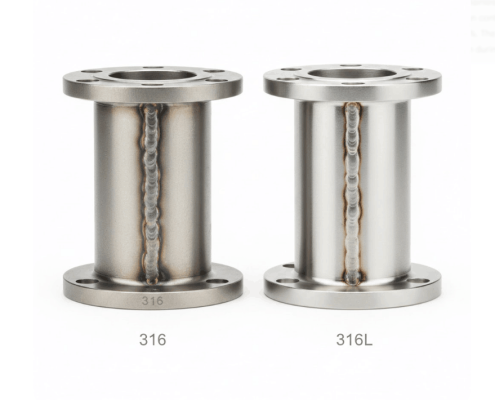
The main difference between 316 and 316L stainless steel is the carbon content. 316L has a carbon content of 0.03% or less, while 316 contains up to 0.08%. The lower carbon in 316L prevents carbide precipitation during welding, improving its corrosion resistance and strength, especially in high-temperature environments.
316L is preferred for high-purity applications and welding, as it reduces the risk of sensitization and chromium carbide formation. It also offers better resistance to stress corrosion cracking, making it ideal for marine, chemical, and medical applications.
| Feature | 316 Stainless Steel | 316L Stainless Steel |
| Carbon Content | Up to 0.08% | ≤ 0.03% |
| Weldability | Good, but susceptible to carbide precipitation | Excellent, reduced carbide formation |
| Corrosion Resistance | High, but more susceptible to sensitization | Better, especially in welded areas |
| Cost | Generally lower | Typically higher due to the extra processing for low carbon content |
| Typical Applications | General purpose, structural components | Marine, medical, chemical, pharmaceutical applications |
At VMT, we optimize the machining of 316L stainless steel by focusing on reducing heat buildup and preventing work hardening. Our strategy includes selecting the right cutting parameters, tool materials, and cooling methods to ensure precision, minimize tool wear, and reduce material waste.
Tool Material: At VMT, we use high-performance carbide tools (solid or tipped) that withstand the rigorous demands of machining 316L stainless steel. These tools maintain their sharpness and resist wear, allowing us to achieve precise cuts even with the high stresses involved.
Tool Geometry: We select tools with a high positive rake angle, which helps the tool engage effectively with the material, reducing cutting forces. Sharp cutting edges are essential to prevent work hardening, ensuring clean cuts and a high-quality finish. For drilling, we use tools with split points and polished flutes to ensure quick chip removal, reducing the risk of clogging.
Speeds and Feeds: Our team at VMT starts with surface speeds (SFM) between 100 and 350, adjusting based on the tool type and material thickness. By using slower speeds, we minimize heat buildup, optimizing the machining process.
Chip Load: We adjust chip load based on the tool size, using around 0.0005″ for smaller end mills and 0.006″ for larger ones. This ensures efficient chip removal while preventing tool damage.
Depth of Cut: We use a shallow, consistent depth of cut, which allows for even chip formation. This strategy reduces rubbing, prevents heat buildup, and ensures smooth, precise machining.
Coolant: VMT uses high-quality, continuous coolant flow to maintain a stable temperature during machining. This ensures that the workpiece stays cool, preventing warping, distortion, or melting.
Alternative Lubrication: For some tools, we use air-oil mist lubrication to avoid thermal shock and prolong tool life. This method is ideal for tools that require extra care to prevent overheating.
316L stainless steel possesses exceptional corrosion resistance, strength, and durability, making it an indispensable material in numerous industries. When machining 316L stainless steel, selecting appropriate cutting parameters, tools, and cooling methods is crucial for optimizing machining efficiency and maintaining precision. If you have any questions about machining 316L stainless steel, please contact us immediately; VMT will provide you with free technical guidance and a quote.
 WhatsApp/WeChat/Mobile:
+86-15099911516
WhatsApp/WeChat/Mobile:
+86-15099911516
 Tel: 86-150-9991-1516
 QQ: 939020977
 E-Mail: service@vimetal.com.cn


Can 316L stainless steel get wet?
Yes, 316L stainless steel can get wet. It resists water corrosion, including seawater corrosion, making it ideal for marine, food processing, and medical applications. Its low carbon content prevents welded areas from rusting, ensuring long-term durability even in humid or wet environments.
How long is the service life of 316L stainless steel?
If used properly, 316L stainless steel can last for decades. Its excellent corrosion resistance, strength, and low maintenance costs make it suitable for harsh environments. In marine or chemical applications, its service life typically exceeds 20-30 years without significant performance degradation.
Which is better, 316 or 316L stainless steel?
There’s no fixed answer. They each have their applicable areas. Due to its lower carbon content, 316L stainless steel exhibits less carbide precipitation and improved corrosion resistance, making it generally more suitable for welding or high-purity applications. 316 stainless steel is suitable for general-purpose applications with less welding requirements and higher costs.

 What is 304 Stainless Steel: Grades, Properties and Uses