304L Stainless Steel 1.4307: The Ultimate Guide
By Luca Xie | Nov 29, 2025
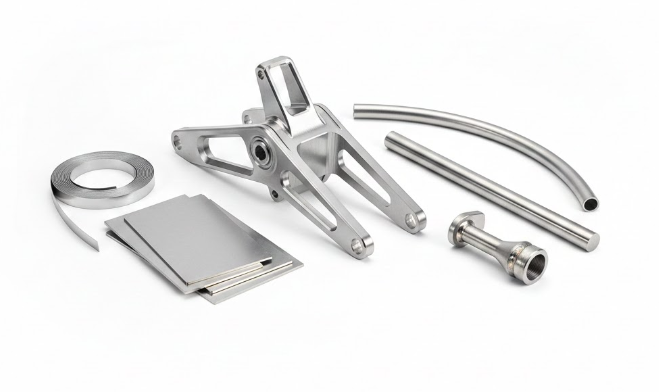

Many projects struggle with stainless steel selection. Choosing the wrong grade can cause corrosion, weld failures, machining issues, surface defects, and higher production cost. A clear understanding of 304l stainless steel properties helps avoid these problems and ensures stable performance.
304l stainless steel is a low-carbon austenitic alloy known for strong corrosion resistance, stable weldability, and excellent formability.This guide explains 304l ss in a complete and practical way. You will learn about 304l stainless steel composition, 304l stainless steel material properties, machining performance.

304L is a low carbon version of 304 stainless steel. It belongs to the austenitic family and offers strong corrosion resistance with stable mechanical strength. The low carbon level reduces carbide precipitation during welding and improves resistance to intergranular corrosion. Many industries use it because it balances durability, cost, and easy fabrication.304L is also known as 304l ss and EN 1.4307. It appears in many forms including 304l stainless steel plate, 304l stainless steel sheet, and 304l stainless steel pipe.
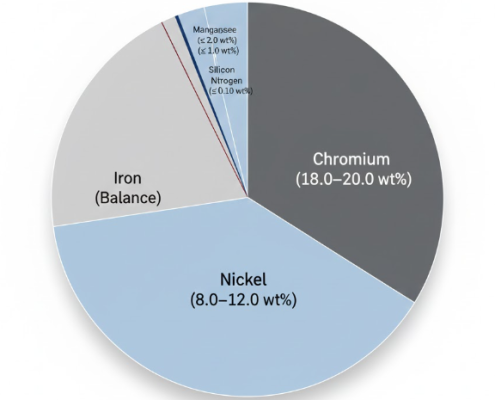
304L contains chromium, nickel, and a reduced carbon level that improves weld performance. These elements give the alloy stable corrosion resistance and balanced strength. The controlled composition also supports smooth CNC machining and consistent forming behavior. Below is a clear breakdown of its key elements.
| Element | Content Range wt% |
| Chromium | 18.0–20.0 |
| Nickel | 8.0–12.0 |
| Carbon | ≤ 0.03 |
| Manganese | ≤ 2.0 |
| Silicon | ≤ 1.0 |
| Phosphorus | ≤ 0.045 |
| Sulfur | ≤ 0.03 |
| Nitrogen | ≤ 0.10 |
| Iron | Balance |
304L has moderate strength, which reduces machining vibration and helps keep cutting forces stable. This supports smooth tool engagement during CNC milling and turning. Its high toughness protects parts from cracking during bending, deep drawing, or impact. The alloy also has low carbon, which keeps weld zones soft and reduces carbide buildup, improving weld stability.
Its lower yield strength makes forming easier and lowers the risk of tearing during bending or stretching. At the same time, its stable hardness gives predictable cutter wear and supports precision machining with steady dimensional control.
| Property | Typical Value |
| Tensile Strength | 485 MPa |
| yield strength | 170 MPa |
| Elongation | 40 percent |
| Hardness | 160 HB |
| Modulus of Elasticity | 193 GPa |
304L stainless steel has moderate density, around 8.0 g/cm³, which provides strong structural support without excessive weight. Its thermal conductivity is moderate, ensuring predictable heat flow during CNC machining and welding. The alloy’s thermal expansion is stable, helping maintain tight tolerances and high dimensional accuracy.
Other key 304l stainless steel material properties include a melting point of 1400–1450 °C, specific heat near 500 J/kg·K, and reliable electrical resistivity. These properties make 304L ideal for industrial equipment, medical devices, and electronic components that demand consistent performance under temperature changes.The following table shows the main 304l stainless steel material properties for reference.
| Property | Typical Value |
| 304l stainless steel density | 8.0 g/cm³ |
| Melting Point | 1400–1450 °C |
| Thermal Conductivity | 16.2 W/m·K |
| Specific Heat | 500 J/kg·K |
| Thermal Expansion | 17.2 µm/m·K |
| Electrical Resistivity | 0.72 µΩ·m |
This section explains the full fabrication performance of 304L stainless steel. You will learn about 304L stainless steel CNC machining, cold and hot working, heat treatments, weldability, formability, and surface finishing. Understanding these processes helps achieve high-precision parts, maintain tight tolerances, and create appearance-critical components.
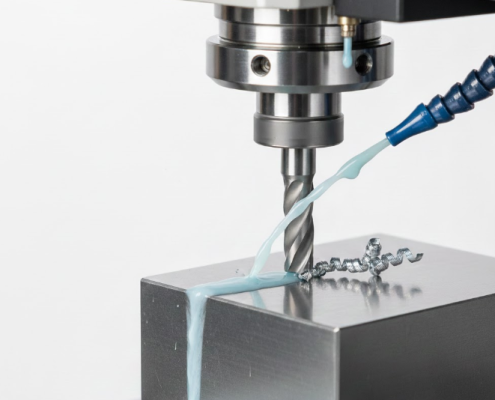
304l ss is suitable for CNC machining, but it requires careful handling due to moderate toughness and work hardening tendency. Sharp tools, stable cutting speeds, and proper feed rates are essential to avoid tool wear and maintain surface quality. Sufficient coolant and smooth chip evacuation help prevent overheating. High-precision operations can achieve tight tolerances and excellent surface finishes, but process control is critical.
At VMT, we provide professional CNC machining services for 304l ss. We deliver parts with iPhone-level appearance, 0.01 mm tolerance, and CPK ≥1.68. Our experience ensures smooth, precise, and reliable production for 304l stainless steel plate, sheet, or pipe components.
Cold working is feasible but increases hardness due to work hardening. Excessive deformation may induce strain-hardening or slight martensite formation. Operators should plan forming steps carefully to maintain dimensional accuracy. The alloy tolerates bending, drawing, and stretching without cracking when controlled correctly.
Hot working is effective within 1000–1150 °C. At these temperatures, 304L softens, allowing large deformations without cracking. Avoid rapid cooling, which can cause uneven microstructures. Hot forming helps achieve complex shapes and large components efficiently.
Annealing restores ductility and relieves internal stress. Stress-relief treatments reduce distortion after machining or welding. 304L cannot be hardened by typical heat treatments. Maintaining controlled thermal cycles ensures stable 304l stainless steel material properties for machining and forming.
304L exhibits excellent weldability due to low carbon content. This prevents intergranular corrosion in weld zones. Common methods include TIG, MIG, and laser welding. Careful filler selection and controlled cooling maintain corrosion resistance and mechanical stability across welded joints.
The alloy shows strong formability, supporting bending, stretching, and deep drawing. Its high elongation prevents cracking, while moderate yield strength reduces tearing risk. Parts maintain accuracy during high-precision fabrication and CNC operations.
304L achieves high-quality finishes, including brushed, mirror, and polished surfaces. Surface treatments retain corrosion resistance while enhancing appearance. With controlled finishing procedures, parts can reach iPhone-level appearance, meeting tight aesthetic and functional tolerances.
304L stainless steel has multiple equivalents across different regions, ensuring compatibility for sourcing and design. These equivalents maintain similar 304l stainless steel composition and performance.
| Standard | Equivalent Grade | Region / Organization |
| EN | 1.4307 | Europe |
| UNS | S30403 | United States |
| JIS | SUS 304L | Japan |
| DIN | X2CrNi19-11 | Germany |
| GB | 0Cr19Ni10 | China |
| ISO | 15510-1.4307 | International |
304L stainless steel is available in a variety of forms to meet different fabrication and application needs:
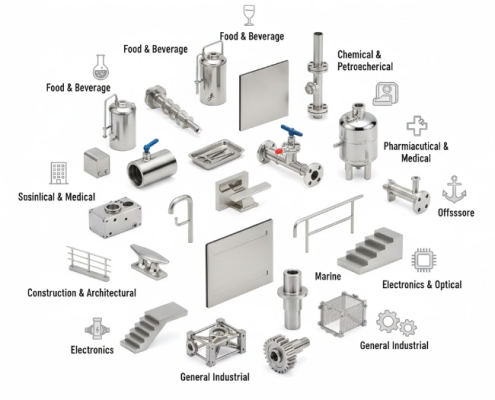
304l ss is widely used across various industries due to its corrosion resistance, formability, and stable mechanical properties. Common applications include storage tanks, pipelines, heat exchangers, pharmaceutical and medical equipment, and hardware like fasteners. Specific examples include:
The 304l stainless steel price varies by region, form, and market conditions. In China, 304l stainless steel plate and coil typically range from USD 1,700 to 2,200 per ton. In the United States, hot-rolled plate is around USD 3,400 to 3,700 per ton, while in Europe it ranges from USD 3,600 to 4,000 per ton.
For bar or rod forms, prices in China are approximately USD 1.70–2.10 per kg, in Europe USD 2.80–3.20 per kg, and in North America USD 3.10–3.60 per kg. Prices fluctuate with nickel and chromium markets, order volume, and processing requirements. Bulk orders or standard sizes usually reduce per-unit costs, whereas small batches, custom dimensions, or precision CNC machining parts carry higher pricing.
The market price of 304L Stainless Steel fluctuates significantly. The following data was updated in November 2025 and is for reference only. For the latest real-time quotes, please contact the VMT team.
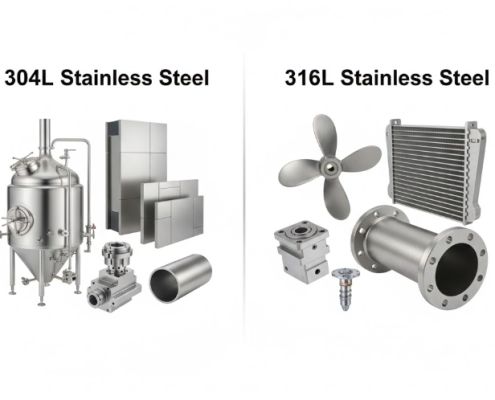
304l ss and 316l stainless steel share similar corrosion resistance and mechanical properties, but their composition differs. 316L contains molybdenum, giving it superior resistance to chlorides and harsh chemical environments. This makes 316L ideal for marine applications, chemical processing, and saltwater exposure.
304L, on the other hand, is easier to form, machine, and weld due to its lower carbon content. It maintains high corrosion resistance in most indoor and outdoor environments, making it cost-effective for general industrial, food processing, and architectural applications.
When choosing between the two, consider exposure conditions, fabrication complexity, and cost. 304L is suitable for high-precision CNC machining with tight tolerances, while 316L offers extra protection in aggressive environments.
304l ss is a low-carbon variant of standard 304 stainless steel. Its reduced carbon content minimizes carbide precipitation during welding, preventing intergranular corrosion. This makes it ideal for welded structures and appearance-critical components.
304 has slightly higher carbon, giving it marginally higher strength but lower weldability. It may require post-weld annealing for corrosion resistance in critical applications. Both alloys share similar 304l stainless steel composition, corrosion resistance, and machinability, but 304L is preferred when fabrication and CNC machining precision are priorities.
A U.S. mountain bike brand needed lightweight 304l ss brackets and components with tight tolerances and smooth surfaces for their high-end frames. Previous suppliers struggled with surface scratches and dimensional inconsistencies, delaying assembly.
VMT solved the problem by first reviewing the part designs and performing a detailed feasibility analysis for CNC machining of 304l stainless steel sheet and bar. Custom fixtures were designed to secure parts during milling and drilling, minimizing vibration. Our engineers selected sharp, wear-resistant tools and optimized feed rates, cutting speeds, and coolant flow to prevent work hardening and maintain surface quality. Each feature was carefully machined with 4- and 5-axis centers, and intermediate inspections verified dimensional accuracy. After rough machining, we conducted fine finishing passes to achieve iPhone-level appearance and 0.01 mm tolerance, then performed quality checks using CPK ≥1.68 standards before final delivery.
The customer received the parts and praised their flawless finish and precise dimensions, noting they perfectly met assembly requirements. If you face challenges machining 304l stainless steel, contact VMT to get a free quote and technical guidance to ensure your parts achieve the same high-quality results.
304l ss is a versatile stainless steel with excellent corrosion resistance, formability, and stable mechanical properties. Its low carbon content ensures weldability, tight tolerances, and high-quality surface finishes. With proper CNC machining, cold and hot working, and careful process control, it can meet the demands of automotive, medical, food processing, marine, and industrial applications.
 WhatsApp/WeChat/Mobile:
+86-15099911516
WhatsApp/WeChat/Mobile:
+86-15099911516
 Tel: 86-150-9991-1516
 QQ: 939020977
 E-Mail: service@vimetal.com.cn


Why is aluminum used instead of steel?
Aluminum is preferred over steel in many applications due to its lightweight, corrosion resistance, and better thermal conductivity. It is ideal for industries like aerospace and automotive, where weight reduction is crucial for fuel efficiency and performance. Aluminum’s malleability also makes it easier to shape into complex designs.
Why is aluminum worth more than steel?
Aluminum tends to be more expensive than steel due to its higher production costs, especially in raw material extraction and refining processes. Aluminum also requires more energy for processing and is less abundant compared to steel, contributing to its higher market price.
Is aluminum stronger than steel?
No, steel is generally stronger than aluminum in terms of tensile strength. However, aluminum has a better strength-to-weight ratio, meaning it can achieve similar strength at a significantly lighter weight. This makes aluminum ideal for applications where lightness is important, such as in aerospace and sports equipment.


 All about 316Ti stainless steel(material 1.4571)