what is 316 stainless steel:Grades, properties and uses
By Luca Xie | Nov 20, 2025
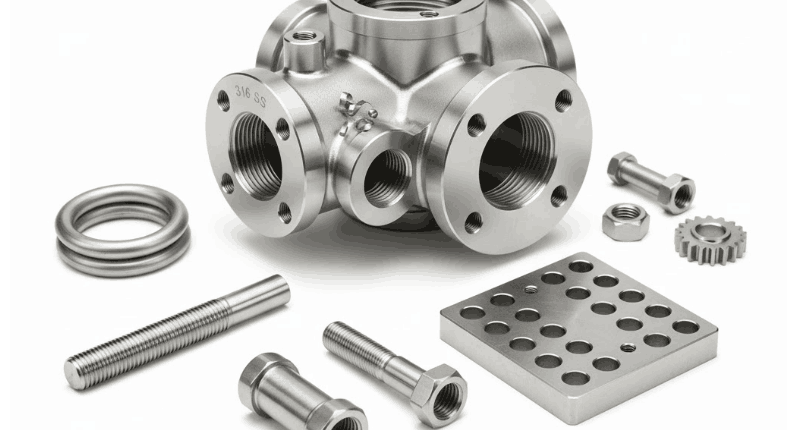

You often struggle with corrosion, heat damage, and CNC machining failures caused by poor material choices. These problems slow production and raise costs. 316 stainless steel solves these issues and gives you stronger, longer-lasting parts.
316 stainless steel is the focus of this article. You will learn what it is, how its grades differ, and how key 316 stainless steel properties affect machining performance. You will also see its applications, common forms, and the challenges you may face when cutting AISI 316 stainless steel.
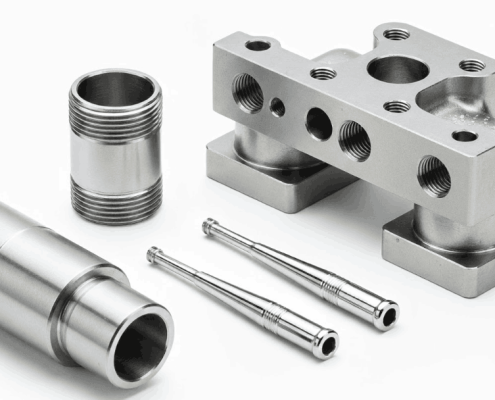
316 stainless steel is an austenitic alloy designed for environments that demand stronger corrosion and chemical resistance. You also see it referred to as 316 steel, ss 316, and AISI 316 stainless steel. Its blend of chromium, nickel, and molybdenum gives you higher durability in saltwater, acidic media, and high-temperature conditions.
• Exceptional Corrosion Resistance: The alloy contains molybdenum, which significantly boosts its ability to resist pitting and crevice corrosion, especially in saltwater or chloride-rich environments.
• High Chemical Resistance: It offers strong opposition to attacks from many acids and alkalis, making it reliable for use with various harsh processing chemicals.
• Good High-Temperature Performance: It maintains excellent mechanical strength and structural integrity when exposed to elevated operational temperatures.
• Excellent Weldability: It can be successfully joined using common welding techniques without extensive post-weld treatments.
• Hygienic Surface: The material naturally forms a smooth, passive, and easy-to-clean surface, essential for maintaining sterile conditions.
• Higher Material Cost: The inclusion of the element molybdenum in the alloy formula makes this grade inherently more expensive than standard grades like 304.
• Difficult Machinability: Its high work-hardening rate and strength make it more challenging to cut and shape compared to other common construction metals.
• Susceptibility to Sensitization: When heated within a specific temperature range, carbide precipitates form along grain boundaries, which can compromise its corrosion resistance.
• High Thermal Expansion: Like other austenitic grades, it expands and contracts significantly with temperature changes, requiring careful design when joined to dissimilar materials.
• Non-Magnetic Property: In its typical annealed state, it lacks magnetic permeability, which limits its use in applications that require a magnetic response.

When you select materials for demanding CNC or industrial applications, different grades of 316 stainless steel give you unique advantages in welding, corrosion resistance, and high-temperature performance. To help you choose the right one, here is how each major grade is typically used.
316L is the low-carbon variant of 316 stainless steel. By reducing the carbon content, it minimizes carbide precipitation during welding, helping you achieve cleaner joints and preventing intergranular corrosion. This grade is widely used in welded structures, large tank fabrications, and precision CNC parts that must maintain corrosion resistance even after significant thermal input.
316H contains a higher carbon content, giving it enhanced strength and creep resistance at elevated temperatures. You’ll see it used in heat exchangers, refinery components, and high-temperature industrial systems where both oxidation resistance and mechanical stability are essential. Compared with standard 316, 316H delivers better performance in hot service conditions.
316Ti is stabilized with titanium to improve resistance to sensitization and long-term exposure at mid-to-high temperatures. This prevents chromium carbide formation and helps the alloy maintain corrosion resistance during prolonged thermal cycles. It is commonly chosen for thermal processing equipment, exhaust components, and applications requiring extended durability under continuous heat.
When you evaluate 316 stainless steel for CNC machining or product design, you usually look at its chemical, mechanical, physical, and manufacturing-related behaviors. Each property affects how well the alloy performs in corrosion-prone, high-temperature, or precision-machined environments.
This section introduces the key chemical characteristics of 316 stainless steel. It explains how each alloying element contributes to corrosion resistance, strength, and temperature stability.

The main elements in grade 316 stainless steel work together to provide corrosion resistance, strength, and thermal stability. Here is a detailed breakdown:
| Element | Typical Content (%) | Function |
| Chromium | 16–18 | Provides general corrosion resistance |
| Nickel | 10–14 | Stabilizes the austenitic structure and toughness |
| Molybdenum | 2–3 | Enhances resistance to chlorides and pitting |
| Carbon | 0.08 max | Controls carbide formation and sensitization |
| Manganese | 2 max | Improves strength and ductility |
| Silicon | 1 max | Supports oxidation resistance |
| Phosphorus | 0.045 max | Limits brittleness |
| Sulfur | 0.03 max | Improves machinability |
316 stainless steel resists pitting corrosion in chloride solutions up to 0.6% at room temperature. Molybdenum and chromium-nickel balance provide superior resistance to seawater, acids, and industrial chemicals compared with 304 stainless steel. This ensures long-term durability in harsh environments.
316 stainless steel maintains strength and corrosion resistance at elevated temperatures. It can operate continuously up to 870°C in oxidizing environments and up to 925°C for intermittent use. Its lower carbon content limits carbide precipitation, helping prevent sensitization during heat exposure.This thermal stability makes 316 stainless steel suitable for heat exchangers, chemical processing equipment, and applications requiring both high temperature resistance and corrosion durability.
This section summarizes the key mechanical behaviors of 316 stainless steel, including its strength, ductility, and hardness. Understanding these properties helps you predict how the alloy will perform under stress and guides material selection for applications requiring durability and flexibility.
| Property | Typical Value | Notes |
| Tensile Strength | 515–720 MPa | Ultimate resistance to pulling forces |
| Yield Strength | 205 MPa | Stress at onset of permanent deformation |
| Elongation | 40% | Material ductility before fracture |
| Hardness | 95 HRB / 201 HB | Depends on product form and heat treatment |
The ultimate tensile strength of 316 stainless steel ranges from 515 to 720 MPa, providing strong resistance to pulling and stretching forces. This ensures the alloy can handle high-stress applications, from structural supports to pressure-bearing components, without failure.
The 316 stainless steel yield strength is typically 205 MPa, representing the stress level at which permanent deformation begins. Knowing this value helps predict when parts will start to bend under load, which is crucial for design and safety.
Elongation at break is around 40%, giving 316 stainless steel excellent ductility. This means the material can deform significantly before fracturing, making it suitable for applications requiring bending, shaping, or forming without cracking.
Hardness varies between 95 HRB and 201 HB, depending on product form and heat treatment. This range provides a balance between wear resistance and ease of machining or forming, ensuring long-term durability in service.
This section summarizes the key physical characteristics of 316 stainless steel, including density, melting point, elasticity, thermal and electrical behavior, and magnetic properties. Understanding these factors helps you predict material performance under mechanical, thermal, and environmental conditions.
| Property | Typical Value | Notes |
| Density | 8.0 g/cm³ | Mass per unit volume |
| Melting Point | 1371–1399°C | Temperature range for phase change |
| Modulus of Elasticity | 193 GPa | Resistance to elastic deformation |
| Electrical Resistivity | 0.74 μΩ·m | Ability to resist electric current |
| Thermal Conductivity | 16.2 W/m·K | Rate of heat transfer |
| Coefficient of Thermal Expansion | 16.0 μm/m·K | Expansion per degree of temperature change |
| Magnetic Properties | Non-magnetic in annealed state | Can become slightly magnetic after cold working |
The density of 316 stainless steel is about 8.0 g/cm³, making it significantly heavier than aluminum and many lightweight alloys. This higher density provides stability and mechanical robustness, which is essential for pressure vessels, structural supports, and components that must resist deformation under load.
316 stainless steel melts between 1371 and 1399°C, giving it excellent high-temperature tolerance. This allows it to be used in heat exchangers, furnaces, and chemical processing equipment without losing mechanical integrity or dimensional stability.
With a modulus of elasticity of 193 GPa, the alloy offers strong resistance to elastic deformation. This ensures that components maintain their shape under applied forces, which is critical for structural frameworks, precision assemblies, and high-stress applications.
The electrical resistivity is 0.74 μΩ·m, indicating moderate conductivity. While not as conductive as copper or aluminum, it allows safe use in many industrial environments where electrical insulation is not critical but some current-carrying capability exists.
Thermal conductivity is 16.2 W/m·K, which allows heat to flow steadily through the material. This property is important for equipment exposed to temperature gradients, such as chemical reactors or heat exchangers, preventing localized overheating and thermal stress.
The coefficient of thermal expansion is 16.0 μm/m·K, meaning the material expands 16 micrometers per meter for every degree Celsius rise. This predictable expansion is vital for assemblies with tight tolerances, preventing warping, leaks, or structural misalignment during heating or cooling cycles.
316 stainless steel is generally non-magnetic in the annealed state. However, slight magnetism may develop after cold working. This makes it suitable for applications where magnetic interference must be minimized, such as in medical devices, electronic housings, or sensitive instrumentation.
This section summarizes the key manufacturing characteristics of 316 stainless steel, including weldability, formability, and machinability. Understanding these properties helps you plan fabrication processes, select appropriate tools, and achieve high-quality finished parts.
316 stainless steel welds well, especially in its low-carbon 316L variant. The low carbon reduces carbide precipitation, preventing intergranular corrosion near welds. It is suitable for TIG, MIG, and spot welding. Proper filler material selection ensures joints maintain corrosion resistance and mechanical strength.
The alloy has good formability and can be bent, deep drawn, or shaped into complex geometries. Its austenitic structure allows it to endure forming operations without cracking, making it ideal for tanks, piping, and architectural components.
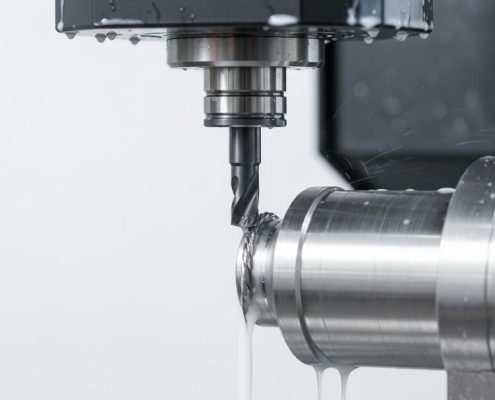
Machining 316 stainless steel requires care because it work-hardens rapidly. Use sharp cutting tools, moderate speeds, and sufficient lubrication to prevent tool wear. Though not as easy to machine as 304 stainless steel, proper techniques allow precision components with smooth finishes.
316 stainless steel is valued across industries for its corrosion resistance, strength, and durability. Its combination of chemical and mechanical properties allows it to perform reliably in harsh or high-demand environments.
Thanks to its high chloride resistance, 316 stainless steel is widely used in boat fittings, propellers, fasteners, and structural elements near the coast. It withstands saltwater and humid environments, making it ideal for docks, bridges, and exterior architectural features.
The alloy’s resistance to acids, chlorides, and industrial chemicals makes it perfect for storage tanks, pipes, valves, and heat exchangers in chemical and petrochemical plants. Its high-temperature stability ensures long-term performance under corrosive conditions.
316 stainless steel meets strict hygiene standards. Its corrosion resistance and non-reactivity make it suitable for surgical tools, implants, and medical equipment, ensuring patient safety and long-term reliability.
The alloy’s non-reactive surface and easy-to-clean finish make it ideal for food and beverage processing. Tanks, mixers, conveyors, and cutlery benefit from 316 stainless steel’s durability and resistance to cleaning chemicals.
In aerospace and automotive sectors, 316 stainless steel is used for high-strength, corrosion-resistant components such as exhaust systems, fasteners, and structural parts. Its combination of toughness, ductility, and thermal stability ensures reliability in demanding environments.
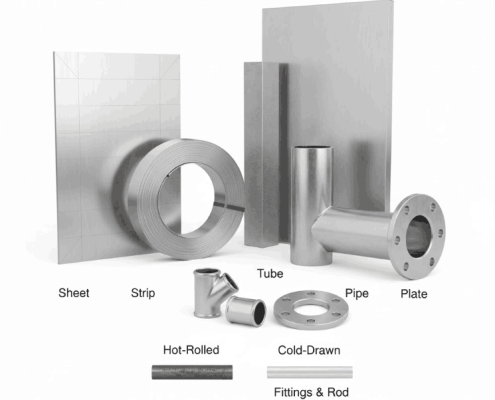
316 stainless steel is available in a variety of forms to meet diverse industrial and manufacturing needs. The following table summarizes the most common forms of 316 stainless steel, their typical applications, and key features for easy reference.
| Form | Typical Applications | Key Features |
| Sheet | Panels, enclosures, architectural elements | Smooth surface, easy to cut and form |
| Strip | Springs, clips, precision components | Consistent thickness, suitable for assembly |
| Tube | Piping, heat exchangers, structural supports | Corrosion resistant, withstands pressure |
| Bar | Shafts, machined parts, structural components | High strength and stability |
| Pipe | Fluid transport in chemical, food, marine industries | Corrosion and heat resistant |
| Plate | Structural components, heavy machinery, tanks | Thick, strong, durable |
| Hot-Rolled | General fabrication, structural use | Good mechanical properties, workability |
| Cold Drawn | Precision machining, high-tolerance parts | High accuracy, smooth finish, improved strength |
| Fittings & Flanges | Pipe and tube connections in processing systems | Reliable, corrosion-resistant joints |
In a recent project producing precision 316 stainless steel components for a chemical processing client, our team encountered several machining difficulties. The material work-hardened rapidly. This caused excessive tool wear and made it difficult to maintain tight tolerances. Low thermal conductivity led to localized heating at the cutting edges. Its high toughness produced inconsistent chip formation and occasional burrs. These issues threatened both the surface finish and the dimensional accuracy required by the client.
To overcome these challenges, VMT implemented a combination of precise process controls and expert tooling selection. Sharp and wear-resistant cutting tools were used. Optimized speeds and feeds helped reduce work hardening. Adequate lubrication and cooling prevented heat buildup. Careful sequencing of operations ensured consistent chip evacuation and reduced burr formation. As a result, the final parts achieved 0.01 mm tolerance and flawless surface finish. The components also offered long-term durability that met the client’s strict performance requirements.
Are you encountering these challenges when machining 316 stainless steel? Contact us immediately for VMT’s 316 stainless steel machining solutions.
316 stainless steel offers a unique combination of corrosion resistance, mechanical strength, and thermal stability, making it suitable for demanding applications across multiple industries. Understanding its mechanical, physical, and manufacturing properties ensures components perform reliably. By selecting appropriate processing methods and controlling machining parameters, you can fully leverage the benefits of this versatile alloy.
 WhatsApp/WeChat/Mobile:
+86-15099911516
WhatsApp/WeChat/Mobile:
+86-15099911516
 Tel: 86-150-9991-1516
 QQ: 939020977
 E-Mail: service@vimetal.com.cn


What is the cost of stainless steel 316?
The 316 stainless steel price varies by form, region, and quantity. Bulk material typically costs US$1.10–3.00 per kg, while 1–2 mm sheets range US$3.2–5.2 per kg or US$55–70 per m². Per metric ton, prices are around US$1,589 / MT in China and US$3,376 / MT in the U.S., depending on market conditions.
Can stainless steel 316 rust?
While 316 stainless steel is highly corrosion-resistant, it is not completely immune to rust. Prolonged exposure to extremely harsh conditions, such as stagnant saltwater or strong acids, can cause surface corrosion. Regular cleaning and proper maintenance help preserve its resistance.
Which steel is better, 304 or 316?
It depends on the application. 316 stainless steel outperforms 304 stainless steel in corrosion resistance, especially in marine, chemical, or high-chloride environments. 304 stainless steel is sufficient for general applications with lower exposure to harsh conditions and is usually more cost-effective.


 316L Stainless Steel: A Comprehensive Guide